
Can Scalp Massages Actually Regrow Hair? What the Science Says
April 14th, 2026
Dr James Kilgour, MD
This article is for you if...
In the world of hair restoration, we are often bombarded with expensive serums, laser helmets, and pharmaceutical interventions. Yet, one of the most buzzed-about remedies is also the oldest and cheapest: the scalp massage. It sounds almost too simple to be true. Could the mere act of a head massage really be the "miracle cure" for hair thinning, or is it just a glorified relaxation technique?
The truth lies somewhere in the middle. While a scalp massage won't transform a completely bald head into a lush forest overnight, there is legitimate, peer-reviewed evidence suggesting that mechanical stimulation can alter the biology of your hair follicles. If you are looking for a natural way to support healthier hair and its longevity, understanding the intersection of touch and cellular science is the first step toward real results.
The Growing Interest in Scalp Massages: Miracle Cure or Just Relaxing?
The surge in interest regarding a daily scalp massage isn't just a byproduct of the "wellness" boom; it’s a response to a growing desire for non-invasive health hacks. For years, scalp massage was relegated to the realm of spa luxury—a nice-to-have addition to a haircut that helped you de-stress. However, as our understanding of mechanobiology (how physical forces affect cells) has grown, so has the realization that our follicles respond to physical touch.
We live in an era where we want to take agency over our aging process. Scalp massage fits this desire perfectly because it costs nothing but time. However, to see it as a "miracle" is a mistake. It is a marathon, not a sprint. The interest is justified, but the expectations must be calibrated. It is an adjuvant therapy—a powerful tool in your toolkit, but rarely a standalone solution for advanced hair loss or conditions like androgenetic alopecia.
Understanding the Biology of the Hair Follicle
To understand why massage might work, we first have to look at the "engine" of the hair: the follicle. Think of your hair follicle not as a static strand of silk, but as a complex, mini-organ burrowed deep within your skin.
How Hair Grows (And Why It Stops)
Hair growth follows a rhythmic cycle: Anagen (growth), Catagen (transition), and Telogen (resting). At any given time, about 90% of your hair should be in the Anagen phase, which can last several years. Hair loss or thinning usually happens when this cycle is disrupted. The Anagen phase shortens, and the follicle itself begins to shrink, a process called "miniaturization."
Eventually, the follicle produces a hair so thin it's barely visible, or it stops producing hair altogether. This is often driven by genetics and hormones (like DHT), but it is also influenced by the environment of the scalp itself. If the "soil" isn't healthy, the "plant" cannot thrive.
The Role of Blood Flow in Hair Health
Blood is the delivery system for everything your hair needs to grow. It carries oxygen, amino acids, and minerals to the dermal papilla—the command center at the base of the follicle. When blood flow is restricted, the follicle receives fewer nutrients and struggles to clear out metabolic waste.
Imagine a garden hose with a kink in it. You might still get a trickle of water, but it's not enough to keep the roses vibrant. Proponents of scalp massage argue that by manually stimulating the area, you are "unkinking the hose" in the blood vessels and improving blood circulation, ensuring a steady stream of nutrients reaches the roots. While blood flow alone isn't the only factor in hair loss, it is a foundational requirement for hair health.
The Science of Scalp Massage: What Research Tells Us
Skeptics often dismiss the effects of scalp massage as "woo-woo" science, but several key studies have forced the medical community to take a second look. We aren't just talking about "feeling good"; we're talking about measurable changes in hair diameter.
The 2016 Japanese Study: Thickening Through Mechanical Stress
One of the most cited papers in this field was published in Eplasty in 2016. Researchers in Japan took a group of healthy men and had them use a motorized scalp massage device for four minutes a day on one side of their heads. After 24 weeks, they found a significant increase in hair thickness on the massaged side compared to the control side, providing clinical evidence for increased hair thickness through stimulation.
Crucially, the massage didn't necessarily create new follicles, but it made the existing ones produce thicker hair that was more robust. This suggests that the mechanical force was signaling the follicles to stay in the growth phase longer and produce more keratin.
The 2019 Survey Data: Consistency is Key
In 2019, a large-scale survey published in Dermatology and Therapy looked at over 300 people who practiced "Standardized Scalp Massage" (SSM) for an average of 11 to 20 minutes per day. The results were compelling: nearly 69% of participants reported an improvement in their hair loss or hair regrowth.
The standout takeaway from this study wasn't just that it worked, but how much effort it required. Those who saw the best results were the ones who were most consistent, often massaging their scalps for months before noticing a change. It proved that scalp massage isn't a "quick fix" but a long-term commitment to scalp health and overall health.
The "Stretching" Theory: How Force Affects Gene Expression
Why does rubbing the skin affect the hair inside it? This brings us to the "stretching theory." When you massage your scalp, you aren't just moving the skin; you are stretching the cells of the dermal papilla.
This mechanical stretching triggers specific genes associated with hair growth, such as those that produce signaling proteins like BMP4 and Shh. It also helps down-regulate genes associated with hair loss. Essentially, you are "tricking" the cells into a state of high activity through physical tension. It is the same principle as weightlifting: you put stress on the muscle fibers, and they respond by growing stronger.
The Practical Benefits Beyond Hair Growth
While regrowth is the "holy grail," the broader benefits of scalp massage offer a host of secondary advantages that create an environment where hair is more likely to thrive.
Stress Reduction and Cortisol Levels
We cannot ignore the systemic impact of stress on hair. Chronic stress spikes cortisol, which can push hair follicles prematurely into the Telogen (resting) phase—a condition known as telogen effluvium. Scalp massage is a potent parasympathetic nervous system trigger. By lowering your overall stress levels and cortisol, you are indirectly protecting your hair from stress-induced shedding.
Enhanced Product Absorption
If you use hair growth serums, you want them to actually reach the follicle. A massage helps to "warm up" the skin and increase local vasodilation. This makes the scalp more permeable, allowing active ingredients to penetrate deeper into the epidermis rather than just sitting on the surface and evaporating.
Removal of Sebum and Product Buildup
A healthy scalp is a clean scalp. Over time, dead skin cells, dandruff, excess sebum (oil), and styling products can create a "plug" around the follicle opening. This can cause inflammation or even folliculitis, which hinders growth. The physical action of a massage helps to break up these deposits, acting as a manual exfoliant that ensures the follicle can "breathe."
How to Perform an Effective Scalp Massage
To reap these benefits, you can't just aimlessly rub your head for thirty seconds. Technique matters. You want to move the scalp over the skull, not just slide your fingers over the hair.
The Effleurage Technique for Circulation
Effleurage involves long, sweeping strokes using the flats of your hands or fingertips. Start at the forehead and move toward the nape of the neck, then from the temples toward the crown to cover the entire scalp. This technique is designed to warm up the tissue and stimulate the lymphatic system, helping to drain toxins and prime the area for deeper work. It’s the "warm-up" phase of your routine.
Petrissage: Deep Tissue Kneading
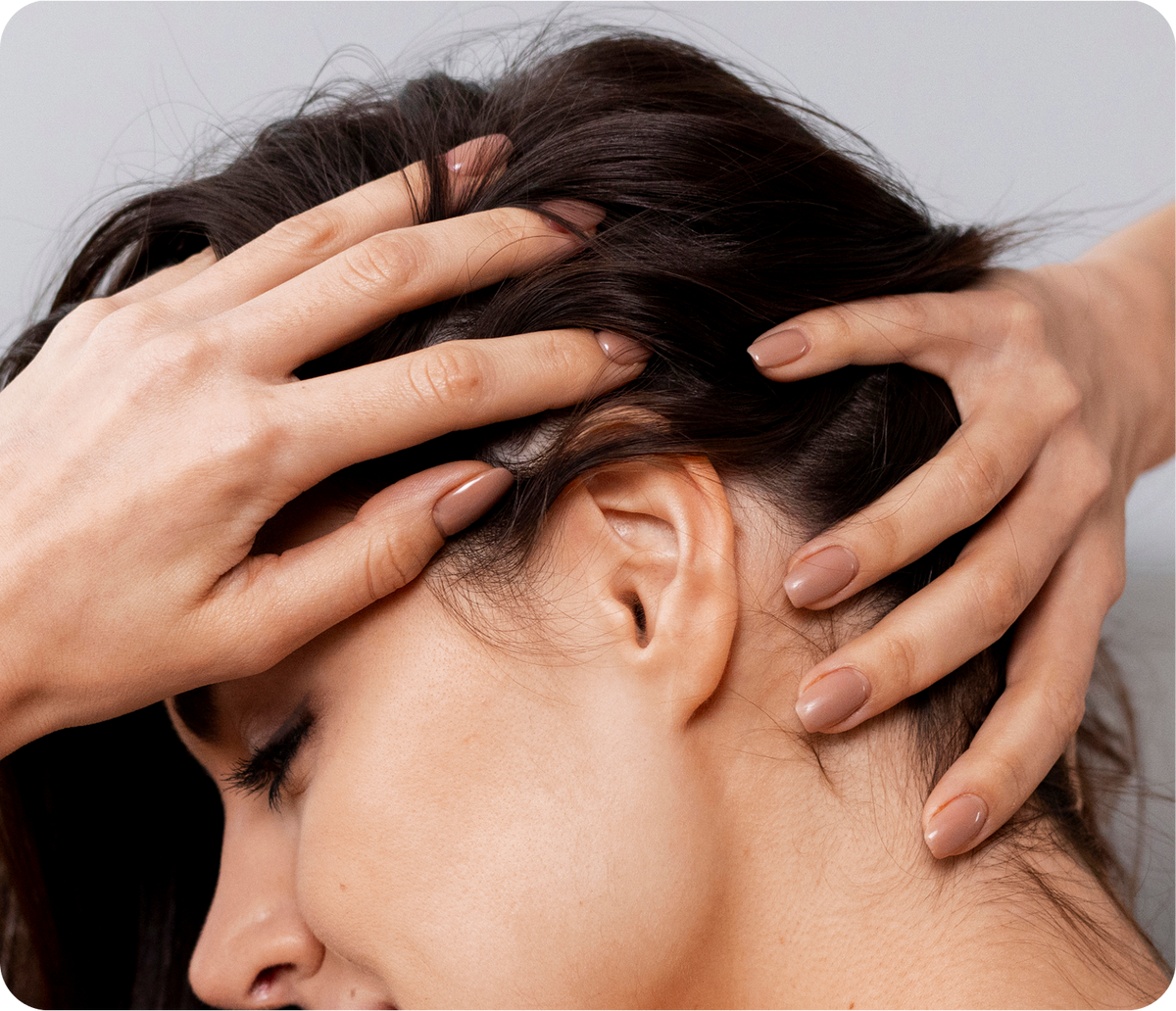
This is where the real work happens. Petrissage involves using the pads of your fingers (never your nails) to apply firm, circular, yet gentle pressure. Think of it as "kneading dough." You want to feel the scalp moving under your fingertips. Focus on areas where the scalp feels tight, typically the crown, the hairline, and the temples. This deep-tissue work is what provides the mechanical "stretch" to the dermal papilla cells discussed earlier.
Using Tools vs. Using Your Hands
Many people ask if they should buy a specialized scalp massager. Silicone brushes or motorized "spiders" can be excellent tools because they provide consistent pressure and save your fingers from fatigue. They are also great for use in the shower to help lather shampoo. However, your hands are the most sophisticated tools you own. They provide sensory feedback—you can feel where your scalp is tight or sensitive in a way a plastic tool cannot. A combination of both is often the best approach.
The Importance of Pressure and Frequency
More pressure is not always better. You want "firm but comfortable." If you are causing pain or redness, you are being too aggressive. As for frequency, the 2019 study suggests that 10 to 20 minutes a day is the "sweet spot." If that sounds like too much, try breaking it into two 5-minute sessions—one in the morning and one before bed. Consistency is more important than duration; five minutes every day is better than thirty minutes once a week.
Boosting Results: Combining Massage with Other Treatments
Scalp massage works best when it is part of a holistic ecosystem of hair care. It is a force multiplier for other treatments.
The Synergy of Essential Oils (Rosemary, Peppermint, and Lavender)
Using a "carrier oil" (like jojoba, castor oil, or almond oil) infused with essential oils can amplify your results. Rosemary oil, in particular, has been compared in studies to 2% Minoxidil for its ability to improve hair count over six months. Peppermint oil provides a cooling sensation that further increases blood flow through cold-receptor activation. Just a few drops are enough; the oil provides the lubrication for the massage while the active compounds work their magic on the follicles.
Scalp Massages and Topical Minoxidil
If you are using Minoxidil (Rogaine) or another powerful topical serum, a scalp massage can be a game-changer. By massaging the scalp for a few minutes before applying the medication, you increase blood flow and "open up" the skin, which can lead to better absorption of the drug. However, wait about 5-10 minutes after a vigorous massage before applying the product to ensure your scalp isn't too irritated.
Dietary Factors That Support Follicle Health
You can massage your scalp all day, but if your body lacks the raw materials to build hair, you won't see results. Hair is made of a protein called keratin. Ensure you are getting enough biotin, zinc, iron, and Omega-3 fatty acids. Think of the massage as the "labor" and your diet as the "lumber." You need both to build the house.
Potential Risks and Common Mistakes to Avoid
While scalp massage is generally safe, there are ways to do it wrong that can actually lead to more hair loss.
Over-Manipulation and Traction Alopecia
One of the biggest mistakes beginners make is being too rough. If you are tugging on the hair shafts while massaging the skin, you risk "traction alopecia"—hair loss caused by repeated tension on the hair root. Always keep your fingers planted on the skin and move the skin itself. Avoid sliding your fingers through the hair if your hair type is prone to tangling, as this can lead to breakage.
The Danger of Long Fingernails and Scalp Irritation
Never use your fingernails. Your scalp is delicate, and tiny micro-scratches from nails can lead to infections or scabbing. These micro-injuries cause inflammation, and inflammation is the enemy of hair growth. Always use the soft pads of your fingertips. If you have long nails, consider using a silicone scalp massaging tool instead to avoid accidental scratching.
When to Consult a Dermatologist or Trichologist
Scalp massage is a wellness practice, not a medical "cure" for underlying diseases. If you notice sudden, patchy hair loss (alopecia areata), redness, extreme itching, or scaling, stop the massages and see a professional. Conditions like scarring alopecia or fungal infections require medical intervention, and massaging an infected or highly inflamed scalp can actually spread the issue or cause permanent damage.
In the end, scalp massage is a testament to the power of consistency. It requires no fancy equipment, just a few minutes of your day and a bit of patience. By stimulating blood flow, reducing stress, and triggering cellular growth signals, you aren't just rubbing your head—you're cultivating a healthier environment for your hair to grow. It may not be a miracle, but it is science-backed self-care that pays dividends over time.