
Copper Peptides for Hair Growth: The Science Behind the Scalp Care Hype
June 23 2026
Dr James Kilgour
This article is for you if...
For decades, the conversation around hair loss was dominated by two heavy hitters: Minoxidil and Finasteride. But as our understanding of skin biology has deepened, a new protagonist has emerged from the world of high-end skincare to claim its place on the scalp. Copper peptides, often recognized by their striking sapphire-blue hue, are no longer just a secret ingredient for erasing wrinkles; they are becoming the cornerstone of a sophisticated approach to hair longevity.
If you’ve noticed your hair thinning or simply want to optimize the health of your scalp, you’ve likely encountered the buzz surrounding GHK-Cu. This isn't just another marketing trend. It is a biological intervention that targets the very environment where hair is born. In this guide, we’ll strip away the hype and look at the cellular machinery that makes these molecules a formidable ally in your quest for a thicker, healthier mane.
The Renaissance of Scalp Care: Why Copper Peptides are Taking Center Stage
The beauty industry is currently undergoing a "skinification" of hair. We are finally treating the scalp like the living, breathing extension of our face that it is. In this shift, copper peptides have taken center stage because they offer something most stimulants don't: regeneration. While many products focus on forcing hair to grow through irritation or vasodilation, copper peptides work by repairing the "soil" so the "plant" can flourish naturally.
What Exactly is a Copper Peptide?
At its simplest, a copper peptide is a small fragment of protein (a peptide) combined with a copper ion. In the human body, peptides act as messengers. They are the cellular "project managers" that tell your body to heal a wound, produce more collagen, or defend against bacteria.
The most famous of these is GHK-Cu (Glycyl-L-histidyl-L-lysine). This specific sequence of amino acids has a high affinity for copper. Think of the peptide as a delivery truck and the copper as a specialized tool. Without the truck, the copper can’t get to the construction site; without the tool, the truck has nothing to offer. When they work together, they unlock a suite of biological functions that are essential for tissue remodeling and hair follicle health.
The Science of GHK-Cu: How These Tiny Molecules Communicate with Your Hair
The magic of GHK-Cu isn't magic at all—it's biochemistry. To understand why your scalp craves these molecules, we have to look at how they influence the life cycle of a hair follicle. Your hair doesn't just "grow"; it cycles through phases of activity and rest. Copper peptides act as the conductor of this orchestra, ensuring every instrument hits the right note at the right time throughout the hair growth cycle.
The Discovery and Biology of Copper Peptides
Copper peptides were first isolated in the 1970s by Dr. Loren Pickart, who noticed that younger blood contained high levels of GHK-Cu, while older blood did not. He observed that this molecule could make old liver cells function like young ones. This discovery sparked a revolution in anti-aging. Researchers soon found that copper peptides were naturally released during tissue injury. When you get a cut, your body sends GHK-Cu to the area to signal for repair. By applying them to the scalp, we are essentially sending a "repair and renew" signal to follicles that might be dormant or struggling.
Angiogenesis: Feeding the Follicle from Within
Imagine your hair follicle as a high-performance engine. To run, it needs a constant supply of fuel (oxygen and nutrients). This fuel is delivered via a tiny network of blood vessels. One of the most significant roles of copper peptides is promoting angiogenesis—the formation of new blood vessels.
As we age, or as hair loss progresses, the microcirculation and overall scalp circulation can diminish. The follicle begins to shrink because it’s starving. Copper peptides stimulate vascular endothelial growth factor (VEGF), which encourages the growth of new capillaries around the follicle. By "upgrading the plumbing," you ensure that each hair has the resources it needs to grow thick and strong.
Blocking the "Hair Killer": Copper Peptides vs. DHT
If you’ve researched hair loss, you know the villain of the story: Dihydrotestosterone (DHT). This hormone binds to receptors in the scalp and causes follicles to miniaturize until they eventually stop producing hair altogether.
While not as aggressive as pharmaceutical DHT blockers, copper peptides have been shown to inhibit 5-alpha reductase, the enzyme responsible for converting testosterone into DHT. By lowering the local levels of this enzyme in the scalp, copper peptides help shield vulnerable follicles from the hormonal signaling that leads to thinning. It’s like putting a protective barrier around your hair's most sensitive components.
Stimulating the Anagen Phase: Keeping Hair in the Growth Cycle Longer
Hair growth happens in three stages: Anagen (growth), Catagen (transition), and Telogen (resting). In many cases of thinning, the Anagen phase becomes shorter and shorter, while the resting phase grows longer. This results in "peach fuzz" hair that never gains real length.
Copper peptides are known to enlarge follicle size and extend the Anagen phase. They signal the follicular cells to keep dividing and producing keratin. When a follicle stays in the growth phase for a longer duration, the hair shaft becomes thicker and the overall hair density of the scalp improves. You aren't just growing more hair; you're growing better hair.
Copper Peptides vs. Minoxidil: How Do They Compare?
It is tempting to pit these two against each other in a winner-takes-all battle, but the reality is more nuanced. Minoxidil is a vasodilator that primarily works by opening potassium channels and forcing blood flow to the area. It is a powerful stimulant, but it doesn't necessarily address the underlying health of the scalp tissue.
Copper peptides, on the other hand, are restorative. They focus on tissue remodeling, inflammation reduction, and follicle size. While some studies suggest that GHK-Cu can be as effective as a low-percentage Minoxidil in certain contexts, they are fundamentally different tools.
The Complementary Approach
In the world of high-performance hair care, the "and" is usually better than the "or." Many users find that using copper peptides alongside Minoxidil yields superior results. Minoxidil acts as the accelerator, while copper peptides act as the mechanic, ensuring the engine (the scalp) is healthy enough to handle the speed. Furthermore, Minoxidil can often cause scalp irritation or dryness; the anti-inflammatory nature of copper peptides can help soothe these side effects, making the overall regimen more sustainable.
Managing Expectations: Realism vs. Marketing
Let’s be clear: copper peptides are not a "cure" for baldness that has existed for decades. If a hair follicle has completely scarred over and died, no peptide can bring it back. Copper peptides are most effective for those in the early to mid-stages of thinning, or for individuals looking to reduce shedding, maintain their current density, and improve hair quality. Results take time—usually three to six months of consistent use—because they are tied to the natural rhythm of your hair’s growth cycles and the stabilization of hair shedding.
The Scalp Environment: Beyond Just Hair Growth
One of the biggest mistakes people make is focusing solely on the hair shaft and ignoring the skin it grows from. A healthy scalp should be supple, well-hydrated, and free of chronic inflammation. This is where copper peptides truly shine compared to traditional treatments.
Anti-Inflammatory Properties for a Calmer Scalp
Chronic micro-inflammation is a silent contributor to hair loss. Conditions like seborrheic dermatitis, dandruff, or even environmental stress can cause the immune system to attack or suppress the hair follicle. Copper peptides are potent anti-inflammatories. They help quench the "fire" in the scalp, reducing redness and sensitivity. A calm scalp is a productive scalp.
Collagen and Elastin: Skin Health for the Follicle’s Foundation
The hair follicle is embedded in the dermal layer of the skin, which is made mostly of collagen and elastin. As we age, our scalp loses its "cushion," becoming thinner and tighter. This can physically constrict the follicle. Copper peptides are legendary for their ability to stimulate elastin and collagen production. By thickening the dermis and improving the elasticity of the scalp, you are providing a more robust and supportive foundation for your hair to anchor into.
How to Choose the Right Copper Peptide Product
Not all blue liquids are created equal. As copper peptides have gained popularity, the market has been flooded with "copper-themed" products that may lack the concentration or stability required to actually work.
GHK-Cu vs. Other Variations
When reading labels, look specifically for GHK-Cu, AHK-Cu, or Copper Tripeptide-1. These are the most researched forms. You may also see "Second Generation" copper peptides like Copper PCA, Bis(Tripeptide-1) Copper Acetate, or complementary peptides like Acetyl Tetrapeptide-3. While these can be effective and are often more stable in cheaper formulations, GHK-Cu remains the gold standard for biological activity and cellular communication.
Concentration Matters: Finding the Sweet Spot
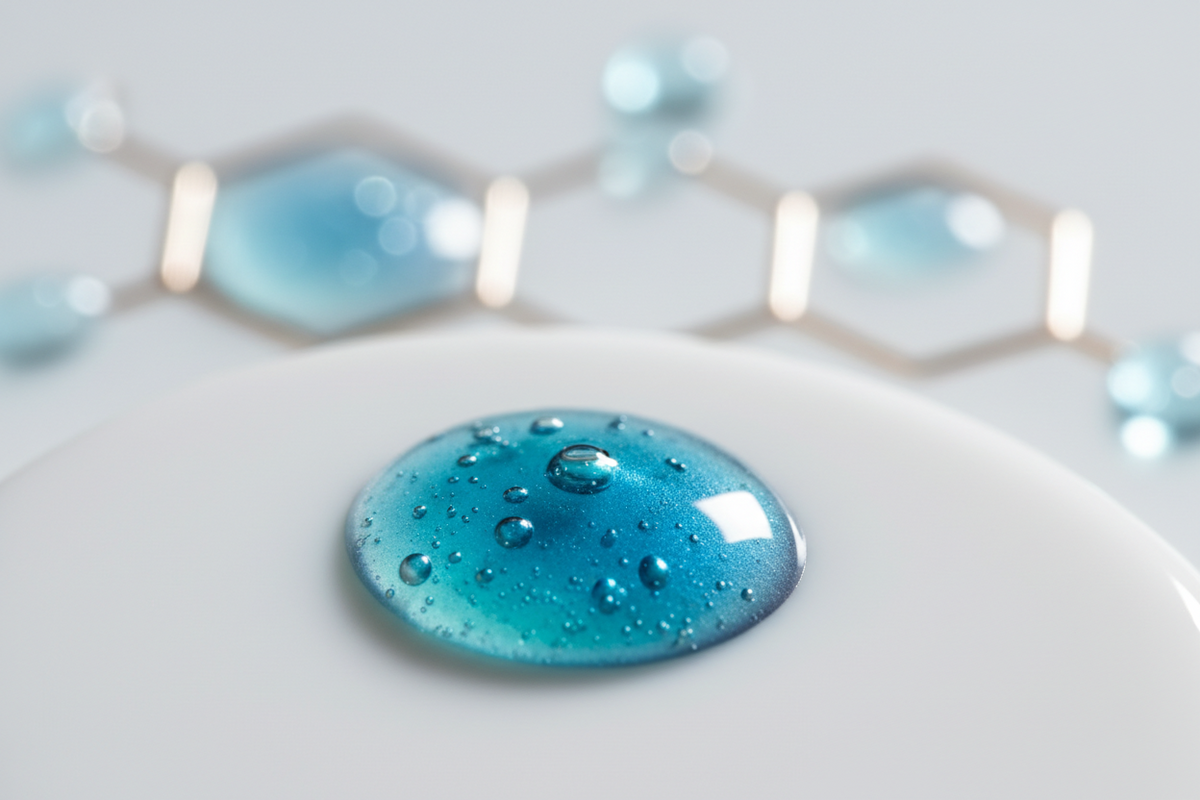
More isn't always better. In skincare, GHK-Cu is often used at concentrations between 0.1% and 1%. For the scalp, you want to look for something in the 1% to 2% range for therapeutic effects. If a product is a pale, translucent blue, it likely has very little copper peptide in it. A high-quality serum will usually be a deep, vibrant indigo. However, be wary of products that are "ink-black," as excessively high concentrations can sometimes lead to irritation.
The Delivery System: Serums, Shampoos, and Foam
The delivery method is crucial. Shampoos containing copper peptides are popular, but they have a fatal flaw: you wash them off. To work, peptides need time to penetrate the stratum corneum and reach the follicle.
-
Serums and Leave-in Topicals: These are the most effective. They allow the peptides to sit on the skin and absorb over several hours.
-
Foams: Excellent for those with oily scalps or for daytime use, as they dry quickly and don't weigh down the hair.
-
Shampoos: Best used as a supportive "booster" rather than your primary source of copper.
How to Incorporate Copper Peptides into Your Routine
Adding a new step to your grooming ritual doesn't have to be complicated, but precision matters. If you're going to invest in high-quality peptides, you want to ensure every drop counts.
Preparation: The Clean Slate Method
Absorption is the name of the game. If your scalp is covered in dry shampoo, styling wax, or natural oils, the peptides will sit on top of the debris rather than reaching the skin.
-
Tip: Apply copper peptides to a clean, slightly damp (towel-dried) scalp. The moisture can act as a conduit, helping the serum spread and penetrate more effectively.
Application Techniques: Massage and Absorption
Don’t just spray and pray. To get the most out of your serum:
-
Section the hair: Use a comb or your fingers to expose the scalp in the areas of concern (usually the hairline and crown).
-
Apply directly to the skin: Use a dropper or nozzle to place the product on the scalp, not the hair.
-
The 2-Minute Massage: Use your fingertips to gently massage the serum in using circular motions. This not only aids absorption but the mechanical action itself stimulates blood flow.
The "Blue Stain" Myth and Practical Application Tips
A common concern is whether the blue copper will stain your skin or hair. High-quality GHK-Cu serums are designed to absorb fully. Once dry, they should not leave a blue tint on your skin. However, if you have very light blonde or bleached hair, there is a small risk of temporary tinting if you saturate the hair itself.
-
Solution: Focus the application strictly on the scalp. If you're worried about staining your pillowcase, apply the product at least 30 minutes before bed to allow it to dry completely.
Common Pitfalls and How to Avoid Them
Even the best ingredients can fail if used incorrectly. Here is how to avoid the most common mistakes beginners make with copper peptides.
The Danger of "Kitchen Chemistry" and DIY Mixing
Because pure GHK-Cu powder can be bought online, some people try to save money by mixing their own serums. This is a recipe for disaster. Copper peptides are notoriously unstable. They react to light, heat, and pH levels. Without professional lab equipment and stabilizers, your DIY serum will likely oxidize and become useless (or irritating) within days. Stick to professionally formulated products that ensure the peptide remains active.
Ingredient Conflicts: What Not to Mix with Copper Peptides
Copper peptides are "divas"—they don't play well with everyone.
-
Vitamin C (L-Ascorbic Acid): These two should never be used in the same window. The copper will oxidize the Vitamin C, and the Vitamin C will break down the peptide. Use one in the morning and one at night.
-
Strong Acids (Glycolic/Salicylic): A very low pH can break the bond between the copper and the peptide. If you use a scalp exfoliant, wait at least 30 minutes before applying your copper serum.
Consistency: Why the "Sprint" Mentality Fails in Hair Growth
You cannot "overdose" your way to faster results. Applying a bottle of serum in a week won't make your hair grow faster; it will just waste your money. Hair growth is a marathon. The follicles respond to consistent, low-level signaling over months. If you skip days or only use it when you "remember," you are resetting the clock on those signals.
Safety, Side Effects, and Who Should Be Cautious
Copper peptides are generally considered very safe and are naturally occurring in the body. However, as with any bioactive treatment, there are considerations.
Potential Irritation and Sensitivity
While copper peptides are anti-inflammatory, the delivery vehicle (the alcohol or propanediol used in the serum) can sometimes cause redness or itching in sensitive individuals. Always perform a patch test on a small area of your scalp for 24 hours before committing to a full application.
Toxicity Concerns: Can You Use Too Much Copper?
It is nearly impossible to reach systemic copper toxicity through topical scalp application. The amount of copper absorbed into the bloodstream from a 1% or 2% serum is negligible compared to dietary intake. However, if you have Wilson’s Disease (a rare genetic disorder where the body cannot eliminate copper), you should consult your physician before using any copper-based products.
A Long-Term Strategy for Hair Longevity
Copper peptides are a powerful tool, but they are most effective when part of a broader philosophy of hair health.
Tracking Your Progress
Hair changes are so gradual that we often miss them in the mirror. To stay motivated:
-
Take "Baseline" Photos: Take clear photos of your hairline and crown under consistent lighting.
-
The 90-Day Check: Don't even look for results until day 90. At that point, take a second set of photos. Look for "filling in" of the temples or a reduction in the "width" of your part.
The Holistic Picture: Diet, Stress, and Peptides
No topical can outrun a poor lifestyle. To give your copper peptides the best chance:
-
Protein Intake: Hair is made of protein, and nutrients like Biotin are essential for its strength. Ensure you're eating enough to provide the building blocks.
-
Zinc Balance: High levels of topical copper can theoretically compete with zinc. If you are using copper peptides long-term, ensure your diet or a multivitamin provides adequate zinc.
-
Scalp Health: Use a clarifying shampoo once a week to prevent buildup, ensuring the peptides always have a clear path to the follicle, and a peptide based hair growth serum.
Final Verdict: Are Copper Peptides Worth the Investment?
In an industry filled with empty promises, copper peptides stand out because they are backed by decades of wound-healing and hair regrowth research. They don't just "trick" the hair into growing; they improve the biological quality of the scalp, encourage blood flow, and protect the follicle from hormonal stress.
If you are looking for a scientifically-backed, non-greasy, and restorative addition to your hair care routine, copper peptides are absolutely worth the investment. They represent the modern approach to hair care: one that prioritizes health, repair, and the long-term vitality of the scalp. Be patient, be consistent, and let the science of GHK-Cu work its way from the root up.