
Do DHT Blocker Shampoos Actually Work? Here’s What the Science Says
June 30th 2026
Dr James Kilgour
This article is for you if...
If you have spent even five minutes looking into solutions for thinning hair, you have likely encountered the term "DHT blocker." It is the buzzword that dominates the hair restoration market, appearing on everything from $10 drugstore bottles to $80 luxury apothecary cleansers. For someone watching their hairline retreat or their part widen, these shampoos represent a glimmer of hope. They promise to stop hair loss at the source, right in the shower, without the systemic side effects of prescription pills.
But does a product that stays on your head for ninety seconds truly have the power to alter your biology? Or is "DHT blocker" simply a clever marketing label designed to capitalize on our collective fear of balding? To find the truth, we have to look past the glossy labels and dive into the gritty reality of follicular science.
The Growing Interest in DHT Blockers: Hope or Hype?
The explosion of interest in DHT blockers stems from a modern shift in how we approach hair loss. We are moving away from "cover-up" solutions like toupees and thickening sprays toward preventative, biological interventions. People want to keep the hair they have, and they want to do it safely.
The appeal of a shampoo is obvious: it fits seamlessly into a routine you already have. There are no pills to remember and no greasy foams to apply before bed. However, this convenience often creates a gap between expectation and reality. The market is currently flooded with products claiming to "block DHT," yet only a handful of ingredients have the clinical backing to support those claims. Navigating this landscape requires a mentor who can help you distinguish between a scientifically formulated treatment and a bottle of expensive soap.
Understanding the Role of DHT in Hair Loss
To understand if a shampoo works, you first need to understand the enemy. In the world of androgenetic alopecia (pattern baldness), the primary antagonist is a hormone called Dihydrotestosterone.
What is Dihydrotestosterone (DHT)?
DHT is an androgen, a sex hormone that contributes to the development of "male" biological characteristics. It is a derivative of testosterone, converted by an enzyme known as 5-alpha reductase (5-AR). While DHT is crucial during puberty for things like body hair growth and voice deepening, it plays a much more destructive role on the scalp later in life. Think of DHT as a highly potent version of testosterone; while it helps hair grow on your chin and chest, it acts as a toxin to the follicles on the top of your head.
How DHT Causes Follicular Miniaturization
Imagine your hair follicles are like small, productive factories. In a healthy scalp, these factories produce thick, long strands of hair. When DHT enters the scene in genetically predisposed individuals, it binds to receptors in the hair follicles. Once bound, DHT begins to "choke" the follicle.
This process is called follicular miniaturization. With each growth cycle, the follicle shrinks. The hair it produces becomes shorter, thinner, and lighter in color—eventually resembling the fine "peach fuzz" found on a newborn. Eventually, the factory shuts down entirely, and the follicle becomes dormant. Once a follicle has completely miniaturized and scarred over, no shampoo in the world can bring it back. This is why early intervention is the golden rule of hair preservation.
The Genetic Component of Male and Female Pattern Baldness
It is a common misconception that hair loss is caused by "too much" DHT or testosterone. In reality, most people with thinning hair have normal hormone levels. The issue is sensitivity. If you inherited "sensitive" hair follicles from your parents, even small amounts of DHT will trigger the miniaturization process. This genetic sensitivity affects both men and women, though the patterns of thinning differ. In men, it usually starts at the temples and crown; in women, it typically manifests as a general thinning across the entire scalp.
What Exactly is a DHT Blocker Shampoo?
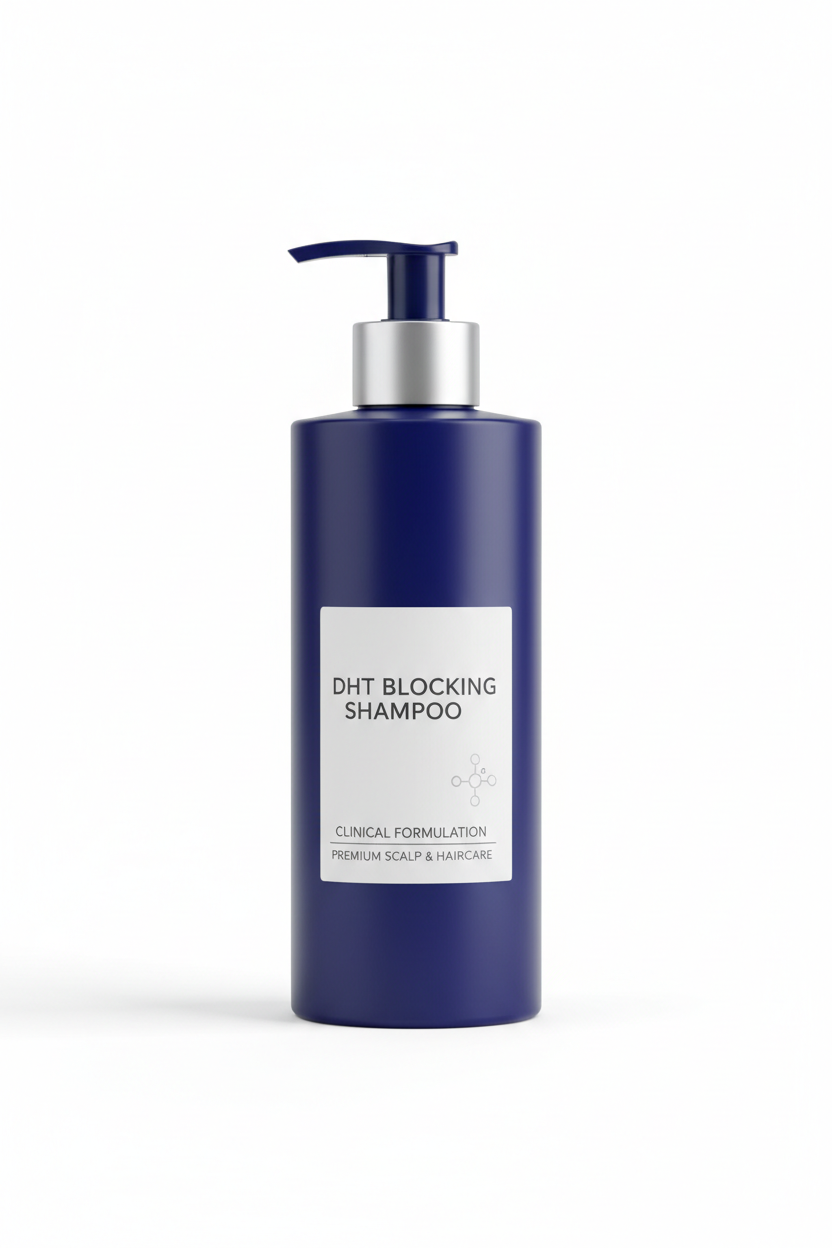
A DHT blocker shampoo is a topical cleanser formulated with specific ingredients intended to either inhibit the 5-alpha reductase enzyme on the scalp or prevent DHT from binding to the androgen receptors in the follicle.
Unlike a standard volumizing shampoo, which uses polymers to coat the hair shaft and make it appear thicker, a DHT blocker is designed to interact with the scalp’s physiology. The goal isn't just to make the hair look better today, but to protect the follicle so it can continue producing healthy hair tomorrow.
The Science of Scalp Absorption: Can a Shampoo Really Work?
This is the billion-dollar question. Skeptics argue that because shampoo is a "rinse-off" product, the active ingredients don't have enough time to penetrate the skin and reach the hair bulb where the DHT damage occurs.
The Challenge of "Wash-Off" Products
The scalp is a formidable barrier. Its job is to keep things out. When you apply a shampoo, you are fighting against time and the skin's natural defenses. Most people scrub for thirty seconds and rinse immediately. In that timeframe, very few molecules can penetrate deep enough to make a difference. This is why many dermatologists are skeptical of shampoos that list exotic, unproven botanical extracts; if the ingredient doesn't have a high "flux" (the ability to move through the skin), it’s just going down the drain.
The Importance of Contact Time
For a DHT blocker shampoo to be effective, it must be treated more like a liquid mask than a soap. Research into ingredients like ketoconazole suggests that absorption increases significantly when the product is left on the scalp for three to five minutes. This "contact time" allows the active compounds to saturate the follicular openings. Without this deliberate pause, the most expensive DHT blocker in the world is little more than a fragrant cleanser.
Key Ingredients to Look For (And What Research Says About Them)
If you are scanning a label, ignore the marketing fluff and look for these specific, evidence-backed players.
Ketoconazole: The Anti-Fungal with a Hidden Benefit
Originally designed to treat dandruff and fungal infections, Ketoconazole is the heavyweight champion of the medicated shampoo world. Clinical studies have shown that 2% ketoconazole (available by prescription) and even the 1% over-the-counter versions can disrupt the DHT pathway. It appears to help reduce the inflammation caused by DHT and may even inhibit the 5-alpha reductase enzyme locally. Many hair loss veterans refer to it as one of the "Big Three" essential treatments.
Saw Palmetto: Nature’s 5-Alpha Reductase Inhibitor
Saw Palmetto is a botanical extract from a small palm tree. It is perhaps the most famous natural DHT blocker. While much of the research focuses on oral supplements for prostate health, topical studies suggest that Saw Palmetto can help block the conversion of testosterone to DHT on the scalp surface. It isn't as potent as a pharmaceutical, but for those seeking a "clean" or "natural" alternative, it is a primary ingredient to watch for.
Pumpkin Seed Oil: Clinical Evidence for Hair Density
One of the more surprising success stories in recent years is Pumpkin Seed Oil. A 2014 study showed that men taking pumpkin seed oil experienced a 40% increase in hair count over six months. While that study used oral supplements, topical formulations have followed suit, utilizing the oil’s fatty acids and phytosterols to nourish the scalp and potentially block the action of 5-AR.
Caffeine: Stimulating the Hair Shaft
Caffeine isn't just for your morning wake-up call. When applied topically, caffeine has been shown to counteract the suppressive effects of DHT on hair follicle growth. It acts as a stimulant, extending the "Anagen" (growth) phase of the hair cycle. Because caffeine is a small molecule, it penetrates the scalp much more easily than many other herbal extracts.
Biotin and Zinc: Support vs. Treatment
You will find Biotin and Zinc in almost every "growth" shampoo. It is important to be honest here: these are not DHT blockers. Biotin is a B-vitamin that supports the structure of the keratin (the protein your hair is made of). Zinc helps with tissue repair. They provide the "building blocks" for healthy hair, but they won't stop the hormonal attack of DHT. Think of them as the fertilizer, not the fence.
Salicylic Acid: Clearing the Path for Growth
While not a DHT blocker itself, Salicylic Acid is a critical supporting player. It exfoliates the scalp, removing sebum (oil) and dead skin cells that can clog follicles. By clearing this debris, it ensures that the actual DHT-blocking ingredients have a clear path to penetrate the skin.
DHT Blocker Shampoos vs. Prescription Medications
How does a shampoo stack up against the "heavy hitters" of the medical world?
Comparing Shampoos to Finasteride (Propecia)
There is no contest here: Finasteride is significantly more powerful. Finasteride works systemically to lower the total amount of DHT in your entire body. A shampoo only works locally on the scalp. If your hair loss is aggressive, a shampoo alone will likely feel like bringing a knife to a gunfight. However, many people prefer the shampoo precisely because it doesn't go systemic, avoiding the rare but discussed sexual side effects associated with the pill.
Comparing Shampoos to Minoxidil (Rogaine)
Minoxidil is a vasodilator; it increases blood flow to the follicles but doesn't touch DHT. A DHT blocker shampoo and Minoxidil are actually doing two different jobs. Minoxidil is the "gas pedal" for growth, while the DHT blocker is the "shield" protecting the follicle.
The Synergistic Approach: Using Both Together
The most effective hair restoration regimens are rarely "monotherapies." Using a DHT blocker shampoo alongside Minoxidil or Finasteride creates a multi-angled attack. The shampoo cleanses the scalp and provides a mild blocking effect, while the stronger medications do the heavy lifting. This is often the "sweet spot" for maintaining hair density.
What the Experts Say: Dermatologists’ Perspectives
Dermatologists generally view DHT blocker shampoos as "adjunct" treatments. They are a great "plus-one" to a regimen, but rarely the star of the show.
The Consensus on Shampoo as a Monotherapy
If you ask a specialist if a shampoo can stop balding on its own, the answer is usually a cautious "it depends." For someone in the very early stages of thinning, it might provide enough of a nudge to slow the process down. For someone with significant, established hair loss, a shampoo used in isolation will likely result in disappointment.
Managing Expectations: Regrowth vs. Retention
The biggest mistake people make is expecting a shampoo to regrow a full head of hair on a bald spot. Shampoos are much better at retention than regrowth. Their job is to protect the surviving follicles and keep them from shrinking further. If you see a bottle promising "rapid regrowth," be skeptical. Success with a DHT shampoo should be measured by the hair that doesn't fall out over the next year.
How to Properly Use a DHT Blocker Shampoo for Maximum Efficacy
If you decide to invest in one of these products, you must use it correctly to get your money's worth.
1. The "Two-Minute Rule" for Absorption
Don't just lather and rinse. Apply the shampoo, massage it into the scalp (not just the hair), and then let it sit. Use this time to shave or use a body wash. Aim for at least three to five minutes of contact time. This is non-negotiable for penetration.
2. Scalp Massage and Blood Flow
While the shampoo sits, use your fingertips to gently massage your scalp. This isn't just relaxing; it helps loosen sebum and increases local blood flow, which may theoretically help the transport of nutrients to the follicle.
3. Frequency of Use
Most medicated shampoos should be used 2 to 3 times per week. Using them every single day can lead to an overly dry scalp, which can cause its own set of problems, like inflammation and breakage. On "off" days, use a gentle, sulfate-free moisturizing shampoo.
Potential Side Effects and Precautions
Even though they are topical, DHT blocker shampoos are not without risks.
Scalp Irritation and Dryness
Ketoconazole and Salicylic Acid can be quite drying. If your scalp starts to itch, flake, or feel tight, you may be using the product too frequently. Always follow up with a high-quality conditioner—apply it only to the ends of the hair if you have an oily scalp, or all over if you are prone to dryness.
The Importance of Patch Testing
Before slathering a new medicated product all over your head, do a patch test. Apply a small amount to the inside of your arm and wait 24 hours. If there is no redness or itching, it’s likely safe for your scalp.
How We Evaluated the Clinical Data
When we look at the efficacy of these products, we have to be critical of where the data comes from.
Peer-Reviewed Studies vs. Brand-Funded Trials
Many "DHT blocker" brands tout "clinical results" that were actually small, 30-day studies funded by the company itself. These are often biased. We prioritize peer-reviewed research published in medical journals—studies where the methodology is transparent and the results are statistically significant.
The Reality of Sample Sizes in Hair Loss Research
Hair loss research is notoriously difficult. A study with 20 people over 8 weeks doesn't tell us much. Hair grows slowly (about half an inch a month). Truly reliable data comes from studies that last at least six months and involve hundreds of participants. Currently, Ketoconazole is the only shampoo ingredient that consistently holds up under this level of scrutiny.
Alternative and Complementary Treatments
If you find that shampoos aren't giving you the results you want, there are other non-drug options to consider.
Low-Level Laser Therapy (LLLT)
Laser caps and combs use medical-grade lasers to stimulate cellular activity in the follicle. Much like a DHT shampoo, LLLT is a great supporting player that works well in combination with other treatments.
Microneedling for Enhanced Penetration
Using a derma-roller or electric microneedling device creates tiny "micro-channels" in the skin. When done correctly, this can significantly increase the absorption of topical treatments, allowing them to bypass the skin's outer barrier more effectively.
Dietary Changes and Supplements
Hair is non-essential tissue; your body will starve your hair of nutrients to feed your heart and lungs if it has to. Ensuring you have adequate levels of Iron, Vitamin D, and Zinc is essential for any topical treatment to work.
The Verdict: Should You Buy a DHT Blocker Shampoo?
So, do they work? The answer is a nuanced yes, but with a heavy asterisk.
A DHT blocker shampoo is an excellent "maintenance" tool. If you are looking for a way to optimize your scalp health and add a layer of protection against DHT without jumping into the world of prescription drugs, they are a worthwhile investment. However, you should view them as a "preventative" rather than a "cure."
If you choose a product, look for Ketoconazole, Saw Palmetto, and Caffeine. Be patient, be consistent, and keep your expectations grounded in reality. Hair loss is a marathon, not a sprint; the goal is to cross the finish line with as much hair as possible.
Frequently Asked Questions
How long does it take to see results?
Hair growth cycles are slow. You should not expect to see any visible change in density for at least 4 to 6 months of consistent use.
Can DHT blocker shampoos cause a "shedding" phase?
Yes. Any product that alters the hair growth cycle (like Ketoconazole or Minoxidil) can cause a temporary "shed." This happens because the "old" hairs are being pushed out to make way for new, healthier strands. Don't panic; it’s usually a sign the product is working.
Are these shampoos safe for color-treated hair?
Some can be harsh. Medicated shampoos like those containing Ketoconazole or high levels of sulfates can strip color. Look for "sulfate-free" versions or use a color-protecting conditioner immediately after.
Do they work for women with thinning hair?
Yes. While the term "DHT blocker" is often marketed toward men, women also experience DHT-related thinning (Female Pattern Hair Loss). These shampoos can be a safe and effective part of a woman's hair care routine.