
Stress, Cortisol, and Thinning: Why Your Hair Growth Cycle Is Stalling
June 29th 2026
Dr James Kilgour MD
This article is for you if...
We often treat our hair as an external accessory, something to be cut, colored, and styled. But in reality, every strand is a living record of your internal chemistry. When your life feels like it’s fraying at the edges, your hair often follows suit. It isn’t just a coincidence that a grueling work project or a personal crisis is followed by a shower drain full of hair. This is the physiological manifestation of stress—a silent thief that disrupts your body’s most delicate biological rhythms.
The Unseen Connection: How Stress Quietly Steals Your Hair
Stress doesn't just make you feel overwhelmed; it reallocates your body’s resources. Think of your body as a high-stakes business during a financial crisis. To survive, the management (your brain) cuts funding to non-essential departments to keep the lights on in the engine room (your heart, lungs, and liver). Unfortunately, your hair follicles are considered the most "expendable" department in your body. When you are under chronic pressure, your system stops investing in the luxury of long, thick hair to focus entirely on basic survival.
Understanding the Hair Growth Cycle: A Delicate Balance
To understand how stress sabotages your hair, you first need to see your scalp as a garden. At any given moment, every "plant" is at a different stage of development. This staggered growth ensures that while you lose a few hairs daily, you never notice a difference in overall density.
The Anagen Phase (Growth)
This is the marathon stage. During Anagen, your hair follicles are in a state of rapid proliferation, growing about half an inch per month. Under normal circumstances, 85% to 90% of your hair is in this phase, and it can stay here for anywhere from two to seven years. It is a high-energy process that requires a constant supply of nutrients and oxygen.
The Catagen Phase (Transition)
This is a brief, two-week intermission. The hair follicle shrinks and detaches from the dermal papilla—the blood supply that feeds it. It’s a transitional bridge where the hair prepares to stop growing but isn't quite ready to leave your head yet.
The Telogen Phase (Resting)
Finally, the hair enters the Telogen phase, a period of rest lasting about three months. The old hair sits in the follicle like a cork in a bottle while a new hair begins to form beneath it. Eventually, the old hair is shed to make room for the new arrival. In a healthy cycle, only about 10% of your hair is resting at once.
The Role of Cortisol: Your Internal Alarm System
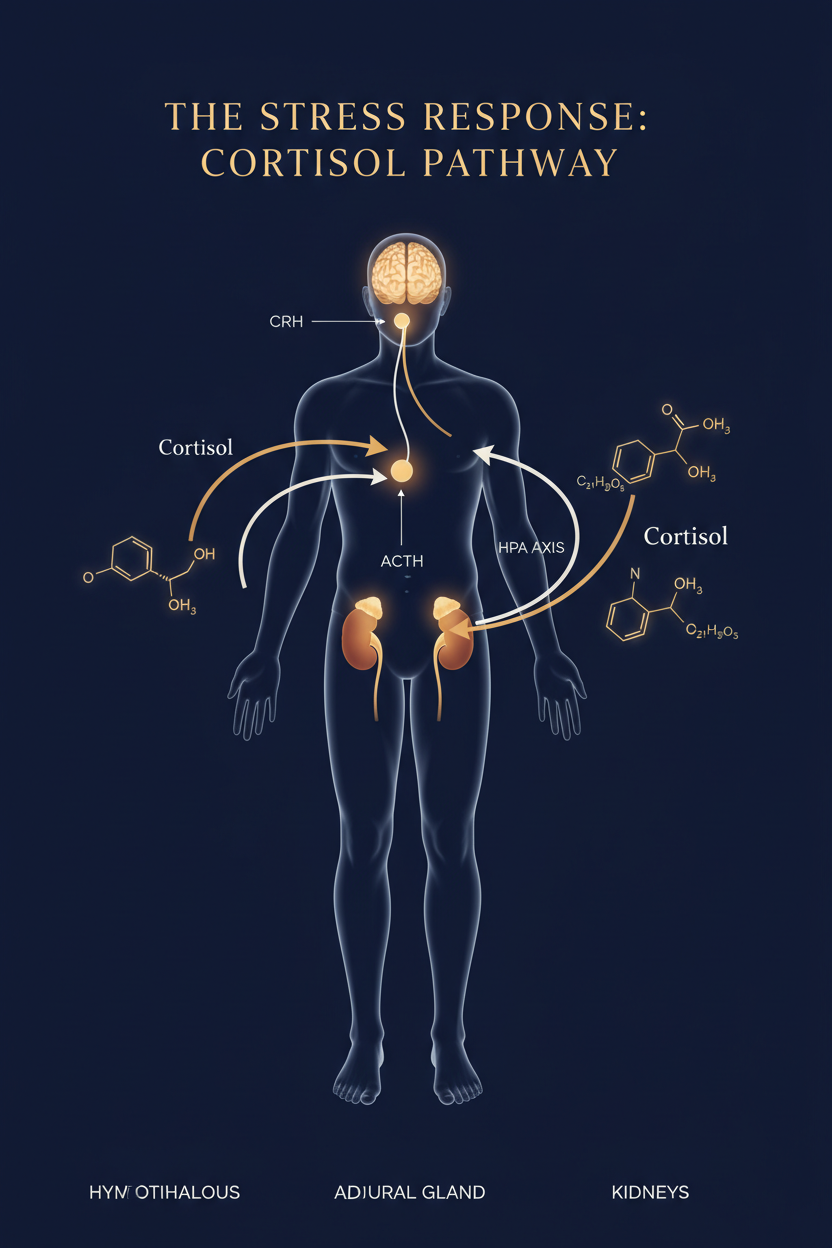
When you encounter a stressor, your adrenal glands pump out cortisol. In short bursts, cortisol is a lifesaver—it helps you react to danger. But in the modern world, where the "sabre-toothed tiger" is actually a never-ending inbox, cortisol levels stay elevated indefinitely.
How Cortisol Disrupts the Scalp’s Ecosystem
Cortisol is a signaling molecule. When levels are chronically high, it sends a specific message to the hair follicles: "Stop building." It essentially forces the follicles to exit the growth phase prematurely. Imagine a construction crew suddenly being told the budget has been cut mid-build; they pack up their tools and leave the structure unfinished.
The Impact of Stress Hormones on Essential Skin Proteins
Recent research has shown that cortisol, much like the effects of dihydrotestosterone in other conditions, actually breaks down fundamental substances in the skin. Specifically, it accelerates the degradation of proteoglycans—sugar-protein molecules that are vital for maintaining hair health and the structural integrity of the hair follicle. When these molecules are depleted, the follicle loses its structural integrity and its ability to stay in the Anagen phase, leading to an early exit into the resting phase.
The Science of Telogen Effluvium: When Stress Triggers Shedding
When a significant physiological or emotional shock occurs, it can trigger a condition known as Telogen Effluvium. This isn't permanent balding, but rather a temporary "stall" in the hair production line.
The "Shock" to the System
Under intense stress, the body can prematurely push up to 30% or more of your hair into the Telogen (resting) phase simultaneously. Suddenly, instead of a staggered rotation, a massive portion of your hair decides to go on hiatus all at once.
Why the Thinning Happens Months After the Stressor
This is the most confusing part for many people. Because the Telogen phase lasts about three months before the hair actually falls out, you won't see the thinning the day you get bad news. You will see it 90 days later. This "lag time" often makes it difficult for people to connect their current hair thinning to a stressful event that happened months in the past.
How Cortisol Depletes Your Hair’s "Building Blocks"
Cortisol doesn't just stop growth; it hijacks the raw materials needed to keep your hair strong.
Nutrient Diversion: Survival Over Aesthetics
Creating hair is one of the most metabolically expensive things your body does. It requires immense amounts of protein, iron, and zinc. When cortisol is high, the body diverts these nutrients toward the production of glucose and the maintenance of muscle tissue for a "fight or flight" response. Your hair is left starving for the very minerals that give it its shine and strength.
The Inflammation Factor and Hair Follicle Health
Chronic stress is pro-inflammatory. Elevated cortisol levels can lead to micro-inflammation around the hair bulb. This inflammation acts like "noise" that drowns out the chemical signals telling the hair to grow. Over time, this can lead to follicle miniaturization, where the hair grows back thinner and more fragile with each cycle.
Identifying Stress-Related Thinning vs. Other Types of Loss
It’s crucial to distinguish between stress-induced shedding and other conditions like androgenetic alopecia, which is driven by androgen sensitivity, alopecia areata, or permanent hair loss.
Pattern vs. Patchiness
Stress-related thinning (Telogen Effluvium) is typically diffuse. You will notice a general loss of volume all over the scalp, and your ponytail might feel thinner. If you see distinct, smooth circular bald patches, that is likely an autoimmune response. If the thinning is concentrated only on the crown or the hairline, it may be a hormonal imbalance involving DHT or genetic factors.
Analyzing Your Timeline
Look back at your calendar. Was there a major illness, a job change, or a period of high anxiety three to four months ago? If the timeline matches the sudden increase in hair shedding, cortisol is likely the culprit.
Breaking the Cycle: How to Lower Cortisol and Support Growth
The good news is that stress-related thinning is usually reversible. Once the "threat" passes and cortisol levels stabilize, your follicles can re-enter the Anagen phase.
The Power of Adaptogens and Nutrition
To coax your hair back into growth, you must first lower the internal alarm. Adaptogens like Ashwagandha or Rhodiola can help the body manage its response to stress, effectively lowering the "cortisol ceiling." Simultaneously, prioritize "hair-first" nutrition: collagen peptides, biotin, and iron-rich foods tell your body that there is a surplus of resources, making it safe to grow hair again.
Scalp Care as a Nervous System Reset
Don't underestimate the power of physical touch. Scalp massages not only increase blood flow to the follicles (bringing that much-needed oxygen) but also stimulate the vagus nerve, which helps shift the body from a sympathetic "stress" state to a parasympathetic "rest and digest" state.
Lifestyle Shifts to Re-Enter the Anagen Phase
Consistency is your best friend. Prioritizing seven to eight hours of sleep is non-negotiable, as this is when the body performs the majority of its cellular repair. When you lower your baseline stress, you signal to your follicles that the crisis is over and the construction crew can return to work.
When to See a Specialist
If your shedding persists for more than six months, or if it is accompanied by scalp pain, redness, or extreme itching, it’s time to consult a dermatologist or a trichologist. They can run blood tests to rule out thyroid issues, the hormonal shifts of menopause, or severe vitamin deficiencies that might be mimicking or exacerbating stress-related loss.
Your Path Back to Resilient Hair
Thinning hair is often your body’s way of asking you to slow down. While the sight of extra hair in the comb can be distressing, remember that your body is simply trying to protect you. By addressing the root cause—excess cortisol—and nourishing your system from the inside out, you aren't just helping your hair grow back; you are building a more resilient, balanced version of yourself. Your hair will return, and when it does, it will be a sign that you’ve successfully navigated the storm.