


A Stanford Dermatologist Watched His Own Mother’s Healthy Hair Fall Out — And Couldn’t Stop It
Then he realized almost every doctor in America was looking in the wrong place. What he found rewrote how he treats menopausal hair loss — and it started in his mother’s bathroom.
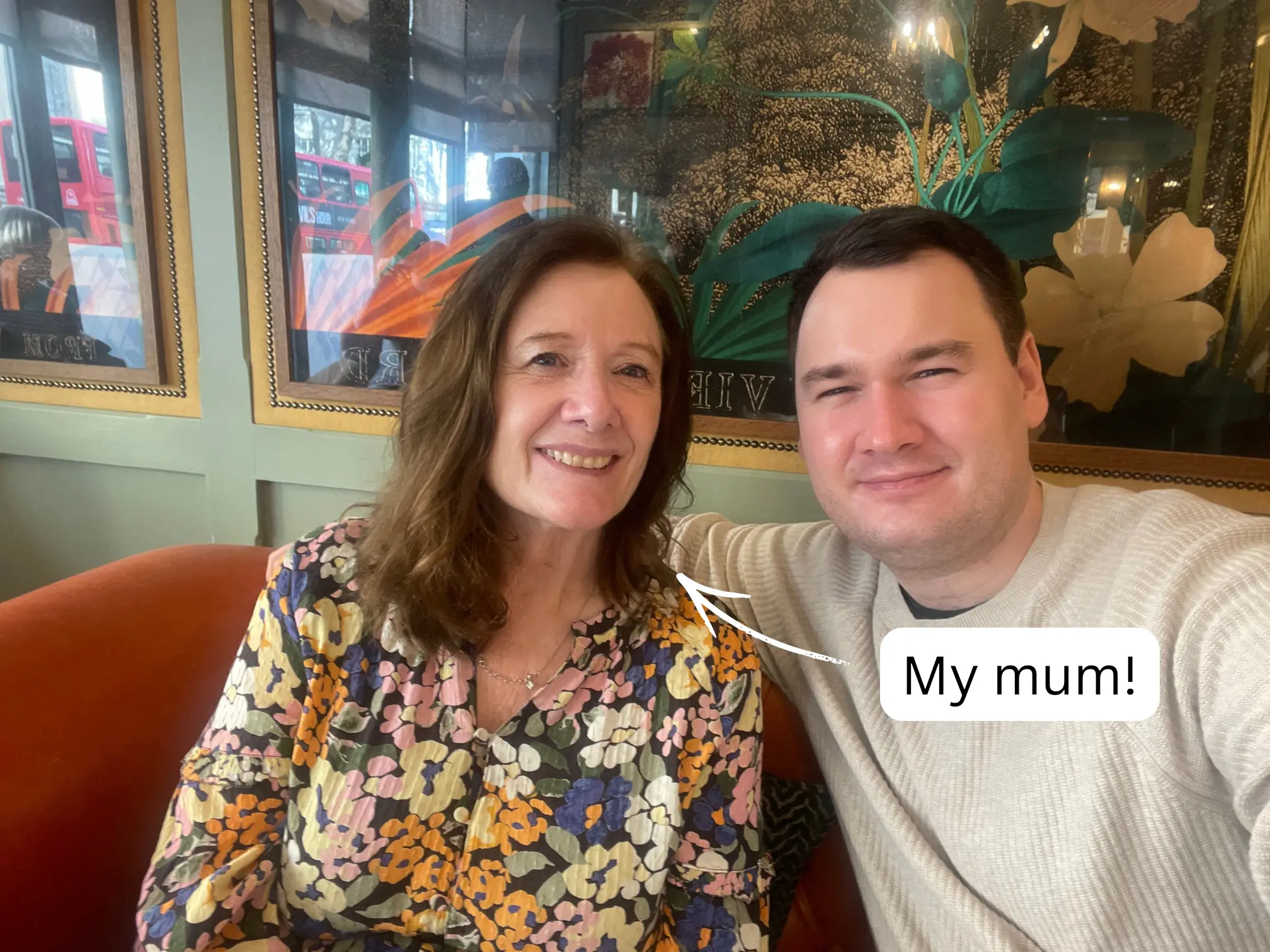
The brush is on the counter. My mother’s hand is on it.
She’s 64. We’re in her bathroom in the UK. She doesn’t know I’m watching from the doorway.
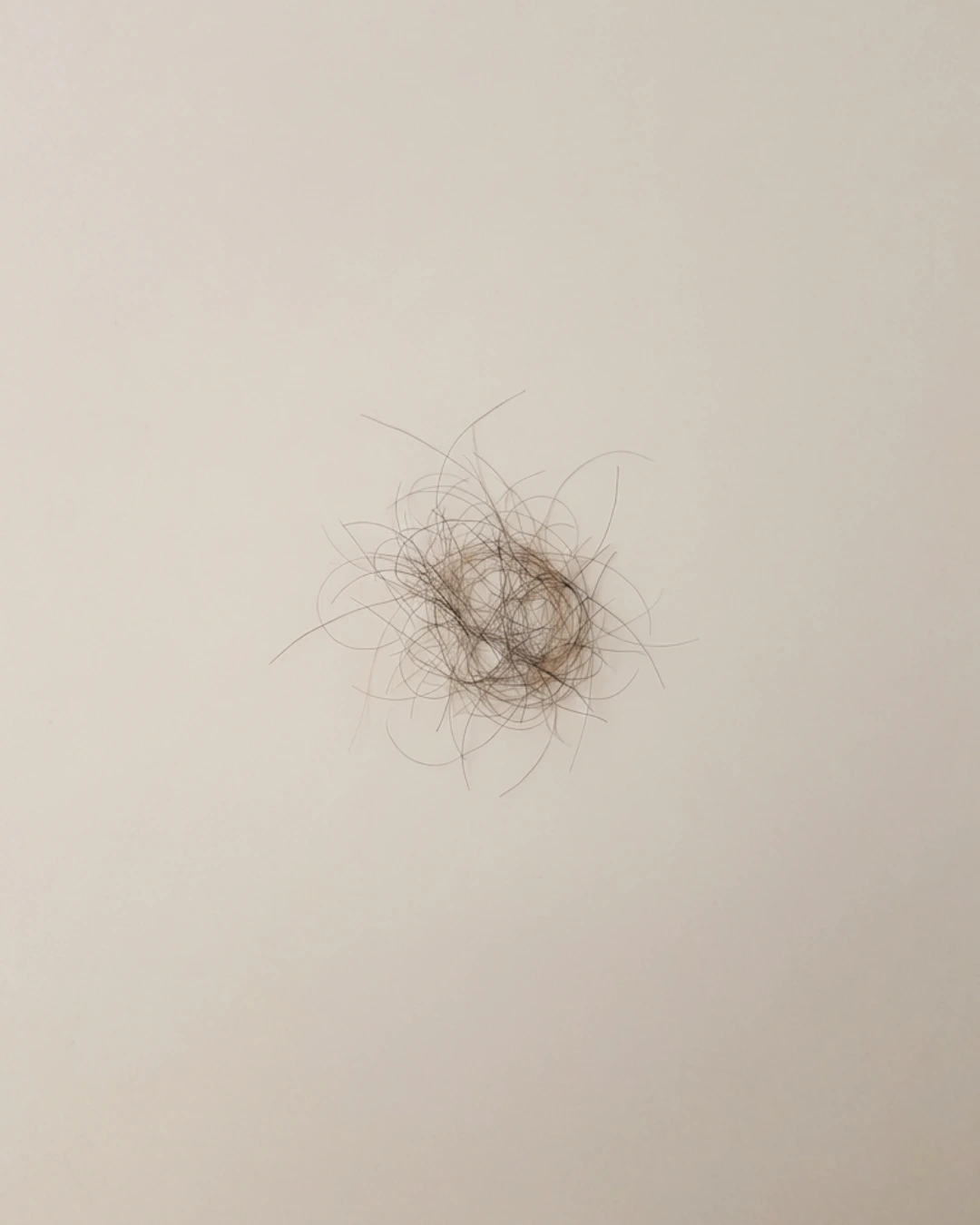
She pulls the brush back, looks at it, looks at the sink, and pulls the strands off slowly. Lays them on the porcelain.
I count nine.
She doesn’t see me. She runs the water. Washes them away.
I’m a Stanford-trained dermatologist. I’ve spent my career studying skin, scalps, and hair. I’ve published in the biggest journals in the field. And I’m standing in my mother’s bathroom watching her go through a ritual I’m pretty sure she’s been doing every morning for two years.
Here’s the part that doesn’t make sense.
I picked one of those strands up later, after she’d gone downstairs. Looked at it under a loupe.
The hair was healthy. Full diameter. Pigmented. Strong.
In a healthy scalp, that strand had four to six more years of growing in it. It would have reached past her shoulder blades. It would have added back to the ponytail she used to wear thick down her back when I was a kid.
It wasn’t damaged. It wasn’t broken. It wasn’t dying.
It was being pushed out.
And every textbook I’d ever read — every protocol I’d ever followed — every prescription I’d ever written for a woman in her exact situation — said the same thing.
This isn’t supposed to happen.
But it was happening. To my mother. Every morning. And I couldn’t explain it.
It took me two more years — and a study out of Harvard I’d somehow missed — to understand what I was actually looking at. When I did, it turned out everything I’d been taught about female hair loss was aimed at the wrong layer of skin entirely.
If you’ve ever pulled a brush back and counted — or made yourself look away so you wouldn’t — you already know exactly what my mother was doing that morning. She just didn’t know why yet.
By the time you finish this, you will.
Then I Started Seeing It Everywhere
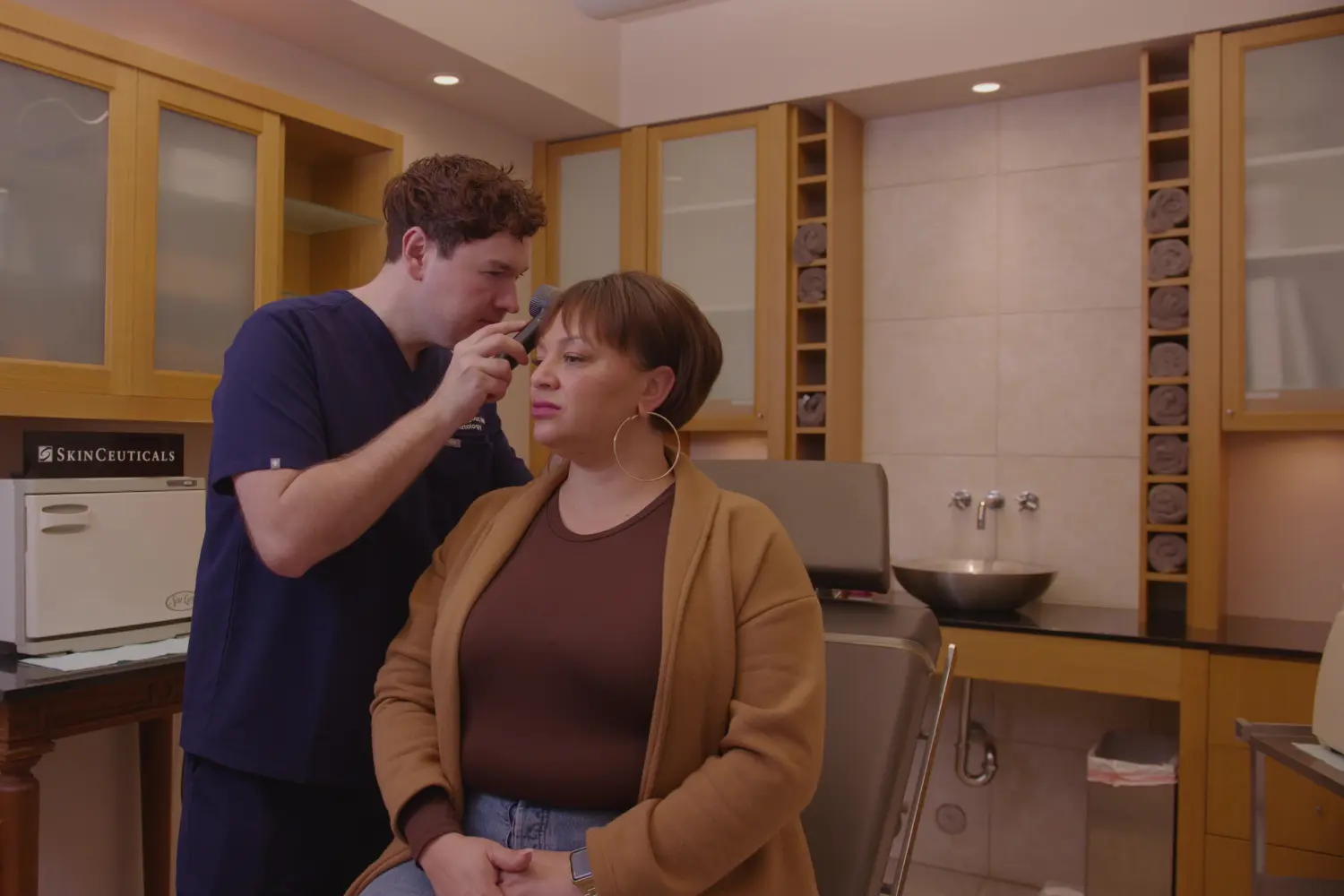
I flew back to my practice in California two weeks later. And for the first time in my career, I started paying attention to the brushes.
Patient after patient. Same impossible detail.
A 54-year-old executive. Her ponytail had lost a quarter of its weight in two years. The hair she was losing looked completely normal.
A 61-year-old teacher. Wider part each spring. Healthy strands on her shoulders by lunchtime.
A 58-year-old who’d stopped going to her own daughter’s events because of how the overhead lights hit her scalp. Every strand she lost, intact.
I started counting. By the end of that year, I’d seen the same pattern in over 1,200 women.
Different ages. Different professions. Different hormonal profiles. But the brushes told the same story every time.
Healthy hair. Being pushed out. By something the textbooks weren’t naming.
And these women had all seen other doctors first. Almost every one had heard the same things.
It’s just menopause. It’s just hormones. It’s just age. Try minoxidil. Maybe Nutrafol. Here’s a pamphlet.
The dismissal was so consistent it was almost a script. But the brushes told me the script was wrong. Something was pushing healthy strands out — and nobody in dermatology was looking at what.
I’ll show you exactly what it is in a moment. First, because I’m about to ask you to throw out everything you’ve been told, you should know who’s telling you.
Who’s Telling You This
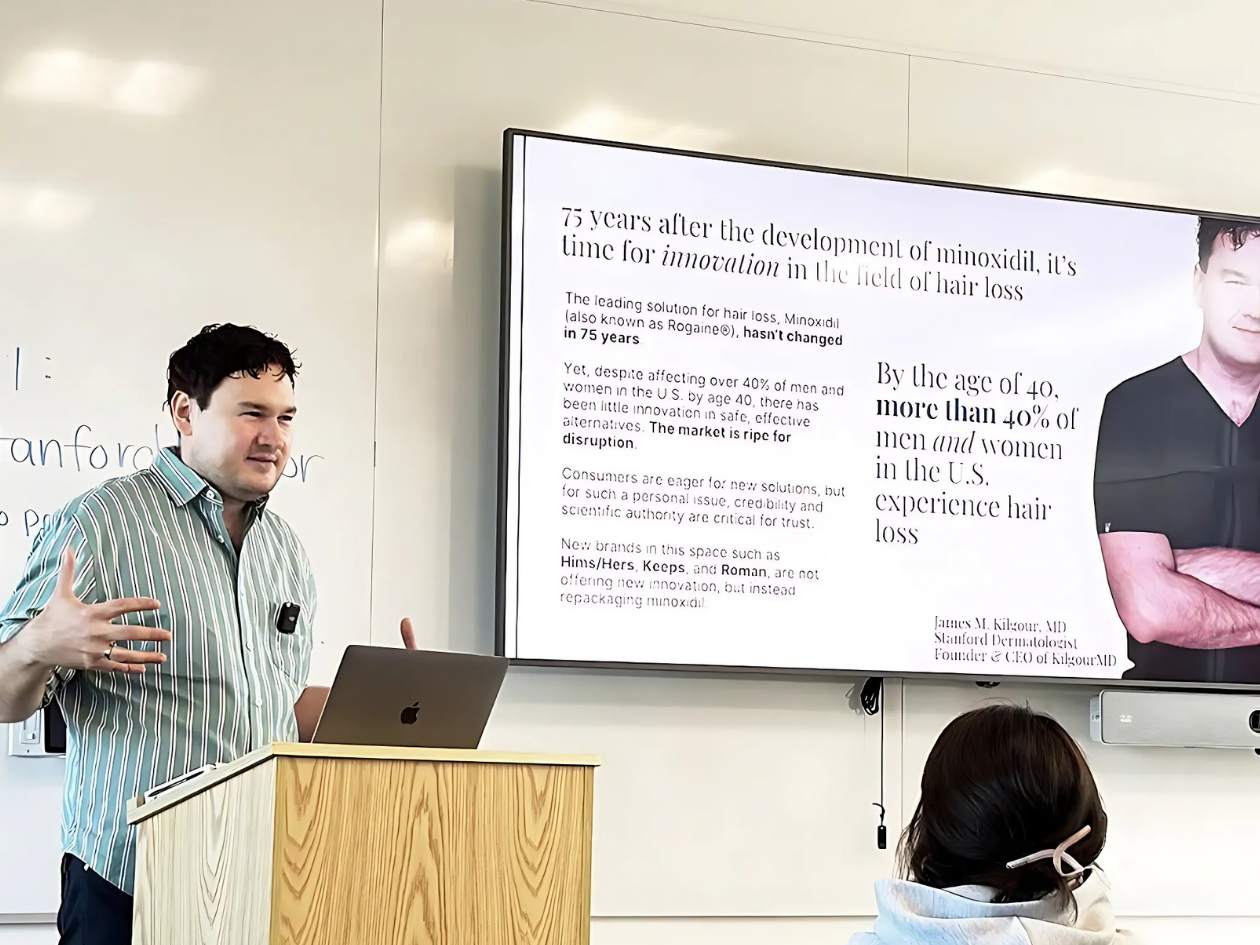
I’m Dr. James Kilgour. Stanford-trained dermatologist. Board-certified by the American Board of Dermatology. Fellow of the American Academy of Dermatology, and published in the field’s biggest peer-reviewed journals — including JAMA Dermatology and JAAD.
I spent seven years building the protocol I’m about to show you — after watching my own mother lose her hair, and realizing I had nothing in my training that would actually help her.
Last month, the results were peer-reviewed and accepted for publication in one of the largest dermatology journals in the world.
Over a thousand US clinicians now recommend the protocol through FrontRowMD. More than 150,000 women are on it.
I’m not a wellness brand. I’m a dermatologist. And what I’m about to tell you came out of the morning I realized my own profession had been treating the wrong layer of skin for forty years.
And Then I Started Hearing It From You
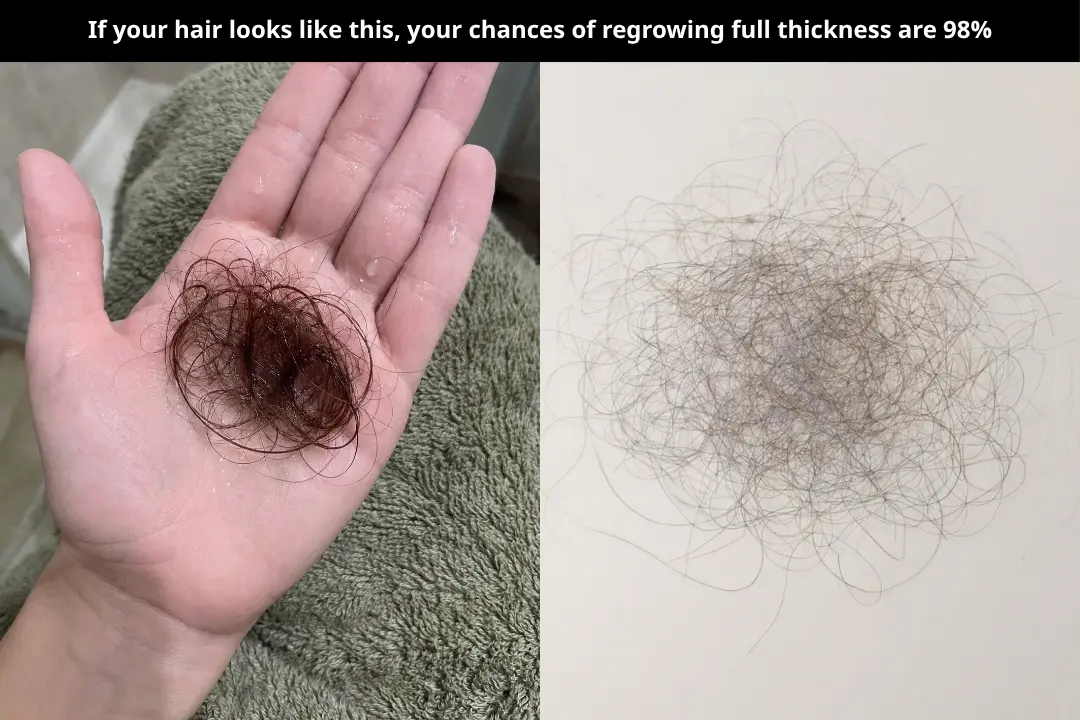
If you’re reading this, I’d bet you already know exactly what I’m describing. Because you’ve been living it.
The ponytail you now wrap twice and it still feels thin.
The part that’s gotten a little wider every year.
The way you run your fingers through it at night and feel scalp where there used to be hair.
The photo someone took from above that you deleted before anyone else saw it.
The lighting in a room you now notice before anything else.
You’ve been to the doctor. Maybe twice. Maybe more. Your bloodwork came back normal. Your hormones came back normal. Your thyroid came back normal.
And you walked out with the same quiet message every other woman in your position has heard.
This is just what happens now. Get used to it.
Here’s what nobody told you. Normal labs and thinning hair aren’t a contradiction. They’re exactly what happens when the problem is sitting somewhere the blood panel never looks — in the tissue itself.
It’s not in your hormones. It’s not in your nutrition. It’s not in your age.
You’re not crazy. You’re not vain. You’re not getting old too fast. You were right that something is wrong. You’ve just been looking — and being looked at — in the wrong place.
Let me show you the right one.
Your Scalp Is The Fastest-Aging Skin On Your Entire Body
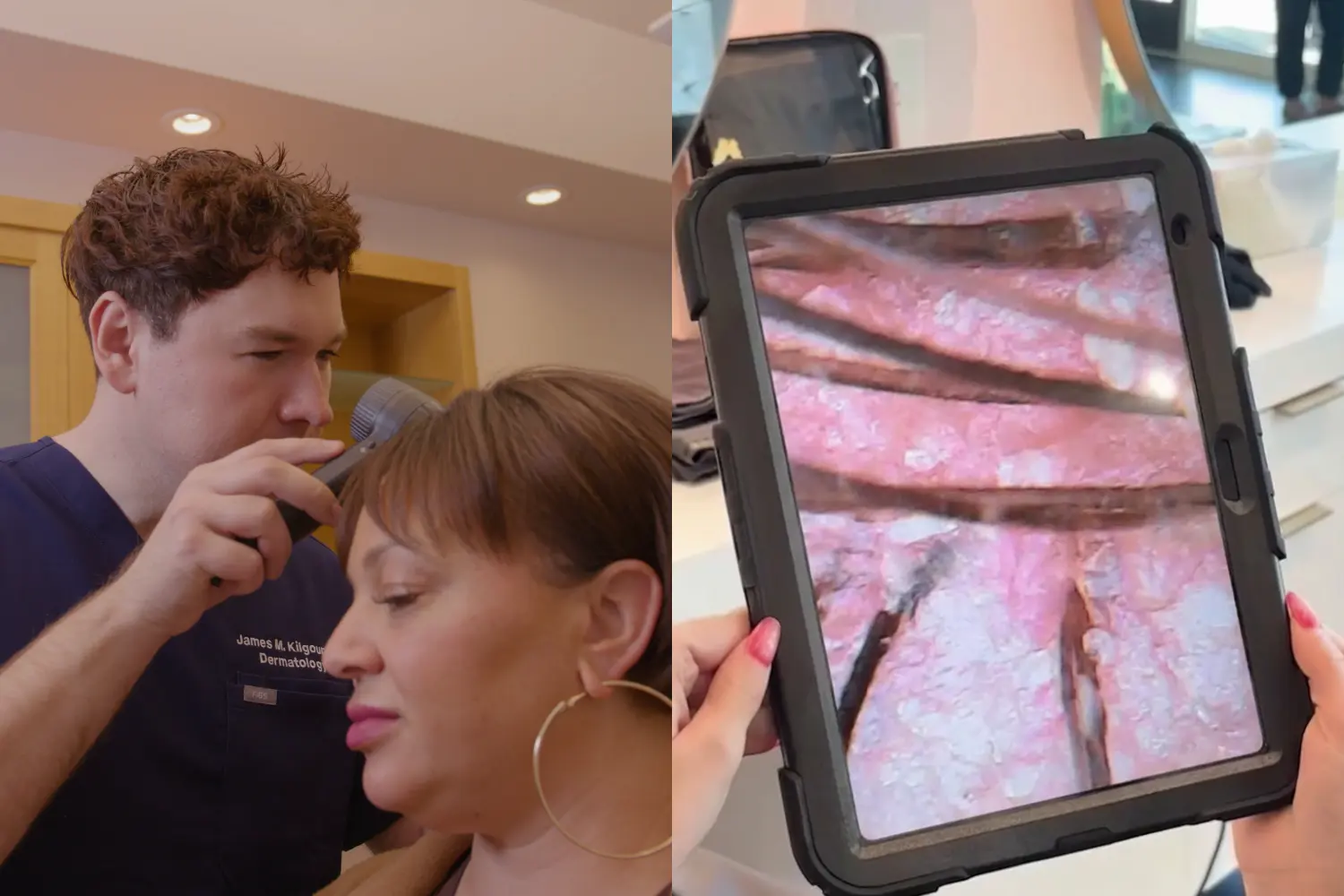
Faster than your hands. Faster than your neck. Faster than the skin around your eyes — the part of you that’s been getting all the moisturizer and SPF for the last twenty years.
How much faster?
In ultrasound imaging studies, up to ten times faster than the skin on your forehead.
By your 50s, the tissue holding your hair in place can be biologically closer to a 90-year-old’s than the face looking back at you in the mirror.
And you never see it happen. Your face ages in front of you every morning. Your scalp ages in the dark, under your hair, where no one ever looks.
Three things drive it. And your face deals with none of them.
UV and pollution hit your scalp every day. Unlike your face, it’s never protected. Not by SPF. Not by hats. Not by hair — it thins exactly where the sun hits hardest.
It’s peripheral tissue, like your hands. Blood reaches it last and leaves it first.
And it holds more estrogen receptors per square inch than almost anywhere on your body. For thirty years those receptors kept the tissue elastic, blood-rich, well-fed. Then menopause hits, estrogen drops, and they all go quiet at once.
Collagen breaks down. Blood flow falls. The connective tissue that anchors each follicle thins out. And aged scalp tissue physically can’t hold onto hair anymore. So it lets healthy strands go — years before they were ever supposed to fall.
That’s what’s in your brush. That’s what was in my mother’s brush.
Not damaged hair. Healthy hair, pushed out of soil that stopped feeding it.
Think of a seed in dead dirt. Doesn’t matter how good the seed is. Nothing grows.
You’ve been watering the seed for years. Nobody told you to look at the dirt.
Fix the dirt, and the hair comes back. I know that sounds backwards. But there’s a study out of Harvard that proves it cold.
The Harvard Study That Proved It Cold
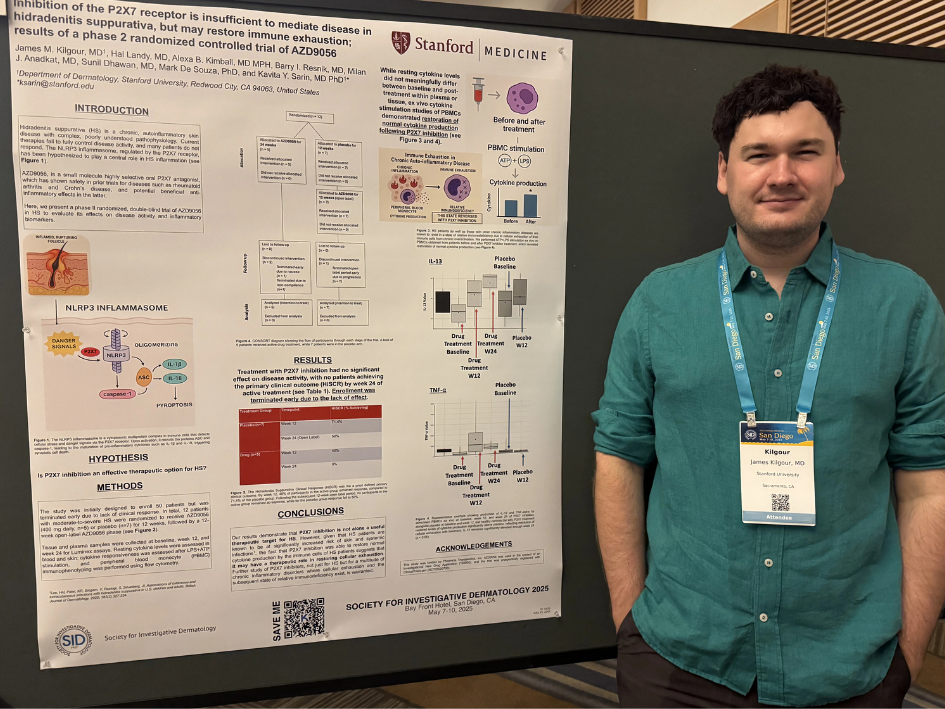
In May 2020, Ya-Chieh Hsu’s lab at Harvard published a paper in the Proceedings of the National Academy of Sciences — one of the most rigorous journals in the world. It’s public. Look it up after you finish reading.
Here’s what they did.
They took follicles from thinning, aging scalps — the kind every doctor would write off as dying — and moved them into young, healthy scalp tissue.
The “dying” follicles grew back. Full strands.
Then they did the reverse. Young, healthy follicles — the kind you had in your twenties — into aged scalp tissue.
Every one of them died.
Same follicle. Opposite outcome. The only thing that changed was the scalp around it.
The follicle was never the problem.
Which means almost every strand you’ve lost in the last five years is still right there — sitting in your scalp, alive, in tissue that simply stopped feeding it.
That study should have ended forty years of failed female hair loss treatments. The dermatology establishment, for the most part, has ignored it ever since.
I’m not going to guess why. I build things based on what the data shows. And the data showed me something specific: fix the scalp environment — the aged tissue, the lost anchoring proteins, the collapsed blood flow — and the follicles do exactly what Harvard proved they can do.
They grow hair again.
Fix the scalp, and the hair comes back. That became the whole project. But before I show you what I built, you need to see why everything you’ve already tried was guaranteed to fail — because it isn’t your fault.
Why Everything You’ve Tried Failed
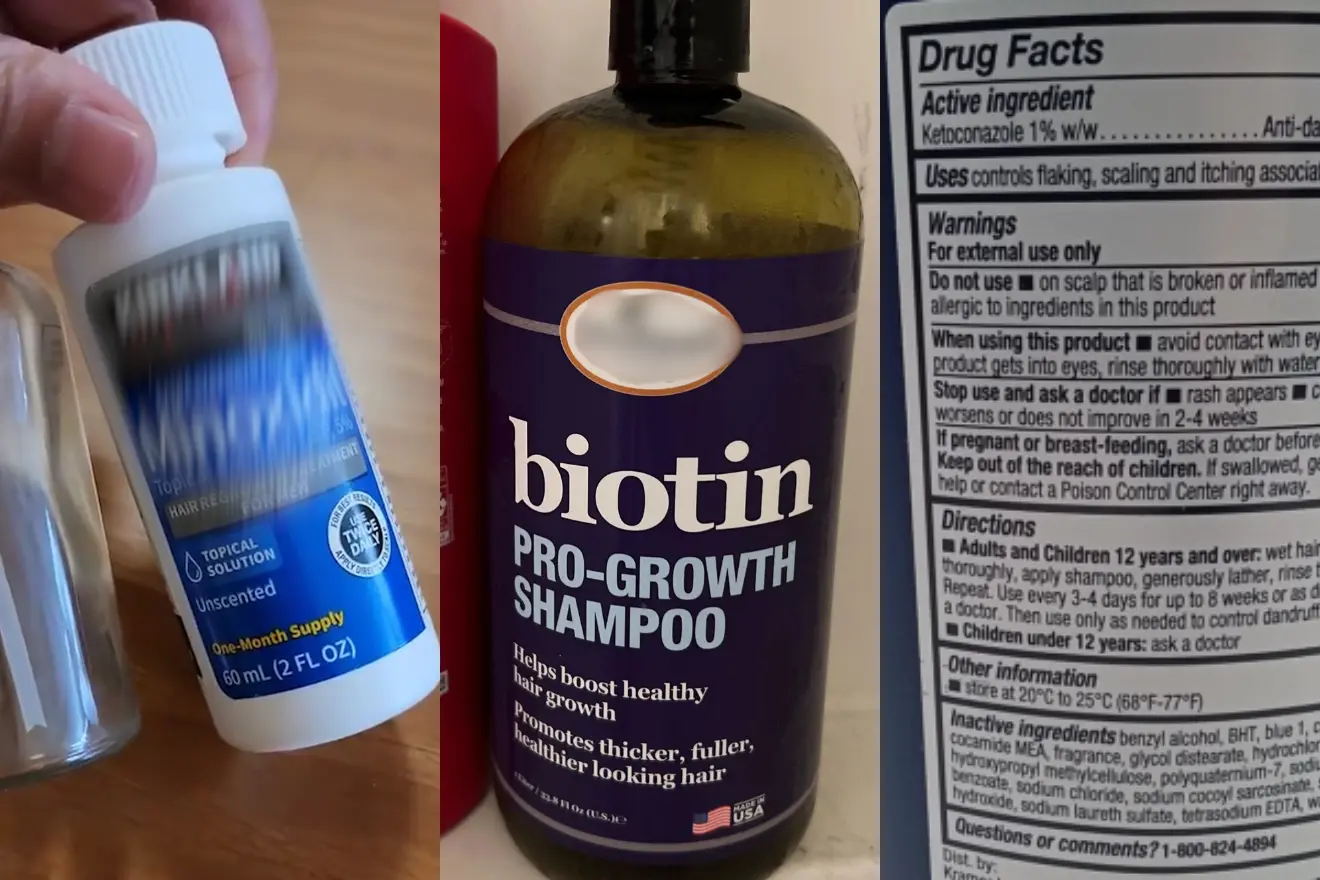
Minoxidil forces blood flow at a follicle that was never broken. It pushes harder on the one part of the system that wasn’t the problem. That’s why it stops working the moment you stop using it — and why it failed half the women who ever tried it.
Biotin works for exactly one thing. Biotin deficiency. Which affects roughly 1 in 60,000 women. If you still have your eyebrows, you almost certainly don’t have it. And even if you did — oral biotin barely reaches your scalp in any meaningful amount. Your body already produces what it needs locally. Pills aren’t fixing what isn’t broken.
The rest of the supplement aisle — collagen, multivitamins, anything “for hair” you swallow — all aimed at the strand. All ignoring the soil.
Transplants — the most expensive option on the menu — fail in women more often than surgeons admit, because grafts moved into aged tissue tend to die in the same tissue that let the original hair go.
Every one of them treats the hair. Not one treats the aged scalp underneath.
That’s the whole reason they failed you. Your past failures were never proof you can’t regrow hair — they were proof nobody was treating the actual problem: the scalp.
And here’s the harder thing. Every month you leave it alone, the scalp keeps aging. Doing nothing isn’t standing still — it’s compounding the loss. The collagen keeps thinning. The blood flow keeps dropping. The hair you still have today is held by tissue a little weaker than it was six months ago.
That’s the reason I couldn’t watch my mother go through it one more year. So I started building her a way out — in secret.
Seven Years To Build Her A Way Out
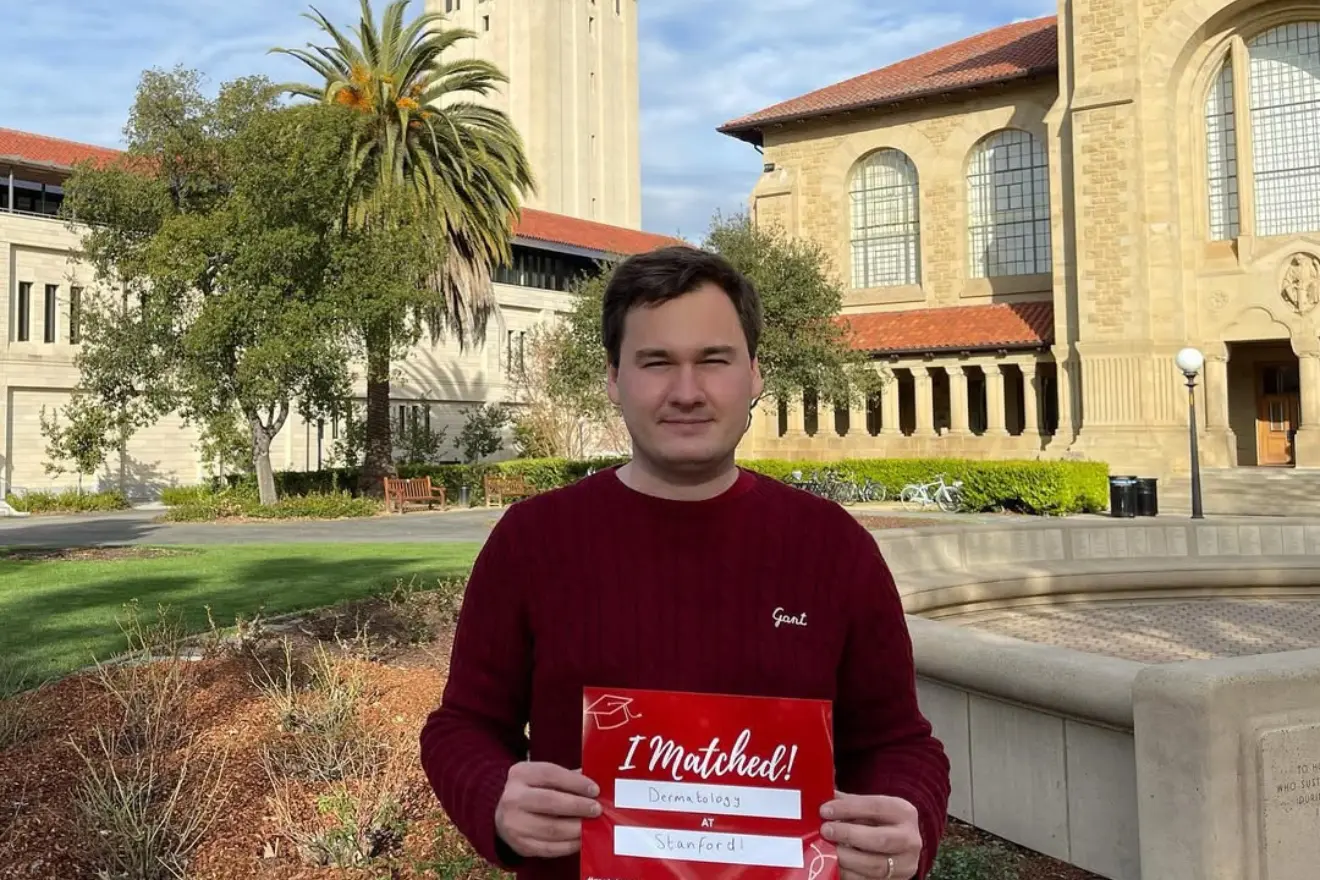
I started in my postdoctoral lab at Stanford. Late nights. Off-hours. Compounds nobody else in dermatology was paying attention to.
I didn’t tell her. I didn’t tell anyone. For a long time I wasn’t sure it would work.
But I kept going, because every time I flew home she was a little quieter. A little smaller in the room. A little less like the woman who walked me to school with the smell of her perfume in her hair.
When I finally had a version I thought might do something, she made it easier and harder at the same time. She emailed me one morning and asked if I could send a few samples of “whatever you’re working on for thinning hair.”
For my dad, she said. He was getting thin up top. She wanted to surprise him.
So for the next eight months, I shipped my mother bottle after bottle thinking they were for my father.
I flew home the following spring. The bottles were lined up on the bathroom windowsill. Empty. Not on my dad’s side. On hers.
She’d been using them the whole time. She just couldn’t ask.
That’s the moment I understood what this actually is for women. My own mother — who I talk to every week, who I’ve never once lied to — would rather invent a story about my father than admit her hair was breaking her heart.
She got her hair back. The full ponytail. The dark brown my whole childhood was set against.
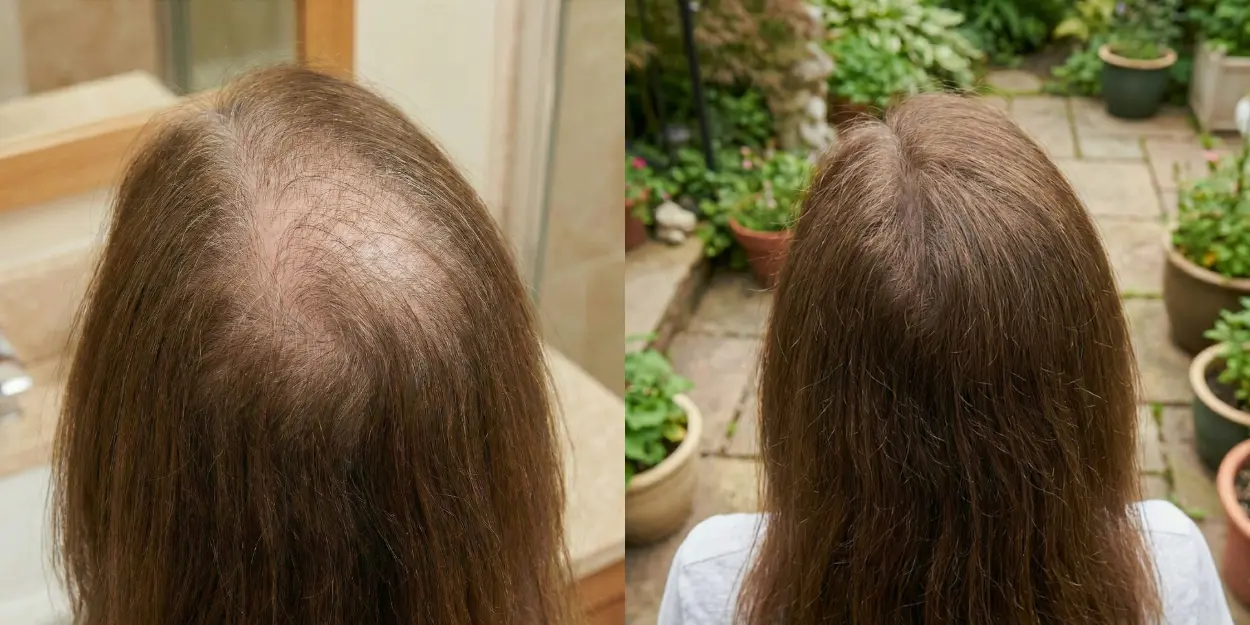
And she got herself back. The outgoing one. The one who lights up a room. The walks she’d stopped taking. The friends she’d stopped seeing.
She’s 68 now. Two years on the protocol. More density than she had at 55. Still on it every night.
She’s the proof I look at when I forget why this matters. I built it for her. Then I did the one thing that terrified me: I tested it on the women least likely to respond.
I Handed It To An Independent Lab And Told Them To Try To Break It
When I knew it worked — for my mother, for the first few patients I’d quietly started — I had a choice.
I could run the trial in my own clinic. My own data. My own controls. My own interpretation. That’s how most brand-funded “clinical trials” get run, and it’s exactly why almost none of them ever get published.
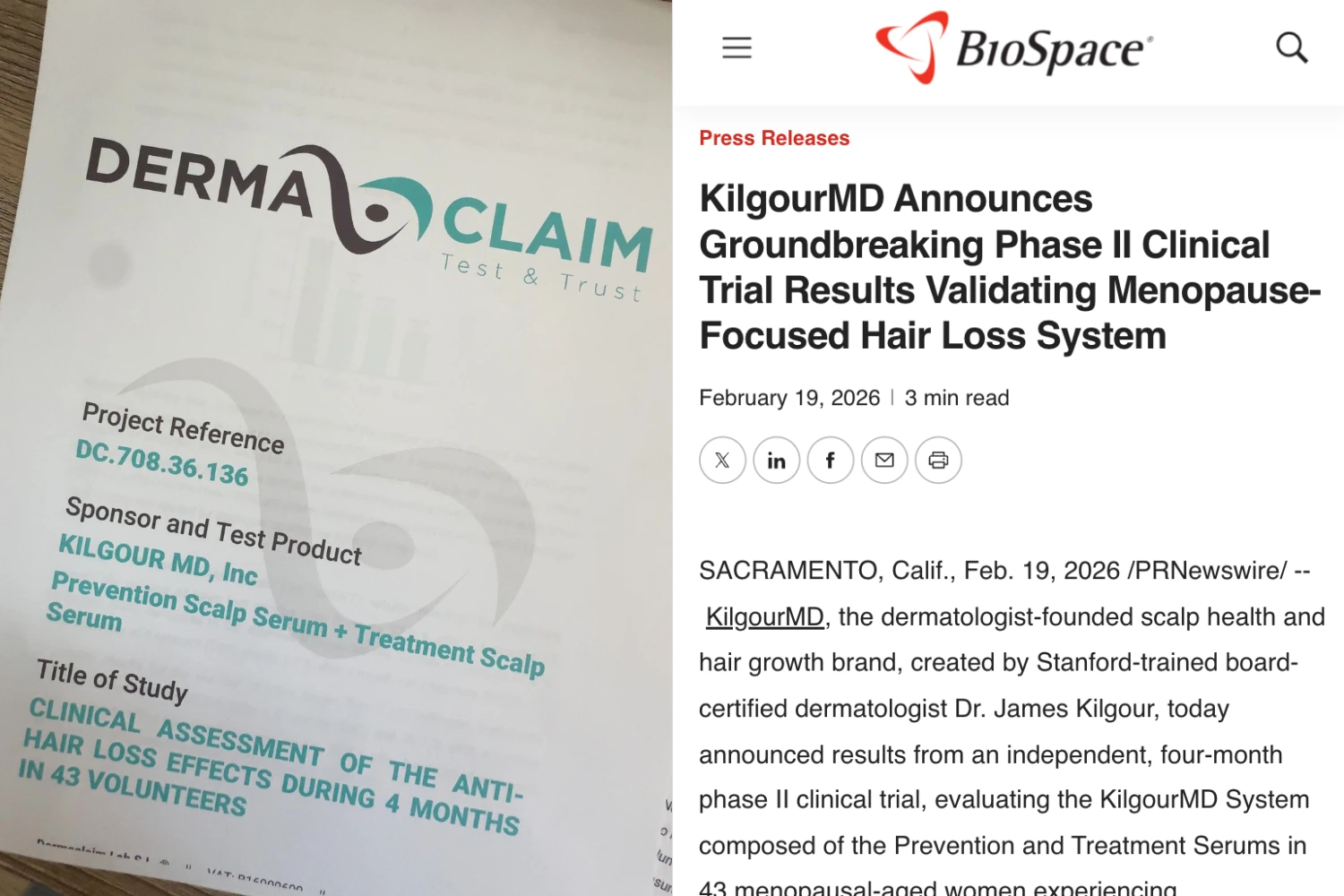
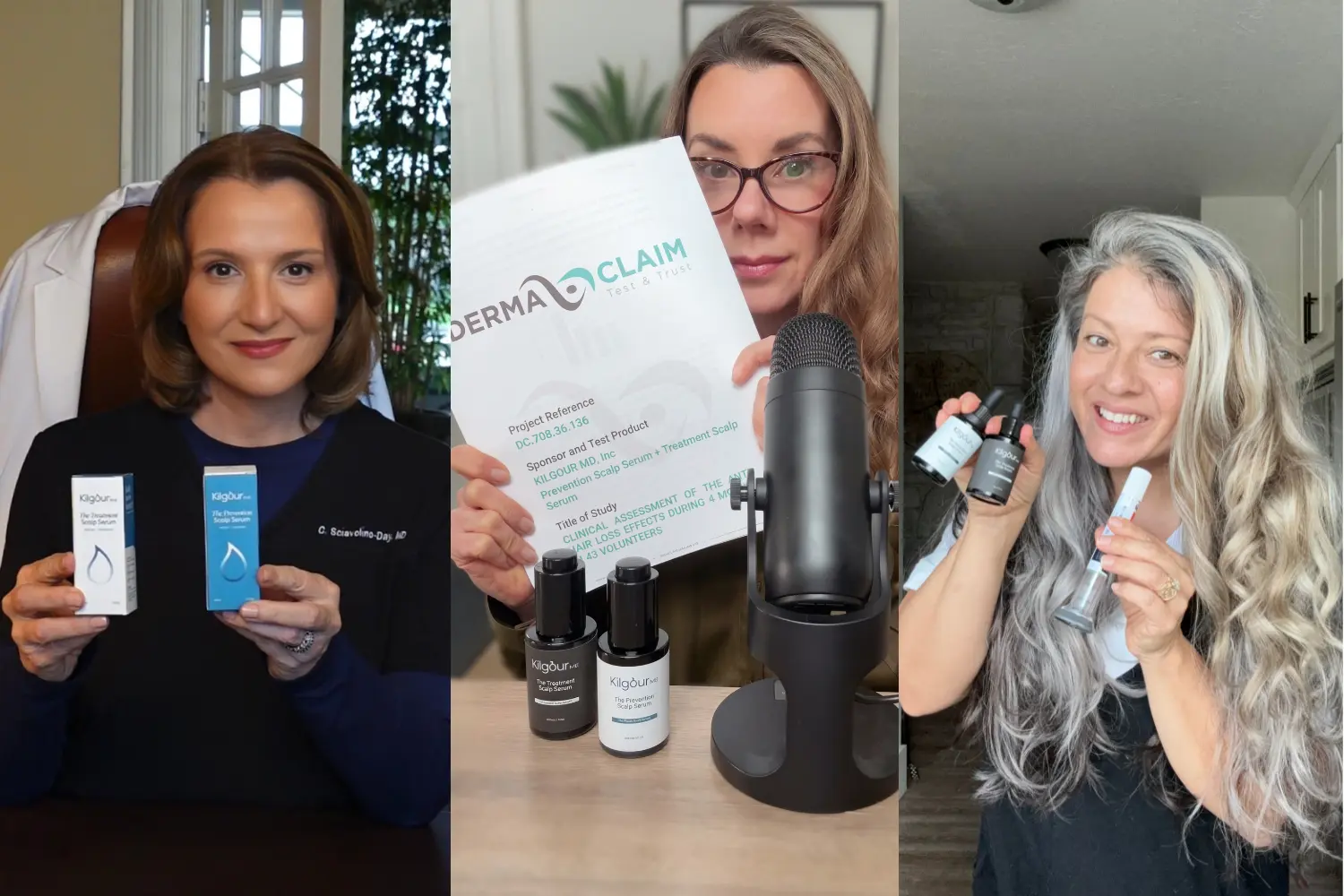
I didn’t want that. So I handed the whole protocol to Dermaclaim — one of the largest independent dermatology research labs in the world. They run trials for major pharmaceutical companies and the biggest global beauty brands. They have nothing to do with me.
I gave them one instruction. Try to break this.
Dermaclaim set the rules, not me. Every woman had to be menopausal. Every woman had to have already failed prior treatments — minoxidil, Nutrafol, supplements, transplants, anything. The hardest possible group to impress, and the criteria were locked before a single woman enrolled.
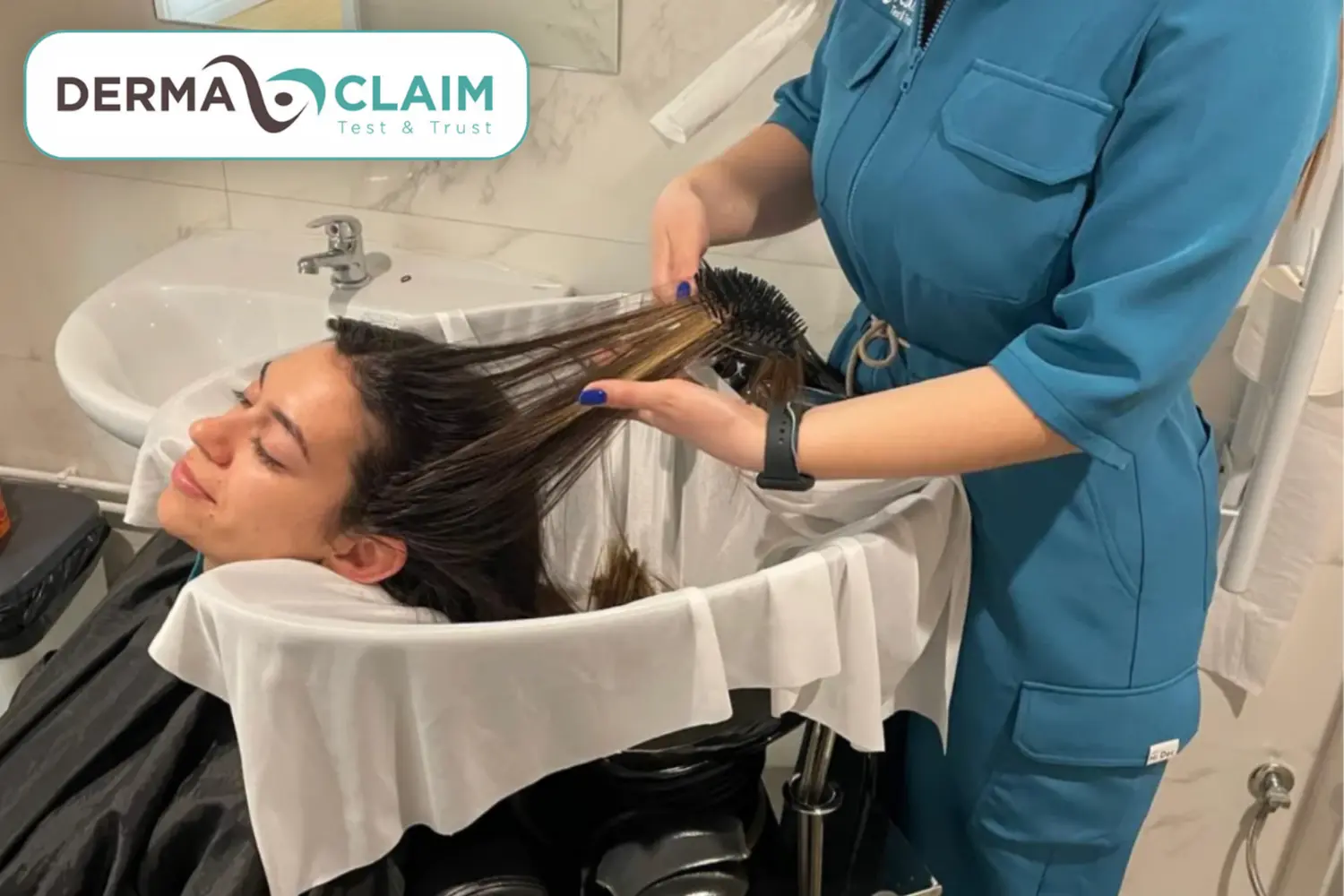
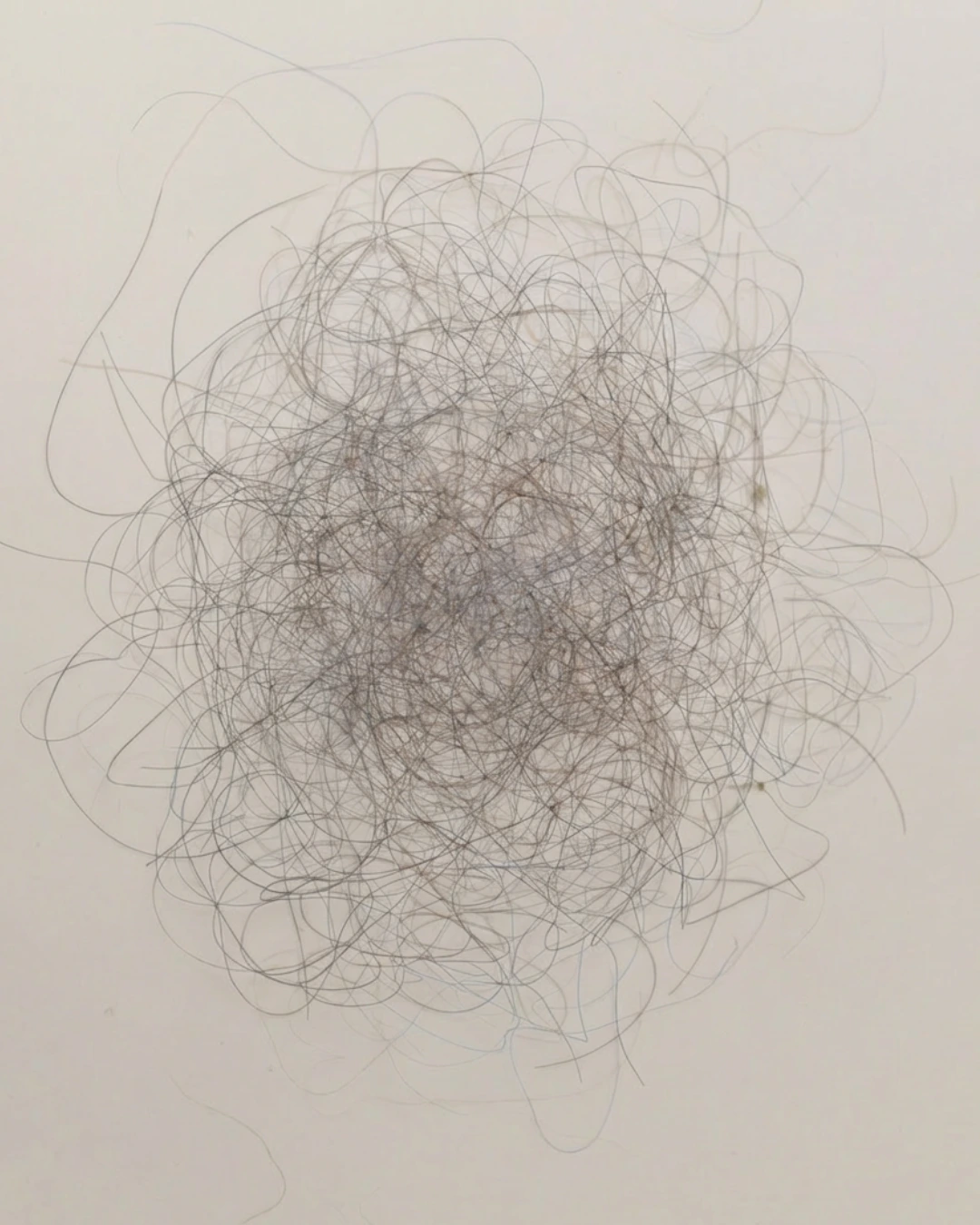
The methodology was hand-counting. Not software estimates. Not “perceived fullness.” Every strand off a clinical brush, counted by hand. Every strand from a standardized wash, counted by hand. Every new hair, counted by hand under trichoscopy, verified frame by frame.
Sixty seconds of two serums a night. Nothing else in their routines changed. I didn’t see the data until Dermaclaim was done.
Here’s what came back.
- Shedding dropped 68% across the trial.
- 95% of these women had their shedding stop by week six. Not slow down. Stop.
- By week twelve, every woman had grown thousands of genuinely new hairs — real strands, counted by hand, out of follicles the industry had written off. No graft. No injection. No pill.
- 98% of them responded. Zero side effects. Zero dropouts.
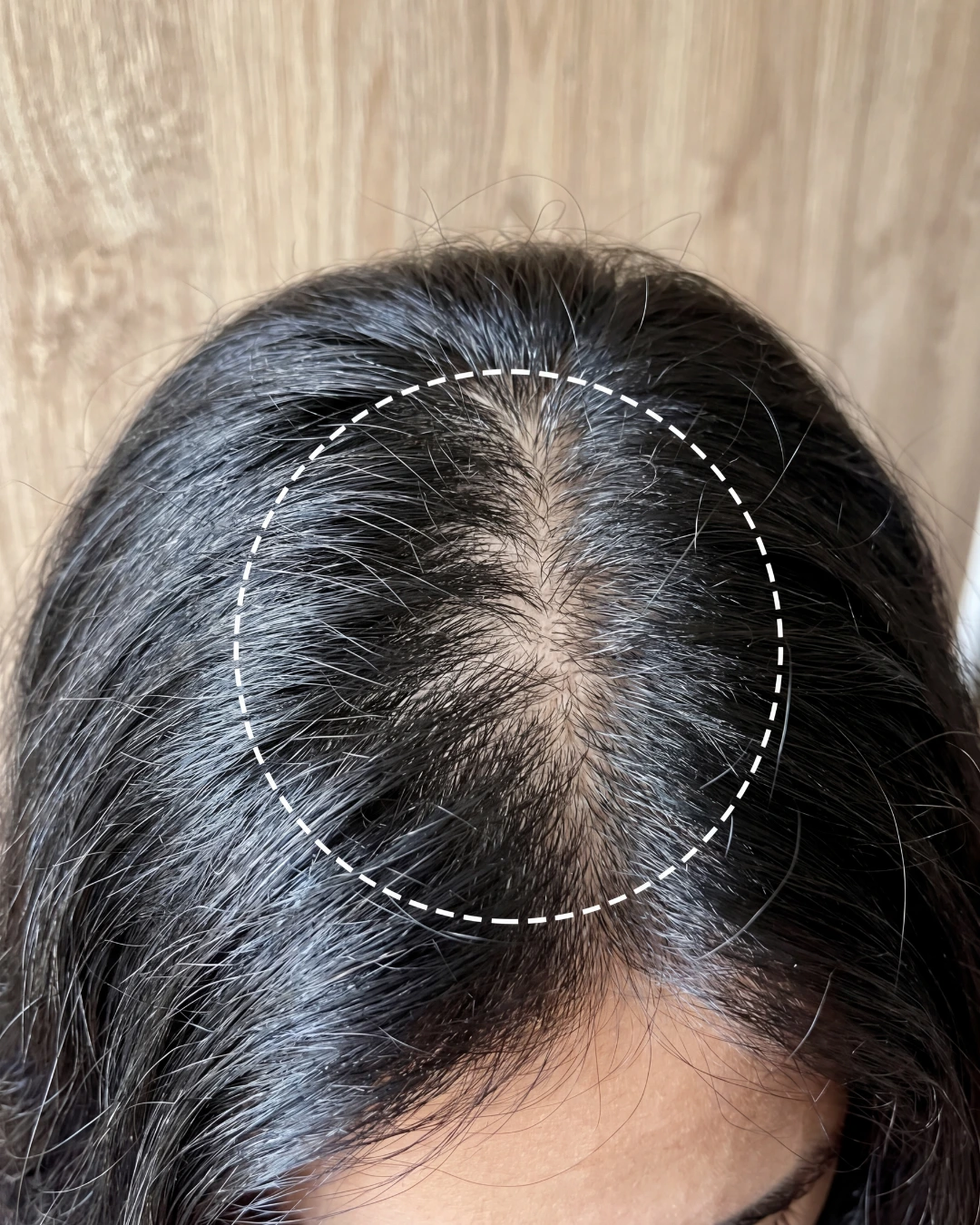
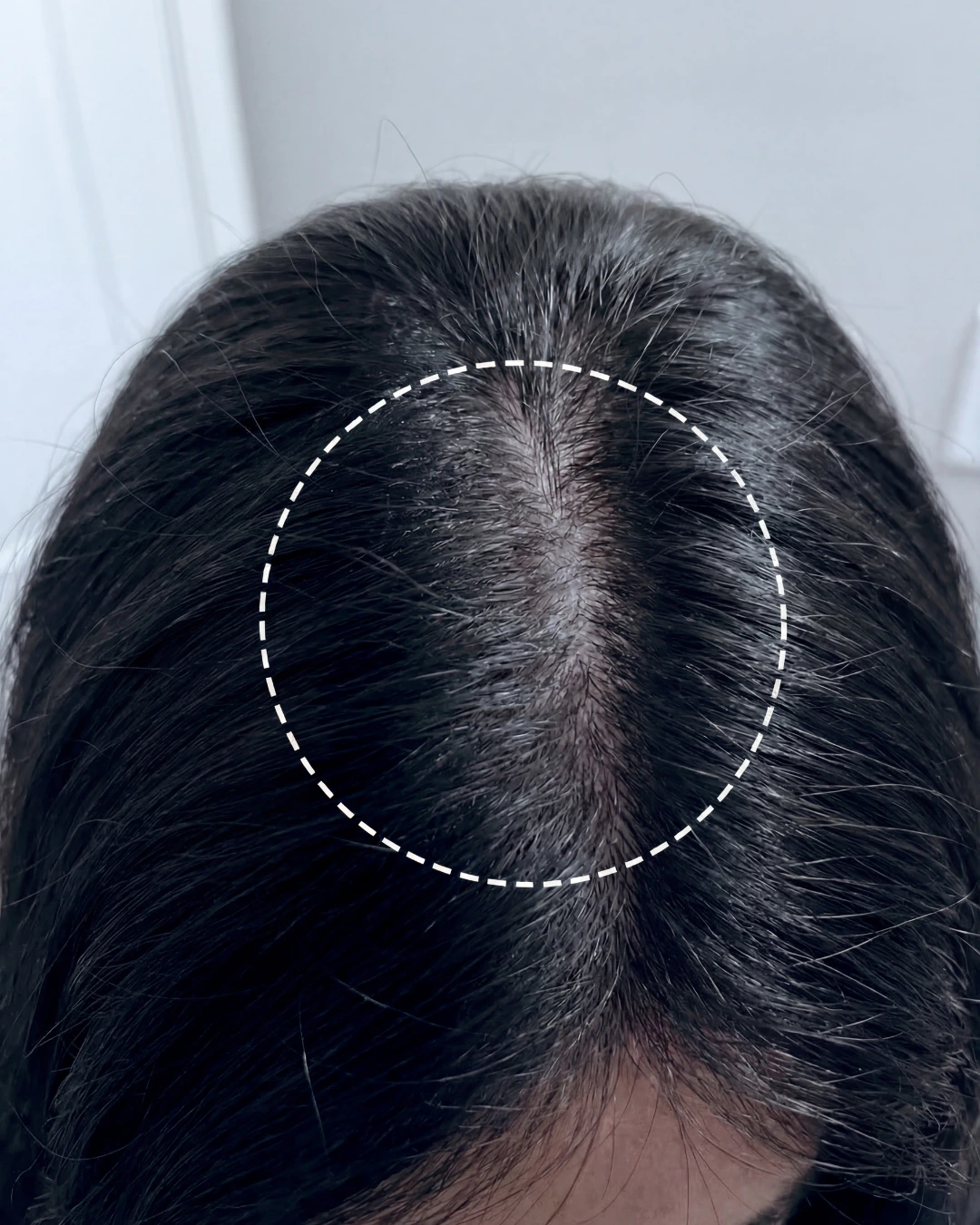
Two women didn’t respond — and Dermaclaim’s pre-set criteria explain both: one developed an autoimmune flare affecting the follicle directly, one started a new prescription mid-trial that invalidated her data under the protocol. Neither was a case of the protocol failing on the scalp it was built for.
And here’s the line that mattered most to me personally. The oldest women in the trial — the ones in their late 60s, at starting grades most dermatologists would call “advanced” — were among the strongest responders.
Age was never the limiting factor. The tissue was. And the tissue can be reversed.
Three weeks ago, the trial was accepted for publication in the Journal of Drugs in Dermatology, June 2026 issue. Independent reviewers checked the methodology, reran the math, and cleared it. For a topical built outside a major pharmaceutical company, that almost never happens.
Fix the scalp, and the hair comes back. Dermaclaim just measured it, by hand, on the women least likely to see it.
Two Serums. Sixty Seconds. Every Night.
Here’s what they used. Here’s what my mother uses. Here’s the whole protocol.
STEP ONE
Rebuild The Aging Scalp
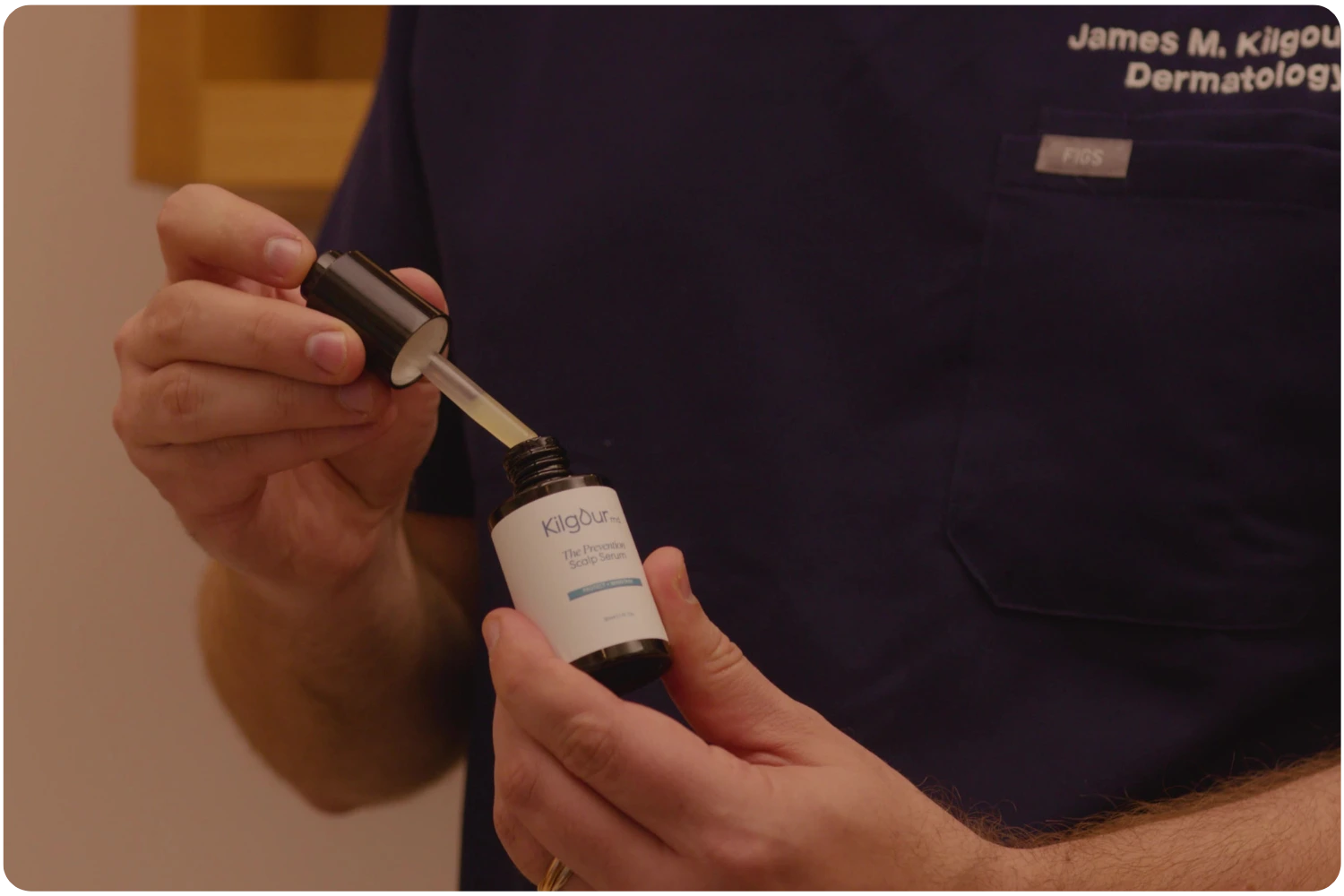
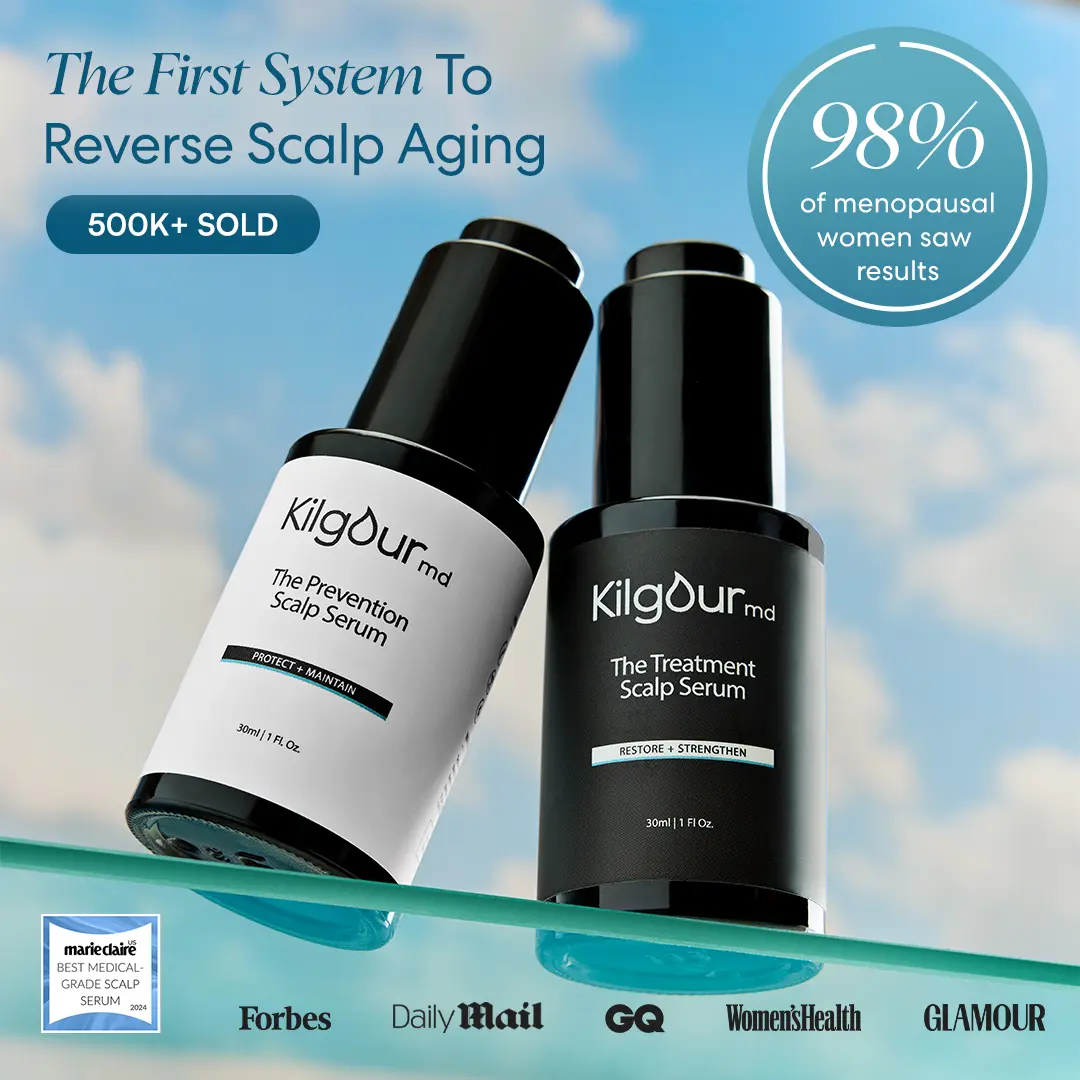
The lead compound is Capixyl, a peptide-and-red-clover complex that rebuilds the connective tissue meant to anchor each strand. In independent testing by Lucas Meyer Cosmetics, Capixyl measured 81% more effective than minoxidil for women over 40.
It’s carried deep by Procapil, shown to lift scalp blood flow 121% — so the rest of the protocol actually reaches the root instead of rinsing off. And two plant-stem-cell extracts, AnaGain and RootBioTec, extend the active growth phase, so every hair you still have stays in your head longer.
STEP TWO
Wake The Follicles Back Up
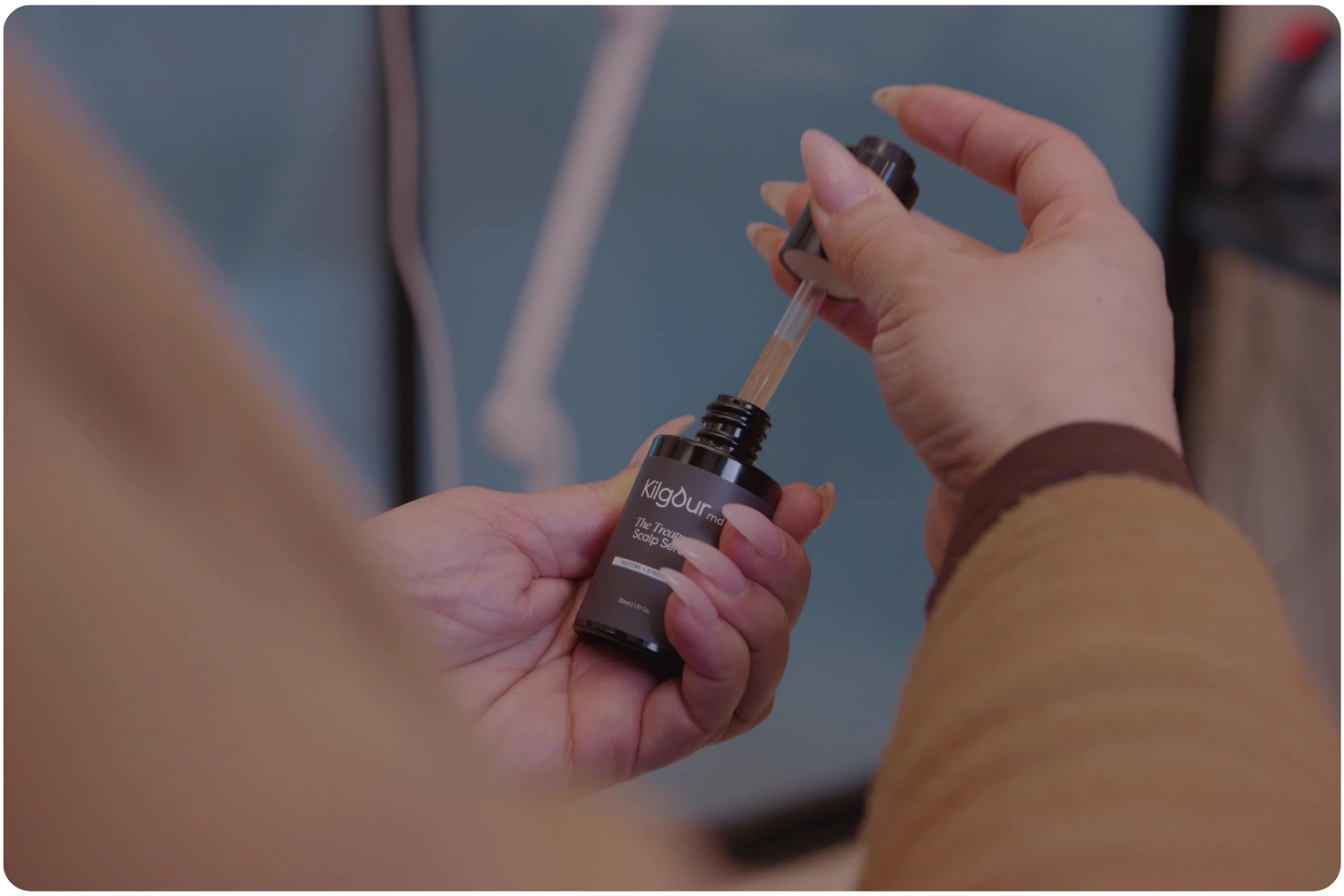
The hero is Redensyl, a patented molecule from larch tree bark — the first topical that speaks directly to the stem cells in the follicle bulge, the cells that decide whether a new hair grows. No hormones. No blood-pressure tricks like the old drugs. It restarts the signal your aging scalp stopped sending. In published testing by Induchem, Redensyl grew new hair at 214% over 84 days — more than double what any topical had produced before it.
Backing it is Rootivate-8 — caffeine, saw palmetto, and pumpkin seed — feeding every follicle Redensyl wakes up.
Step one rebuilds the soil. Step two wakes the seed. Fix the scalp, and the hair comes back — that’s the whole protocol, in two bottles, sixty seconds a night.
The same protocol that ran through Dermaclaim. The same one my mother is still using at 68. The same one the women you’re about to meet are using right now.
Three Women. Three Brushes. Three Stories.

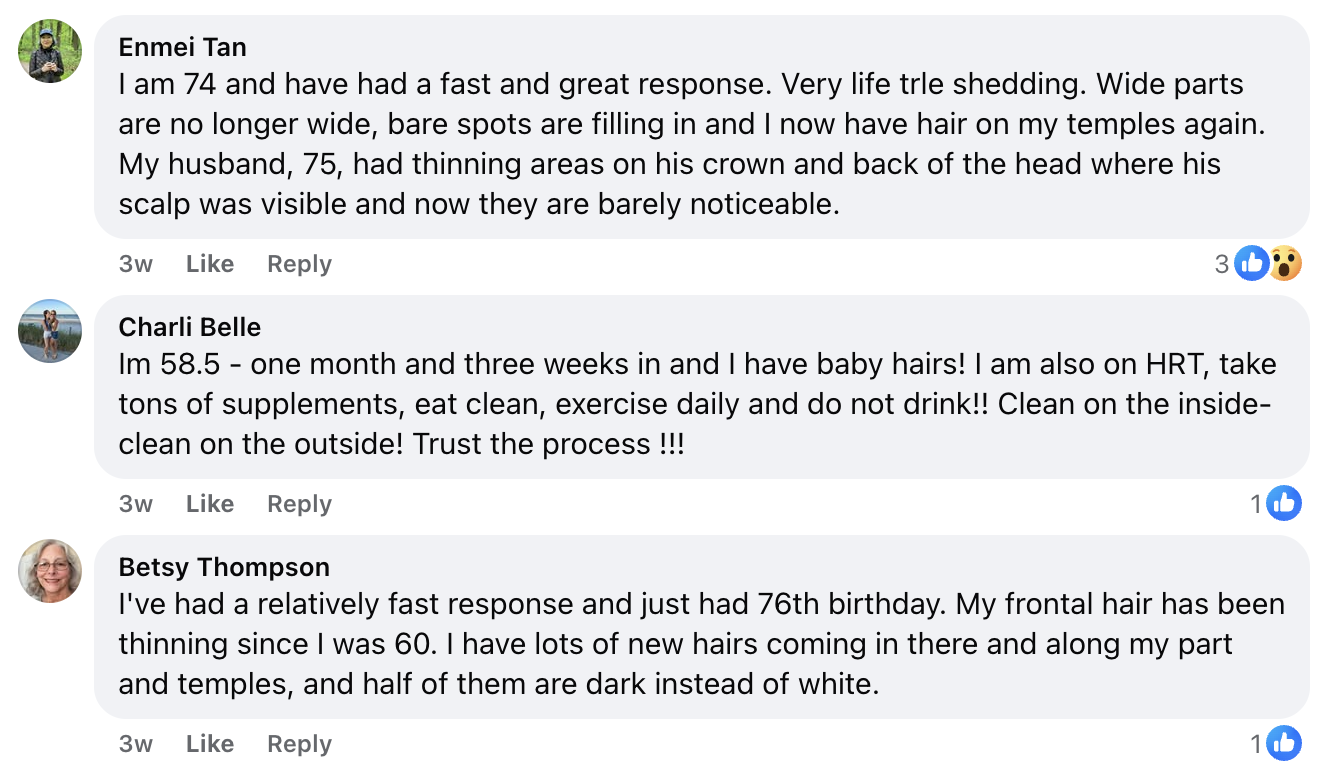
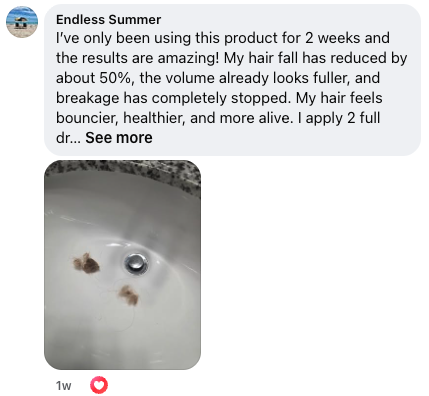
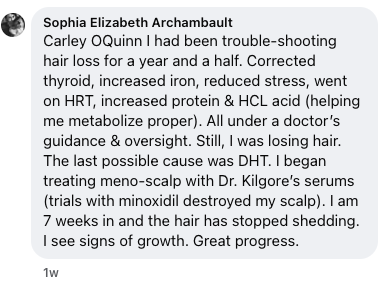
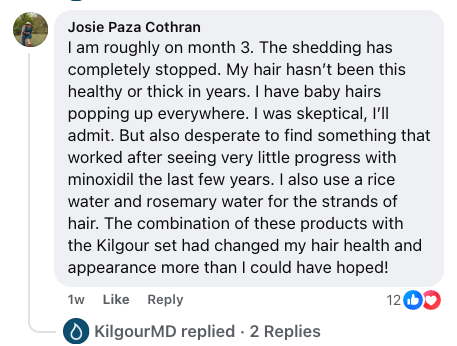
We launched a private group for women on the protocol just over a month ago. It already has nearly 4,000 women in it. I didn’t write any of the following. They came in over email and in the group, in messages we screenshot for the team because they made us cry.
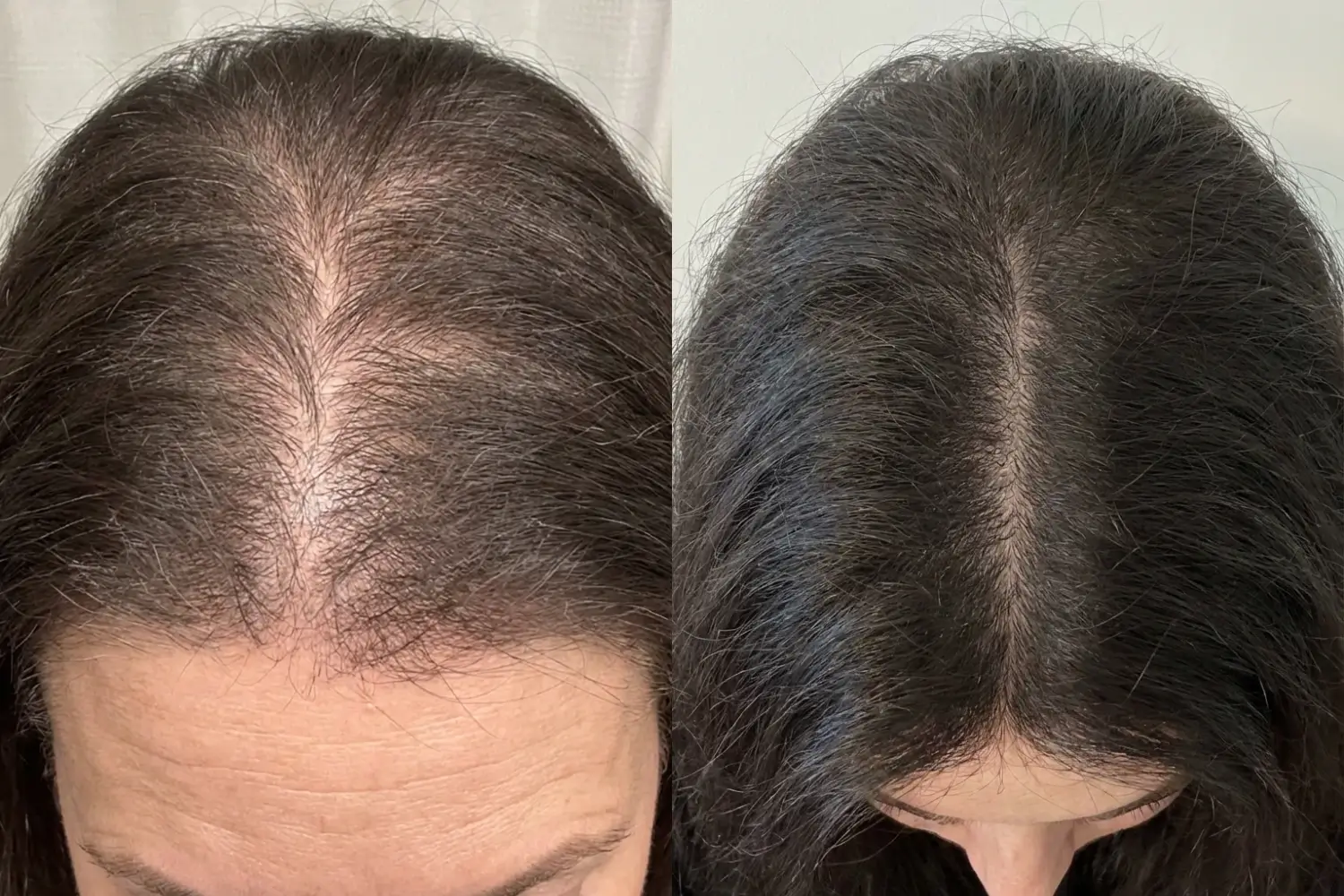
Mariam M., 43 · Hairstylist
Mariam cut women’s hair for 15 years. She’d watched it happen to her clients. She didn’t expect to be on the other side of the chair.
At 43 her part started widening. Minoxidil burned her scalp and made the shedding worse. Months on two of the most popular hair supplements after that. Nothing. Then she paid $10,000 for a transplant — and the grafts didn’t take, because the scalp tissue she’d had them placed into was already too aged to hold them. That detail matters: it wasn’t her follicles that failed the transplant. It was the soil.
When the surgeon suggested another procedure, she declined. She’d decided to just accept it. Shorter cuts. Wigs for weddings. Then she tried KilgourMD because, in her words, “nothing else was going to happen anyway.”
Four months in, she sent us a photo of her part. Three words.
“It’s filling back in.”
She’s still on it — and back to telling her clients exactly what to do about their own shedding.
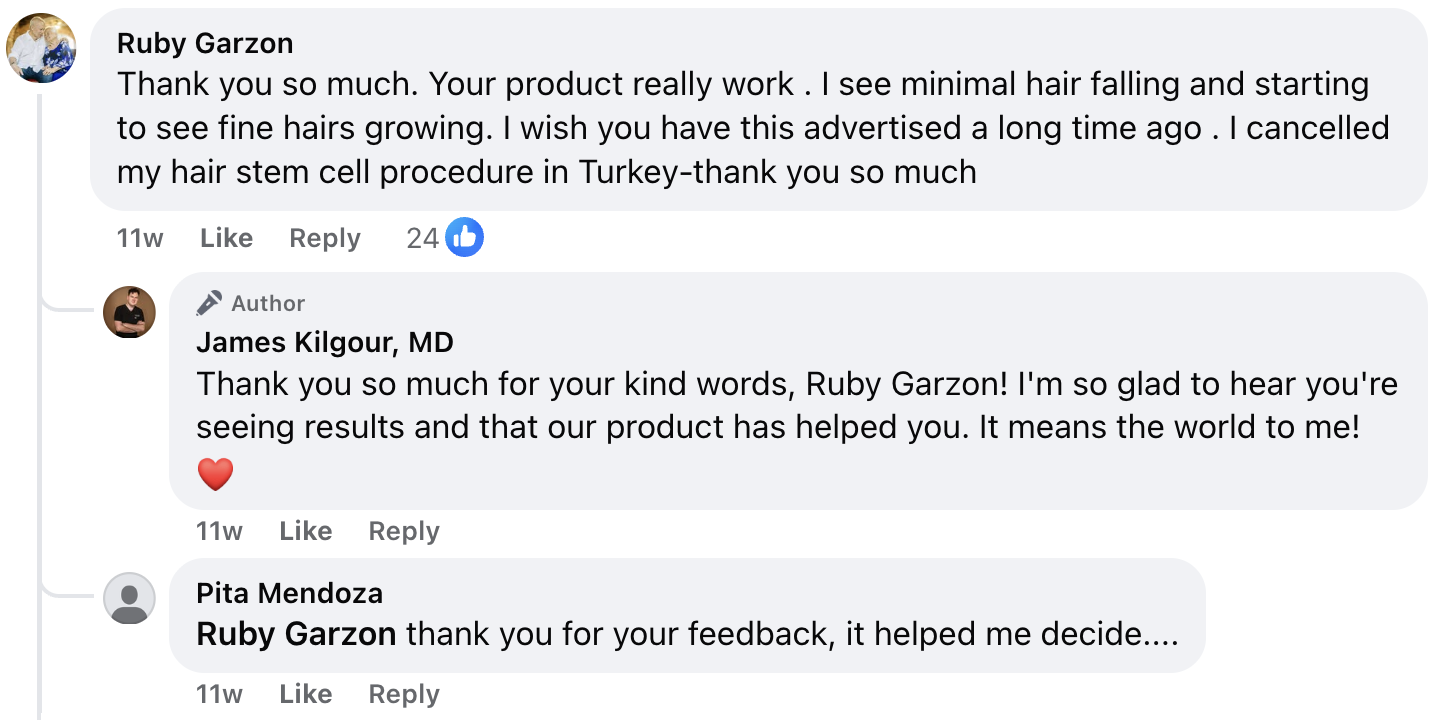
Ruby G., 56
Ruby had already paid for the flight — a $6,000 hair stem cell injection at a clinic in Istanbul, plus travel, plus a week of recovery abroad. Bags half-packed.
A friend sent her our page three days before she flew. She thought about it one night, cancelled the trip, and ordered the serums instead — because she’d finally understood her follicles were fine. It was the scalp around them that needed fixing.
Six weeks later she wrote us four sentences. The last one I keep:
“I don’t know where my hair has been hiding, but it’s starting to come back.”
She never rebooked Istanbul.
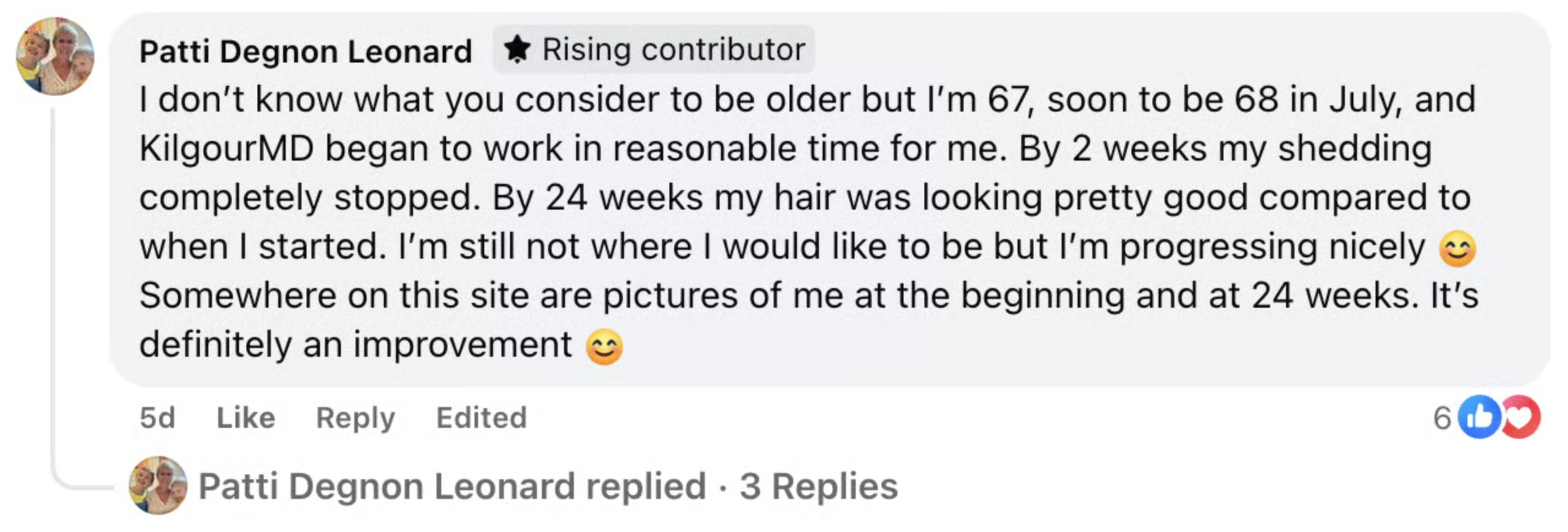
Patti L., 76
Patti had been thinning for fifteen years. She’d never tried anything, because her own dermatologist told her decades ago that hair loss after a certain age just doesn’t reverse. She believed him.
Her daughter ordered the serums for her birthday. Two months in, Patti’s hairdresser noticed the new growth before Patti did. She emailed to say it’s the first thing that’s worked since menopause. She’s 76, and on it every night.
None of these women expected it to work. All of them had tried something that didn’t. They were exactly who the trial was built to test — and exactly who it was built to help.
My Personal 90-Day Guarantee
You’ve been burned before. Minoxidil that made you shed worse. Supplements that did nothing. Transplants that didn’t take. You’re tired of paying for the next thing that doesn’t work.
So here’s the honest version. Most women see the shedding calm down inside the first few weeks — often by week six, same as the trial. New growth follows. The part starts filling. The ponytail gets some of its weight back. Stay consistent for 90 days, and the hair comes back.
Use both serums every night for 90 days. If your hair isn’t visibly changing for the better by then, I’ll refund every penny.
No fine print. You email and say “it didn’t work.” That’s it. No forms. No returning bottles. No proving anything. No “retention specialist” working to keep you on. Full amount back to your card in three to five business days. You keep the bottles.
One email.
I can stand behind it that flatly because 98 out of 100 women in the trial responded. When the number’s that high, a 90-day guarantee isn’t generous. It’s just math.
Over 1,000 US clinicians now recommend the protocol through FrontRowMD. More than 150,000 women are on it — many referred by their own dermatologists, who saw the trial data and changed their minds.
If it were me, I’d start with the 90-day supply. It’s the full protocol we ran the trial on, it’s where the regrowth shows up, and it’s where the guarantee lives.
To Mark The Publication — 38% Off The Full Protocol
While the publication batch lasts, every woman who starts now gets 38% off the 90-day supply, plus free shipping.
Before you decide, here are the four questions I get most — the same ones I’d answer across the desk in my exam room.
“Is It Too Late For Me?”
Almost never about your age. It’s about whether the follicle is still there — and for most women, it is. If the strands in your brush still have their structure, the follicle is alive, waiting on a scalp that stopped feeding it. Fix the scalp, and the hair comes back. My mother was deep into menopause when she started, and the oldest women in our trial were among the strongest responders.
“How Long Until I See Something?”
Most women see shedding calm down in the first few weeks, often by week six. New growth follows after that. Stay consistent — that’s why the guarantee runs a full 90 days.
“My Bloodwork Came Back Normal. My Doctor Says It’s Just Aging.”
Your doctor isn’t wrong about the labs — they’re wrong about what the labs can see. Thyroid, iron, hormones are whole-body markers. Scalp aging is local, and no standard blood panel measures it. Normal labs and thinning hair aren’t a contradiction. They’re exactly what it looks like when the problem is in the tissue itself.
“Minoxidil Already Failed Me. Why Is This Different?”
Because they aim at different things. Minoxidil forces blood flow at a follicle that was never broken. This fixes the aged scalp around it — the actual problem. Every woman in our trial had already failed something else first. A prior failure wasn’t a red flag. It was practically the requirement to get in.
Start Tonight
If you saw yourself anywhere in this — the brush, the wider part, the ponytail that’s lost its weight, the photo from above you deleted — you already know what’s happening.
The strands in your brush this morning were healthy. They had years of life left in them. They got pushed out by tissue that stopped holding them.
That tissue can be reversed. Harvard proved it. Dermaclaim measured it. 150,000 women are living it. My mother is one of them.
Sixty seconds. Two bottles. Tonight, before bed. The shedding settles first. The regrowth follows. The full 90 days are covered either way — if it doesn’t change your hair for the better, one email gets every penny back and you keep the bottles.
The scalp doesn’t stop aging while you decide. Every night you wait, the tissue gets a little weaker. Every night you start, you’re fixing the soil — and the hair comes back.
I started building this because of my mother. I’m finishing this article hoping you start tonight.

— Dr. James Kilgour, MD
Board-Certified Dermatologist, Stanford School of Medicine