






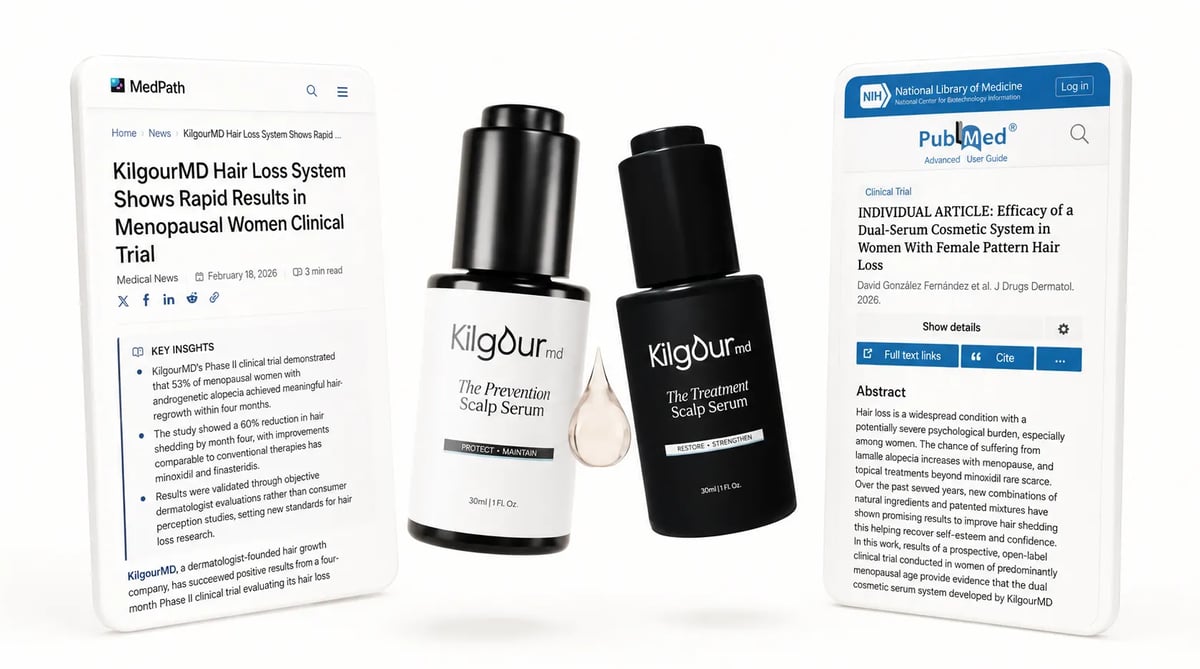
Trial Publication Offer
Up to 50% off + free shipping
00Days: 02Hrs: 09Mins: 33Secs
Dr. James Kilgour, MD
Written ByDr. James Kilgour, MDStanford-Trained Dermatologist

6 Things You've Been Told About Menopausal Hair Loss That A New Clinical Trial Just Proved Wrong

Almost everything women hear about thinning after menopause is built on the wrong explanation. A women-only trial — published in the Journal of Drugs in Dermatology — overturned six of those beliefs at once. #2 explains whether the hair you've already lost is still there.

Trusted By Experts
Dr. Manhong Ma, MD
Dr. Manhong Ma, MD Verified
Dermatology · 34 Years
Dr. Adeeba Akhtar, MD
Dr. Adeeba Akhtar, MD Verified
Primary Care · 21 Years
Jennifer Hanway
Jennifer Hanway Verified
Board-Certified Nutritionist
Alyssa Nishihira, PA-C
Alyssa Nishihira, PA-C Verified
Hair Restoration Specialist
Ilyse Schapiro, MS, RD
Ilyse Schapiro, MS, RD Verified
Registered Dietitian
Dr. Manhong Ma, MD
Dr. Manhong Ma, MD Verified
Dermatology · 34 Years
Dr. Adeeba Akhtar, MD
Dr. Adeeba Akhtar, MD Verified
Primary Care · 21 Years
Jennifer Hanway
Jennifer Hanway Verified
Board-Certified Nutritionist
Alyssa Nishihira, PA-C
Alyssa Nishihira, PA-C Verified
Hair Restoration Specialist
Ilyse Schapiro, MS, RD
Ilyse Schapiro, MS, RD Verified
Registered Dietitian
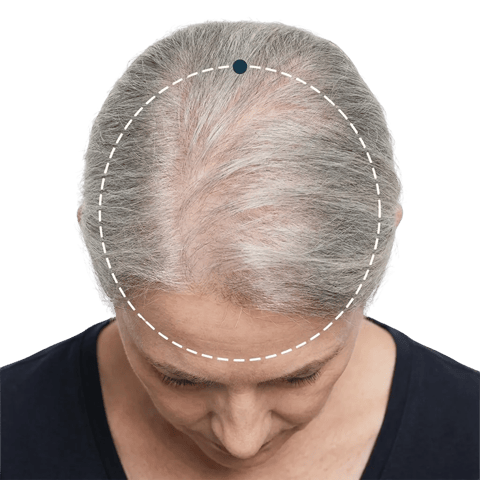
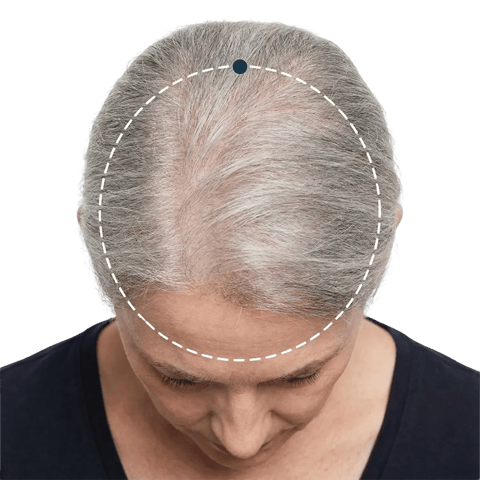
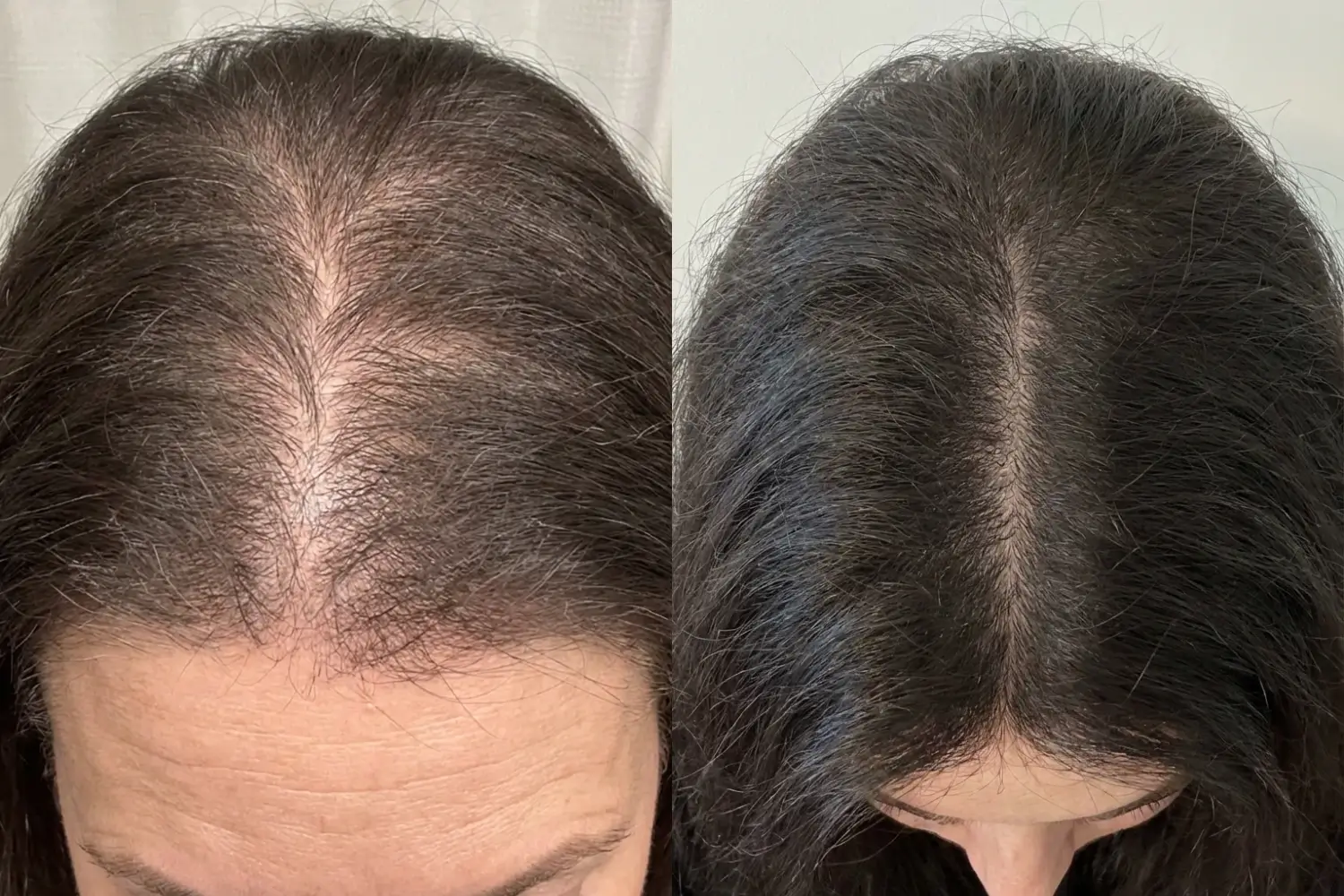
Before and after — KilgourMD results

If your hair started thinning around menopause, you've heard the same things for years. It's your age. It's your hormones. Try minoxidil. There isn't much to be done.

A clinical trial published in the Journal of Drugs in Dermatology says almost all of it is wrong — and, more importantly, wrong in a way that explains why nothing you've tried has worked.

It ran on menopausal women who had already failed something else. It overturned six things at once.

01 / 06The Myth
It's too late for me.
BeforeBefore
AfterAfter

Whether you waited years or tried everything and got nothing, the conclusion ends up the same. My window's gone.

It isn't.

What decides whether a follicle restarts isn't how long it's been sitting — it's whether anything ever told it to. Nothing you bought did.

Women in their late sixties responded in the trial as well as women in their late forties. What fails is tissue, not a birthday.

Journal of Drugs in Dermatology Kilgour et al., Journal of Drugs in Dermatology, 2026

02 / 06The Myth
The hair you've lost is gone.
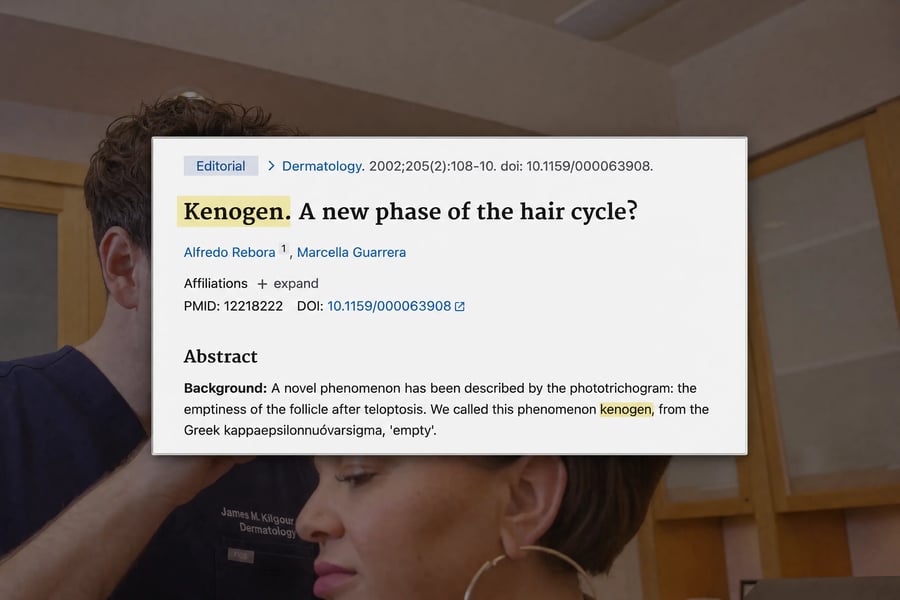
Empty follicles in the scalp

Most of it isn't. It's sitting in your scalp doing nothing.

When a hair sheds, the follicle is meant to start another straight away. Some stop doing that — the hair goes, and nothing starts. The follicle sits there empty. Not dead, not scarred. Empty.

Two dermatologists tracked women losing hair through menopause and found up to a third of follicles sitting like that. Then they published a second paper and put the finding in the title: those empty follicles are the main cause of thinning. Not a symptom of it.

A third of your follicles is roughly 33,000 of them. Still alive. Doing nothing.

This is why KilgourMD has RedensylRedensyl — it’s the only active proven to wake follicles that stopped growing — and in 12 weeks it gives back double what a hair transplant does.

PubMed Rebora & Guarrera, Dermatology, 2002
03 / 06The Myth
My hair is fine for the rest of my life.
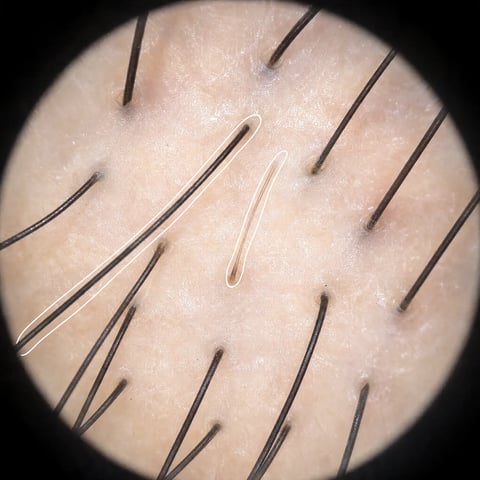
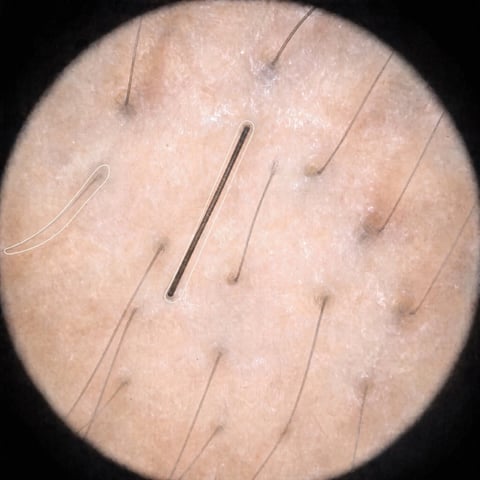
Before13 thick · 1 fine
After9 thick · 5 fine

It isn't, and the reason is in how a follicle works.

You've always had both kinds. The fine wispy hairs and the proper thick ones aren't different hairs — they're the same follicle at different levels of output. A follicle in full production builds a thick strand. Underfed, the same follicle builds a fine one.

That's why you've always had a few. On a healthy scalp about one hair in fourteen is one of those fine ones. By the time you're noticing in the mirror, it's one in three.

Same head. Roughly the same number of hairs. Half the weight. Nothing fell out — something got swapped.

Which means the thickness isn't gone. It's a follicle that stopped being able to build it, and that's a different problem with a different answer.

This is why KilgourMD has CapixylCapixyl — it’s the only active in the formula aimed at what comes back, and in its studies it lifted density 79% against untreated.

PubMed Royal Hallamshire Hospital, Sheffield
04 / 06The Myth
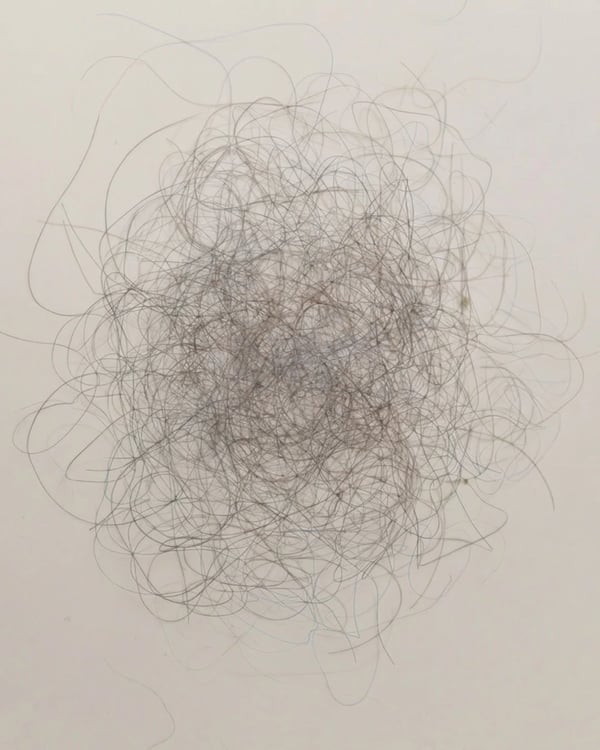
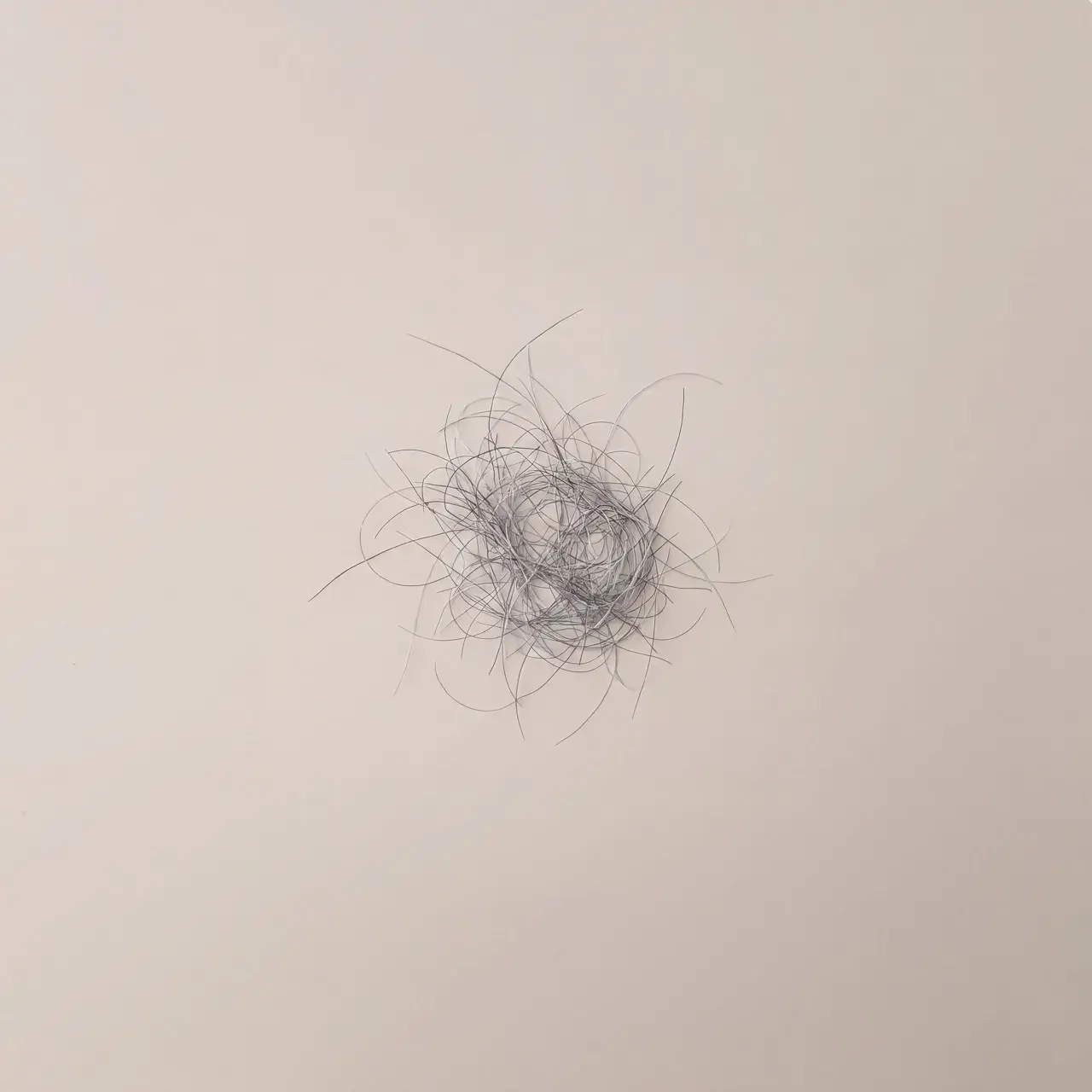
This is just how much I shed now.
BeforeBefore ~270
AfterAfter 6 weeks ~85

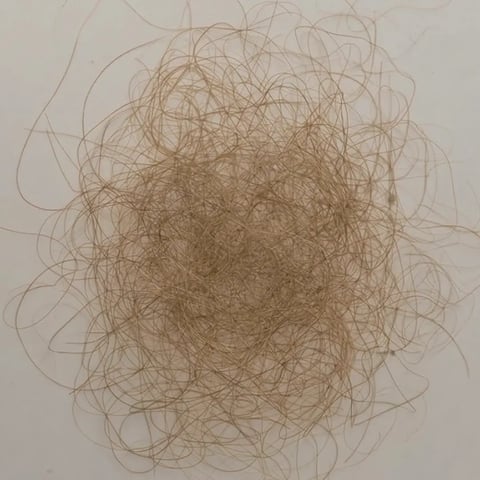
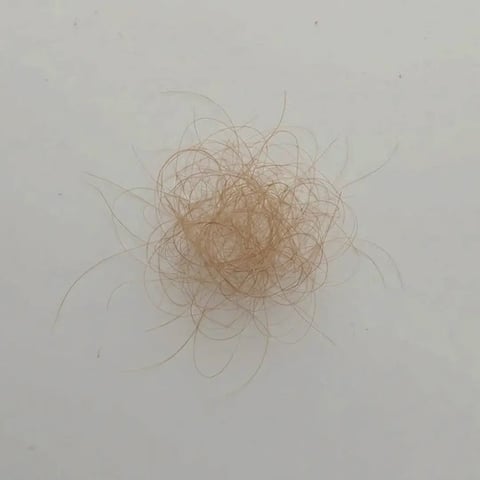
It isn't. Your body has a shedding rate it ran on your whole life — 50 to 100 hairs a day, every day, since you were a girl. You never noticed it because it never changed.

That rate didn't get rewritten at menopause. It got overshot.

Count what's coming out now and you're likely at two or three times it. Not a new normal. A gap between what your body is doing and what it's set to do.

In our trial, shedding dropped 68% in six weeks — the largest reduction ever recorded in menopausal women in the Journal of Drugs in Dermatology. Not the largest we'd seen. The largest anyone has published.

If you're losing 250 a day, that puts you at 80 — back inside the range your body ran on for fifty years. Not less than before — normal.

This is why KilgourMD has AnaGainAnaGain — it holds hair in the growing phase, so fewer hairs cross over into shedding in the first place. In its studies it roughly doubled the number of hairs sitting in growth.

Journal of Drugs in Dermatology Kilgour et al., Journal of Drugs in Dermatology, 2026
05 / 06The Myth
A supplement will help.
Journal review — no studies show biotin benefits hair growth in healthy individuals

Every hair supplement works the same way. It sends building material into your bloodstream and hopes some reaches your scalp.

But nothing going wrong up there is a shortage of building material.

A follicle that stopped starting hairs isn't waiting on a delivery. Neither is one building a thinner strand than it used to. Those are signals failing at the root — under the skin, where a swallowed vitamin arrives last, if at all.

Which is why the evidence reads the way it does. A review in the Journal of Clinical and Aesthetic Dermatology put it plainly: there have been no studies demonstrating biotin supplementation to be beneficial for hair growth in healthy individuals.

They aren't bad products. They were never aimed at what's actually happening.

Journal of Clinical and Aesthetic Dermatology Journal of Clinical and Aesthetic Dermatology · American Academy of Dermatology
06 / 06The Myth
Your doctor would have told you.
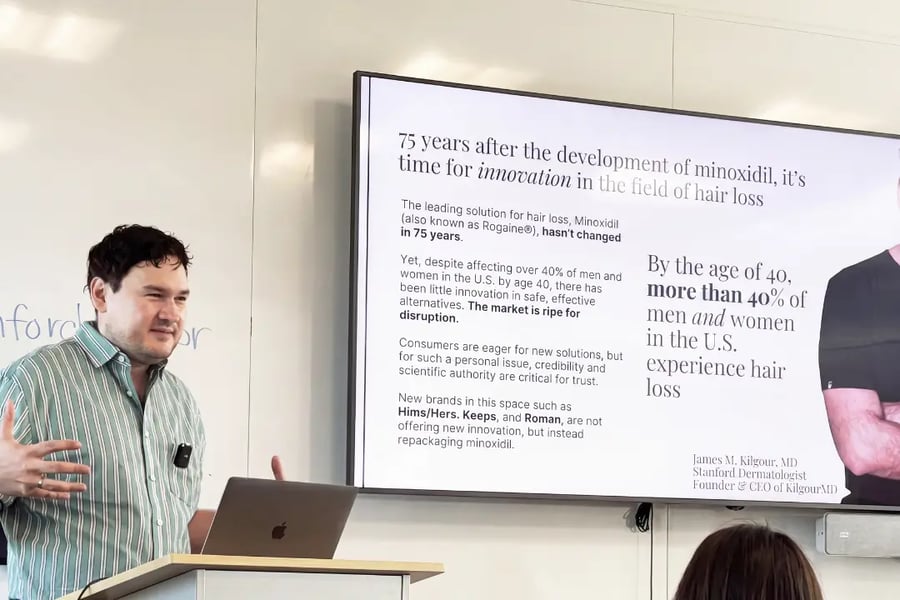
Dr. James Kilgour presenting the hair-loss research

Your doctor isn't lying to you. They're working from what they were taught.

And medicine moves slowly on purpose — the estimate people in my field use is that it takes around seventeen years for a finding to work its way from a journal into ordinary practice. Not because doctors are careless. Because a lot of published research turns out to be wrong, and the safeguards that catch that are the same ones that slow everything down.

Which is fine, mostly. It's less fine if you're the woman waiting.

The empty-follicle papers have been sitting there the whole time. Rebora and Guarrera named kenogen in Dermatology in 2002, then published again showing those empty follicles are the main cause of thinning — not a symptom of it. More than two decades ago.

I only came across them because my own mother was losing her hair and I went looking harder than I would have for a stranger.

So when your bloodwork came back normal and you were told it was your age — both of those were true. Neither of them explained your hair. Thyroid, ferritin, iron, vitamin D. None of those tests can see a follicle that has stopped starting hairs.

That's beginning to change. More than a thousand US clinicians now supply KilgourMD to their own patients directly — a good number of the women on it were referred by the same doctors who'd previously told them there was nothing to do.

PubMed Morris et al., Journal of the Royal Society of Medicine
Thousands of US clinicians now
give KilgourMD to their own patients.
Dermaclaim

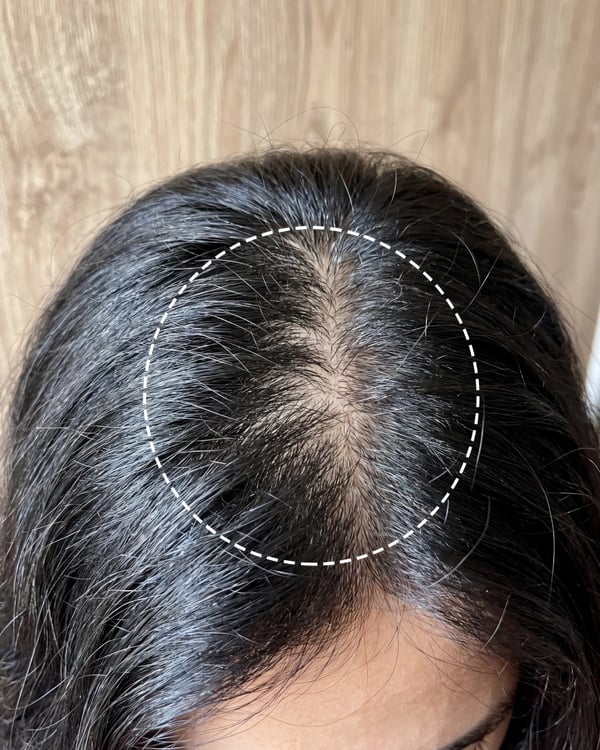
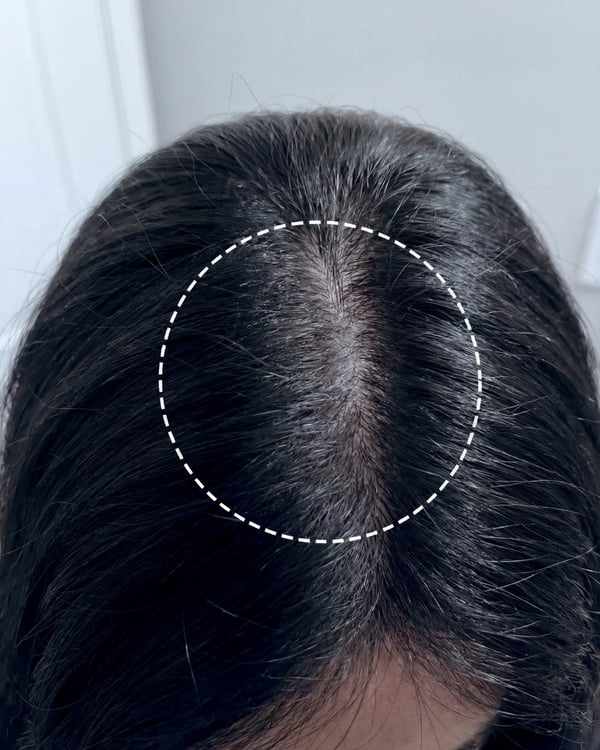
The first trial run on women from perimenopause to decades past it.

KilgourMD in the press and clinical literature
Who ran it

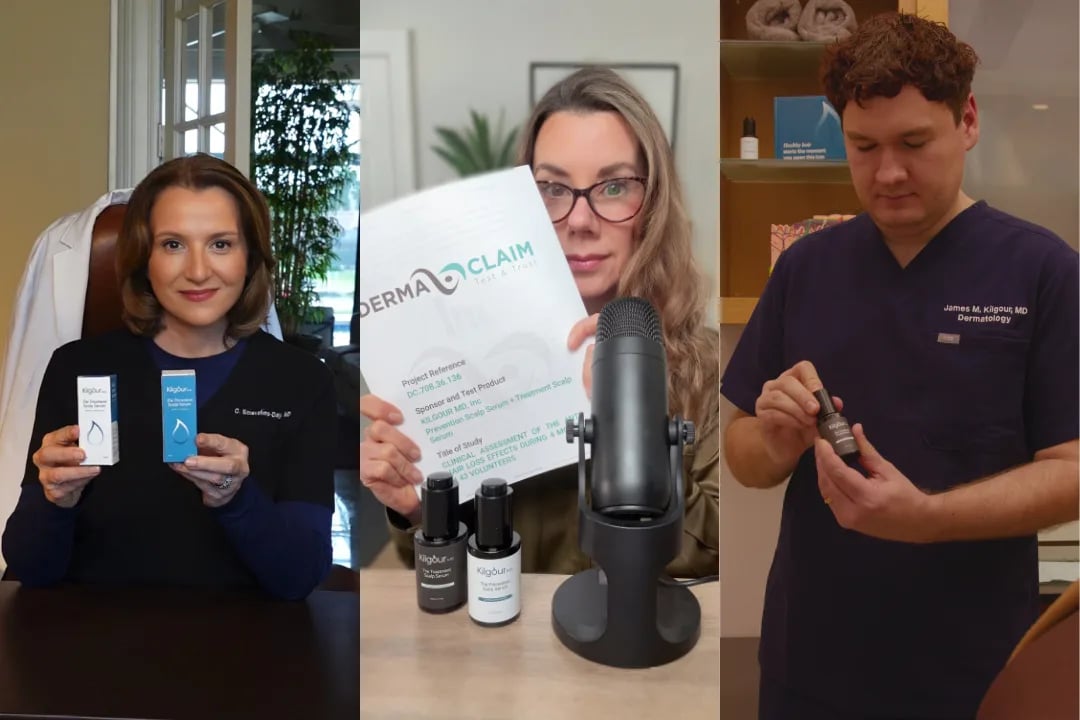
An independent lab, Dermaclaim, on menopausal women at every stage — perimenopausal through years post — with two board-certified dermatologists grading the results.

How it was reviewed

Peer-reviewed and published in the Journal of Drugs in Dermatology. Fewer than one percent of hair products ever get that far.

What made it unusual

No other hair product allowed for the entire trial. Controlled drying, every strand counted by hand. And density graded on the Ludwig scale — the scale drugs are tested on, and the only time a non-drug has been measured on it.

What it found
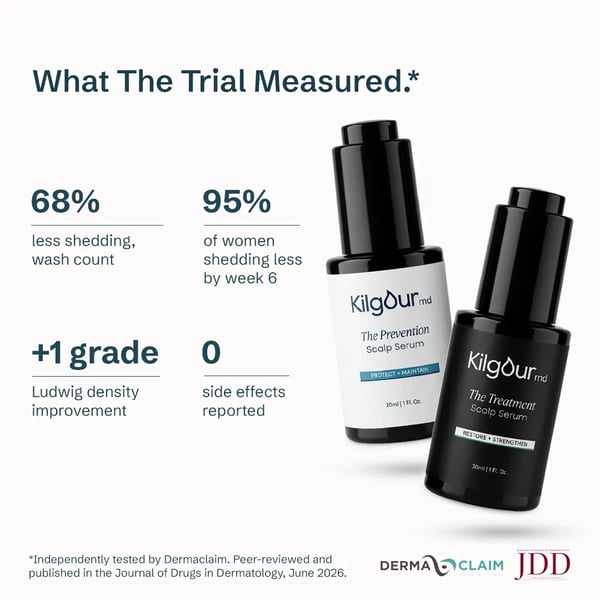
68% less shedding

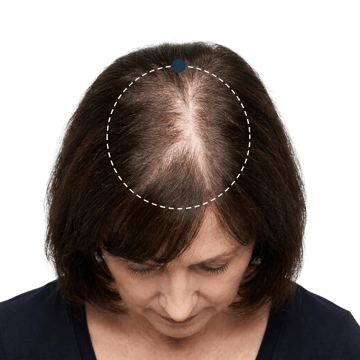
Wash count, by week six. 95% of women were shedding less.

Wash-day shedding — beforeBefore
Wash-day shedding — afterAfter
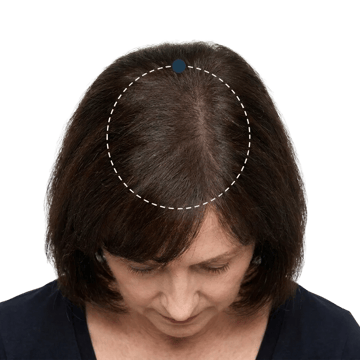
A full Ludwig grade

By week eighteen. Zero side effects, zero dropouts.

Part-line density — beforeBefore
Part-line density — afterAfter
“I've worked with royals, A-listers and Olympians — women with access to every treatment money can buy. This is the first non-drug study to count every strand by hand and deliver a full Ludwig-grade jump. Nothing else comes close.”
Jennifer Hanway
Jennifer Hanway Verified
Advisory boards, L'Oréal Paris & Johnson & Johnson
Crown — beforeBefore
Crown — afterAfter
What the trial measured — the two serums
The two serums from the trial.
The same protocol every woman in it followed. Sixty seconds a night, and a full 90-day money-back guarantee if it doesn't work for you.
Start the Same Protocol →
★★★★★ 200,000+ women
200,000+ women

Women who used it,
in their own words.

DianeDiane, 61Verified★★★★★

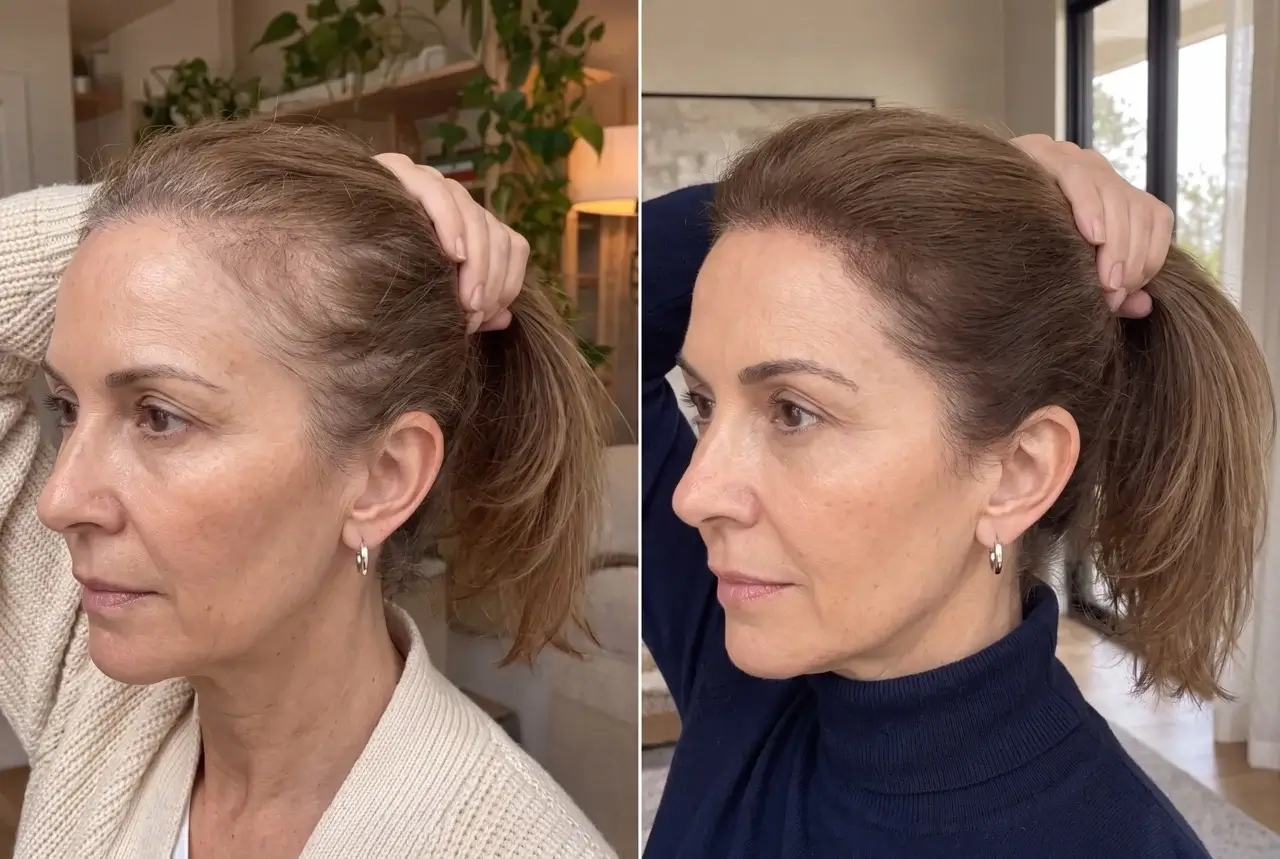
“Mine started in menopause and I blamed myself for ages, thought it was something I was eating. My temples receded so far I stopped wearing my hair back. For two years. Second photo's four months in. Closest to my old hairline I've been in years.”

Diane — before and after
JeanJean, 66Verified★★★★★

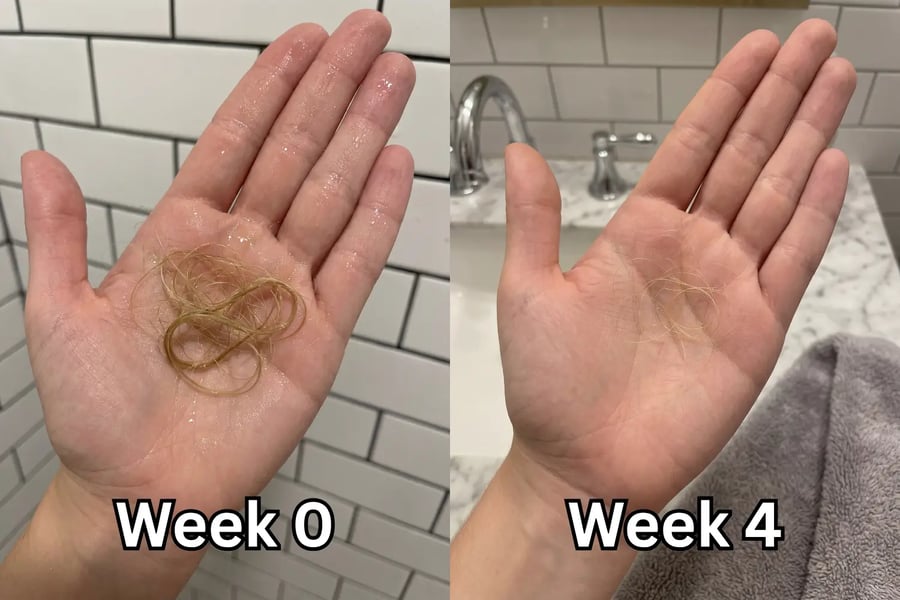
“I was pulling handfuls out every wash. I'd started rinsing the drain before my husband got in there so he wouldn't see. Four weeks and it was a normal amount again.”

Jean — wash-day shedding, week 0 and week 4
MariamMariam, 49Verified★★★★★

“My part was so wide I couldn't wear my hair down. Twelve weeks in and I wear it down every day. I'd forgotten what that felt like.”

Mariam — before and after
KilgourMD two-serum bundle
KilgourMD Dual-Action System

Up to 50% off — trial publication discount

When the trial cleared peer review we set aside a batch at cost, so the women reading about it first could afford it rather than just read about it. It runs while that batch does, then the price goes back and stays there.

Get KilgourMD — Up to 50% Off →
00Days: 02Hrs: 09Mins: 33Secs
KilgourMD

Founded by Dr. James Kilgour, MD — board-certified dermatologist, Fellow of the American Academy of Dermatology, Stanford School of Medicine.

Our trial is published in the Journal of Drugs in Dermatology. Every strand was counted by hand by Dermaclaim, an independent lab. Density was graded by two board-certified dermatologists with no involvement in the study.

More than a thousand US clinicians supply KilgourMD to their own patients. More than 200,000 women use it.

Contact us

Phone: +1 (844) 889-5348

Email: hello@kilgourmd.com

Mailing Address: 300 Delaware Ave, Ste 210, Wilmington, DE 19801, United States

Still deciding?

Enter your email and your 10% off unlocks right here. It stacks on the publication discount.

No spam.

© 2026 KilgourMD. Not intended to diagnose, treat, cure, or prevent any disease or medical condition.

Accepted payment methods
KilgourMD two-serum protocol
KilgourMD Dual-Action System
Up To 50% Off · 90-Day Guarantee
Get 50% Off →