

Research: Women Over 40 With Hair Loss Have Up To 22,000 Healthy “Ghost” Follicles Waiting For A Growth Signal — Here’s How To Bring Them Back
Before you buy another bottle of minoxidil, swallow another hair supplement, or book another hair consultation — you need to know this.

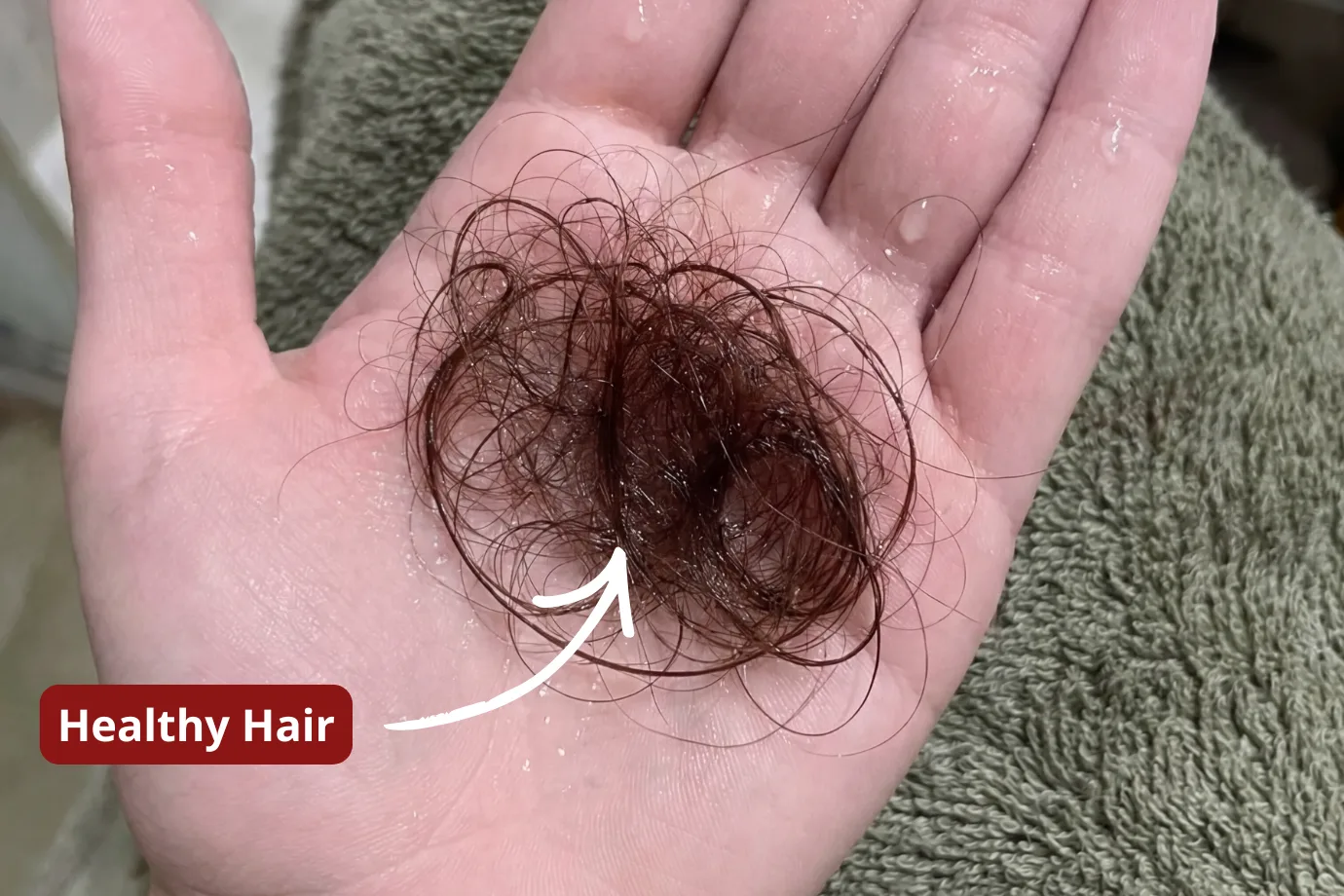
You have up to 22,000 hairs that are alive, intact, and not growing.
Not dead. Not “damaged beyond repair.”
Follicles that will grow thick and full again — they stopped cycling the day your estrogen began to drop, and have been waiting for a growth signal that never comes.
Most of the dermatologists I trained with were taught the same model: hair loss after 40 is miniaturization. The follicle shrinks, the hair gets thinner and finer until it stops growing altogether. The best you can hope for is slowing it down.
That model is out of date. And it’s the reason four out of five women over 40 walk out of their dermatologist’s office being told to “accept it” — when the follicles they just wrote off are alive and waiting.
22,000 Follicles. Empty But Alive. Right Now.
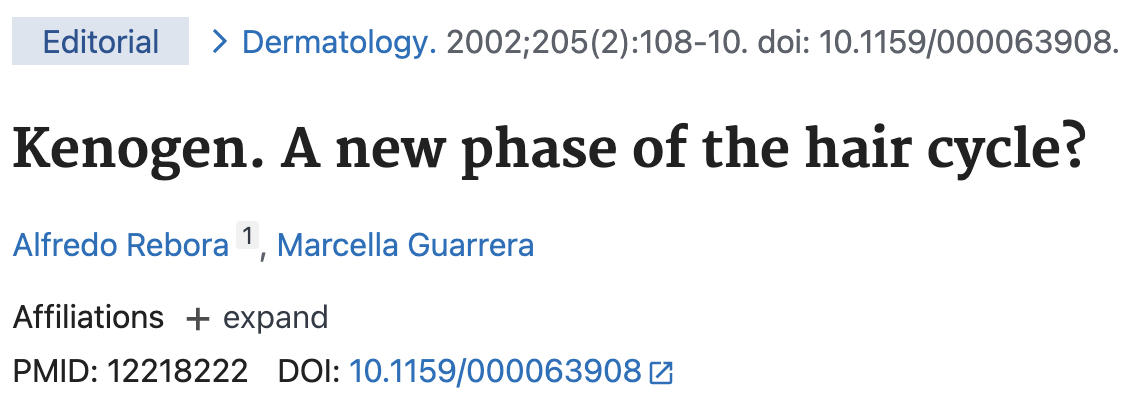
In 2002 Professor Rebora out of the University of Genoa in Italy identified a phase of the hair cycle that wasn’t in any textbook. He called it kenogen — from the Greek word for “empty.”
Here’s what it means.
Normally, when a hair falls out, the follicle immediately begins producing a replacement. The old hair sheds, the new one starts growing. Seamless handoff. You never notice because the new strand is already on its way up before the old one lets go.
But in kenogen, the follicle sheds the old hair and doesn’t start a new one. It just sits there. Empty. The pore is open. The follicle is alive underneath. The stem cells are intact. But nobody sent the signal to start the next cycle.
It’s an empty house with the lights off. Not demolished. Not condemned. Just waiting for someone to come home.
Research shows up to 25% of follicles on a thinning woman’s scalp sit in kenogen phase at any given time. That’s up to 22,000 individual hairs beneath your skin, doing nothing.
Not because they’re broken. Not because they miniaturized. Because the signal that tells them to start a new growth cycle stopped arriving when your estrogen dropped.
Think Back To The Last Time You Noticed It.
Maybe it was under the bathroom light, catching an angle that surprised you. Maybe it was a photo someone took at dinner — and you scrolled past it quickly. Maybe it was the way you started parting your hair to the other side. Or the hat you bought that you didn’t really need.
You already know where the thinnest spot is. Most women do.
Part line. Crown. Temples.
Those spots weren’t chosen at random. The follicles there were born with a hormonal sensitivity the ones on the back and sides of your head don’t have. For most of your life, estrogen kept those sensitive follicles growing. Cycle after cycle, decade after decade.
Then menopause changed the balance. The tough follicles on the back and sides barely noticed. The sensitive ones lost something overnight.
Not the signal to grow faster. The signal to stay awake.
I Watched This Happen Before I Ever Saw It In A Clinic
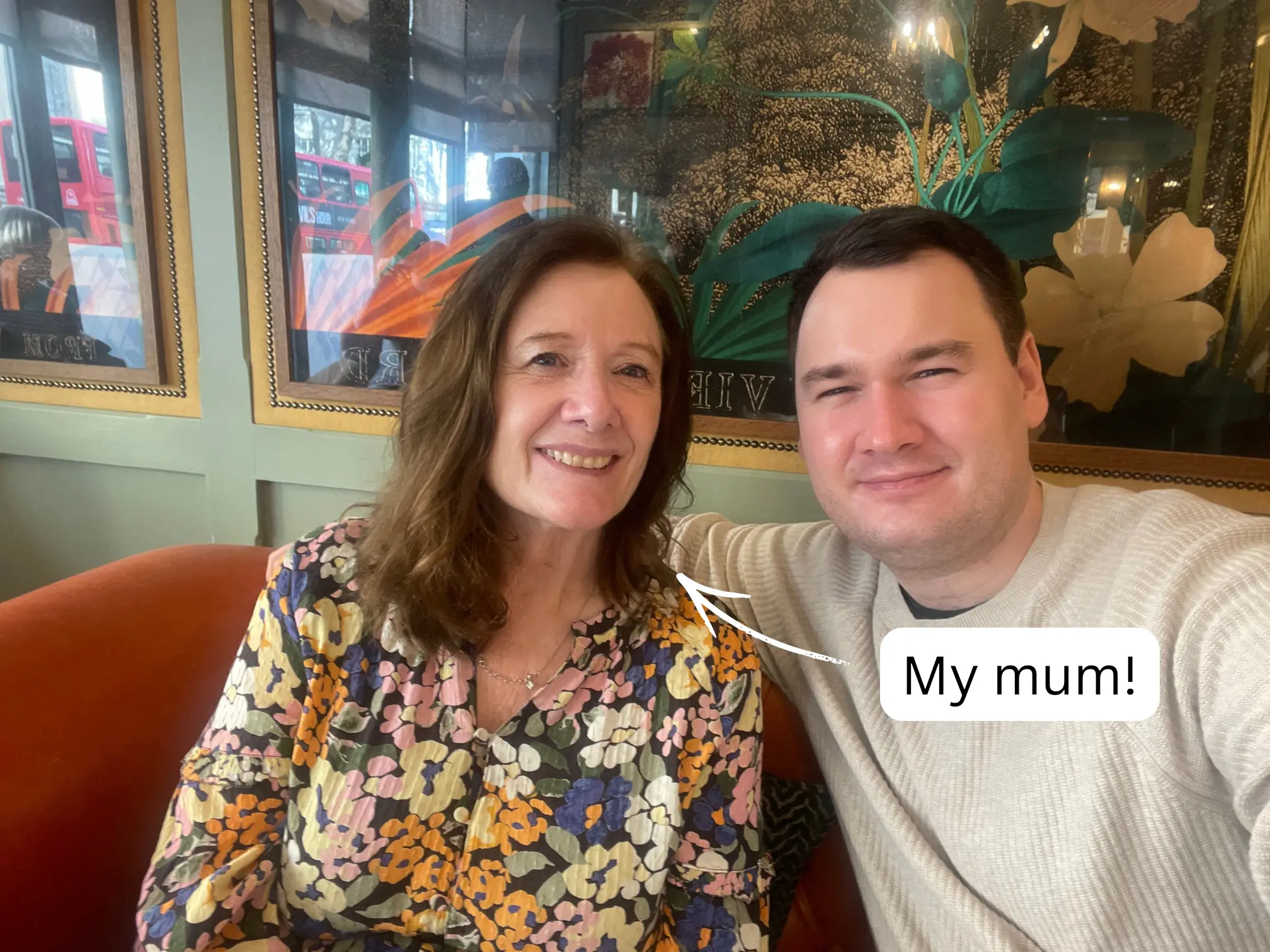
My mother started losing her hair during menopause. She tried biotin. Nothing. Prescription shampoos. Nothing. The whole beauty aisle. Nothing.
Her doctor prescribed minoxidil — a blood pressure drug from the 1980s, originally designed for men. Someone noticed it grew hair as a side effect and thought, “Close enough.”
It made her shed more for three months. Her doctor said, “That’s normal. Give it time.”
She gave it time. During that time, she stopped going to dinner with friends. Stopped taking photos at family events. Started wearing hats she’d never worn before.
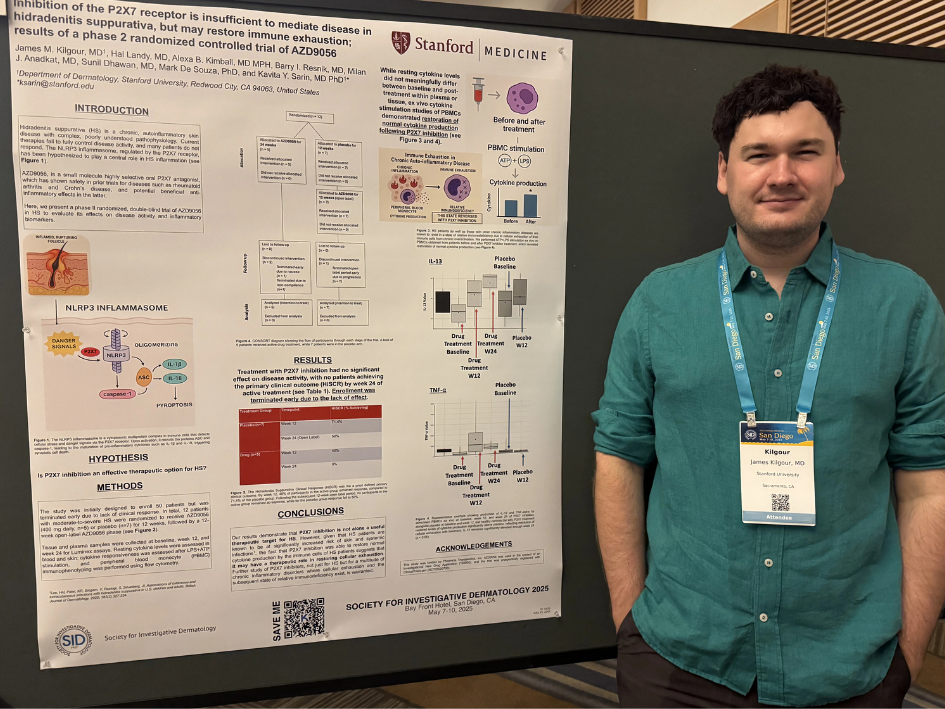
I’m a dermatologist. I trained at Stanford. I understand the biology of hair follicles the way most people understand the layout of their own home.
None of that prepared me for standing in her bathroom doorway, watching her cry in front of the mirror.
I watched my mother shrink. Not her hair — her.
And I knew her follicles weren’t gone. They were in kenogen.
If I could find a way to send that signal back — without hormones, without prescriptions, without a blood pressure drug from 1988 — I could give her her hair back.
That’s what sent me into the lab. Eighteen months. Seven failed formulations. Until I found the compound that could actually reach the stem cells where the kenogen decision gets made.
Why Menopause Breaks The Restart Signal
For most of your life, estrogen maintained the handoff. Old hair sheds, estrogen tells the stem cells at the base of the follicle to fire up the next cycle, new hair begins growing. Seamless.
When estrogen drops during menopause, the restart signal disappears.
The stem cells at the base of each follicle stop receiving the prompt to initiate a new growth cycle. The old hair sheds. But nothing starts growing to replace it.
The follicle sits empty. Kenogen sets in.
One cycle becomes two. Two becomes twelve.
Suddenly 22,000 follicles go quiet — waiting for a signal that isn’t coming.
The Part That Concerns Me The Most
Kenogen is recoverable. But it has a window.
An empty follicle reactivates when the signal arrives. The stem cells are there. The structure is intact. Send the right signal and it wakes up.
But research shows that the longer a follicle sits in kenogen, the higher the risk it crosses a threshold into permanent follicular deletion. The stem cells degrade. The follicle structure collapses. The signal has nothing left to reach.
And once a follicle is gone, nothing brings it back. No compound. No transplant. No treatment.
Messenger’s clinicopathologic study showed that total follicle counts dropped from 317 per square centimeter in early-stage thinning to 243 in advanced stages. Those missing follicles aren’t in kenogen anymore. They’re gone.
The window between “empty but recoverable” and “permanently deleted” is real. And every month your follicles sit without a signal, more of them are at risk of crossing it.
Why Traditional Treatments Show Little Results
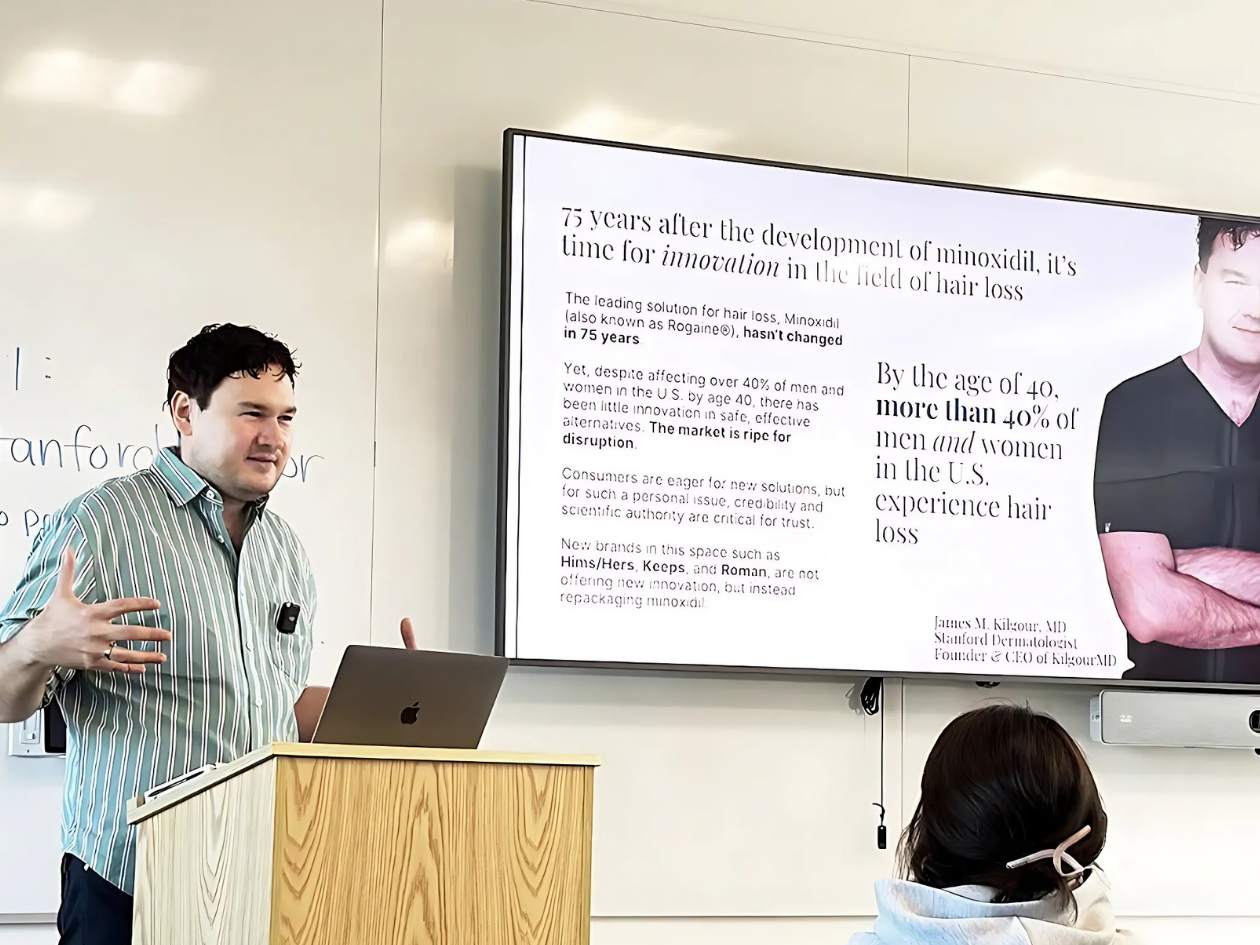
Most women over 40 have tried three or four treatments by the time they realize none of them are working. Each one targets a different mechanism. None of them target kenogen.
Minoxidil dilates blood vessels. It works two layers above where the kenogen decision gets made. It’s sending blood to a house where nobody’s home. And for the minority of women it does help, the moment they stop using it, every strand it grew falls out. That’s dependency, not treatment.
Biotin provides keratin building blocks. But a follicle in kenogen isn’t building anything. There’s nobody in the factory. You’re shipping materials to a closed construction site.
DHT blockers shut down the hormone that attacks follicles. But a follicle in kenogen isn’t under attack — it’s already empty. Blocking DHT on a dormant follicle is like posting a security guard outside a house nobody lives in.
Supplements enter the digestive system and get routed by nutrient partitioning — heart, brain, liver get served first. Hair follicles are last in line.
PRP injects growth factors to stimulate follicles. But it doesn’t address why the follicle stopped cycling. The effect fades because the underlying kenogen isn’t resolved.
Every treatment was working on the wrong layer. So I went looking for something that worked on the right one.
The First Ingredient That Talks To The Stem Cells
For years, the bulge stem cells were considered untouchable. They sit in a protected niche at the base of each follicle. They’re the gatekeepers. They decide — grow or sleep. And nothing in the hair loss industry had ever been able to communicate with them directly.
In 2014, a Swiss biotech lab changed that.
They isolated a modified polyphenol called DHQG — derived from larch wood — that did something unprecedented. It activated the division of outer root sheath stem cells directly. The exact cells that control whether a follicle exits kenogen and enters a new growth cycle.
It didn’t dilate blood vessels like minoxidil. It didn’t block hormones like finasteride. It went straight to the cellular switch that estrogen used to flip — and flipped it through a completely different pathway.
They named the ingredient Redensyl. It won the in-cosmetics Silver Award — the first cosmetic ingredient built from regenerative medicine research.

Redensyl
In the clinical trial, participants grew an average of 10,200 new hairs in 84 days. From their own dormant follicles. No surgery. No prescription. No shedding phase.
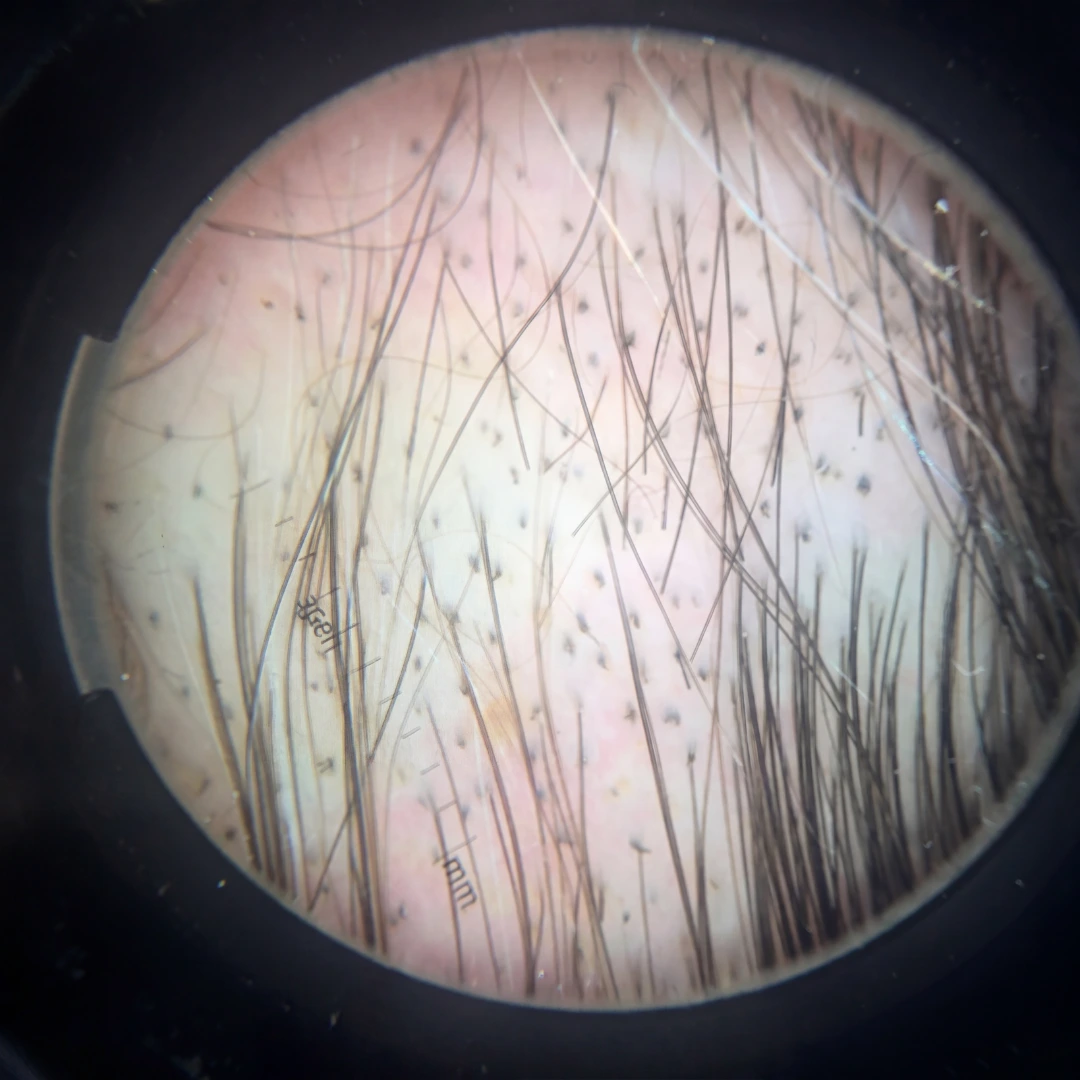 Week 0
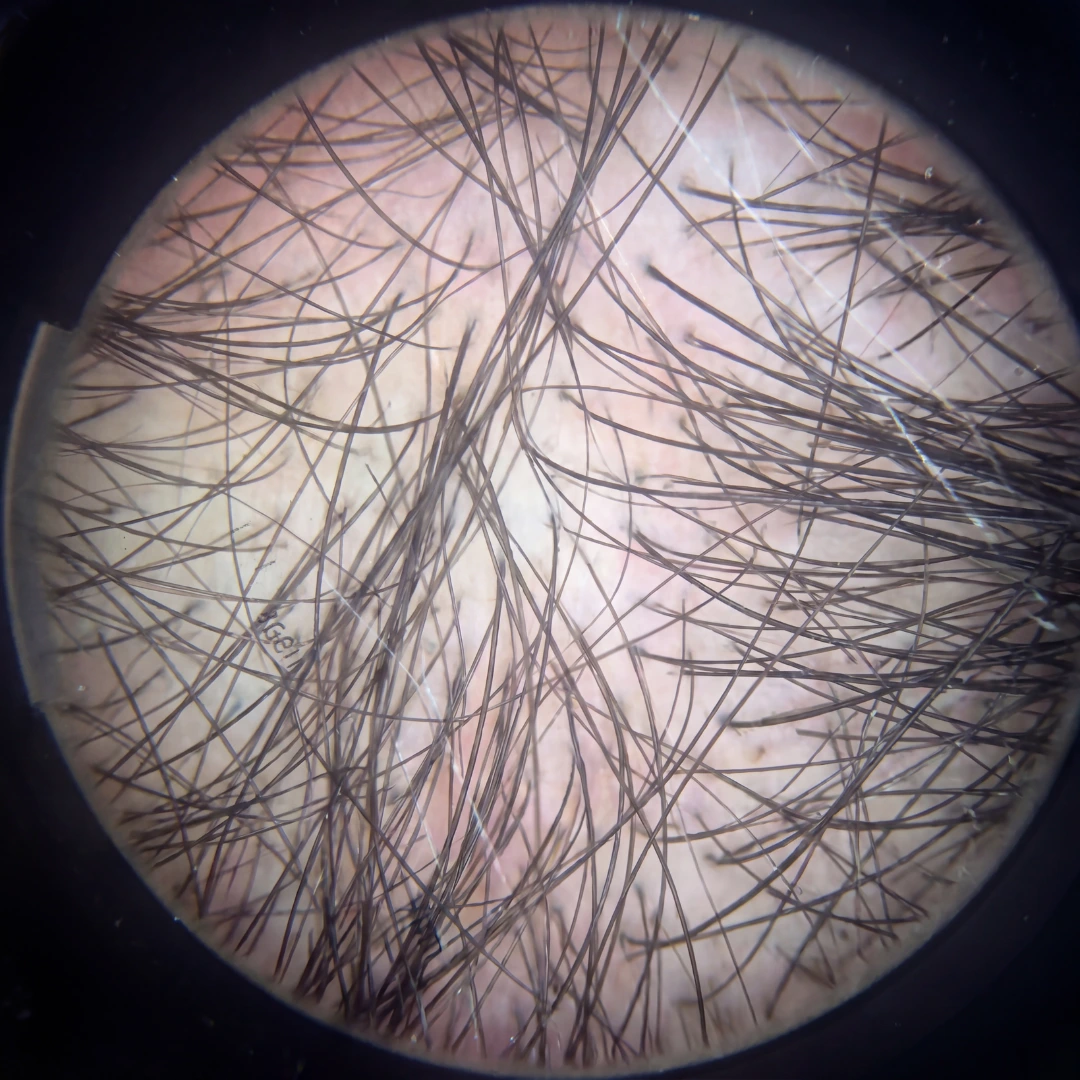 Week 12
A hair transplant moves 3,000 to 4,000 hairs and costs $10,000 to $25,000. This outperformed it — from follicles that were already there, just sleeping.
85% saw measurable improvement. Zero side effects. Zero dependency.
KilgourMD Treatment Serum vs. Minoxidil
| Measurement | KilgourMD | Minoxidil |
|---|---|---|
| Lab Activity (Philpott Assay) | 214% hair growth | 118% hair growth |
| Clinical Improvement | 85% of women | ~40% of women |
| New Hairs in 84 Days | 10,200 | No equivalent data |
| Side Effects | None reported | Over 20 |
| Dependency | None | Yes |
What Clinicians Are Saying

Jennifer Hanway
Board-certified holistic nutritionist · Medical advisory boards for L’Oréal Paris and Johnson & Johnson
“In 19 years advising for L’Oréal, Johnson & Johnson, and working with everyone from Olympic athletes to the British royal family — I’ve never seen anything hit women’s hair as hard as menopause. But when you treat the root cause early, women keep their density and their confidence. Nothing comes close to KilgourMD for that.”
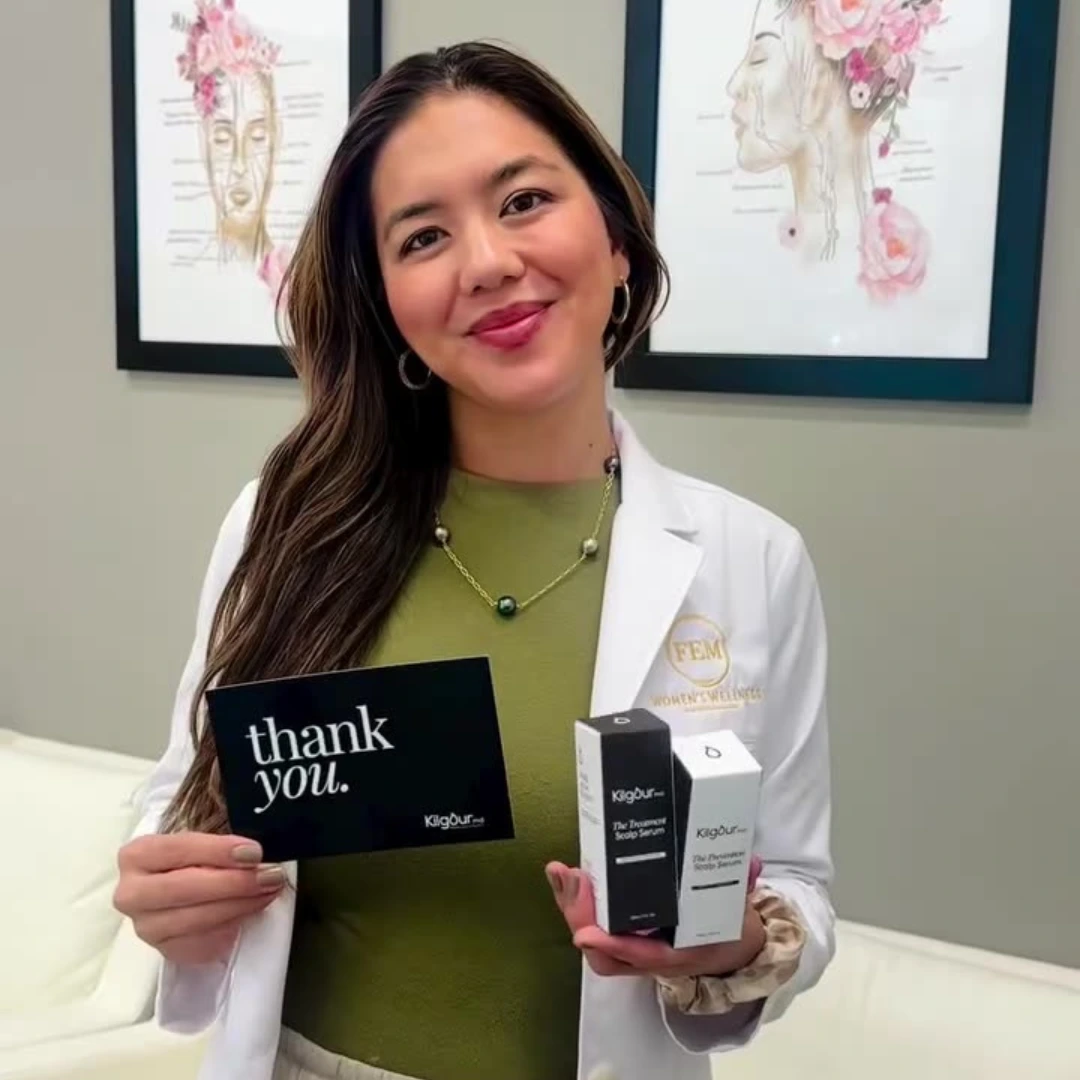
Alyssa Nishihira, PA
Hair Restoration & Restorative Aesthetics
“KilgourMD is the first protocol I’ve seen that actually restarts kenogen follicles instead of just treating the hair above them.”
What Women Are Seeing
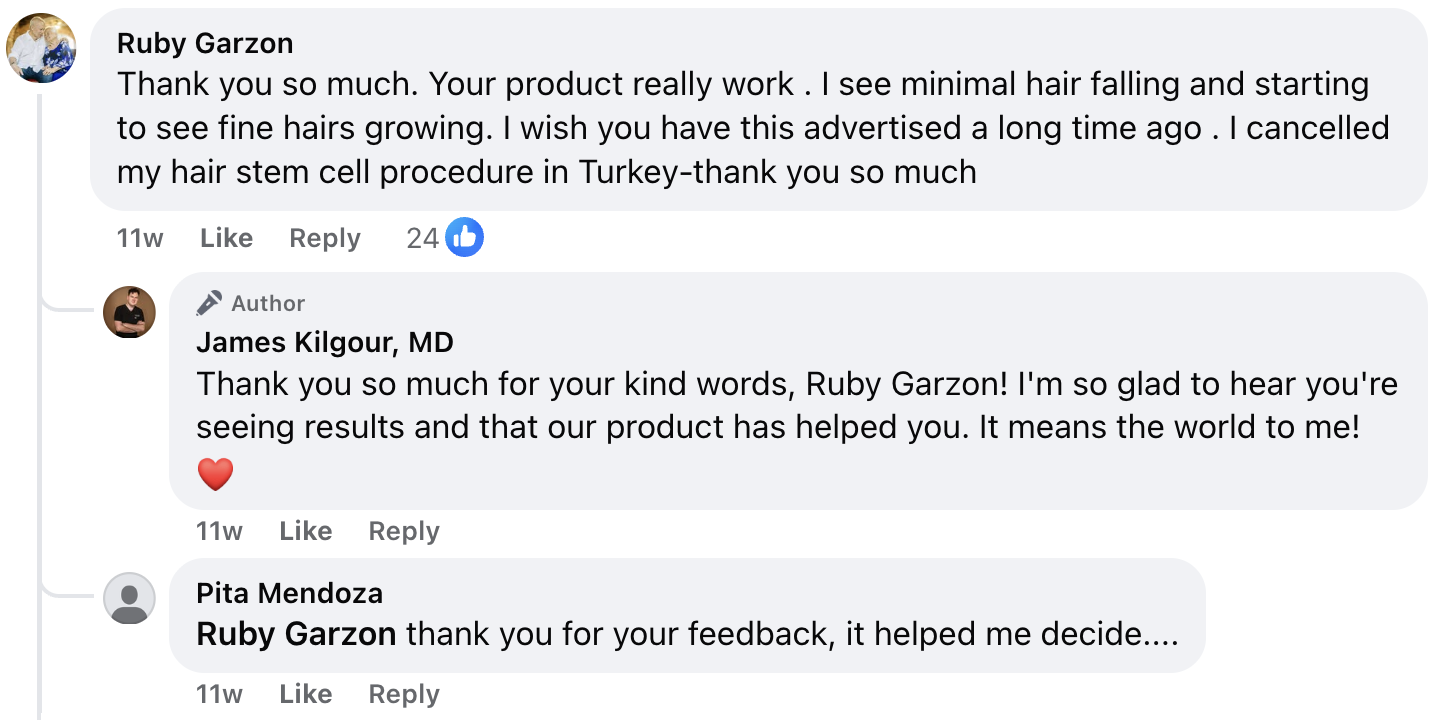
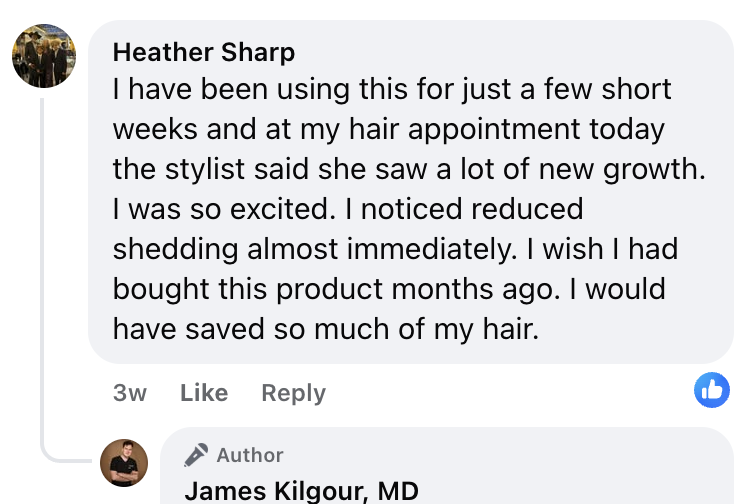
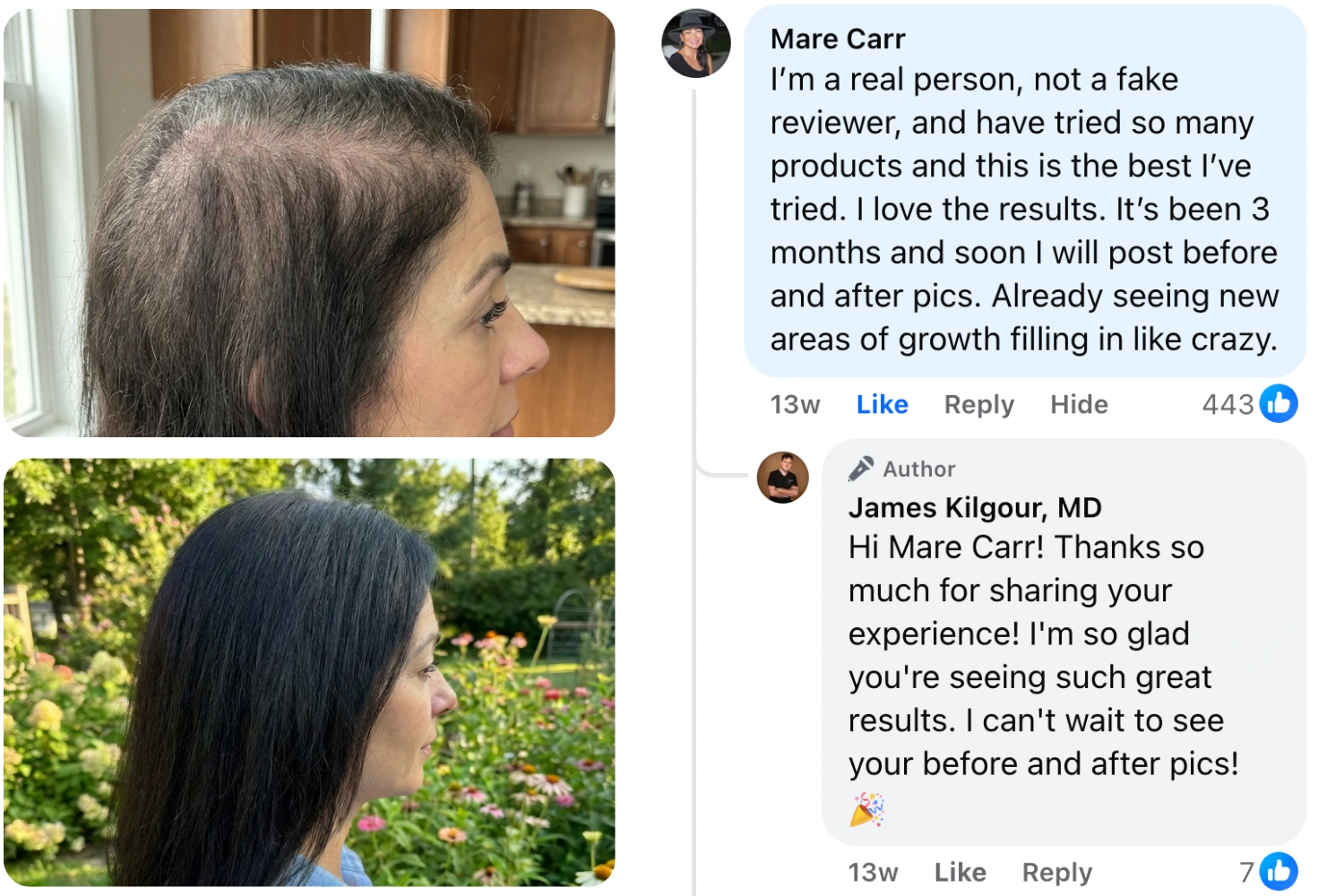
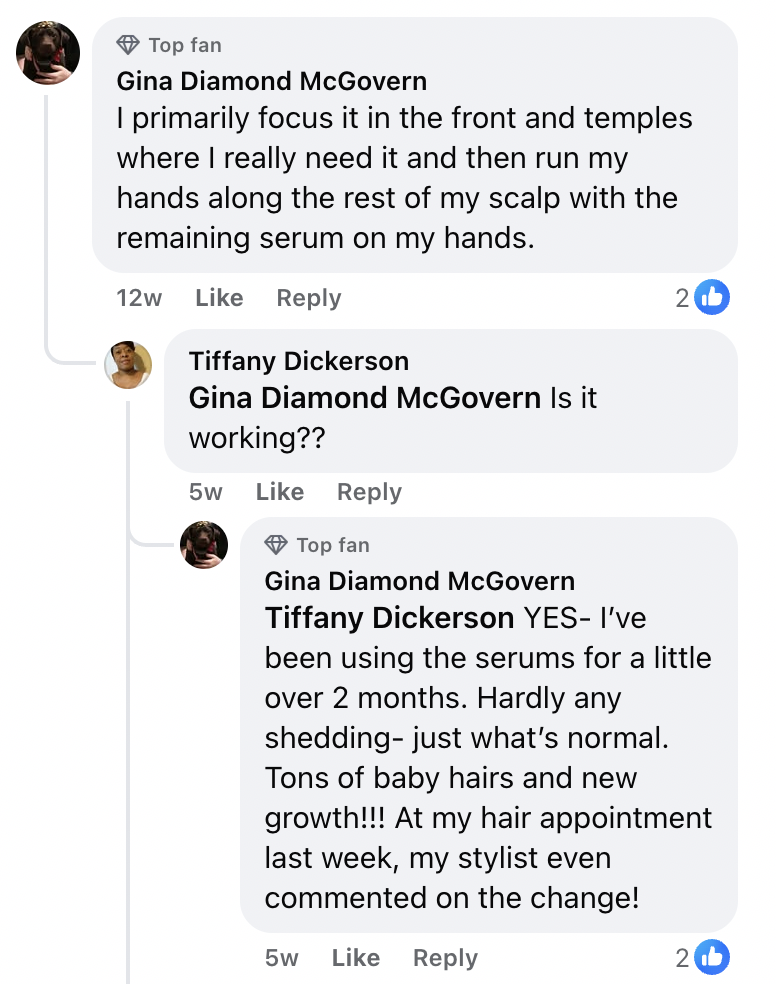
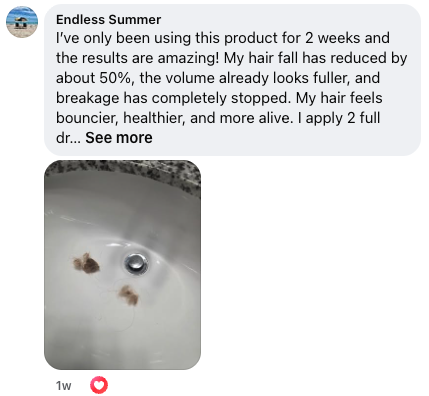
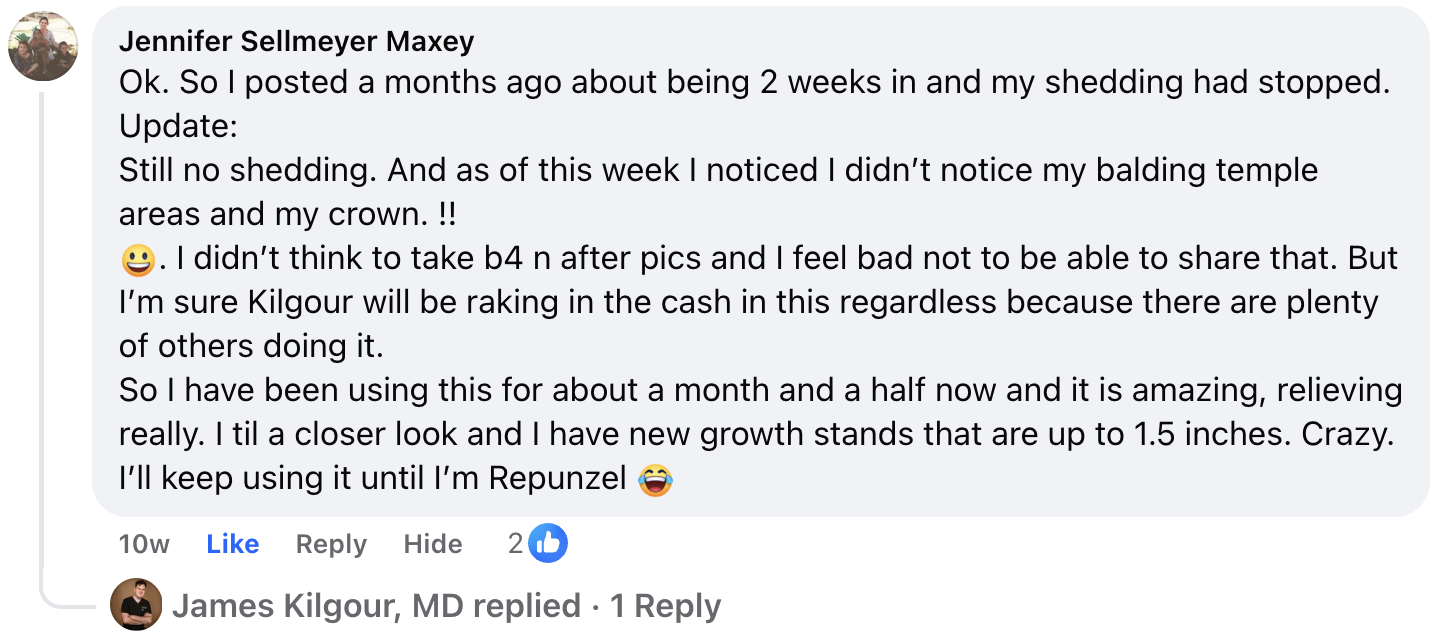
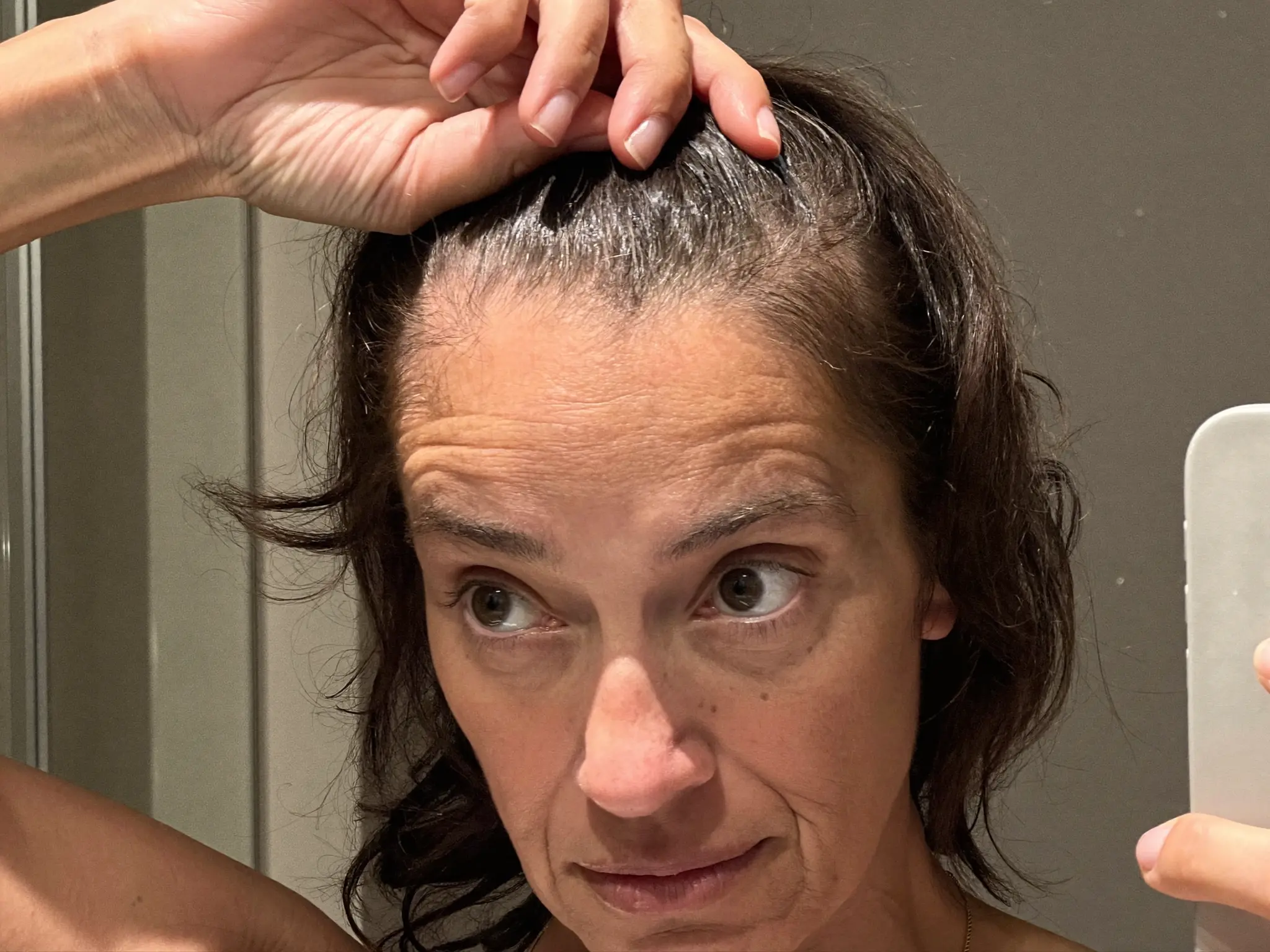
Donna R, 58
Post-Menopause · Using since Feb 2026
“I have baby hairs at my hairline for the first time in years.”
My hairline had been receding slowly for about five years. The baby hairs would try to grow back, get to about a quarter inch, then snap off before they made it any further. Around week 8 on KilgourMD I noticed fine new growth along my hairline that actually stayed. Six weeks after that, those same baby hairs were an inch long. My hairline looks fuller than it has since my late forties.

Stephanie K, 47
GLP-1 user (Wegovy) · Using since Jan 2026
“Down 40 pounds. Got my ponytail back too.”
I started Wegovy late last year. Lost 42 pounds and most of my ponytail along with it. My doctor said it was a “common side effect” and shrugged. I was about to stop the medication just to save my hair. KilgourMD let me keep both. Hair stopped shedding by week 3. By week 10 my ponytail felt heavier in my hand for the first time in over a year.
What The First 90 Days Look Like
-
Days 1–7
The signal starts firing.
DHQG begins binding to stem cells at the base of dormant follicles. The signal is firing beneath the surface.
-
Weeks 2–4
Follicles begin waking.
The signal is reaching more follicles. Stem cells that have been dormant for months begin the first steps of a new growth cycle beneath the surface.
-
Weeks 6–8
Baby hairs along the part line and temples.
Kenogen follicles producing their first new strand in months.
-
Week 12
Visible density. The mirror moment.
Hair that moves differently because there’s more of it. Hair that your stylist notices. Hair that catches you off-guard in photos — in a good way.
90 Days. Full Refund. No Conditions.
Use the serum for 90 days. A few drops before bed. 30 seconds.
If you don’t see new growth by week 12 — email my team. Full refund. Every penny. No forms, no hoops, no questions.
I offer this guarantee because the science earns it. And because the women who don’t respond shouldn’t pay.
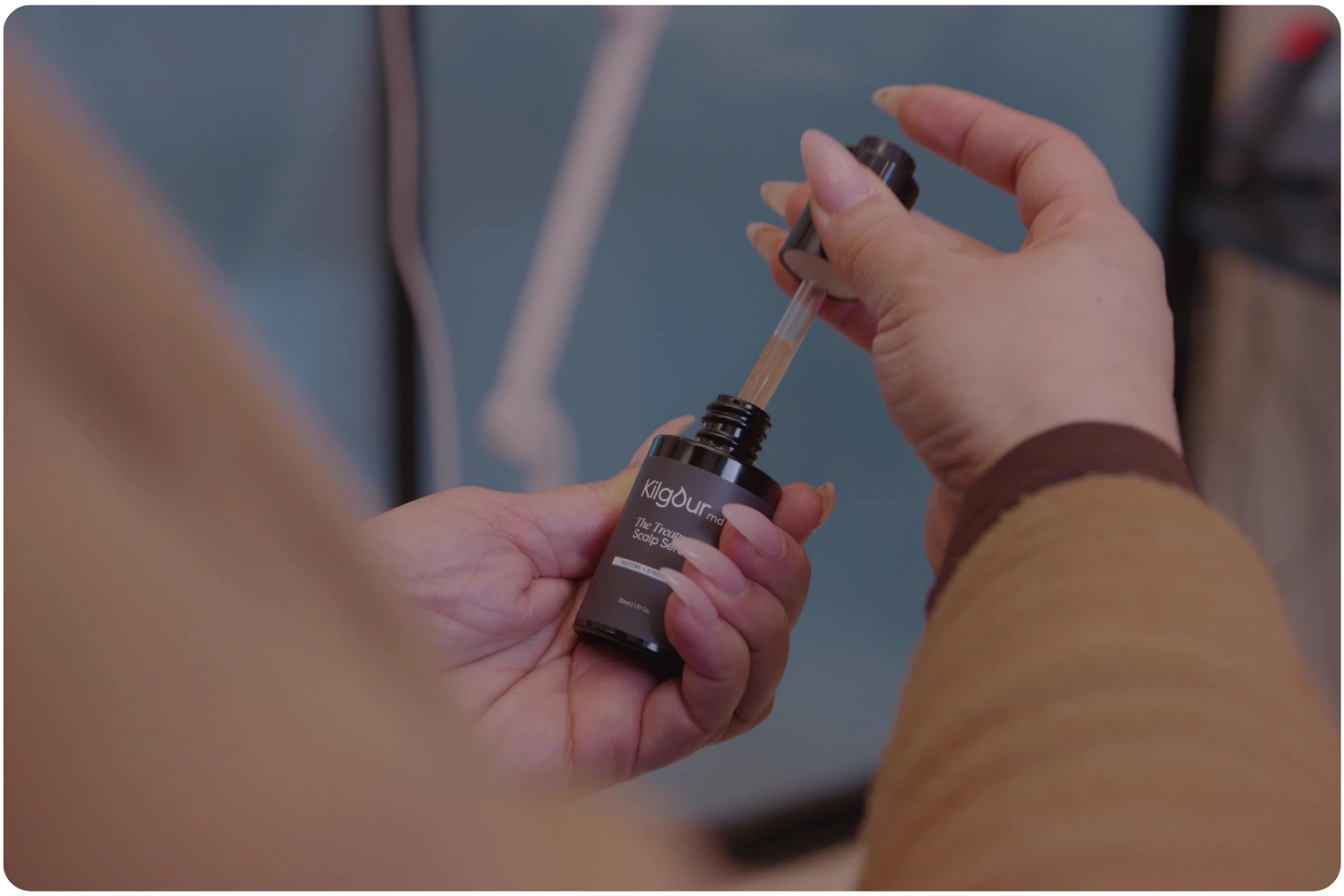
The KilgourMD Treatment Serum
Nine clinically validated compounds built around the only ingredient proven to activate kenogen stem cells directly.
30 seconds · Before bed · That’s the routine
Free shipping · 90-day money-back guarantee
The Signal Has An Expiration Date
Every woman reading this has a choice that gets harder every month she waits.
Right now, statistically, the vast majority of what you’ve lost is kenogen — follicles that are empty but alive. Reactivatable. Waiting.
Six months from now, some of them will have crossed the threshold. Twelve months from now, more. The follicles you could have saved tonight won’t be there next year.
The science isn’t asking you to believe in anything. 85% of women in the trial saw measurable new growth. Every claim on this page has published data behind it. And every dollar is protected by 90 days of unconditional refund.
The only thing left to decide is whether the follicles you have get a signal — or keep waiting for one that isn’t coming.
Free shipping · 90-day money-back guarantee
Frequently Asked Questions
Answers from Dr. James Kilgour, Stanford-Trained Dermatologist
-
“My dermatologist said my follicles are miniaturized. Is kenogen different?”
Miniaturization is real — but research shows it accounts for roughly one-fifth of the density loss in female pattern hair loss. The other four-fifths comes from kenogen — follicles that are empty, not shrunken. Most dermatologists were trained on the miniaturization model before kenogen was formally described. If your thinning is primarily kenogen-driven — which is far more common than most doctors realize — reactivating those follicles is a completely different approach. And the outcomes are faster, because the follicle doesn’t need to rebuild. It just needs to restart.
-
“How do I know if my follicles are in kenogen or permanently gone?”
There’s no way to know for certain without a scalp biopsy. But statistically, in early-to-moderate thinning, the vast majority of density loss is from kenogen. The progression to permanent deletion happens over years. If you’ve been thinning for less than five years and haven’t tried a treatment that targets the stem cells directly, the odds are strongly in your favor. The 90-day guarantee exists so you can find out without financial risk.
-
“How is this different from the supplements I’ve been taking?”
Supplements provide raw materials. A follicle in kenogen doesn’t need materials — it needs a signal to start building again. That’s what Redensyl delivers, directly to the stem cells, topically, bypassing the digestive system entirely.
-
“What if I’m on a GLP-1 medication?”
GLP-1s create a second layer of kenogen risk on top of menopause. The caloric deficit starves the dermal papilla of the energy it needs to restart a growth cycle. Published data shows women on GLP-1s lose hair at significantly higher rates than men on the same drug — because most women already have follicles in early kenogen from estrogen decline, and the medication tips them further. This serum addresses the exact bottleneck their medication is worsening — stem cells that can’t fire without a direct signal.
-
“Am I too far gone?”
Here’s how to check tonight. Stand under the brightest light in your bathroom. Part your hair where the thinning is worst. Look closely at the scalp. If you can see peach fuzz, fine colorless strands, or tiny hairs that never grow past a centimeter — those are follicles in kenogen. They’re not gone. They’re producing something, just not enough to be visible as real hair. That’s a follicle waiting for a signal. As long as you can see those — and most women can — you have follicles left to reactivate.
-
“What if it doesn’t work?”
90 days. Full refund. No questions. 85% saw improvement in the trial. If you’re in the 15%, you pay nothing.
-
“Is this safe alongside HRT or other medications?”
The serum is topical and non-hormonal. It doesn’t interact with HRT, thyroid medication, or any systemic treatment. It works at the follicle level on the scalp — nothing enters your bloodstream. That said, if you have specific concerns, consult your prescribing doctor.
Free shipping · 90-day money-back guarantee