

Both Of These Women Are 9 Months Postpartum. The Difference Between Them Is A Simple 30-Second Daily Habit
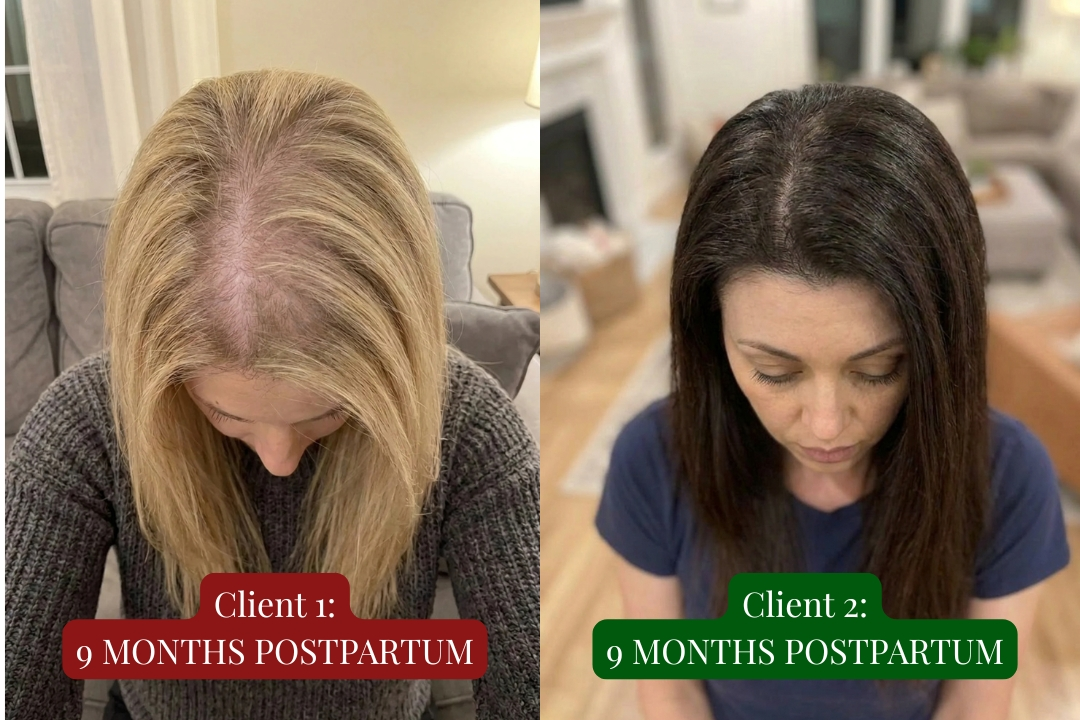
Most new mothers are told the same thing: postpartum hair loss is temporary, it’ll grow back, just give it 6 to 9 months. That advice is accurate for about 1 in 10 women. For the other 9, it’s the reason their hair doesn’t fully recover — because the shedding everyone warns them about isn’t the real problem. What comes after it is.

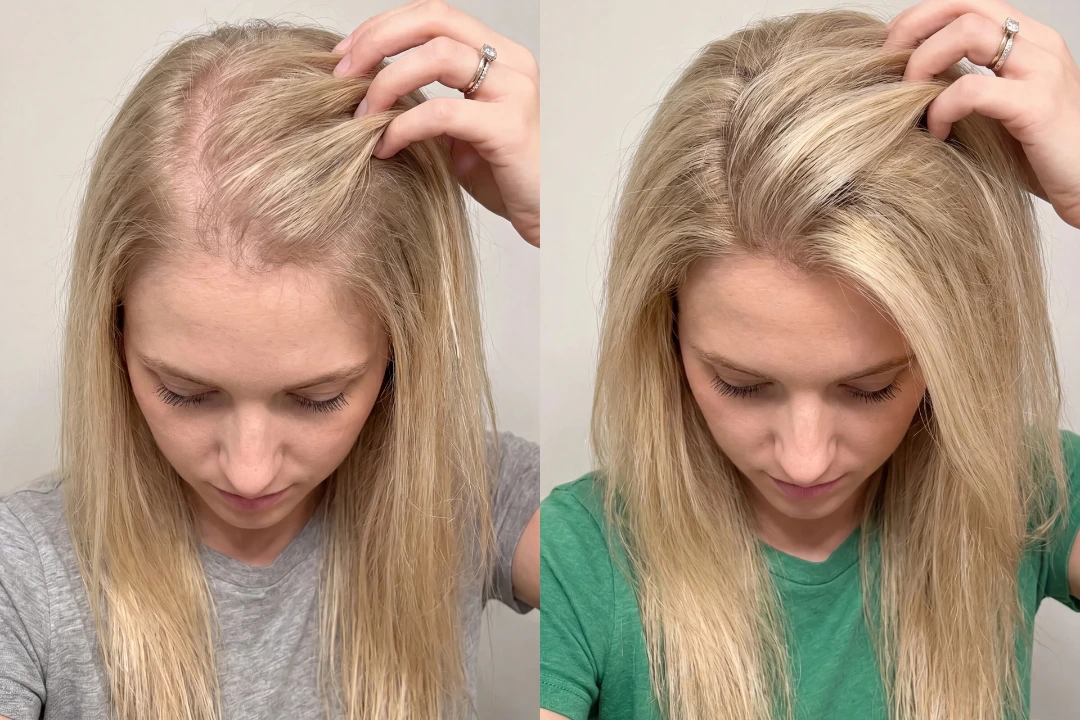
Take a look at these images of two of my clients.
Both in their early thirties. Both postpartum with their first child. Both had the exact same shedding phase between month 1 and month 4 — clumps in the shower, hair on the pillow, the works.
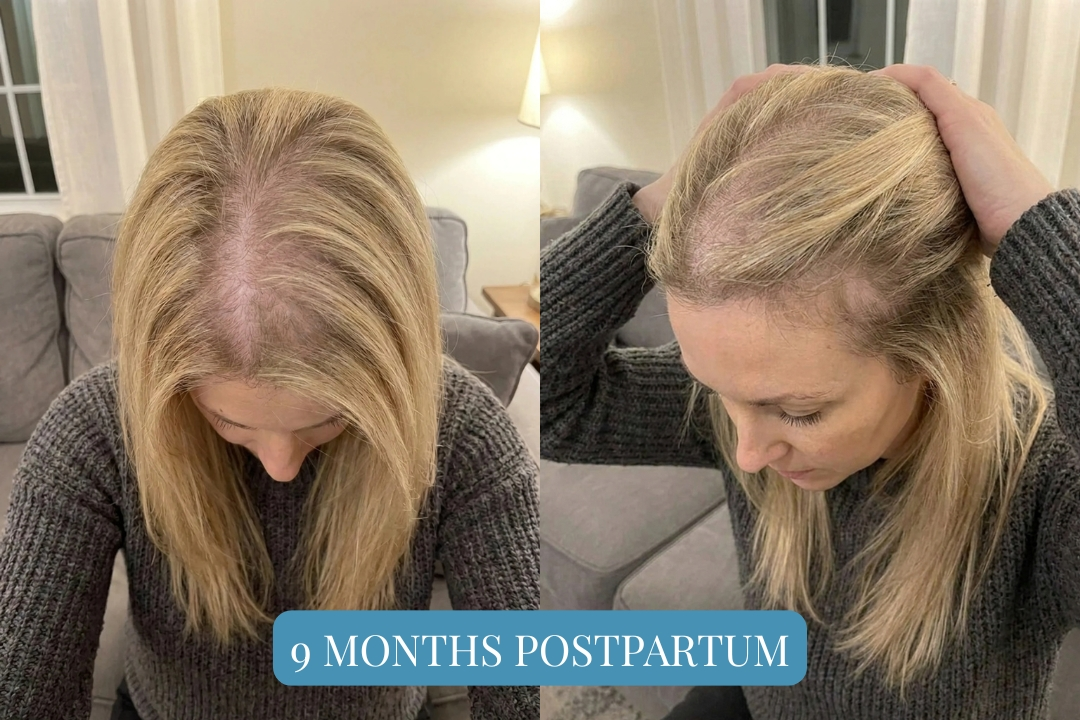
This is the first one.
She came into my clinic at month 9 postpartum, photographed the day of her consultation.
Up until that point, she’d done exactly what every postpartum forum, OB, and Instagram account had told her to do. Took her prenatals. Switched to a high-dose biotin gummy. Bought the silk pillowcase. Used the rosemary oil her sister-in-law swore by. And waited.
The shedding stopped at month 4 — right on schedule.
Then she waited five more months for the rest. The part to close. The ponytail to come back. The temples to fill in.
None of it happened. Her shedding stopped, but her hair never came back. That’s her at month 9 — the photo could have been taken at month 4 the day the shed ended. Five months of waiting bought her nothing.
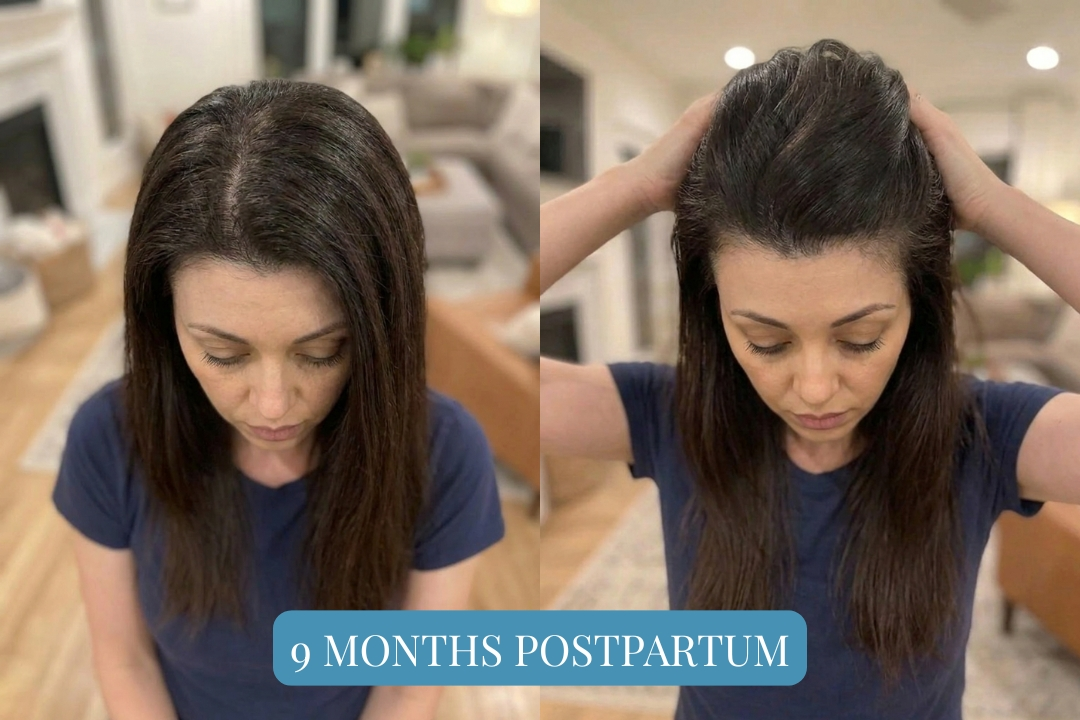
This is the second one. Same age. Same shedding phase from month 1 through month 4.
Photographed at the exact same point — month 9 postpartum.
She didn’t wait longer. She didn’t buy more supplements. She didn’t have “better genetics.”
The difference between these two women was that the second one picked up one habit at month 4 — right when her shedding stopped.
And it isn’t what you’re thinking.
It isn’t minoxidil. It isn’t a prescription. It isn’t a different washing method, more vitamins, or a stricter sleep schedule.
It’s something I built specifically for the phase of the hair cycle that explains why my first client’s hair never came back — and why most new mothers’ hair doesn’t either.
To explain what that habit is and why it works, I’m going to walk you through something most dermatologists weren’t taught.
Who Is James Kilgour?

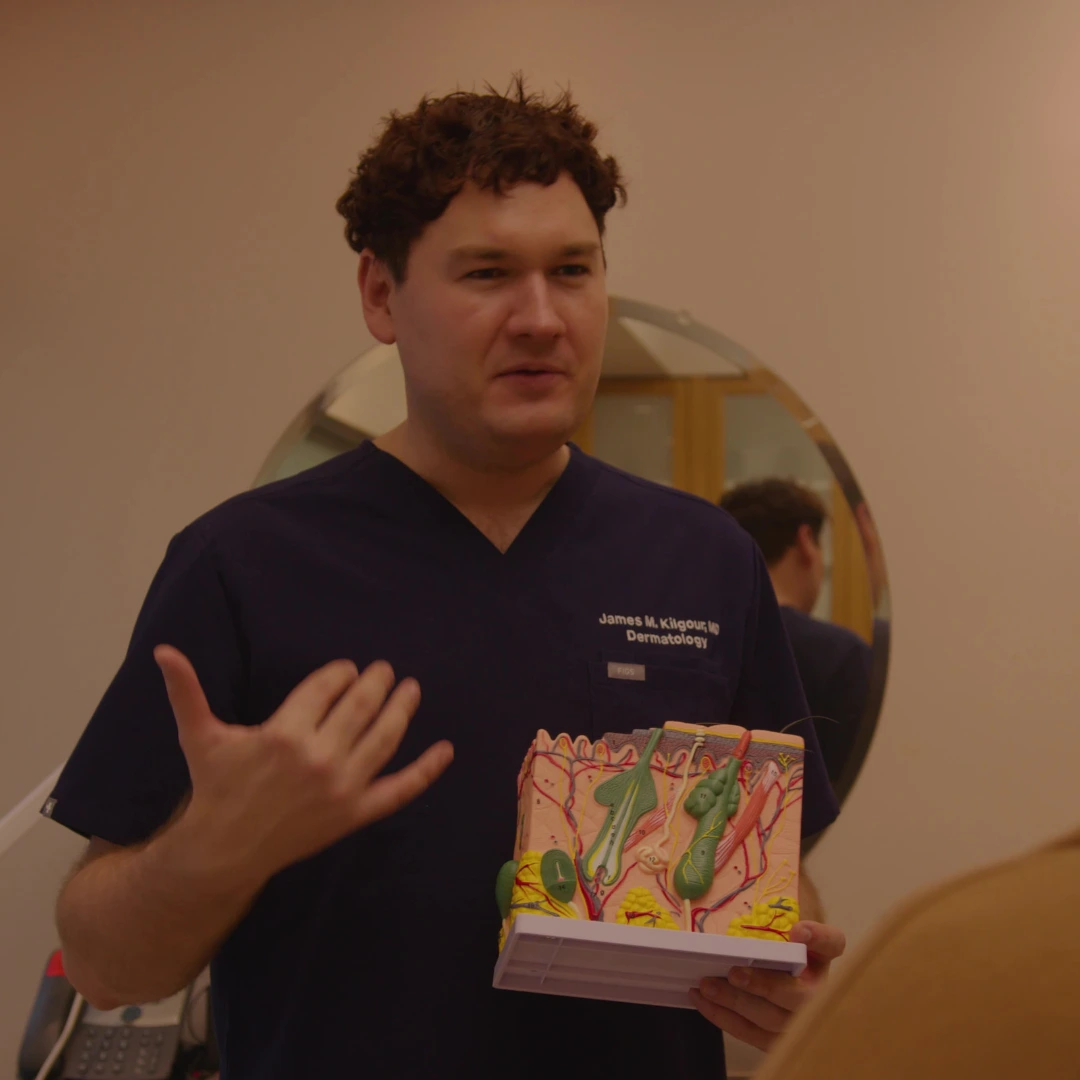
I’m Dr. James Kilgour. I graduated with honors from Cardiff University School of Medicine, completed fellowships at Oxford and Stanford, and I’m board-certified by the American Board of Dermatology. I’ve helped over 150,000 women with hair loss, published research in top dermatology journals, and co-founded a medical journal in my early thirties.
But the work that changed how I practice — and the reason I’m writing this article — didn’t start in a clinic. It started when I realized that an entire generation of dermatologists, including myself, had been trained on a model of the hair cycle that was missing the phase that mattered most for postpartum women.
Almost every patient who comes to me with postpartum hair loss has been told the same three things: it’s telogen effluvium, it’ll grow back on its own, give it a few months.
All three of those statements are partially true. And partially true is exactly the kind of wrong that causes women to struggle with hair insecurities for longer than they should.
Here’s what I mean.
What Most Dermatologists Were Never Taught
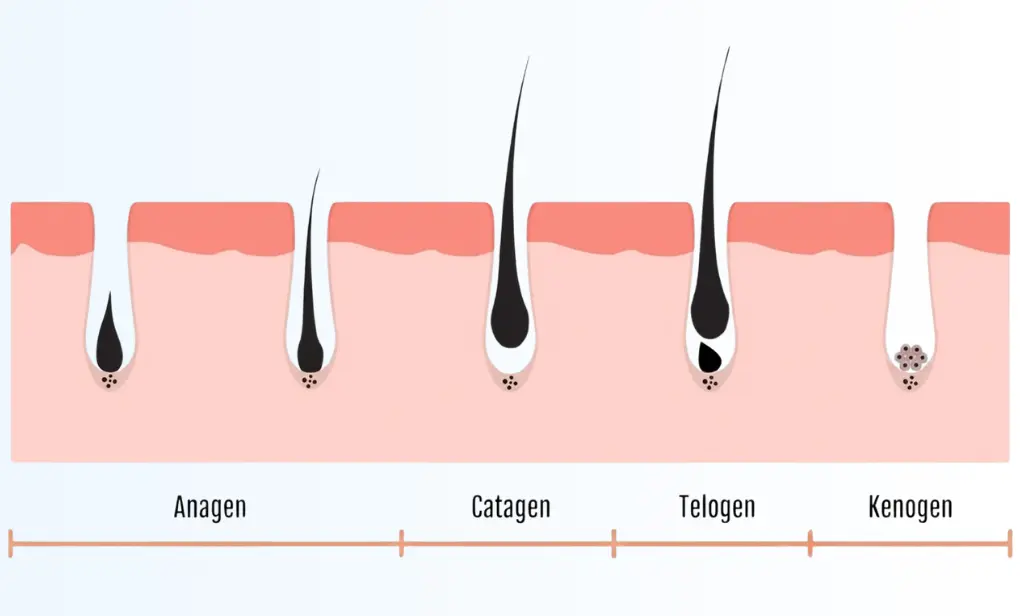
In 2002, two professors at the University of Genoa in Italy published research that should have changed how every dermatologist treats postpartum hair loss.
They identified a phase of the hair cycle that wasn’t in any textbook. They called it kenogen, from the Greek word for “empty.”
Empty kenogen follicles are exactly what they sound like. After a hair sheds, the follicle it came from doesn’t immediately start producing a new one. It sits empty. Containing nothing but the stem cells.
In a healthy scalp, that empty phase lasts about 1 to 2 months. A small fraction of follicles are in it at any given time. You never notice.
In a postpartum scalp, kenogen can stretch to 9 months. 12 months. Sometimes longer. And it can affect hundreds of thousands of follicles simultaneously.
That’s where all your missing hair is. That’s where my first client’s missing hair was at month 9.
Not “shed.” Not “still falling.” Not “slowly cycling.”
Empty — ghost follicles that have been sitting empty for months, unable to restart.
Why All Traditional Hair Products Are Built For The Wrong Problem
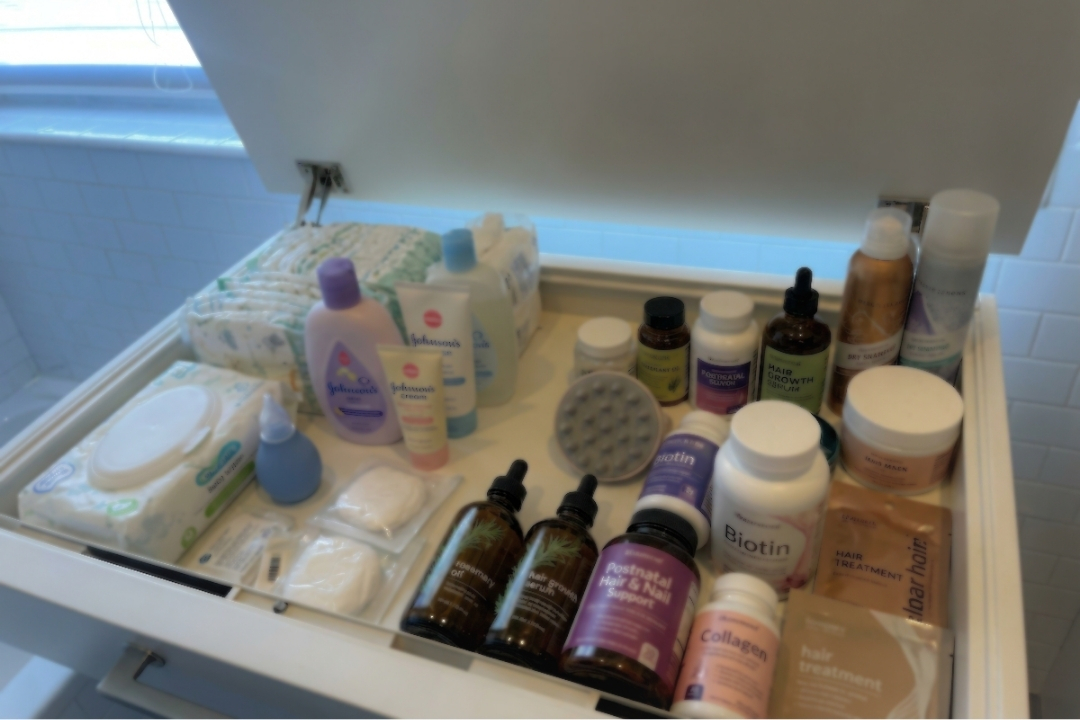
Every supplement, every serum, every “growth booster” you’ve seen marketed to new mothers does the same thing — it tries to push an existing hair through its growth cycle faster.
That approach requires a hair to exist inside the follicle.
A follicle in kenogen is empty. There’s nothing inside it to push.
The only way to get it growing again is to wake up the stem cells underneath and have them build a brand new hair from scratch.
And until recently, no postpartum product on the market was ever built to do that.
“This is the conversation I have with new patients every week. They’ve spent $600, sometimes $1,200 on supplements and serums that were all working on a problem their body finished solving by month 4. They’re not stuck in any cycle. Their follicles are empty, and nothing in their cabinet is built to communicate with stem cells.”
This is why my first client’s supplements didn’t work. Why her scalp massage didn’t work. Why her rosemary oil didn’t work.
Why This Is Happening — Even To Women Who’ve Done Everything “Right”

There are four specific areas keeping a new mother’s follicles empty. Each one is doing damage. They compound on each other. And every existing postpartum product ignores all four.
1.Prolactin Is Shutting Down Your Stem Cells
This is the most important mechanism — and it’s the one I almost never hear discussed anywhere outside academic dermatology.
Prolactin is the hormone that makes breastfeeding possible. It surges up to 8 times baseline after delivery and stays elevated for as long as you nurse.
Here’s what nobody tells new mothers: prolactin has receptors that sit directly on the stem cells at the base of every hair follicle. The same cells that are supposed to wake up and start a new hair cycle.
When prolactin binds to them, three things happen. The follicle gets pushed out of the growth phase early. The stem cells start to die off. And the “restart” signal — the one that’s supposed to begin the next hair cycle — gets actively suppressed.
In plain language: your body, while you’re breastfeeding, is literally shutting down the cells responsible for starting new hair growth. It’s not a side effect. It’s a direct mechanism. And it gets worse the longer you nurse.
Research confirms it: women who breastfeed for 6–12 months have roughly 6 times the odds of severe postpartum hair loss compared to women who stop earlier. Not because of calories. Not because of nutrient drain. Because of prolactin directly suppressing their follicle stem cells.
2.Estrogen Withdrawal Has Weakened The Restart Signal
Beneath every follicle sits a signaling structure called the dermal papilla — the “on switch” that tells the stem cells it’s time to build a new hair.
That signal partly runs on estrogen.
During pregnancy, your estrogen was elevated to levels your body had never seen before. The papilla was broadcasting at full volume. Every follicle was held in growth.
Postpartum? Estrogen drops by 90%+ in a matter of days. The papilla’s restart signal drops from a shout to a whisper.
Even if your stem cells weren’t being suppressed by prolactin, the signal telling them to wake up is now so faint that most follicles stay asleep by default.
3.Cortisol From Sleep Deprivation Is Making Everything Worse
You’re running on four hours of fragmented sleep. Your cortisol is elevated. Cortisol does to hair exactly what prolactin does — shortens the growth phase, stresses the stem cells, suppresses the restart signal.
And prolactin and cortisol don’t cancel each other out. They stack.
A breastfeeding mother with a newborn has both hormones working against her follicles simultaneously. This is why the hair loss feels so much worse than what anyone warned you about.
The Clinical Reality
This is where the standard “just wait it out” becomes genuinely bad advice. And as a doctor, I want to tell you this straight.
Over 90% of postpartum women who seek consultation for hair loss have an underlying condition that the pregnancy masked — and the postpartum shed just revealed.
In a 2024 study of 200 postpartum women who came in for hair loss, here’s what researchers found:
9.5%
Pure postpartum shedding — would resolve on its own
56%
Postpartum shedding PLUS underlying hormonal hair loss
For most women, hormonal hair loss was already starting before they ever got pregnant. The elevated estrogen of pregnancy covered it up — held every hair in growth, masked the thinning, gave those famous “pregnancy hair” months when your hair felt thicker than it ever had.
Then you delivered. Estrogen crashed. And the mask came off in the most dramatic way possible.
This is what no one is telling new mothers. The shedding that happens months 2 to 4 — that does resolve on its own. That part of the standard advice is accurate. But the thinning that comes after? The part widening, the ponytail that stays smaller, the baby hairs that never come in? That’s not self-resolving. That’s underlying kenogen biology that the pregnancy unmasked. And it does not get better on its own.
This is what happened to my first client. The shed ended. The kenogen didn’t.
Waiting 12 months doesn’t return 9 out of 10 women to their pre-pregnancy baseline. It returns them to a worsened baseline — one the pregnancy arguably accelerated.
And Every Month You Wait, The Window Closes Further
This is the part most women learn too late.
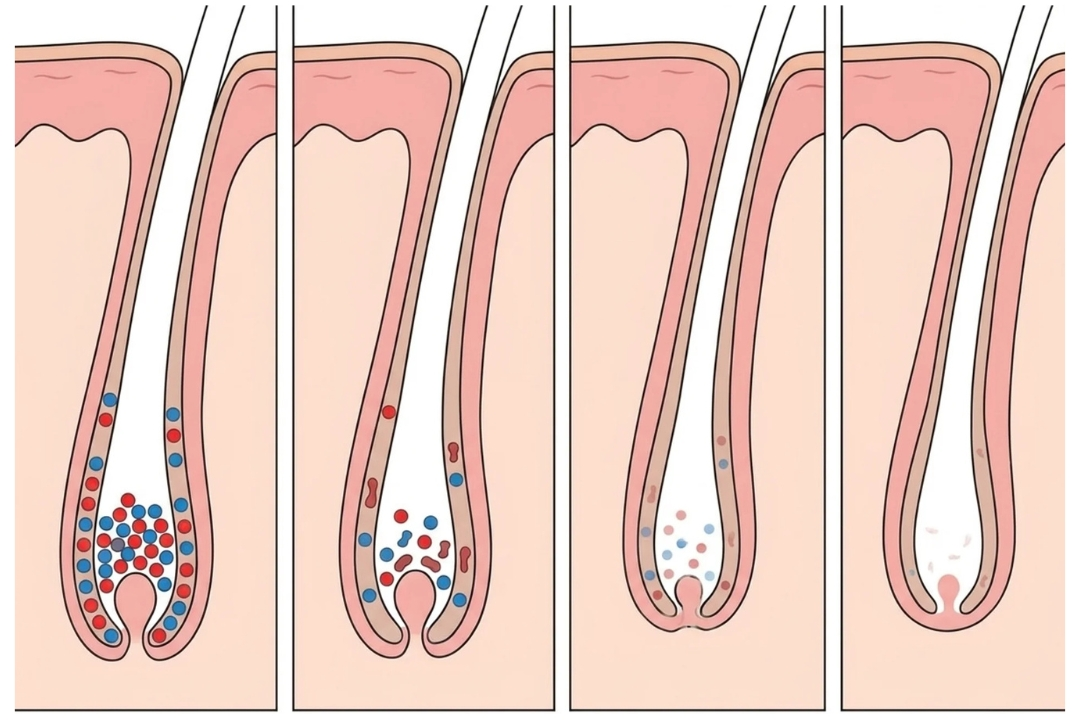
Every month a follicle sits in prolonged kenogen, its stem cells are under continuous stress from prolactin and cortisol. The stem cell pool — the finite reserve you were born with — slowly depletes.
The consequences stack:
-
Months 4–6 of empty kenogen
Stem cells are stressed but largely intact.
A restart signal delivered now recruits most follicles back into growth. This is the easy window. This is exactly where my second client started.
-
Months 6–9
Stem cell attrition begins.
Some follicles no longer respond to normal restart signals. The ones that do wake up produce thinner, weaker hairs than the originals.
-
Months 9–12+
A meaningful fraction of follicles cross into miniaturization.
Producing only fine, colorless vellus hairs instead of terminal hairs. Miniaturization is still reversible, but each month it persists makes full reversal harder.
-
Beyond 12 months
The progenitor cells can be lost entirely.
When that happens, the follicle is effectively dead. No topical, no drug, no surgery can bring it back.
The thinning gets more entrenched, not less. Regrowth gets harder. Follicles that would have bounced back easily at month 4 require much heavier intervention at month 10. And follicles that slip completely away between months 9 and 18 may never return to full production.
The door doesn’t slam shut — it slowly narrows. But it is narrowing.
What I Built For My Patients
Once I understood that postpartum kenogen was the actual problem, I went into the lab with a single question: what would actually wake an empty postpartum follicle back up — and keep it producing hair?
I spent 18 months testing formulations. Most of what’s already on the market goes after one piece of the problem. Supplements throw raw materials at a follicle that isn’t building anything. Minoxidil pushes blood to a follicle that isn’t producing. None of them touch the actual reason the follicle is empty in the first place.
What I needed was something that could do the one thing nothing else on the market could: reach the stem cells inside the dormant follicle and tell them to start growing again. And then, around that, an environment that would let the new growth actually hold.
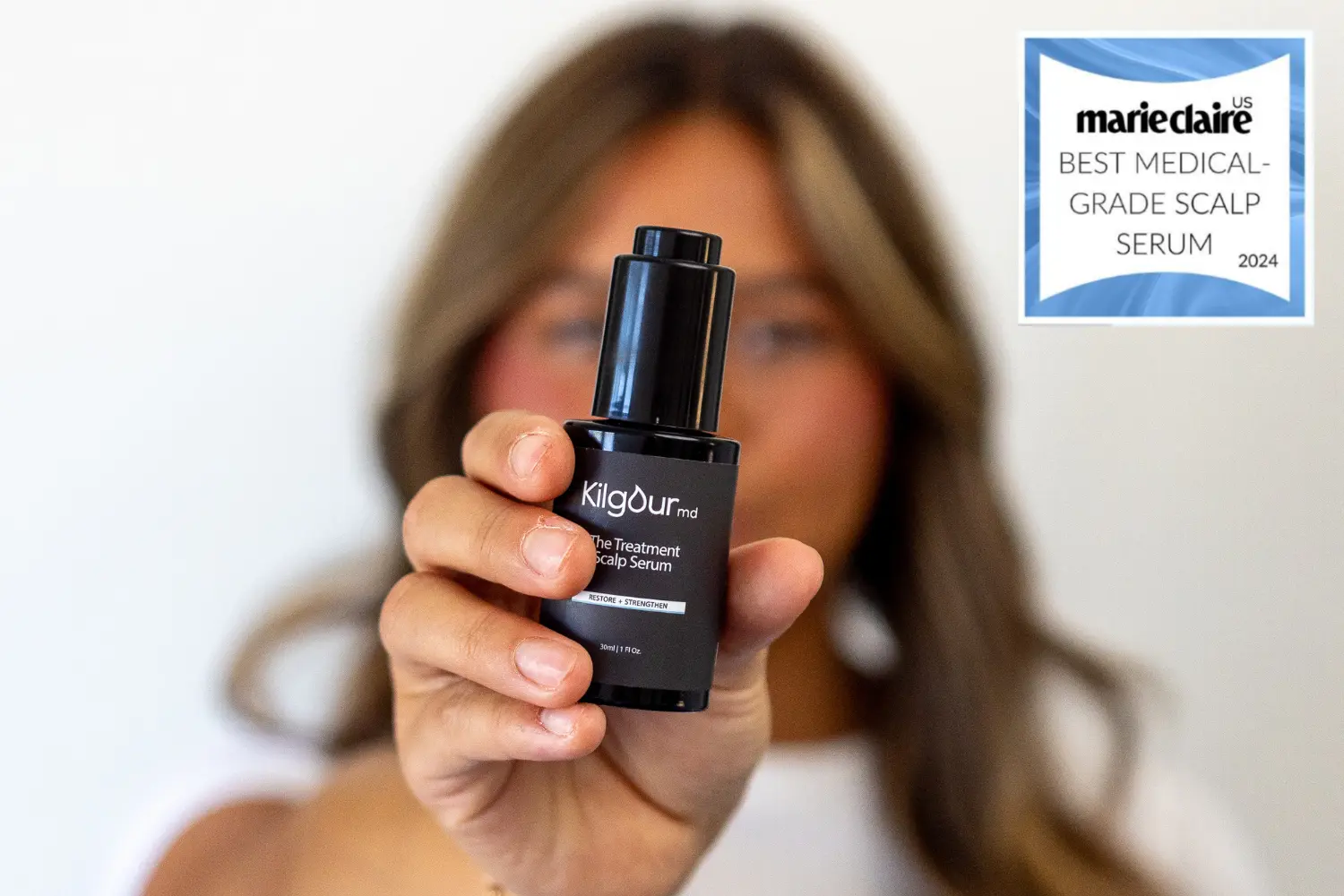
That’s what the KilgourMD Treatment Serum does.
How The Treatment Serum Works
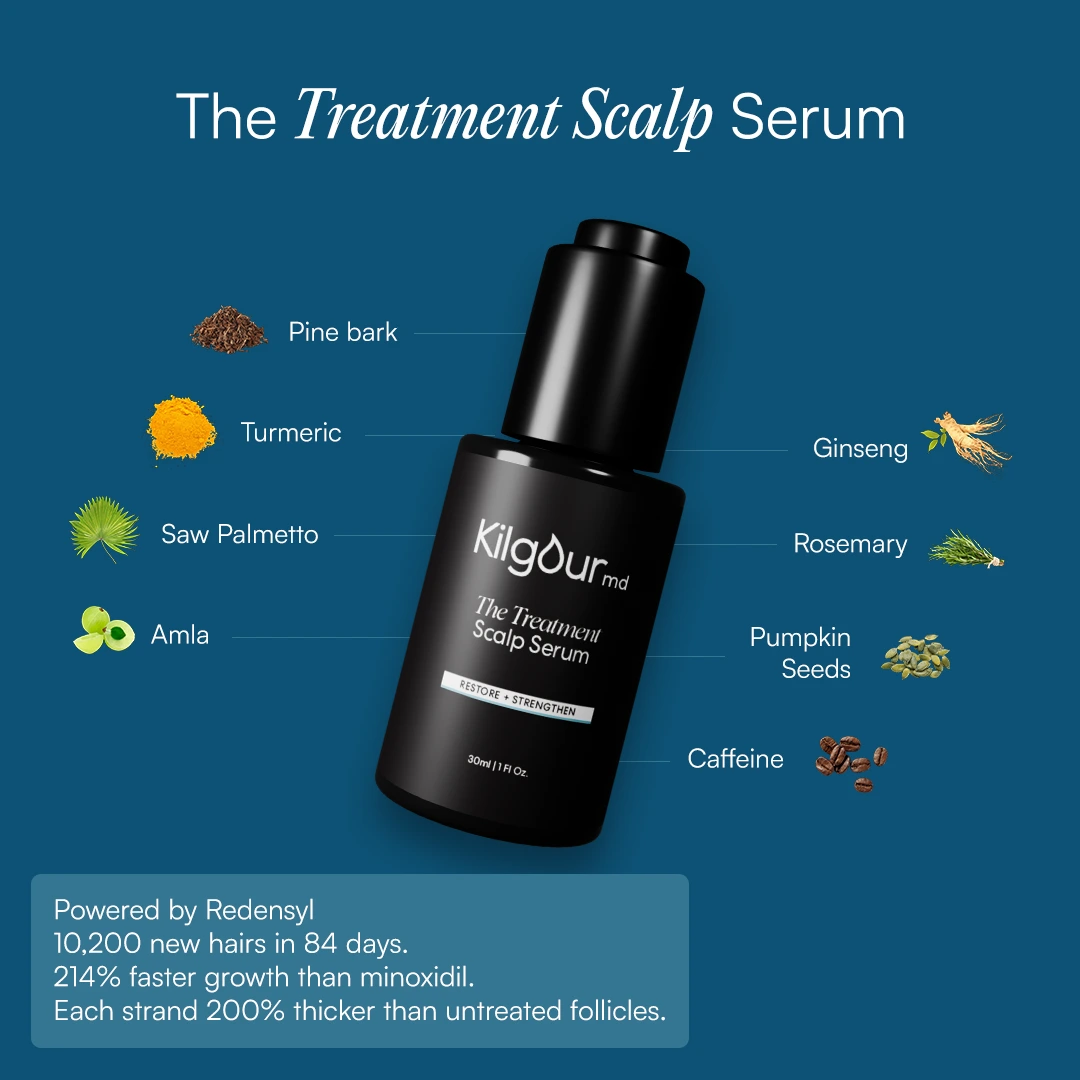
The Treatment Serum is built around a breakthrough compound called Redensyl — supported by additional ingredients that handle what Redensyl alone can’t.
Redensyl Pushes Follicles Out Of Kenogen
For years, the stem cells inside a dormant follicle were considered untouchable. They sit in a protected niche at the base of every follicle. They’re the gatekeepers — they decide whether a follicle grows a new hair or stays empty. And nothing in the hair loss industry had ever been able to reach them directly.
That changed when a Swiss biotech lab isolated a compound from larch wood that did exactly that. They called it Redensyl.
Here’s what happens when Redensyl reaches a postpartum scalp:
It wakes up the stem cells directly. Redensyl binds to the stem cells and activates them from the outside, bypassing the hormonal signal entirely. In lab testing, it increased their activity by 400–700% — sending the exact restart signal postpartum hormones have been suppressing.
It protects those stem cells from prolactin shutdown. While prolactin is actively trying to shut these cells down, Redensyl shields them. This is the mechanism that matters most if you’re breastfeeding. You don’t have to wean to use the Treatment Serum.
What’s In The Serum Alongside Redensyl
Redensyl is what wakes the follicles up. But waking them up isn’t enough — the new hair needs an environment that will actually let it hold. That’s what the rest of the formulation handles.
- EGCG2 — for inflammation. Postpartum scalps run inflamed in a way most women never feel, but the follicles do. Cortisol from sleep deprivation and the hormonal shifts after delivery quietly ramp up the inflammation at the follicular level. EGCG2, a stabilized green-tea-derived compound, calms it down. Without that, the woken-up stem cells don’t stay awake.
- Glycine and zinc — for hair strength. Glycine is the amino acid backbone of keratin, what every new hair shaft is built from. Zinc is the cofactor that locks keratin into its strong, cross-linked structure. Most postpartum women are running short on both, and oral supplements don’t fix it — your digestive system routes nutrients to vital organs first, and hair follicles are last in line. Delivering them topically, directly to the follicle, skips that bottleneck entirely.
What The Clinical Data Shows
In Redensyl’s pivotal 3-month clinical trial:
10,000+
New hairs across a typical scalp in 84 days
85%
Of users saw visible regrowth
Plus follicles shifted out of the empty state at a rate that can’t be explained by any mechanism other than actual kenogen reversal.
To put that 10,000-hair number in perspective: a hair transplant moves 3,000 to 4,000 follicles from the back of the scalp to the thinning area, costs $10,000 to $25,000, and comes with surgical recovery.
Redensyl, found in our Treatment Serum, produced more than twice that amount of new hair in 84 days — from follicles that were already there, just dormant. No surgery. No donor site. No shedding phase.
In head-to-head follicle-level comparisons against minoxidil, the Treatment Serum’s core mechanism produced roughly twice the growth — with no dependency, no side effects, and no concerns about breastfeeding safety.
It’s non-hormonal. Non-vasoactive. Not systemically absorbed in any meaningful quantity. And it doesn’t build dependency.
What Other Experts Are Saying

Jennifer Hanway
Board-Certified Holistic Nutritionist · Medical advisory boards for L’Oréal Paris and Johnson & Johnson
“I’ve spent 19 years advising for the biggest names in beauty and working with everyone from Royal Family members to Olympic athletes. I’ve had countless new moms as clients and there has never been a gold standard solution for postpartum hair loss until now. KilgourMD is the first protocol that addresses the empty phase of the cycle everything else ignores.”

Alyssa Nishihira, PA
Hair Restoration & Restorative Aesthetics
“KilgourMD is the first protocol I’ve seen that actually restarts kenogen follicles instead of just working on the hair above them. For postpartum patients specifically it’s become the answer I reach for first.”
Back To The Two Clients
Now you understand the difference between those two photos.
My first client — the one whose hair didn’t come back at month 9 — wasn’t unlucky. She wasn’t doing anything wrong. She was simply doing exactly what every postpartum forum, OB, and Instagram account told her to do. And what they told her to do was solve a problem her body had already finished solving four months earlier.
Her shedding ended at month 4 like it was supposed to.
But the thousands of follicles that had shed during that window were now sitting empty. In kenogen. Under continuous suppression from her elevated prolactin (she was still breastfeeding), her depleted estrogen, her cortisol from a baby who didn’t sleep, and a nutrient profile that wouldn’t recover for months.
The supplements she was taking? They went to her vital organs first. The rosemary oil? It was supporting follicles that were already producing hair, which hers weren’t. The “patience” everyone advised? It was the mechanism by which her hair loss became something harder and harder to recover from.
By month 9, when she came to my clinic, she’d lost months of intervention window — and started crossing into miniaturization at her temples.
My second client started the Treatment Serum at month 4 — right when her shedding stopped, right when her empty follicles were at their most responsive. She didn’t need to do more than my first client. She needed to do something different.
The difference between these two photos is a 30-second daily habit, started five months earlier.
What Other New Moms Are Saying
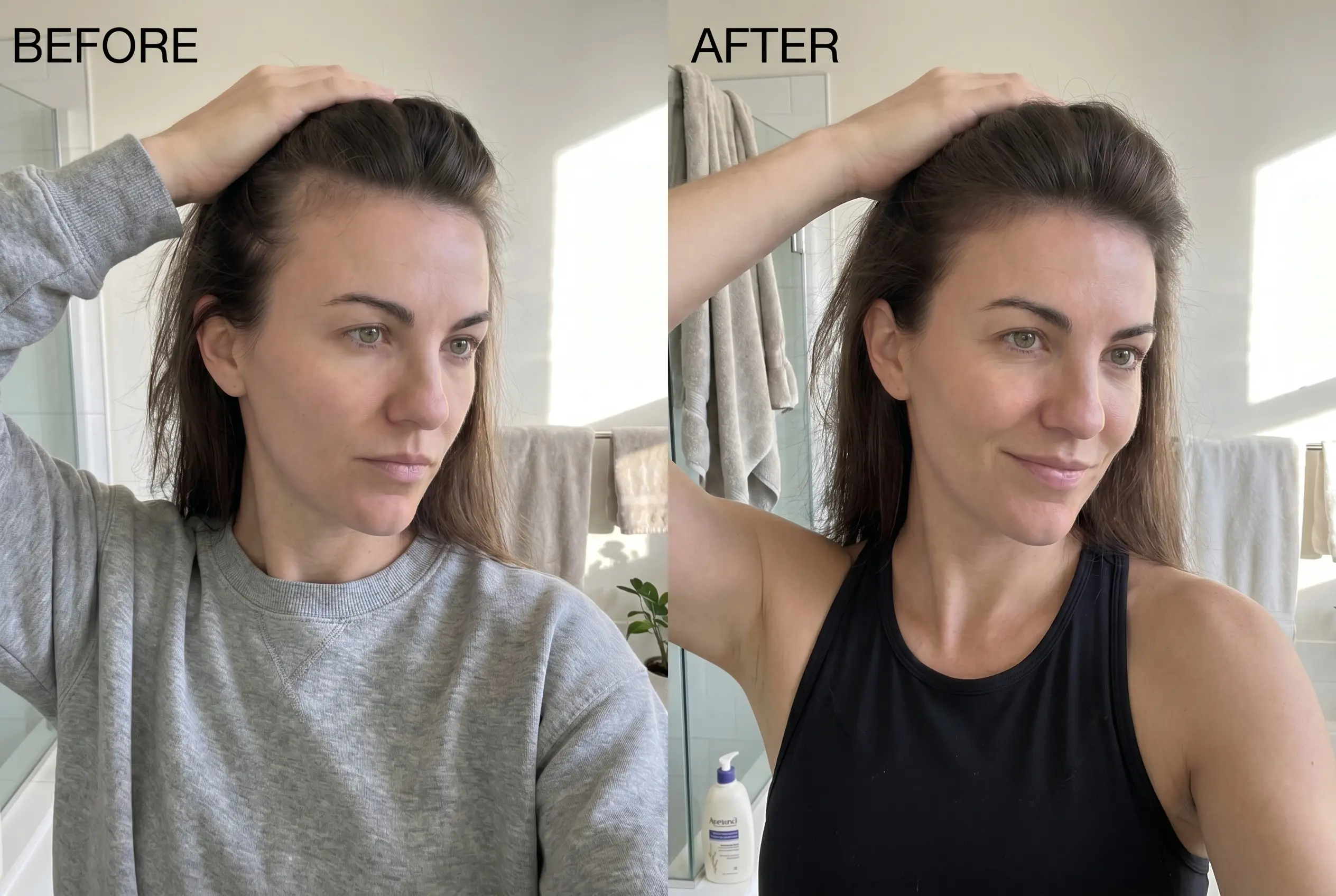
Megan, 34
11 months postpartum
“First new growth I’ve had since my daughter was born.”
New growth along my whole hairline. I thought I was looking at flyaways at first. They’re baby hairs.
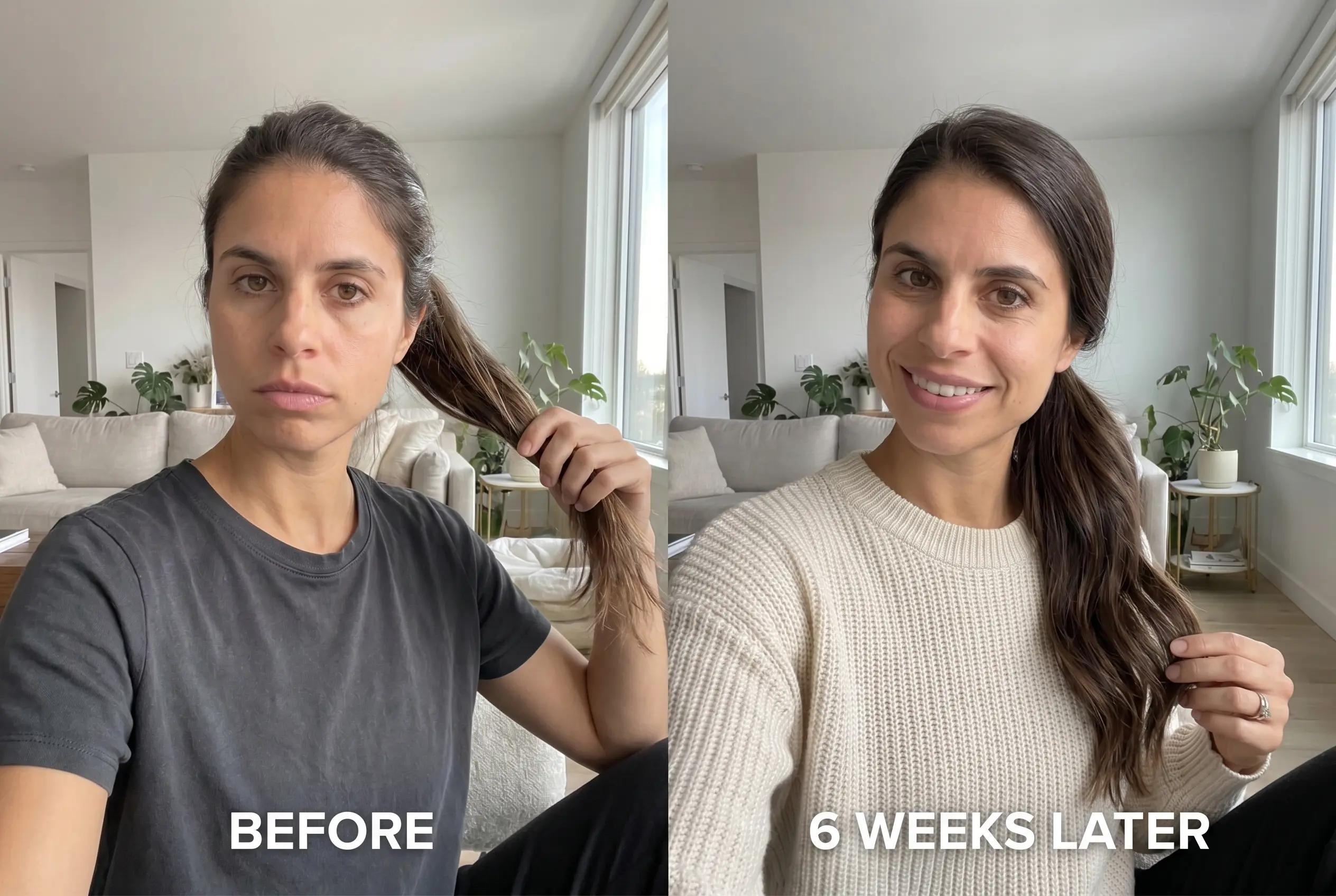
Priya, 31
15 months postpartum
“Six weeks in and my shedding finally stopped.”
It had been going for over a year. My hairdresser asked what I was doing because my ponytail was thicker in the chair.
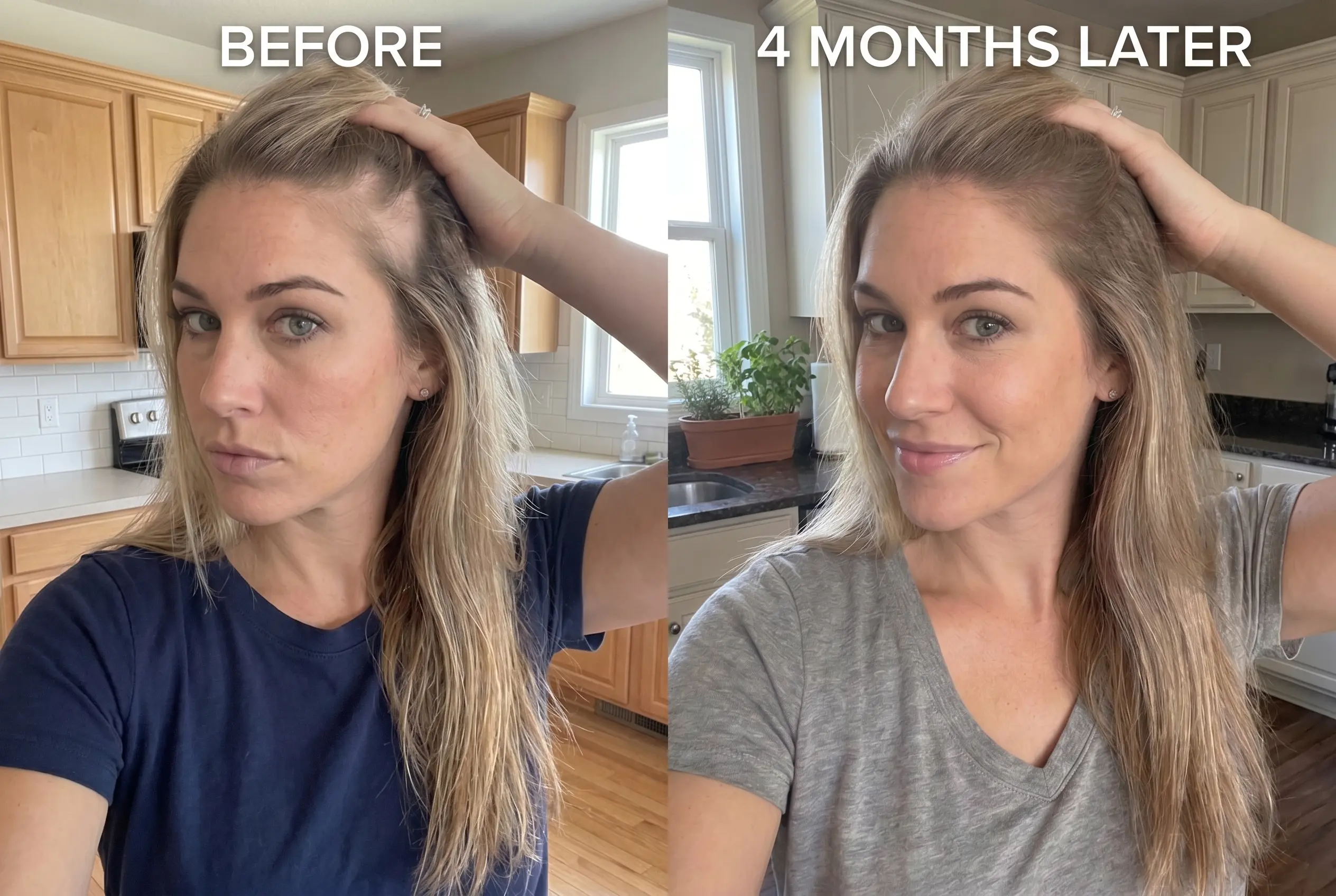
Chloe, 29
8 months postpartum · Still breastfeeding
“My doctor said I had no options. I found this.”
I’m still breastfeeding. Four months later the bald spot at my temple has filled in completely.
Rachel, 37
2 years postpartum
“Wish I had started the day I gave birth.”
I waited 18 months ‘for it to grow back.’ It didn’t. Started KilgourMD. Three months later it was.
Over 150,000 women have started this routine.
What Your First 90 Days Look Like
It’s a two-step routine. 50 seconds. Before bed. After your regular skincare.
-
Days 1–7
The signal starts firing.
Redensyl begins binding to the stem cells at the base of dormant follicles. The signal is firing beneath the surface. You won’t see anything yet. You’re not supposed to.
-
Weeks 2–4
Follicles begin waking.
The signal reaches more follicles. Stem cells that have been dormant for months begin the first steps of a new growth cycle. Underground, out of sight.
-
Weeks 6–8
Baby hairs along your part line and temples.
The first physical evidence your follicles are exiting kenogen. Shedding drops sharply — in the clinical trial, by 68%.
-
Week 12
Visible density. The mirror moment.
Hair that moves differently because there’s more of it.
-
Months 4–6
The part starts to close.
Styles hold, ponytail fills in.
90 Days. Full Refund. No Conditions.
Use the Treatment Serum for 90 days. If you don’t see new growth — email my team. Full refund. Every penny. No forms, no hoops, no questions.
“I offer this guarantee because the science earns it. And because the women who don’t respond shouldn’t pay.”
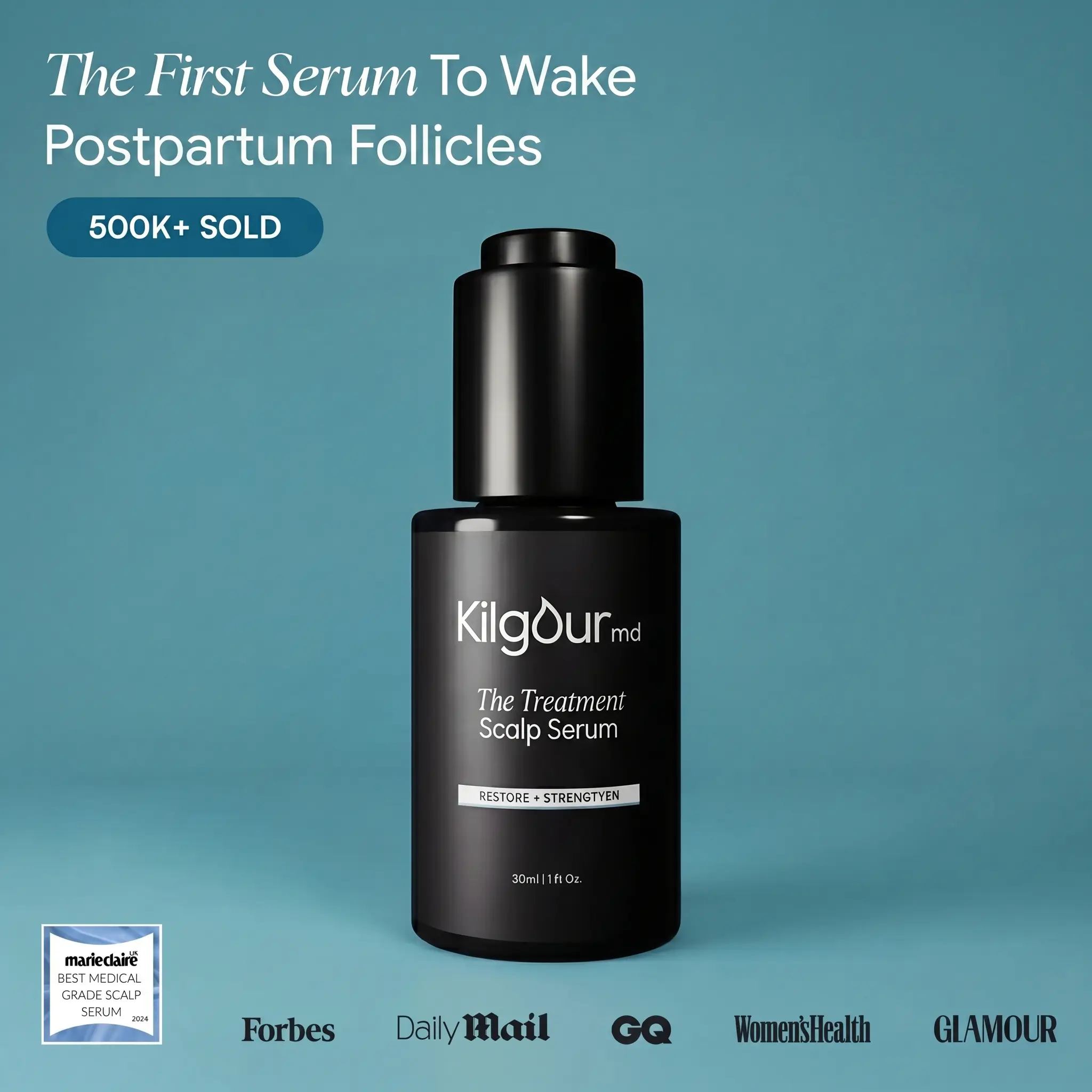
The KilgourMD Treatment Serum
Built around Redensyl — the only ingredient proven to reactivate kenogen stem cells directly. Safe alongside breastfeeding.
50 seconds · Before bed · That’s the routine
- 90-Day “Bottom of the Bottle” Guarantee — Use the entire system for three months. If you don’t see results, full refund.
- Zero-Hassle Refund — No complicated returns, no partial refunds. If you’re not completely satisfied for ANY reason, you get your money back.
- Safe Alongside Breastfeeding — Non-hormonal. Non-systemic. Works at the follicle level on your scalp. Nothing enters your bloodstream.
Free shipping · Made in the USA · 90-day money-back guarantee
Where You Are Right Now Matters
-
Month 2–4 Postpartum
In the active shed — the best window to start.
The shed itself will end on its own, but what comes after it won’t — and starting now means your follicles get the restart signal before they’ve spent months sitting empty. You’re protecting the stem cells from prolactin shutdown while it’s happening, not trying to recover them afterward. Every woman in the clinical trial who started earlier responded faster. This is exactly when my second client started.
-
Month 3–12 Postpartum
Shedding has slowed but hair isn’t coming back — the main window.
The follicles are empty, not gone. The stem cells are under pressure but mostly still there. The restart signal is suppressed but can be re-delivered. This is where Treatment is highly optimal.
-
Past Month 12
Still in a window — just a smaller one.
The earliest-stage miniaturization is still reversible. The Treatment Serum still works — the clinical trial included women well past 12 months postpartum and still saw a 98% response rate. But every month that passes makes the job a little harder for the follicles that are still hanging on.
The shedding will stop on its own. The fullness recovery isn’t that simple. That’s the part that needs help.
Free shipping · 90-day money-back guarantee
Frequently Asked Questions
Answers from Dr. James Kilgour, Stanford-Trained Dermatologist and Founder of KilgourMD
-
“Is this safe while breastfeeding?”
The Treatment Serum is topical and non-hormonal — applied only to the scalp, with no drugs and no hormones in the formulation. As always, if you have specific concerns, I’d recommend checking with your doctor before starting any new product while nursing.
-
“I’m 18 months postpartum and my fullness hasn’t recovered — is it too late?”
While it’s not ideal — the earlier you start, the easier the regrowth is — the clinical trial included women well past 12 months postpartum and still saw the 98% response rate. The serum works as long as there are follicles to wake up. For most women at 18 months, the majority of their missing density is still in the kenogen category, not permanent deletion. You have follicles to recover. The Treatment Serum is built to recover them.
-
“Can I use this alongside my other postnatal products?”
Yes. The Treatment Serum doesn’t interact with multivitamins, postnatal supplements, collagen, or topical products you’re already using. It’s a scalp-level treatment that targets a pathway none of those products touch.
-
“What if it doesn’t work for me?”
Then you pay nothing. Every order is backed by a 90-day “Bottom of the Bottle” guarantee. Use the full system for three months. If you’re not satisfied for ANY reason, contact my team for a complete refund. No partial credits. No return hassles. Full refund.
-
“Is this a subscription? Can I cancel anytime?”
You don’t have to subscribe. If you do subscribe, it’s one click to cancel, anytime. No phone calls, no hoops, no hassle.
Your Follicles Aren’t Dead. They Just Need The Signal.
Remember those two photos at the top of this article.
The difference between them isn’t genetics, age, severity, or how lucky one woman got. The difference is one of them got the right intervention at the right time, and the other one waited.
The women in the clinical trial didn’t have a special advantage. Most of them had tried the same supplements and serums my first client tried. The only difference is that they reached a product that was built for the phase their follicles were actually in — not the one every other bottle was designed for.
A few months from now, you’ll either be watching new growth come in along your part line and your temples — or you’ll be right where you are today.
The guarantee removes the risk. The only thing left is the decision.
— Dr. James Kilgour
Free shipping · 90-day money-back guarantee