

A Stanford Dermatologist Warns: “Just Accepting” Menopause Hair Loss Is The Mistake That’s Costing Women After 40 The Hair They Could Still Have
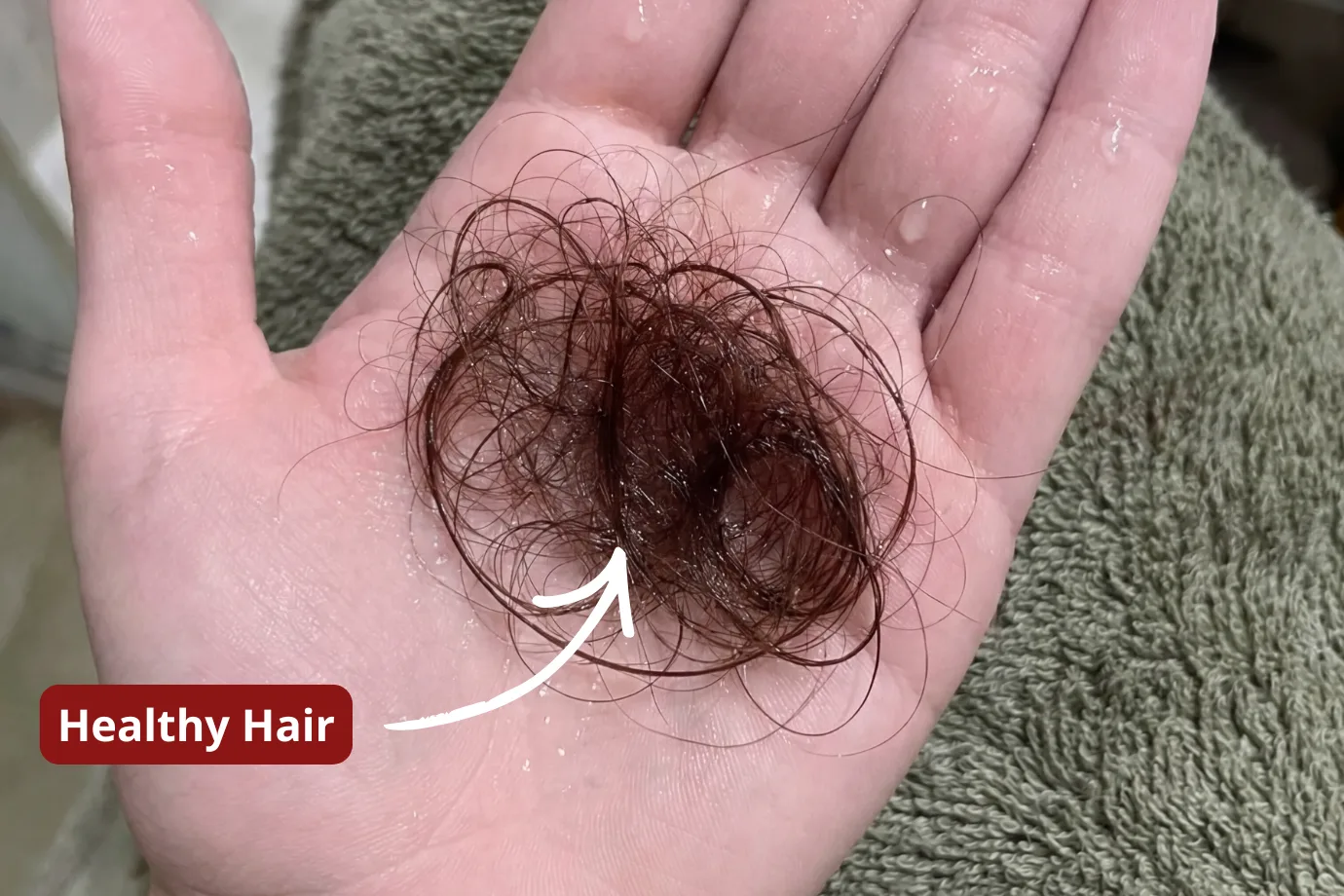
Every woman in menopause who sits across from me describes the same two moments her hair comes out.
The shower. And the brush.
I’ve seen thousands of these women — first during my training at Stanford, then in my own practice since. And the shedding almost always comes down to the same handful of things they were doing. And the same handful of things they were telling themselves. Things they should have changed the moment they saw more hair coming out.
Some are at the very beginning — six months into perimenopause, the first handful in the brush, still telling themselves it’s stress. Some are years in — ponytail half what it was, part widened, temples sparse.
What starts as “a little more shedding than usual” in the first year of perimenopause becomes a thinner ponytail by the time periods get unpredictable. A widening part six months after the last period. Sparse temples by year two of menopause.
Most of them tell me they’ve already made the decision. They’ve decided it’s just menopause. That it’s hormonal and there’s nothing to do until it stabilizes. That they’re “going to accept it.” That the version of themselves with the thick ponytail is gone for good.
The ones who haven’t accepted it yet are stockpiling biotin, switching to high-protein diets, layering Nutrafol on top of expensive shampoos that promise to be different, and pouring oils on strands that are already dead. None of it is changing how much they’re losing. If anything, the supplements are making them feel worse — breaking out, no closer to keeping the hair.
I watched the same pattern repeat for years. Then in 2021, a Harvard study proved exactly what was happening underneath. Last year I paid for an independent lab to find out what could be done about it.
It was the first study of its kind. They counted every single strand a woman lost — by hand. From her brush. From her wash. Before and after. The trial enrolled women 40 to 65 — the age group where the scalp itself is changing fastest.
Here’s what they found.
Hair lost in the brush dropped by 60%.
Hair lost in the wash dropped by 68%.
With 95% of the women seeing their shedding stop within the first six weeks.
The trial was peer-reviewed and accepted by the Journal of Drugs in Dermatology for publication in their June 2026 issue.
And what those women used in the trial is straightforward once you know what your hair actually needs — which has nothing to do with hormones, supplements, or accepting that the hair you used to have is gone for good.
The Hair In Your Brush Is Younger Than You Think
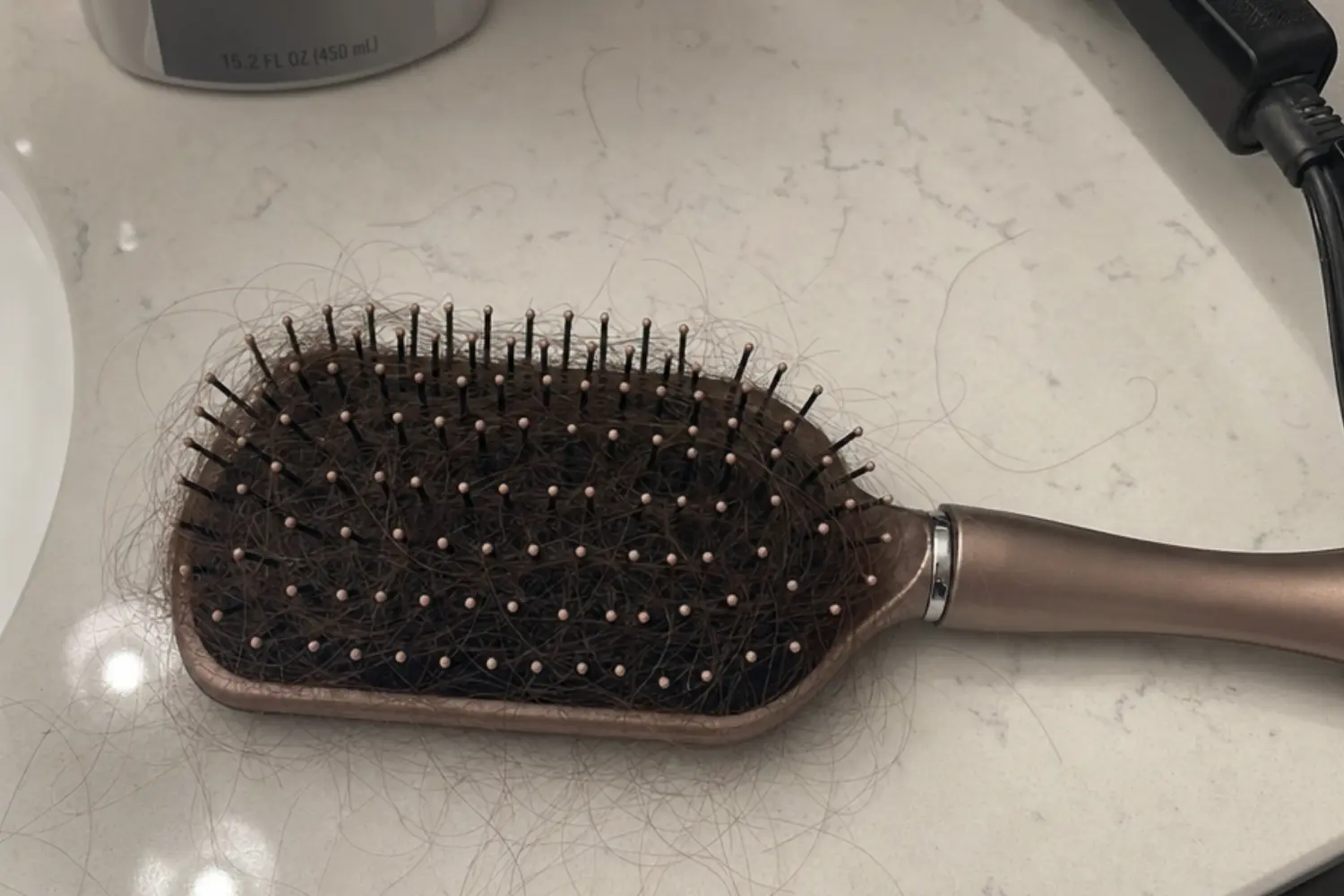
Pick up one of the strands you pulled out of your brush this morning.
Roll it between your fingers. The cuticle is intact. The strand is smooth. Strong. Still has its color. The bulb is attached at the root.
Under a dermatologist’s microscope, that strand had years of life left in it.
A healthy hair grows in cycles. Each cycle is supposed to last between four and six years before the strand is naturally replaced. That’s how thick ponytails get built.
The hair you’re losing right now isn’t a hair that finished its cycle.
It’s a hair that should have spent four more years on your head.
The strand could have grown another twenty inches. Another stretch of holding your ponytail thicker between your fingers. Instead it’s sitting in your palm in the shower, evicted years before its time.
This is what every woman in menopause sitting in my office is grieving — and she doesn’t have the words for it. Not the hair she sees. The hair she should still have.
And here’s the part most doctors don’t explain.
Your hair isn’t falling out. Your scalp is releasing it.
That distinction is the entire story.
Every strand on your head is held in place by a grip — tissue around the base of each follicle that physically locks the strand into your scalp. That grip held your hair in place for thirty years before menopause started.
When estrogen drops, everything underneath your scalp starts changing — overnight.
Your scalp has more estrogen receptors per square inch than almost anywhere else on your body. For thirty years those receptors kept the tissue young, kept the inflammation low, kept the grip strong. When estrogen falls in your 40s, every one of those receptors goes quiet at once.
Under those conditions, scalp tissue ages roughly ten times faster than the skin on the rest of your body. Same woman. Same age. Inches apart on her body. One tissue stays intact. The other collapses.
By your early 50s, your scalp can be closer to a 90-year-old’s than the face in your mirror. Your face is fifty. Your scalp is ninety. Two ages on the same woman. And it’s the older one that’s deciding whether your hair stays in your head.
Inflammation rises. The grip starts giving out — and your scalp begins releasing strands it should be holding for another four to six years.
This is why telling yourself “it’ll stop on its own” doesn’t save your hair. The damage to the tissue is happening right now, every week you wait. Every month of waiting is another month of your scalp aging faster — and the eviction continuing. By the time you finally decide to act, you’ve lost another fifteen to twenty percent of your hair you didn’t have to lose.
And in 2021, researchers at Harvard published a peer-reviewed paper that proved exactly this is what’s happening — and that the entire conversation about menopause hair loss has missed the actual cause.
What Harvard Proved In 2021
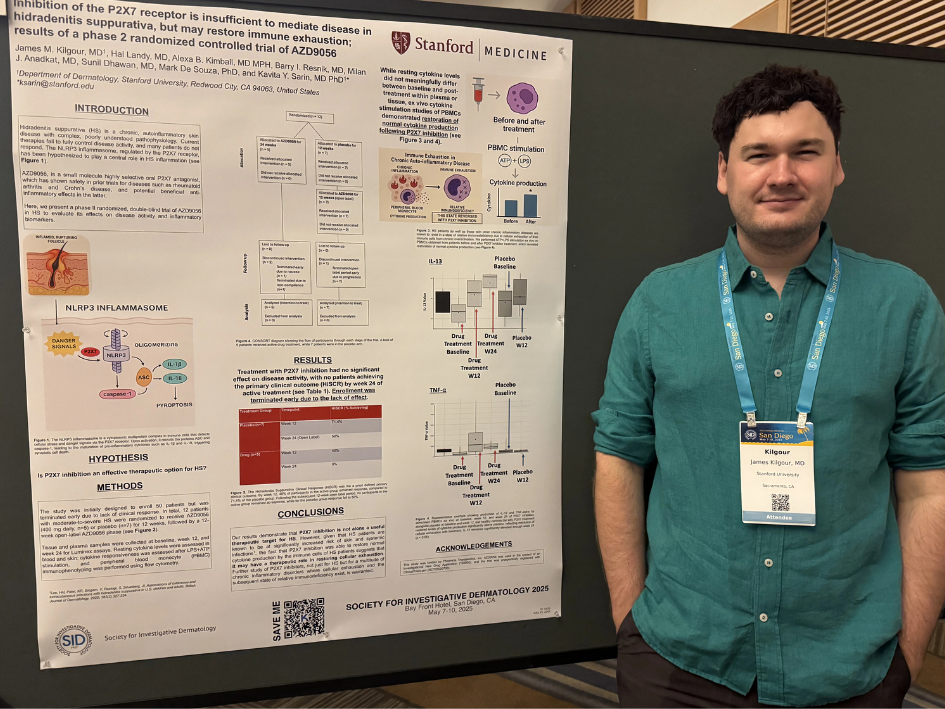
Take a 25-year-old’s healthy follicles — the kind you had when your ponytail was at its thickest — and transplant them onto a menopausal scalp.
They fall out within weeks.
That’s what Harvard researchers proved in 2021, in a study that should have ended the entire conversation about women’s hair loss.
Here’s what they did.
They took follicles from thinning menopausal scalps and transplanted them onto young, healthy tissue. The strands held on. The follicles started cycling normally again.
Then they reversed it. Young, healthy follicles transplanted onto aged, menopausal tissue. The strands released within weeks.
Same follicles. Held or released entirely based on the tissue around them.
The hair was never the problem. The follicle was never the problem. The scalp tissue around them is what decides whether your hair stays in your head.
Which means almost every product and routine sold to menopausal women for hair loss is aimed at the wrong target.
Biotin and hair vitamins feed the strand. But your body has a priority list — heart, brain, organs, muscle, then hair. By the time anything you swallow reaches a follicle after 40, there’s almost nothing left. The supplement industry has known this for thirty years and sold it anyway.
HRT alone doesn’t fix it either. By the time most women start HRT, the scalp has been aging ten times faster for years. The hormones might be back in your bloodstream. But the damage to the scalp tissue that holds your hair has already happened. You can give your body the estrogen back and still have a scalp that can’t hold a strand. That’s why so many women on HRT are still standing in the shower watching their hair come out.
Most shampoos make the underlying problem worse. The harsh chemicals in most shampoos strip away the natural oil layer estrogen used to maintain. Your scalp ends up drier, more inflamed, and quicker to release strands every time you wash.
Even minoxidil — the only FDA-approved option — works on the follicle, not the tissue around it. Which is why so many menopausal women try it for a year and quietly stop. The follicle isn’t broken. The scalp around it is.
And “just accepting it” is the worst trade you can make. You don’t actually accept it. You spend the next twenty years hiding it. You restyle your part three times. You buy hats. You skip overhead lighting at dinner. You watch the woman in the mirror look less and less like you. Meanwhile the tissue keeps aging and the eviction keeps going. By the time you finally try something, you’ve given up a full ponytail you didn’t have to give up.
The good news is that the tissue can be rebuilt. The trial proved it. And what those 95% of women did to rebuild theirs is something almost any woman can do at home — in thirty seconds, once a night, before bed.
“This Is The First Trial To Stop Shedding, Not Slow It”

The trial enrolled women between 40 and 65 — the exact age group where the scalp-aging process is most active.
Most had already tried something. Minoxidil. Special shampoos. Supplements. A few were on HRT and still shedding. None of them were seeing the results they wanted. These were women modern medicine had already failed.
For six weeks, each woman followed the same thirty-second routine on her scalp every night before bed.
Then the lab measured what was actually happening.
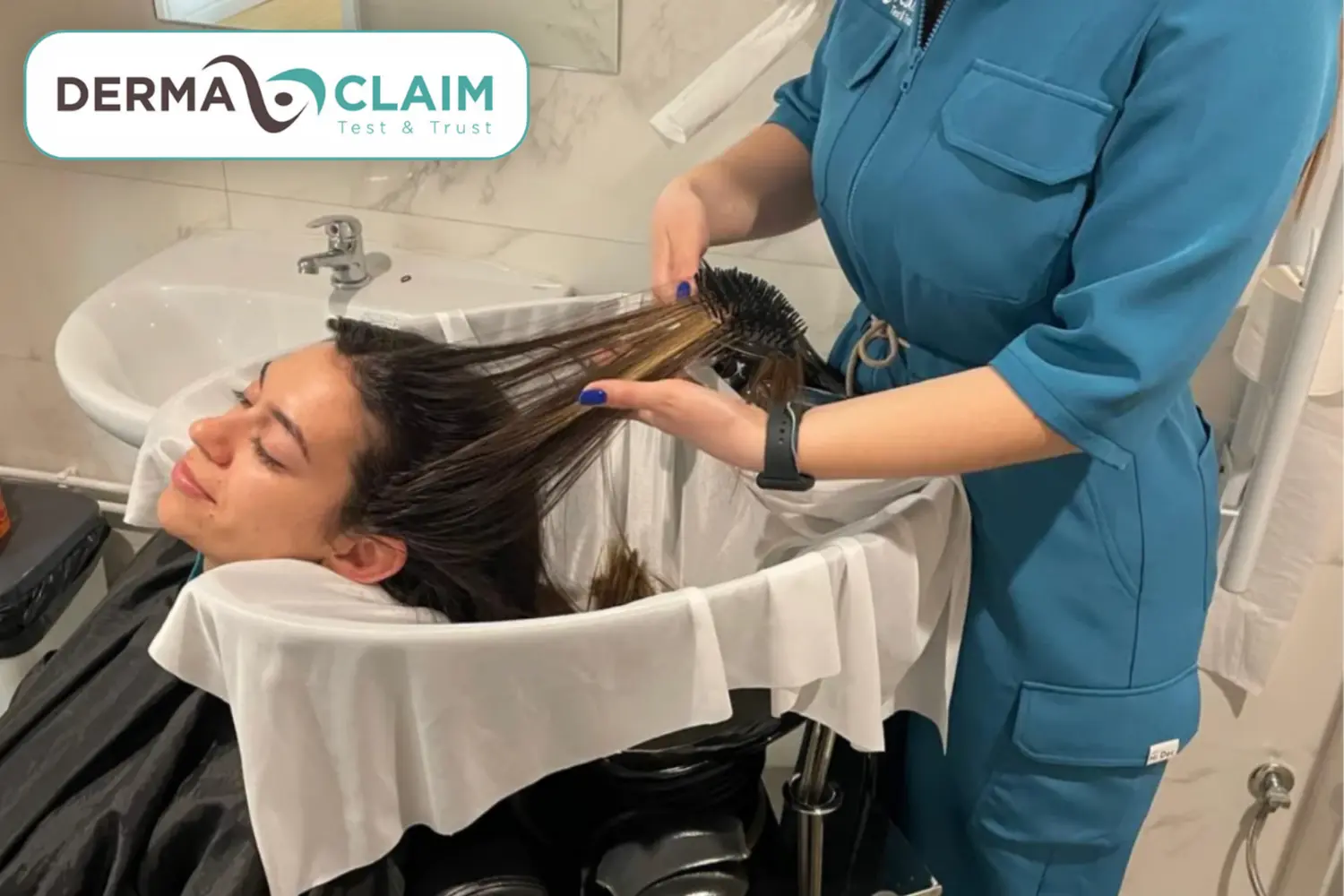
Each woman was seated in a hairdresser’s chair and draped in a fine-weave cloth that catches every shed strand. A trained technician then ran a thick brush, then a medium brush, then a fine comb through her hair in the same order — same combs, same number of strokes, same tension — until no more hair came out. Every strand caught in the cloth was dried, photographed, and counted by hand.
This was done before the routine began. And again at the end of week six.
The result: the brush count dropped by 60%.

Each woman washed her hair in a clinical sink. Two washes in a row. Five minutes each. A gentle, sulfate-free shampoo. A mesh cloth below the basin caught every strand released during the lather and the rinse.
Counted by hand. Photographed. Documented. Same routine before the trial. Same routine at week six.
The result: the wash count dropped by 68%.
Then the lab combined the two measurements to answer the bigger question. Not how much less each woman was shedding — but whether her shedding had returned to what it should be.
The benchmark: the daily shedding of a healthy 30-year-old scalp. Before estrogen decline. Before the tissue starts breaking down. Before the hormonal changes set off the release of strands that should still be holding.
95% of the women in the trial had returned to that benchmark.
Not reduced. Not slowed. Returned to normal. Inside six weeks.
It was the finding that surprised everyone, including the lab.
The trial was peer-reviewed and accepted by the Journal of Drugs in Dermatology for publication in their June 2026 issue.
Which leaves one question.
What were those women actually doing for those thirty seconds every night?
What The Trial Used That Nothing Else On The Market Combines
To stop the shedding, a scalp treatment has to do three things at once.
It has to rebuild what estrogen used to keep healthy in your scalp before 40 — the active grip your scalp has on each strand.
The scalp is the thickest skin on your body. That’s the reason most “scalp serums” wash off in the next shower without ever doing anything underneath.
It has to tell each follicle to stay in growth phase instead of shutting down early — turning a two-year cycle back into a four-to-six-year one.
No single ingredient does all three. And until the trial, no product on the market combined ingredients that did each one.
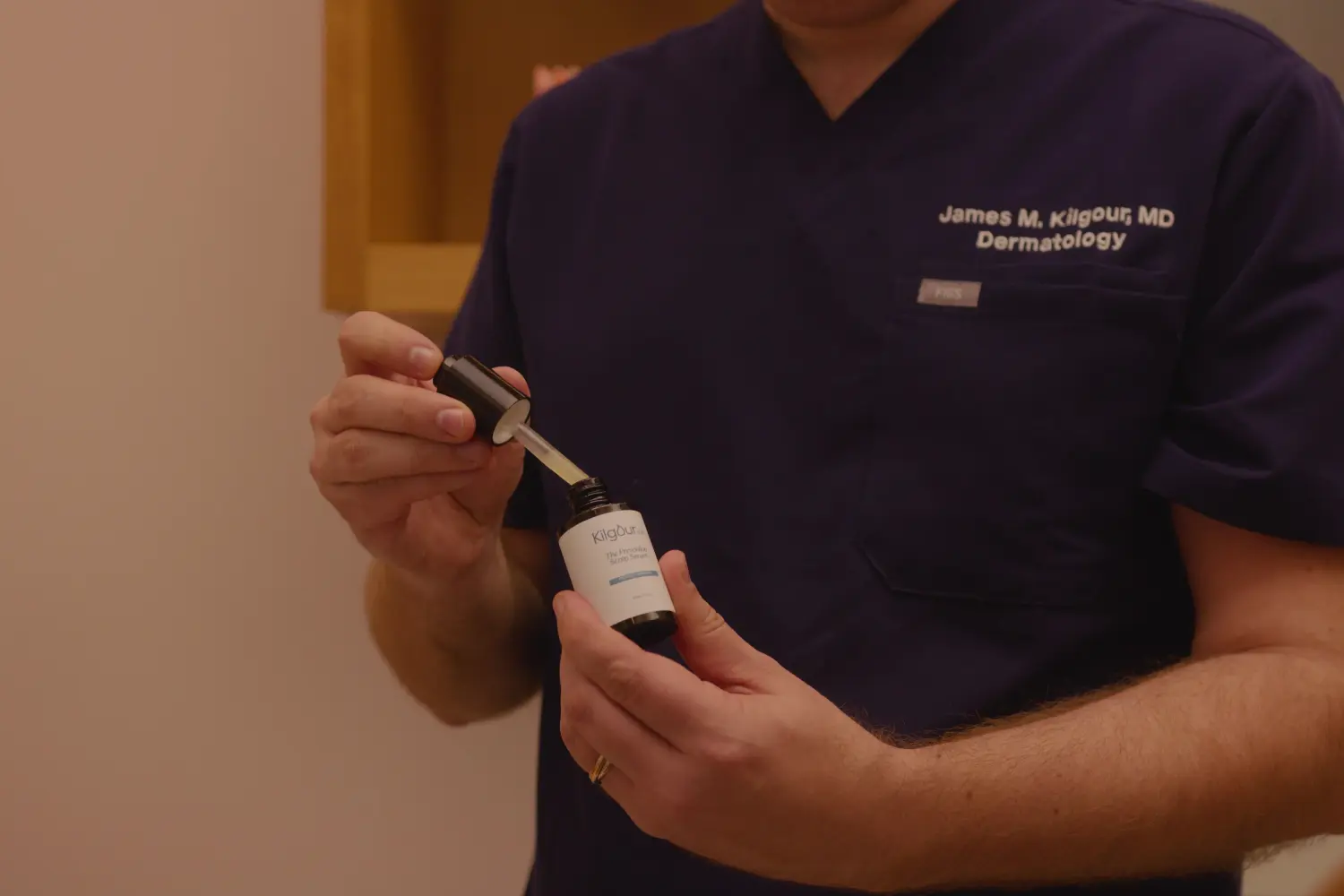
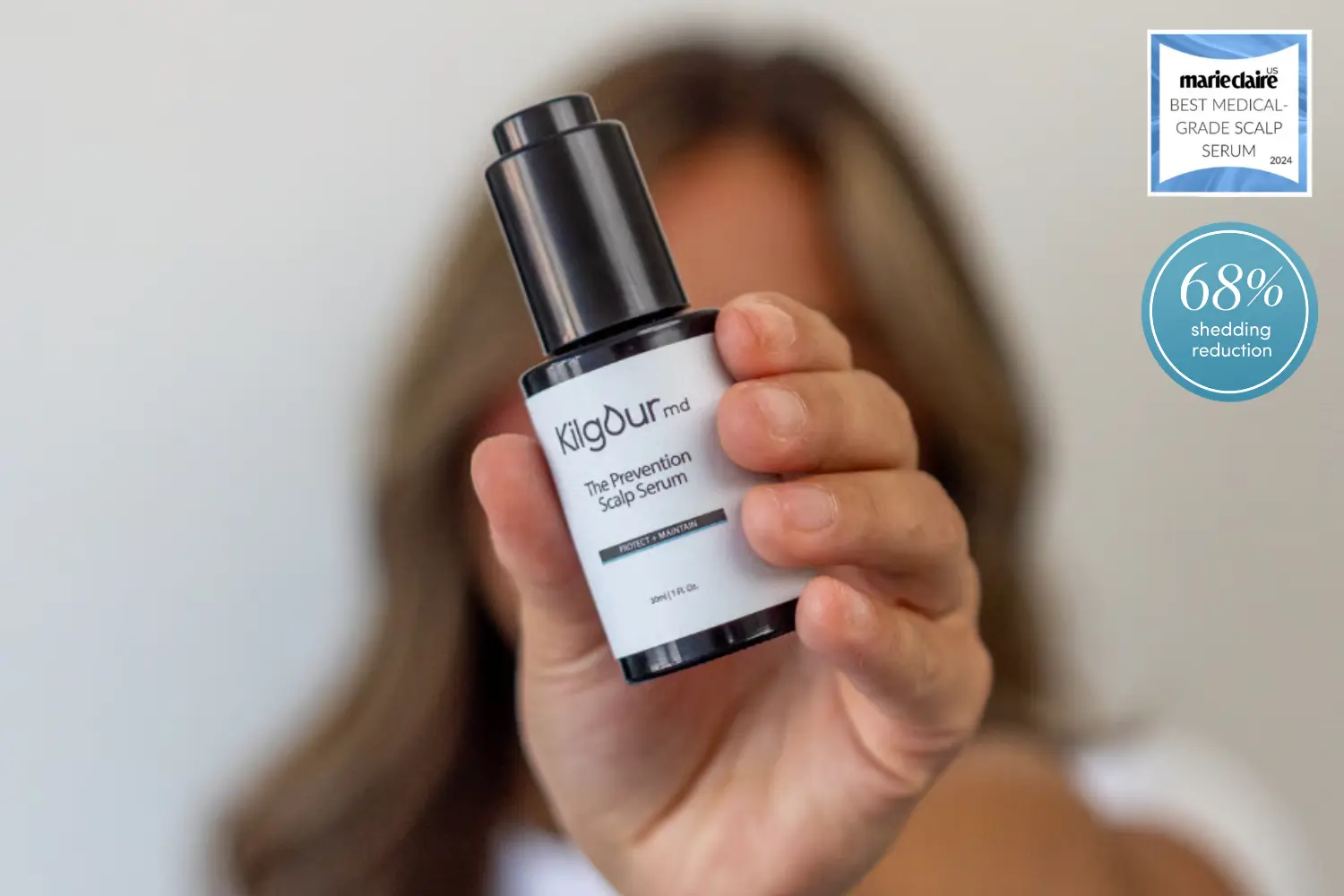
The serum the women in the trial were using does. It’s called The KilgourMD Prevention Serum.

The only ingredient in the formula that gets through the scalp barrier. The reason every other ingredient actually reaches the tissue underneath instead of washing off in the next shower.
It also doubles blood flow to the follicles — feeding the rebuild with oxygen and nutrients the tissue hasn’t seen in years.

Than Minoxidil
Rebuilds the grip directly — the same job estrogen used to do before 40. In head-to-head testing it proved 81% more effective than minoxidil. Without the irritation. Without the rebound shedding.
That’s why the women in the trial stopped shedding strands their scalp should have been holding.


Every follicle has a command center at its base making one call: hold or release. When the tissue around it breaks down, the command shifts to release — and hair gets evicted years before its time.
AnaGain tells the follicle to keep cycling. RootBioTec protects the command center making the call.
Together they extend the growth phase by 78% and increase density by 79% — more strands in the same patch of scalp, counted under a microscope.

Fragmentation
Capixyl rebuilds the grip. Vitamin C reinforces the foundation it grips into. Every follicle is anchored into scalp tissue by a network of collagen fibers.
When estrogen declines, those fibers break apart — and even a perfectly rebuilt grip has nothing solid to hold onto. Vitamin C reduced that breakdown by 44.6% in a trial where one group used the active formula and the other used a fake one.
That’s why the routine works on tissue that’s already broken down. Not just on tissue that’s still intact.
Each of these ingredients, on its own, would be a breakthrough. None of them are found together in any other product on the market.
That’s what the women in the trial were applying for thirty seconds every night before bed.
That’s what produced a 60% drop in brush count, a 68% drop in wash count, and shedding stopping completely for 95% of them in six weeks.
What’s Happening For Women Outside The Trial
Since we made Prevention available outside the trial, thousands of women between 35 and 70 have started using it. Here’s what a few of them have said.
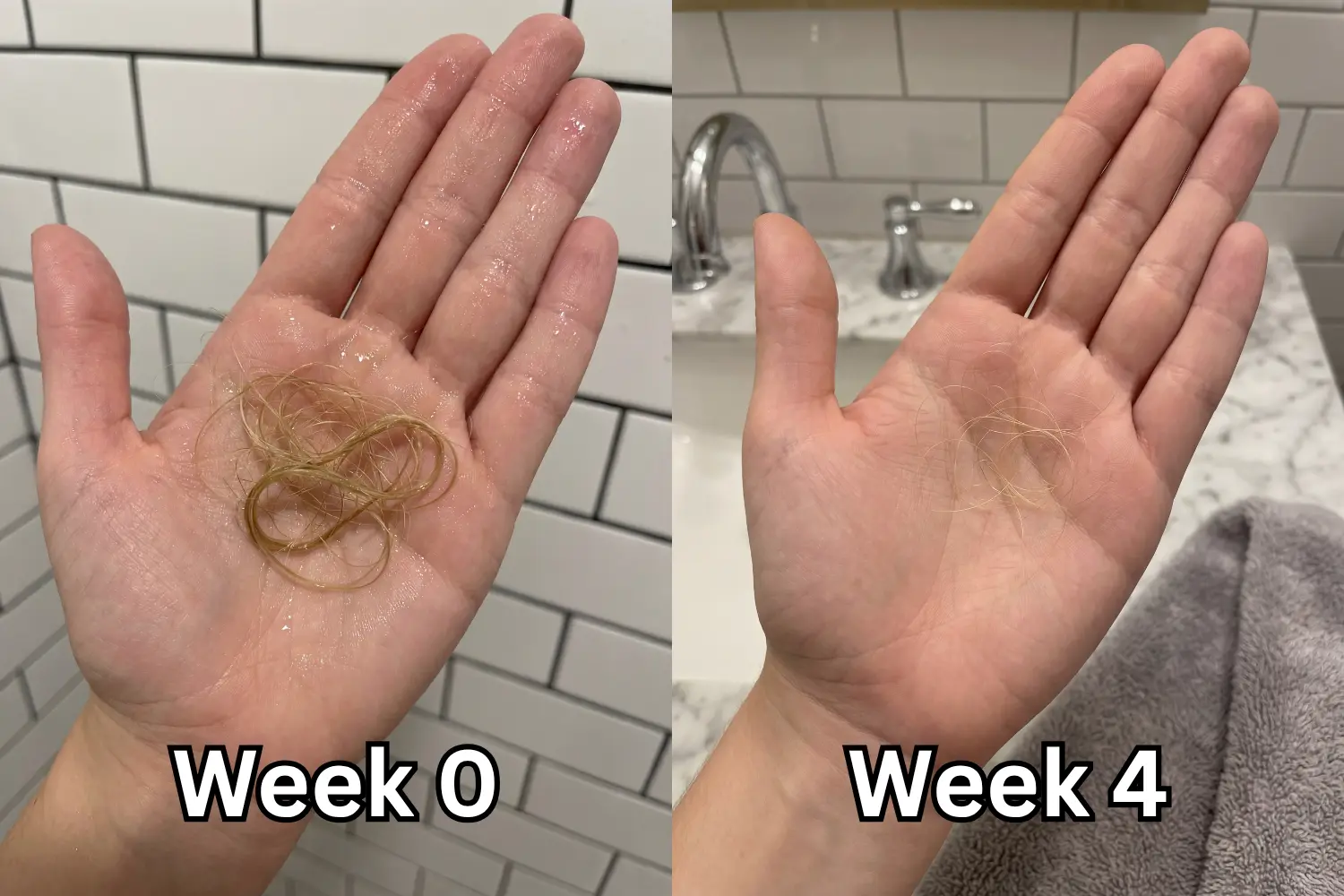
“I started counting hairs in my brush about a year ago because I thought I was losing my mind. My husband kept saying my hair looked fine. The brush said otherwise. I’d already convinced myself it was just menopause and I’d have to get used to it. The morning after my third week on Prevention, I counted seven hairs. Seven. Down from over fifty. I cried in the bathroom.”
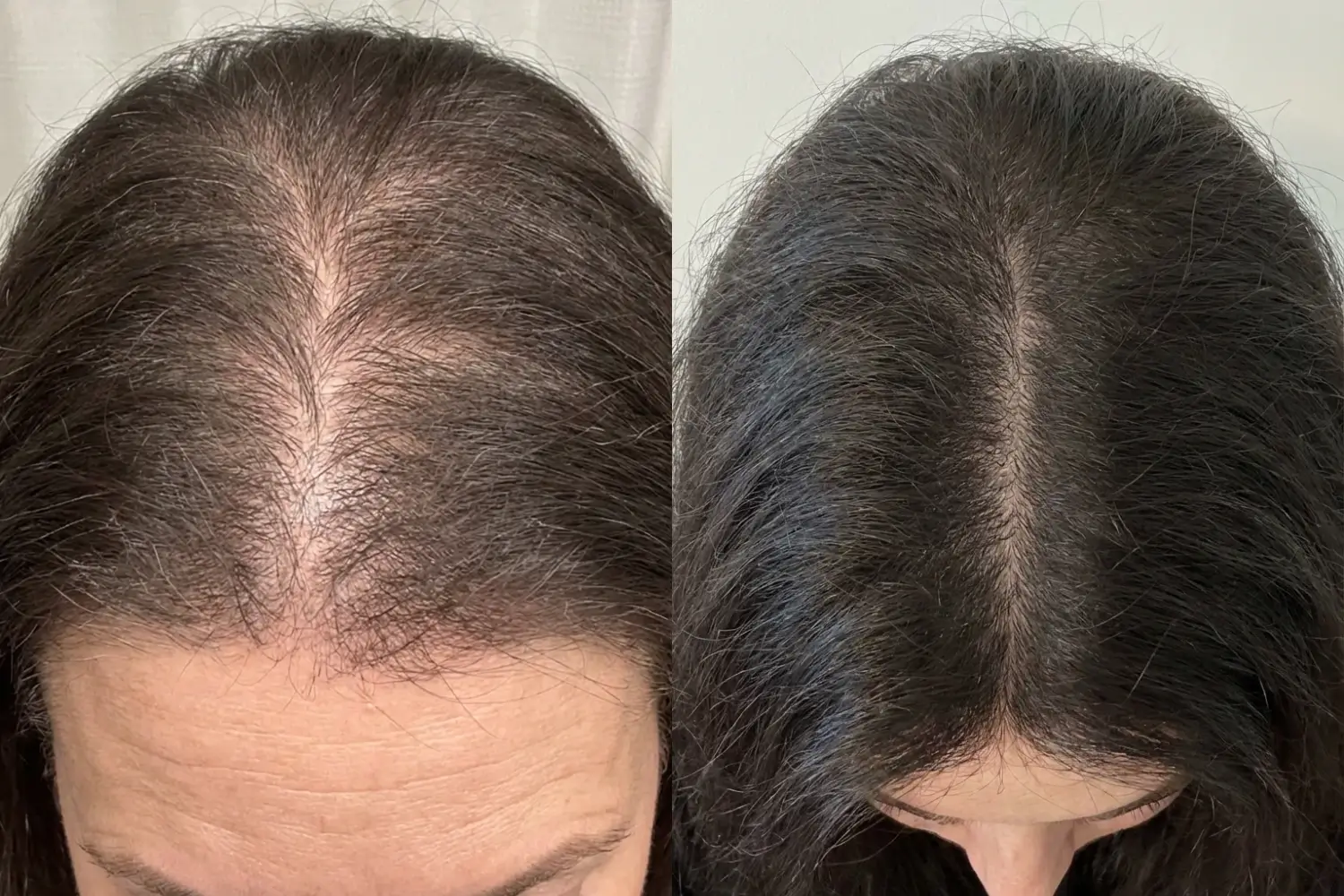
“I’d tried minoxidil for almost two years. It worked for a while, then stopped, then I quit because of the shedding when I went off it. I’d given up. My doctor told me at 60 there wasn’t much I could do. My daughter saw a Kilgour ad and ordered it for me. Six weeks in, my part is closing. I didn’t know that was something that could happen at 61.”
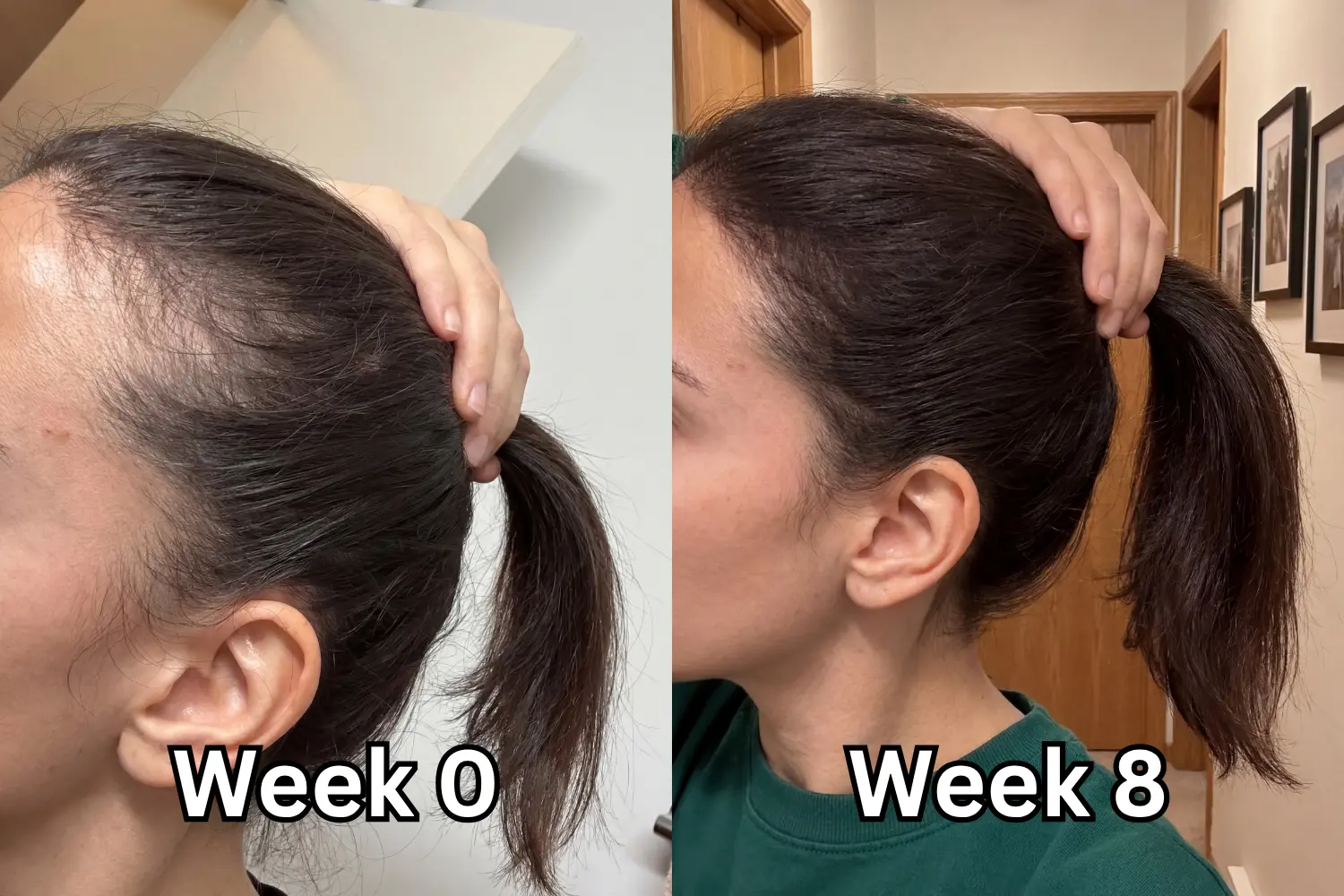
“The shower drain was what broke me. I’d be standing there crying because of how much hair was at my feet. I’m at week eight with Prevention. The drain has hair in it — normal amounts. Not handfuls. My ponytail is thicker than it’s been in two years. And the temples I’d been hiding with side-swept bangs since 45? There’s actual baby hair coming in. I don’t dread washing my hair anymore. I don’t dread the mirror anymore either.”
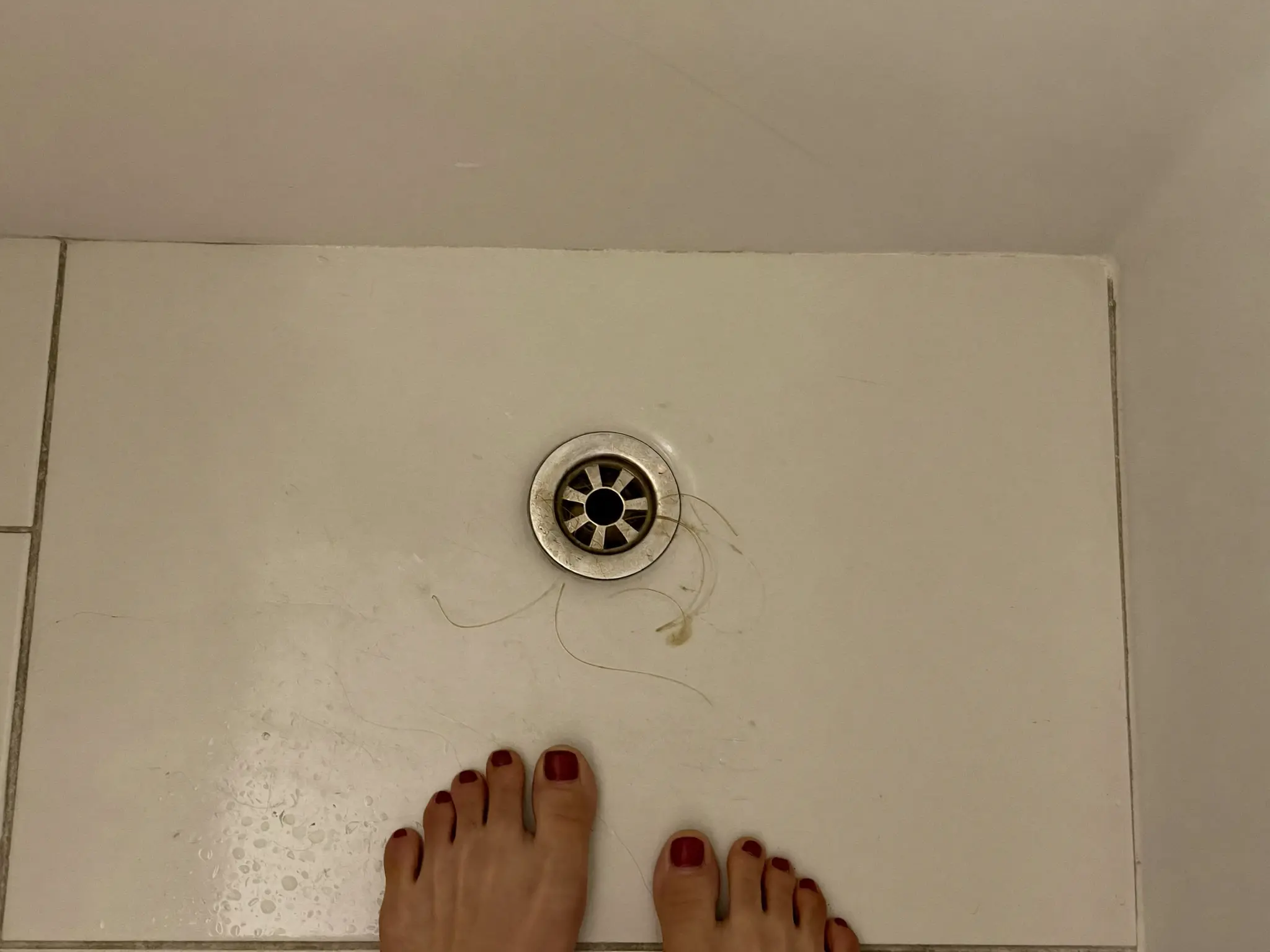
“I’d written off having hair like I used to. I was just trying to slow it down at this point. The thing I dreaded most was the shower — hair on my chest, hair on my arms, hair stuck to the wall when I turned around. I’d be afraid to look at the drain when I stepped out. Six weeks in with Prevention, I stepped out and looked. Two strands. I stood there in my towel and cried. I take pictures of the drain now just to remind myself it’s real.”
These are not isolated cases. They’re the same pattern the trial measured — the same pattern in tens of thousands of women who have used The Prevention Serum since.
My Personal 90-Day “Empty Brush” Guarantee
If you’ve been telling yourself it’s just menopause and there’s nothing to do about it, this is the lowest-risk way to find out whether you’re right.
It doesn’t interfere with HRT. No drug interactions. No side effects. All natural. Exactly like skincare — just for your scalp.
If you’ve already tried everything — biotin that did nothing, expensive shampoos that didn’t change the count, minoxidil that shed you worse, doctors who told you to “wait and see” — this is the one without the risk of getting burned again.
Here’s my promise.
Use Prevention Serum every night. Thirty seconds, before bed.
By week 6, your brush should be almost empty. By week 12, your part should be narrowing. After that, you should be looking at a version of your hair you haven’t seen since you were 40.
If none of that happens, I’ll refund every penny.
No forms. No hoops. No store credit. Just email the team and say “It didn’t work.” You keep the bottles.
Why am I willing to do this? The Journal of Drugs in Dermatology just accepted the trial for publication in their June 2026 issue. And among the women in that trial, 95% stopped shedding completely inside six weeks.
If 95 out of 100 women stop shedding in six weeks, this guarantee isn’t generous. It’s the math.
What To Do Next
If you recognized yourself anywhere in this article — the brush that catches more in one pass than it used to in a week, the ponytail elastic going around an extra time, the part you’ve rearranged three times this year, the lighting you keep avoiding — you already know what’s happening.
And you already know what happens if you don’t do anything about it.
You don’t have to choose between accepting menopause and keeping the hair you’ve had your whole life. You just have to stop treating the strand and start treating the tissue underneath it.
Tap the button below and start tonight, before bed. Thirty seconds. That’s it.
Six weeks from now, your brush is going to look different. Twelve weeks from now, you’re going to catch yourself in the mirror.
If it were me, I’d grab the 3-month subscription. It’s the length we ran the trial on, it’s where you see every stage of results, and with 28% off while supplies last, it’s where you save the most. But whatever option you pick, the guarantee covers every penny of your order.
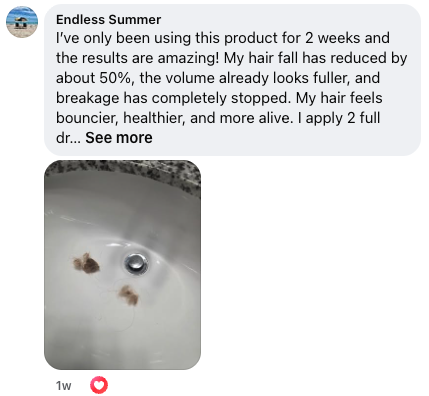
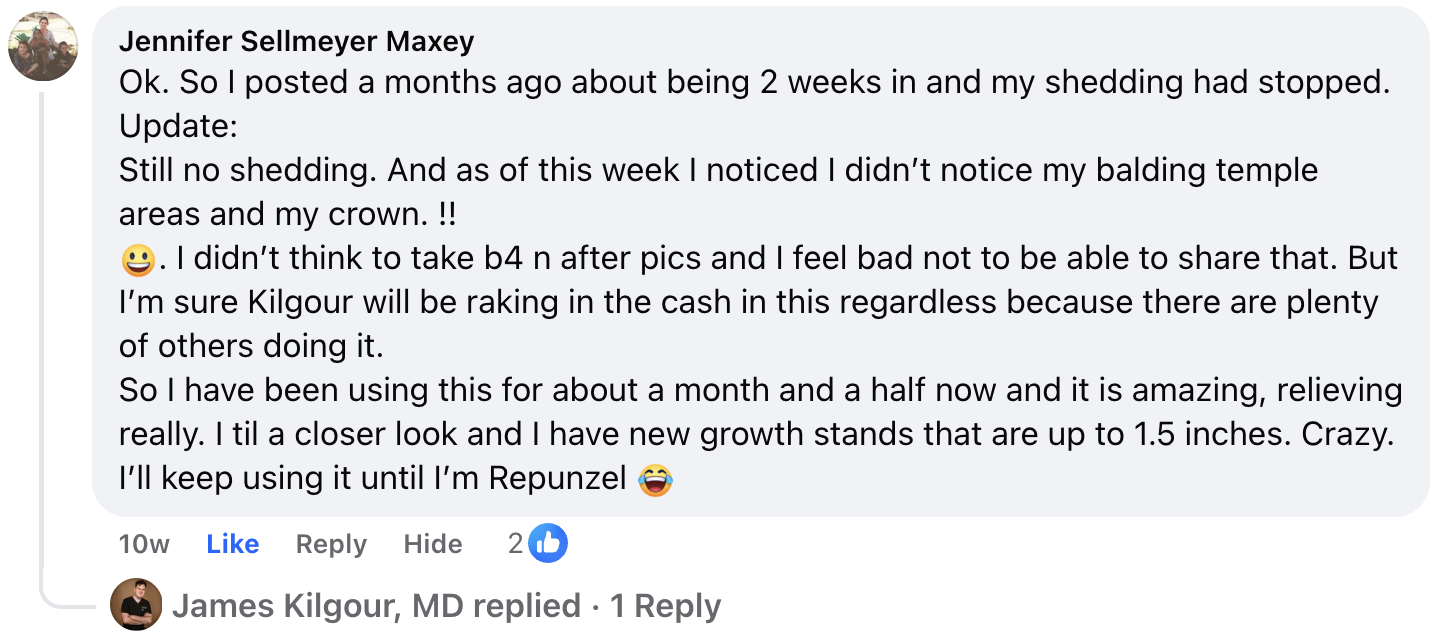
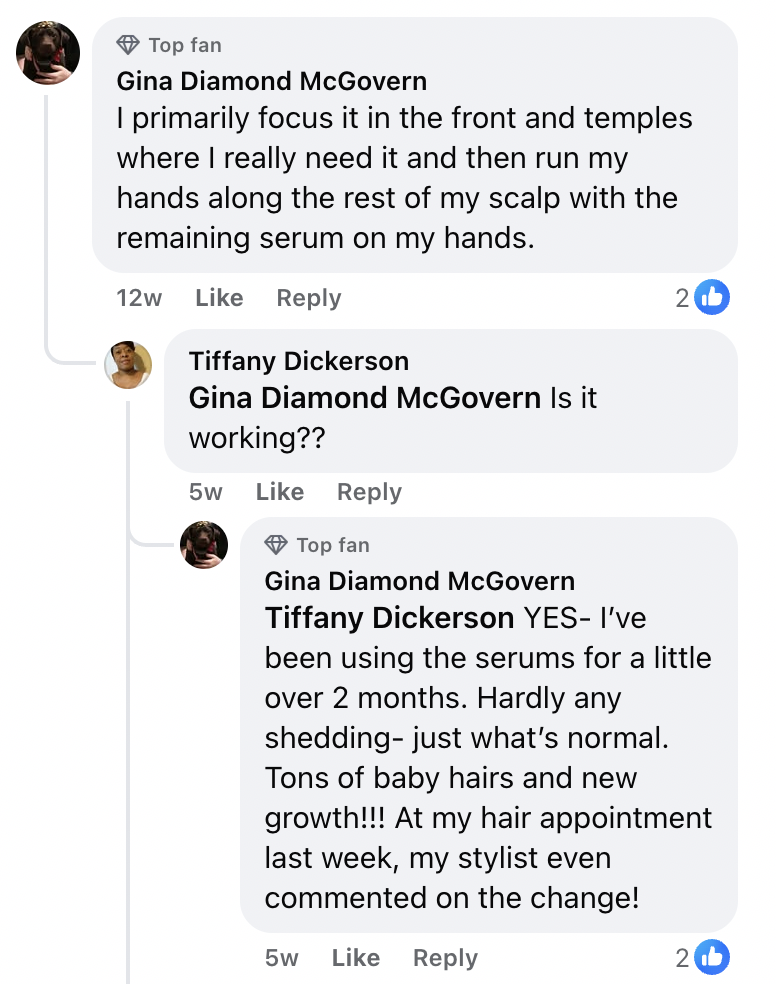
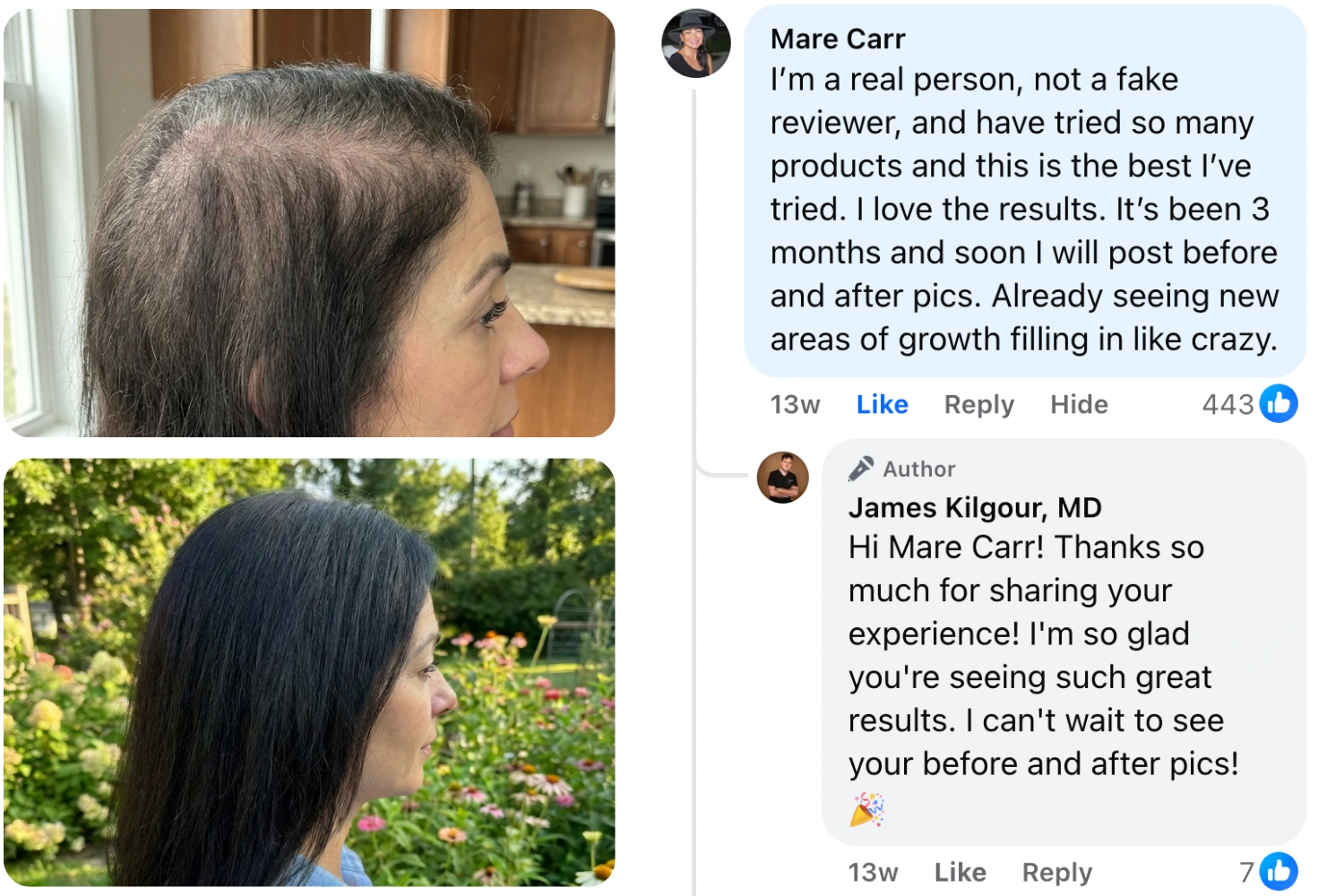
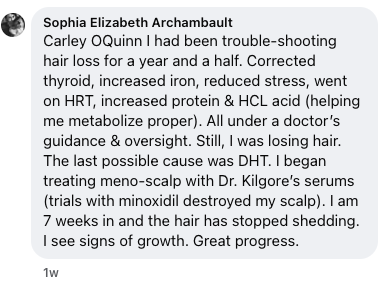
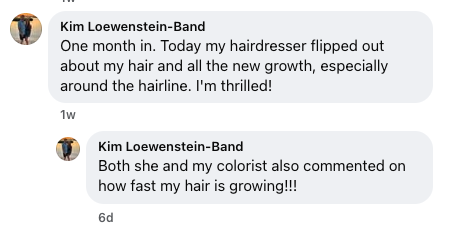
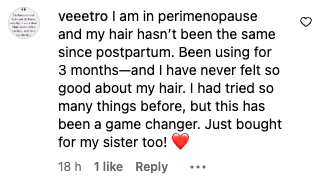
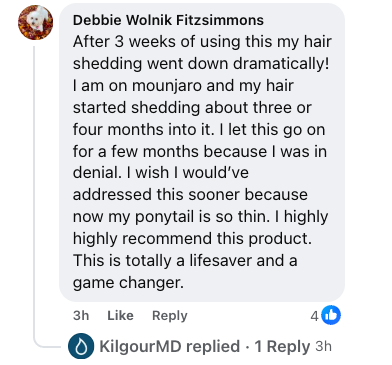
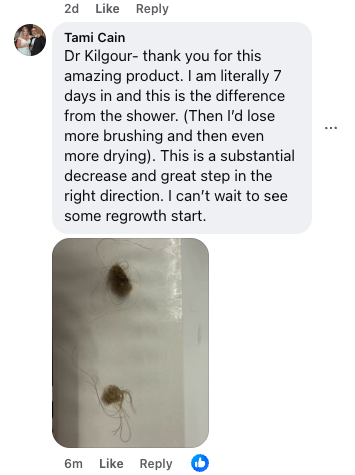
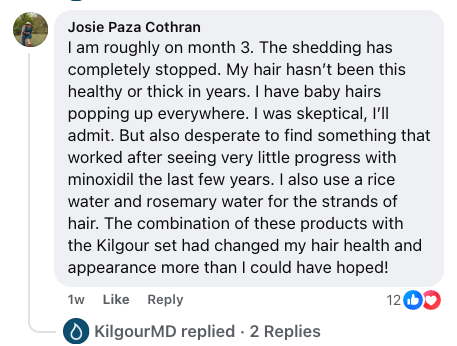
What Women Have Been Writing
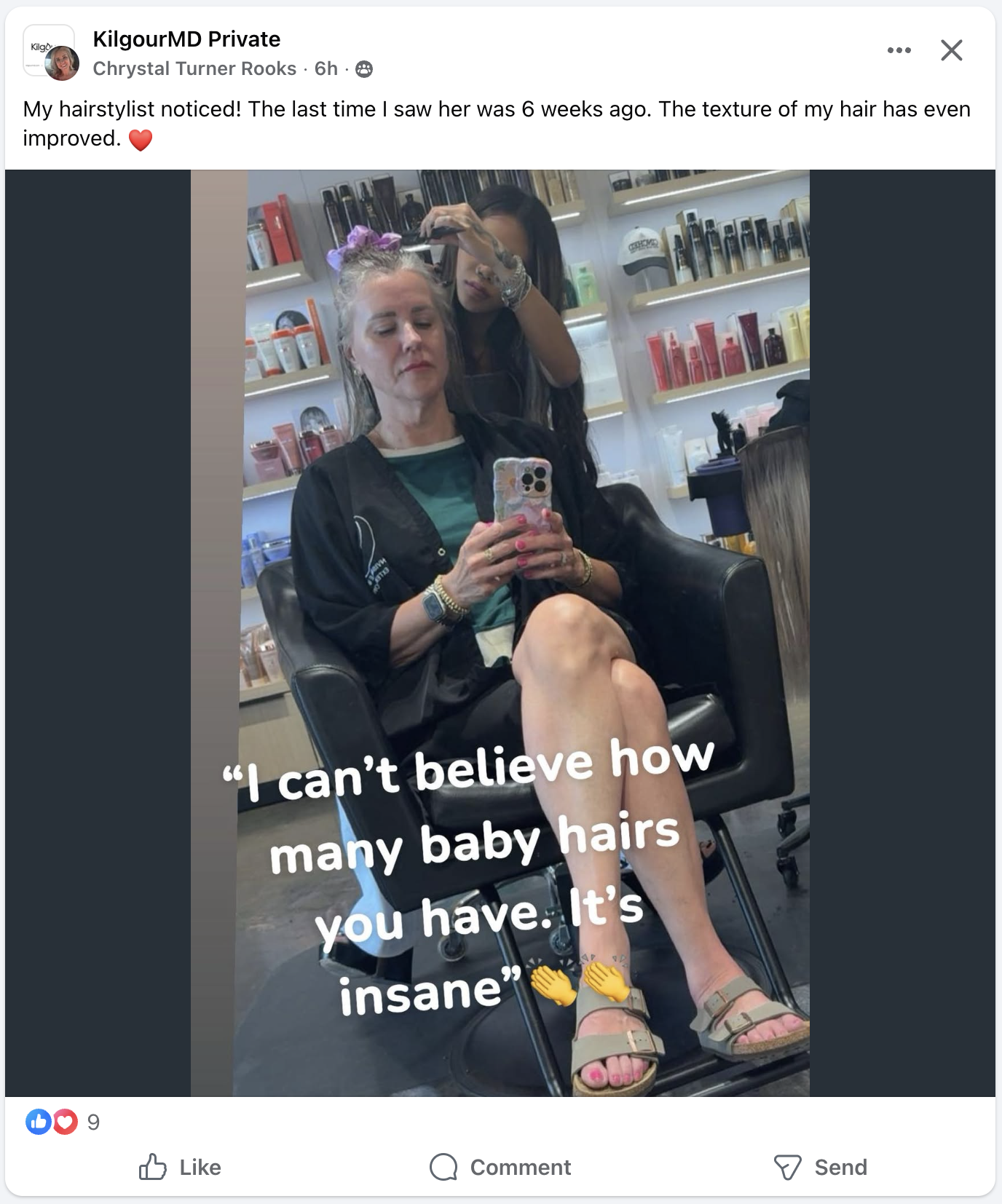
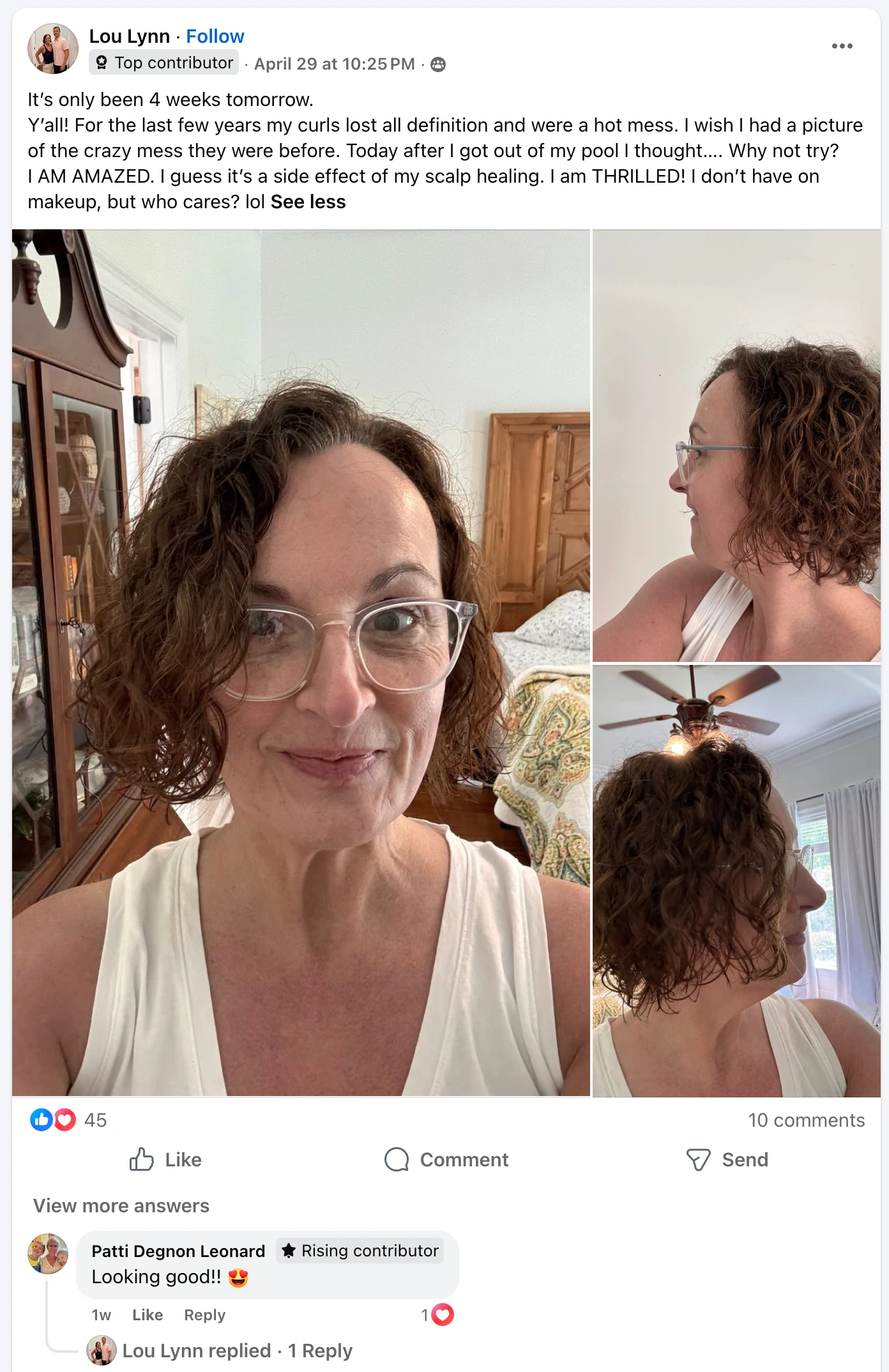
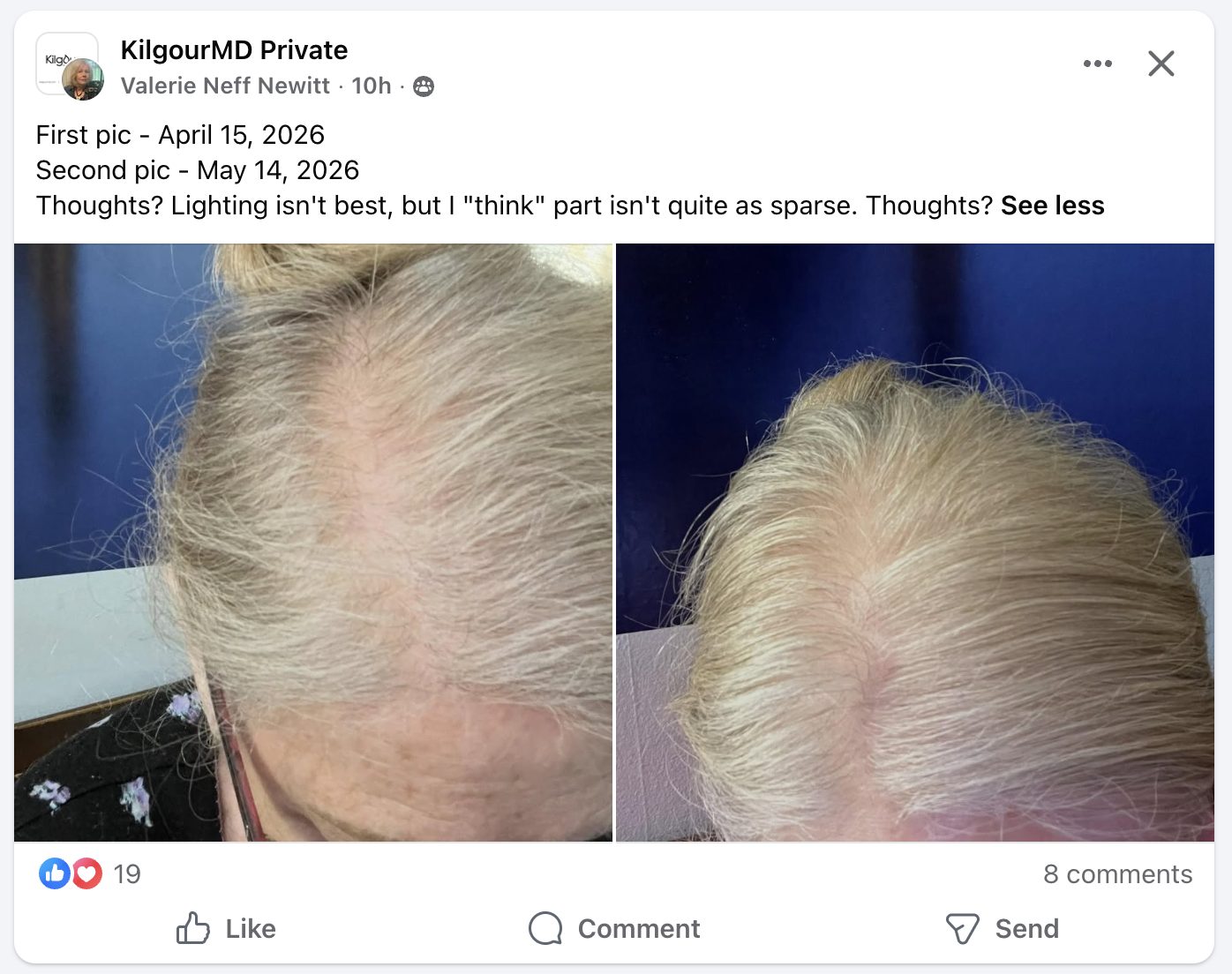
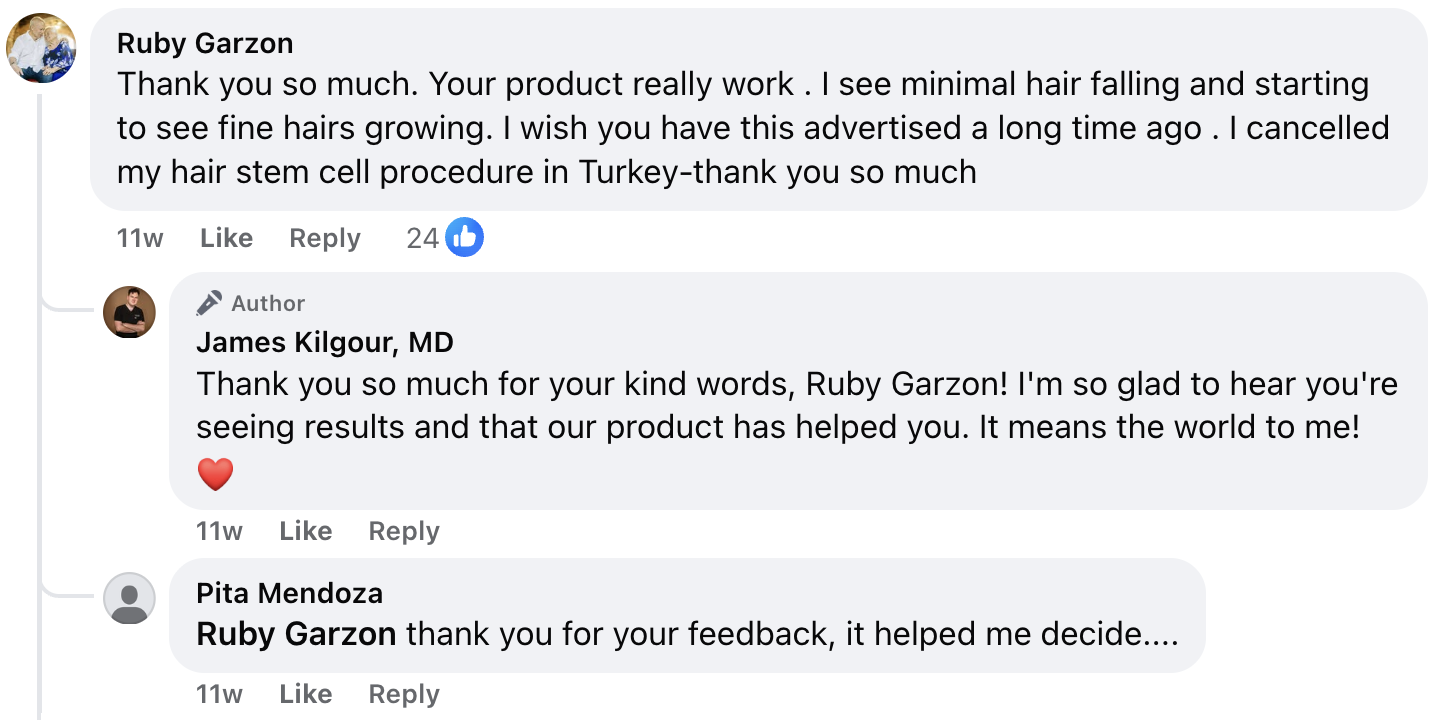
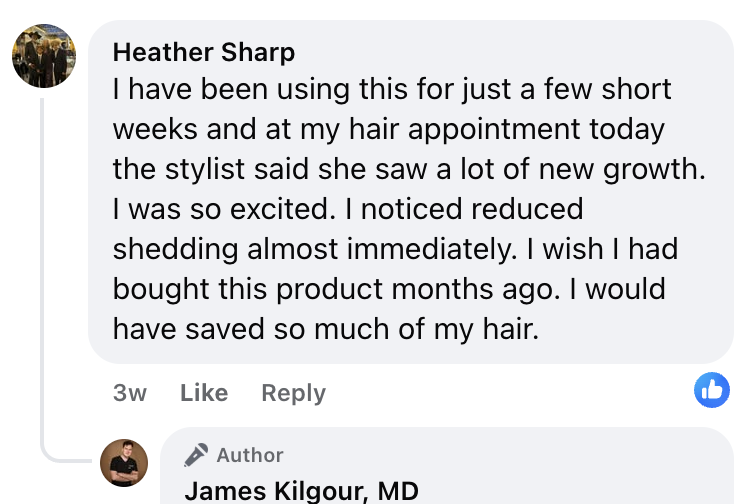
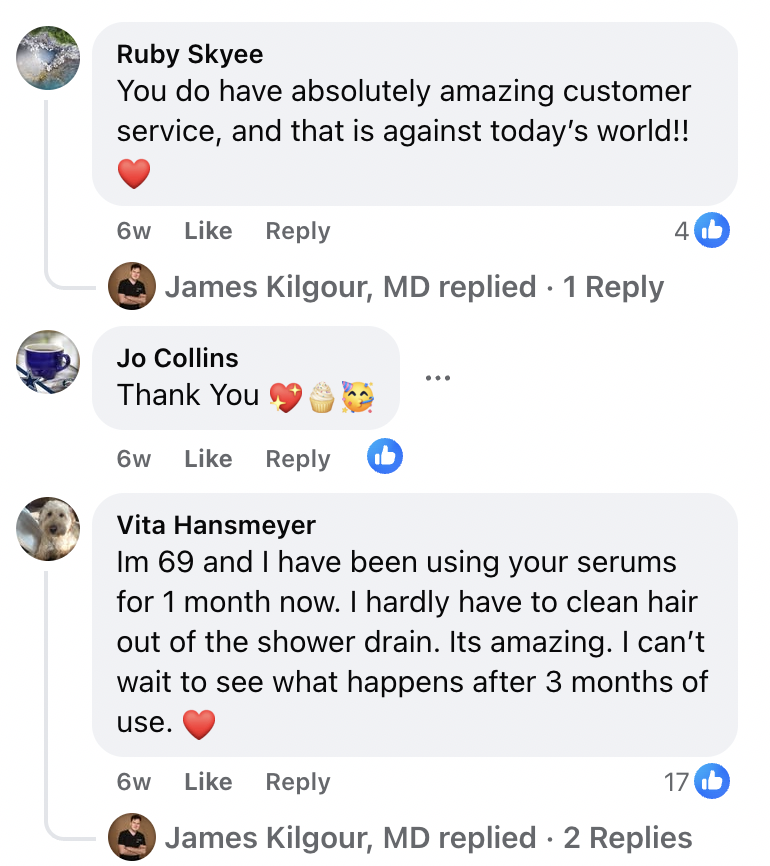
Little unprompted notes women have left on our posts — usually a few weeks in, once they start noticing.

Meet Your Dermatologist
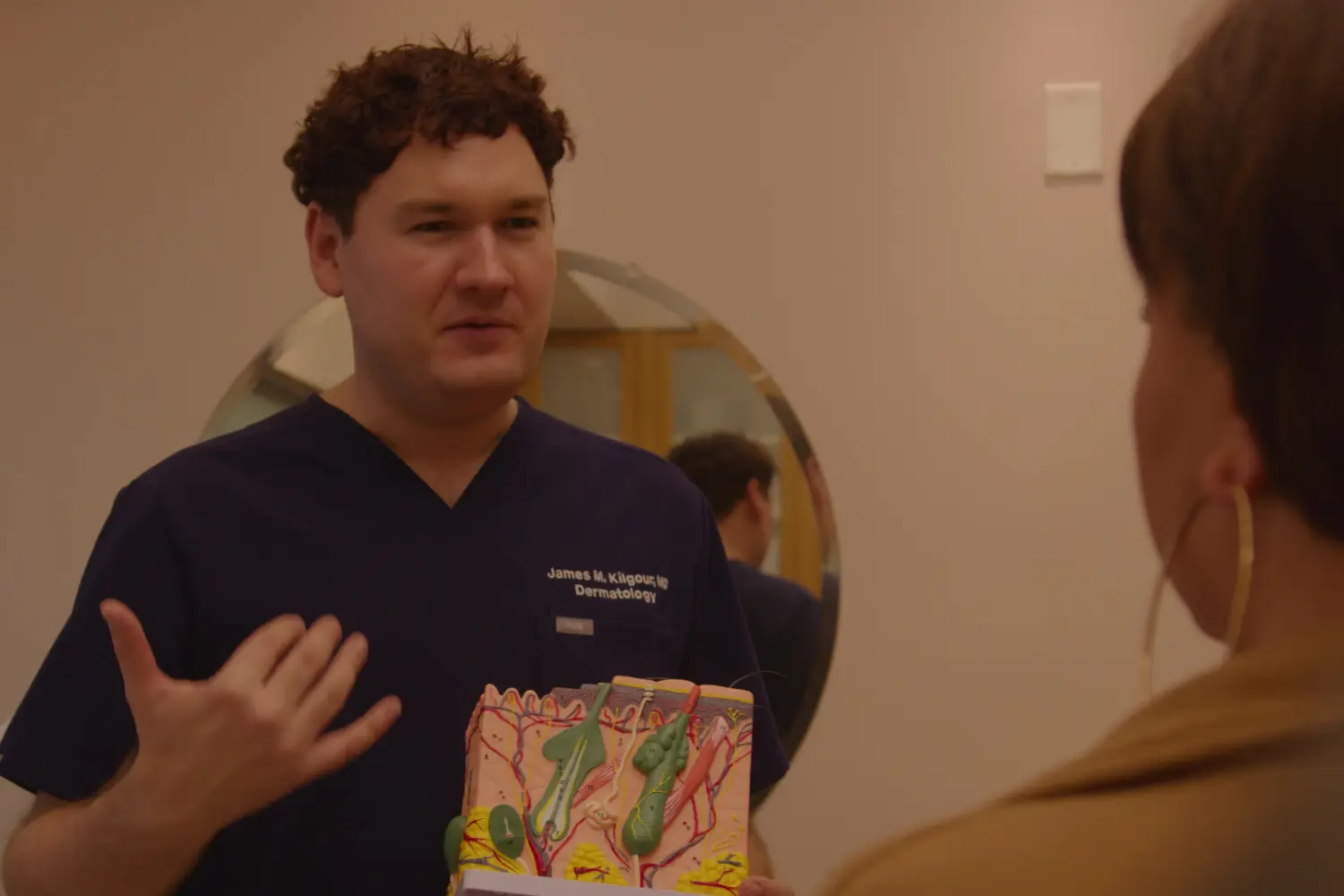
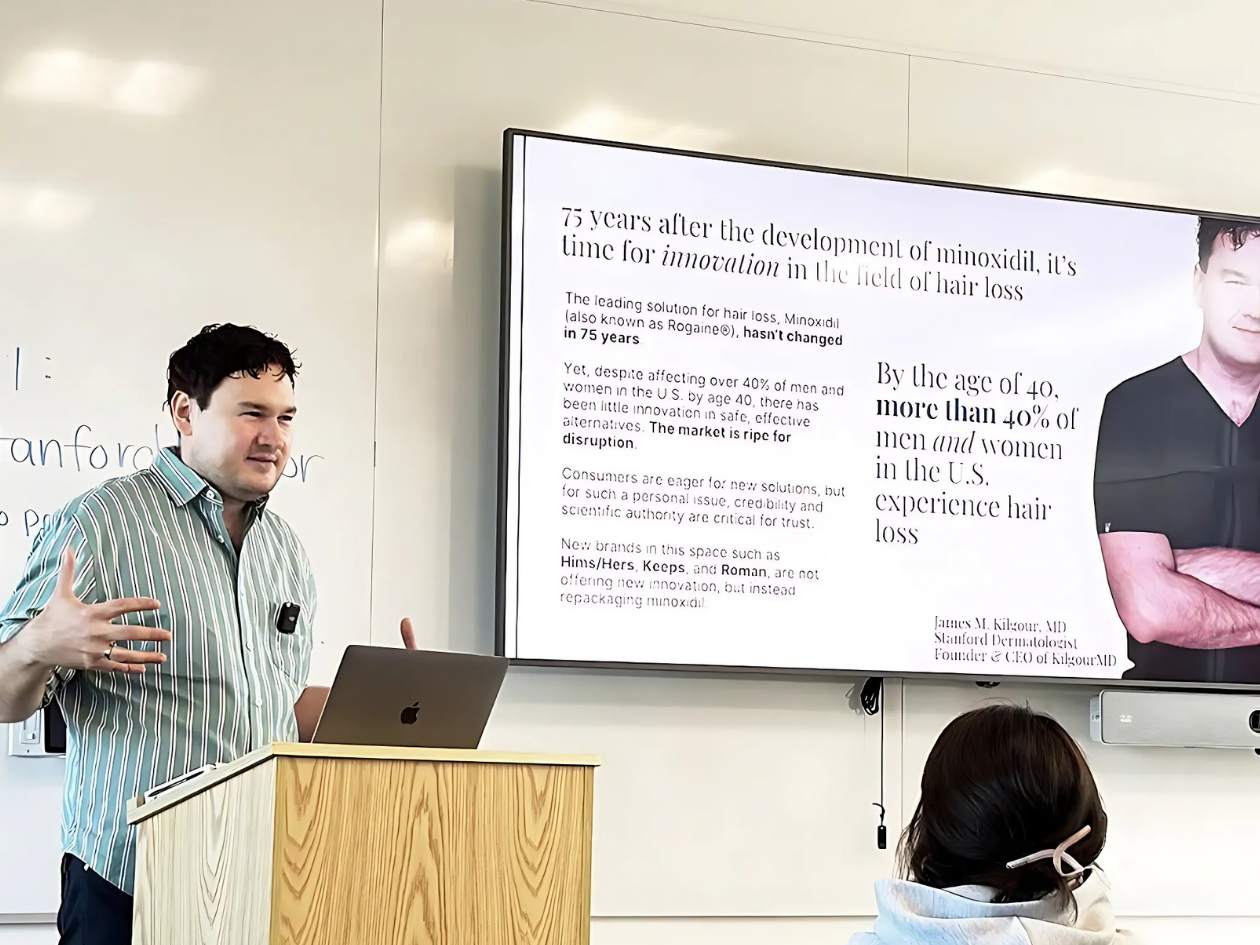
Dr. Kilgour spent 18 months building this routine after watching the same pattern repeat in his clinic — women in their 40s and 50s coming in with thinning hair, getting prescribed minoxidil, and either not responding or quitting because of the side effects.
The science on scalp aging and how the scalp holds onto hair had advanced dramatically in the last decade. Nothing on the market reflected it. So he built something that did.
One serum. Four patented compounds. Matched to the specific biology behind hormonal hair loss. The response rate in his clinical trial came back at 95% in six weeks — the highest hair loss response rate published in the last forty years.
That’s why we’re here.