

A Stanford Dermatologist Warns: Quitting Your GLP-1 Because Of Hair Loss Is A Lose-Lose
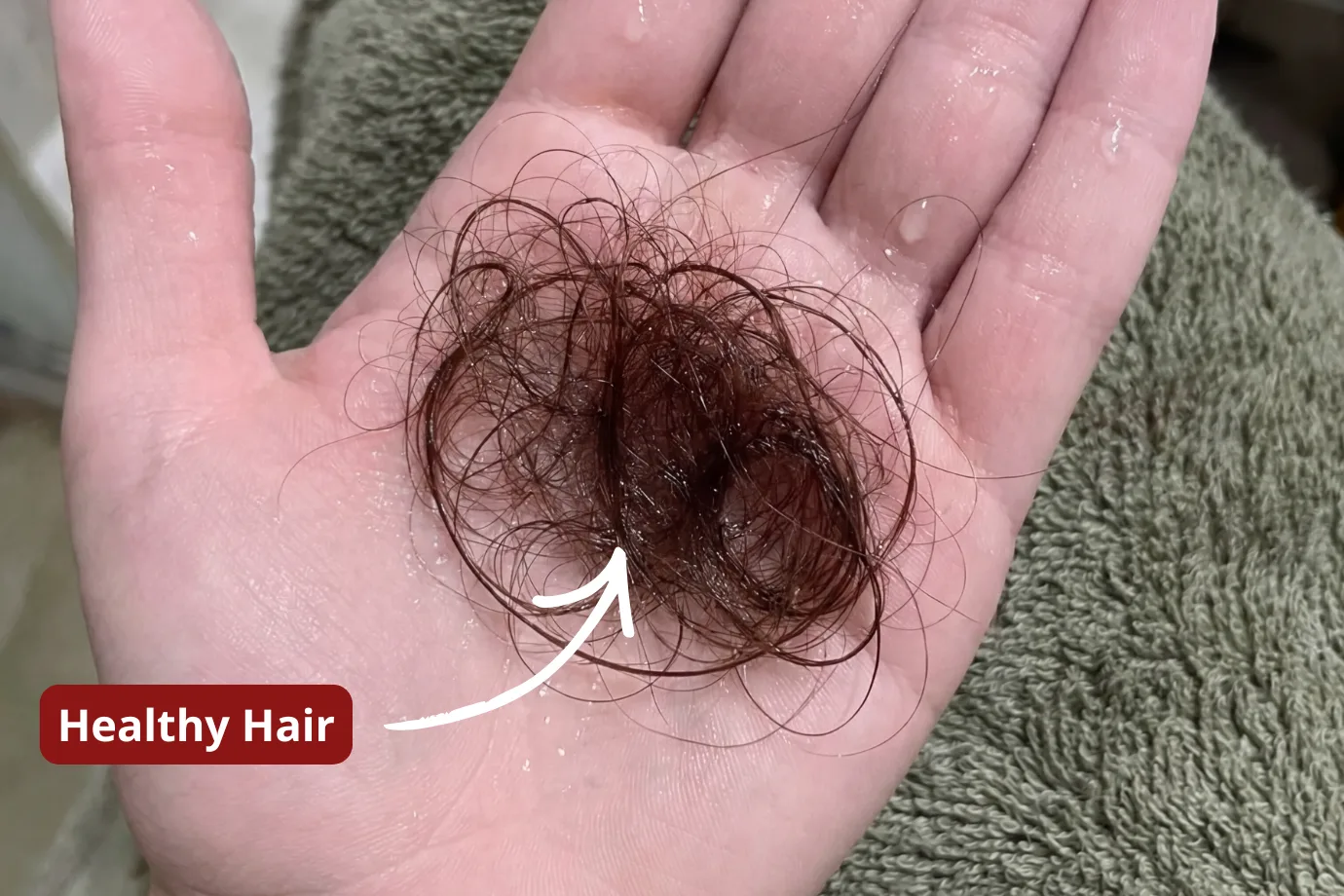
Every woman on a GLP-1 who sits across from me describes the same two moments her hair comes out.
The shower. And the brush.
And from the thousands of women I’ve seen between my training at Stanford and the patients I’ve seen since, the shedding almost always comes down to a handful of things they were doing that they should have changed the moment they saw more hair coming out.
Some are at the very beginning — month three on the medication, the first handful in the shower, still telling themselves it’s stress. Some are months in — ponytail half what it was, part widened, the brush unrecognizable.
What starts as “a little more shedding than usual” at month three becomes a thinner ponytail by month six. A widening part by month nine. Visible scalp at the temples by the one-year mark.
Most of them tell me they’ve already made the decision. They’re going to quit the medication. Or cut back to half-doses. Or take a “break” until the hair stabilizes. The ones who haven’t quit yet are stockpiling biotin, switching to clean-protein diets, and pouring expensive products onto strands that are already dead. None of it is changing the count. If anything, the supplements are making them feel worse — bloated, nauseous, no closer to keeping the hair.
After watching dozens of women come in with this exact pattern — and after a 2024 study from the University of Illinois Chicago made the mechanism clinically undeniable — last year I commissioned an independent clinical lab with my own money to find out what was actually happening, and what could be done about it.
It was the first study of its kind. They counted every single strand a woman lost — by hand. From her brush. From her wash. Before and after. The trial enrolled women 40 to 65 with aged scalps — the exact scalp condition GLP-1 medications create in women fifteen to twenty years younger.
Here’s what they found.
Hair lost in the brush dropped by 60%.
Hair lost in the wash dropped by 68%.
With 95% of the women seeing their shedding cease within the first six weeks.
The trial was peer-reviewed and accepted by the Journal of Drugs in Dermatology for publication in their June 2026 issue.
And the technique those women used in the trial is straightforward once you know what your hair actually needs — which has nothing to do with quitting the medication.
The Hair In Your Brush Is Younger Than You Think
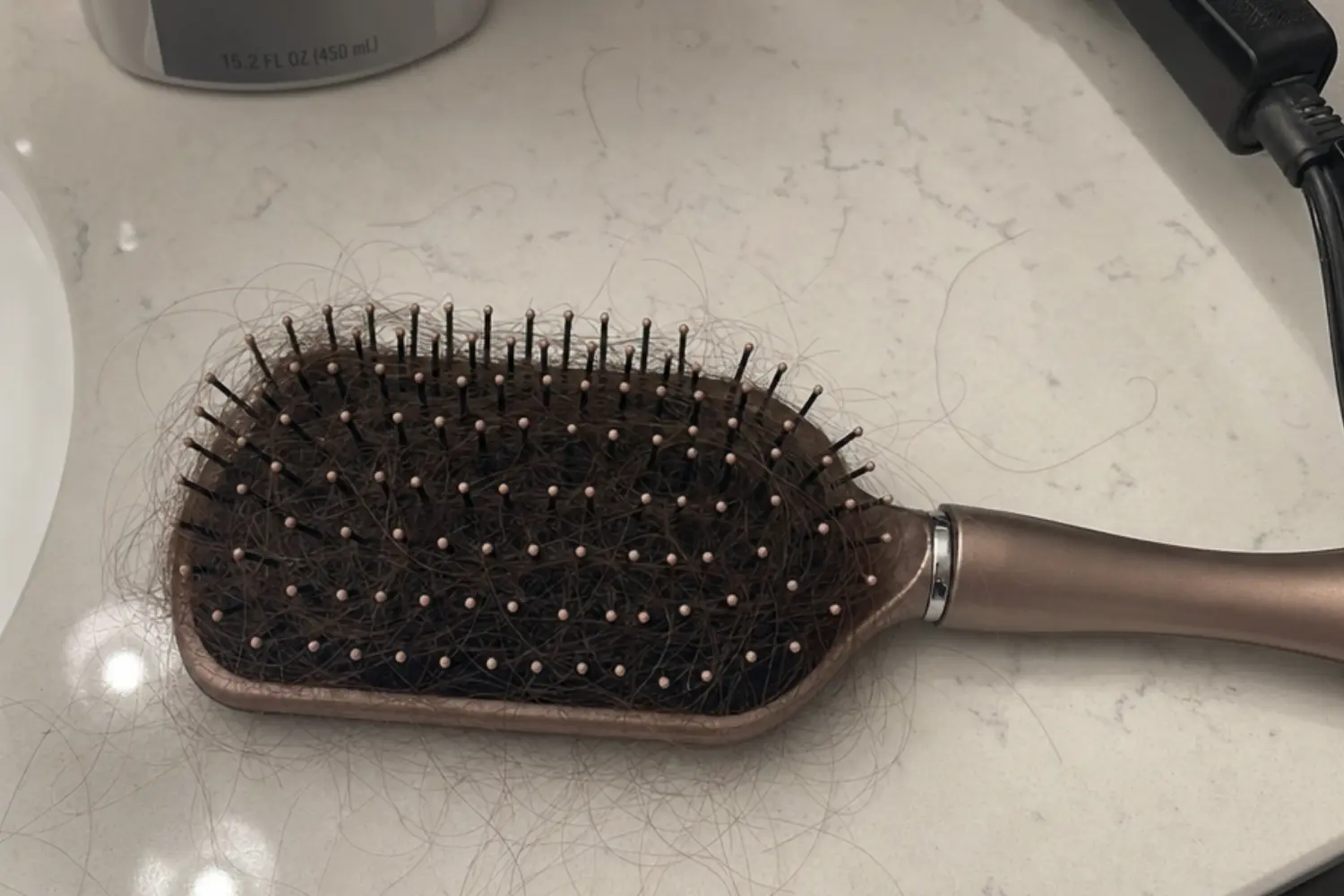
Pick up one of the strands you pulled out of your brush this morning.
Roll it between your fingers. The cuticle is intact. The strand is smooth. Strong. Pigmented. The bulb is attached at the root.
Under the kind of magnification dermatologists use to assess scalp tissue, that strand had years of life left in it.
A healthy human hair grows in cycles. Each cycle is supposed to last between four and six years before the strand is naturally replaced. That’s how thick ponytails get built.
The hair you’re losing right now isn’t a hair that finished its cycle.
It’s a hair that should have spent four more years on your head.
The strand could have grown another twenty inches. Another stretch of holding your ponytail thicker between your fingers. Instead it’s sitting in your palm in the shower, evicted years before its time.
This is what every woman on a GLP-1 in my office is grieving — and she doesn’t have the words for it. Not the hair she sees. The hair she should still have.
And here’s the part most doctors don’t explain when they prescribe these medications.
Your hair isn’t falling out. Your scalp is releasing it.
That distinction is the entire story.
Every strand on your head is held in place by a grip — tissue around the base of each follicle that physically locks the strand into your scalp. That grip held your hair in place for thirty years before you started the medication.
When you start a GLP-1, the math underneath your scalp changes overnight.
Your body suddenly has a fraction of the calories and nutrients it had before. And it has to make a decision about where to send what’s left. Heart first. Lungs second. Liver third. Brain. Bones. Skin. The scalp — which your body considers cosmetic — gets whatever’s left at the bottom of the queue. Most weeks, that’s nothing.
This is what doctors call nutrient rationing. Your body rationing a shrinking supply across the organs it has to keep alive. And your scalp doesn’t make the cut.
Under starvation conditions, scalp tissue ages roughly ten times faster than the skin on the rest of your body. Inflammation rises. The grip starts giving out — and your scalp begins releasing strands it should be holding for another four to six years.
This is why quitting the medication doesn’t save your hair. The damage to the tissue is already done. The eviction already happened. Stopping the medication just means the weight comes back too — and the hair takes twelve to twenty-four months to recover, if it recovers at all.
And in 2024, researchers at the University of Illinois Chicago published a peer-reviewed paper that proved exactly this is what’s happening — and that the entire conversation about GLP-1 hair loss has been pointed at the wrong target.
What The University Of Illinois Chicago Proved In 2024
GLP-1 medications don’t just shrink your waist.
They age your scalp.
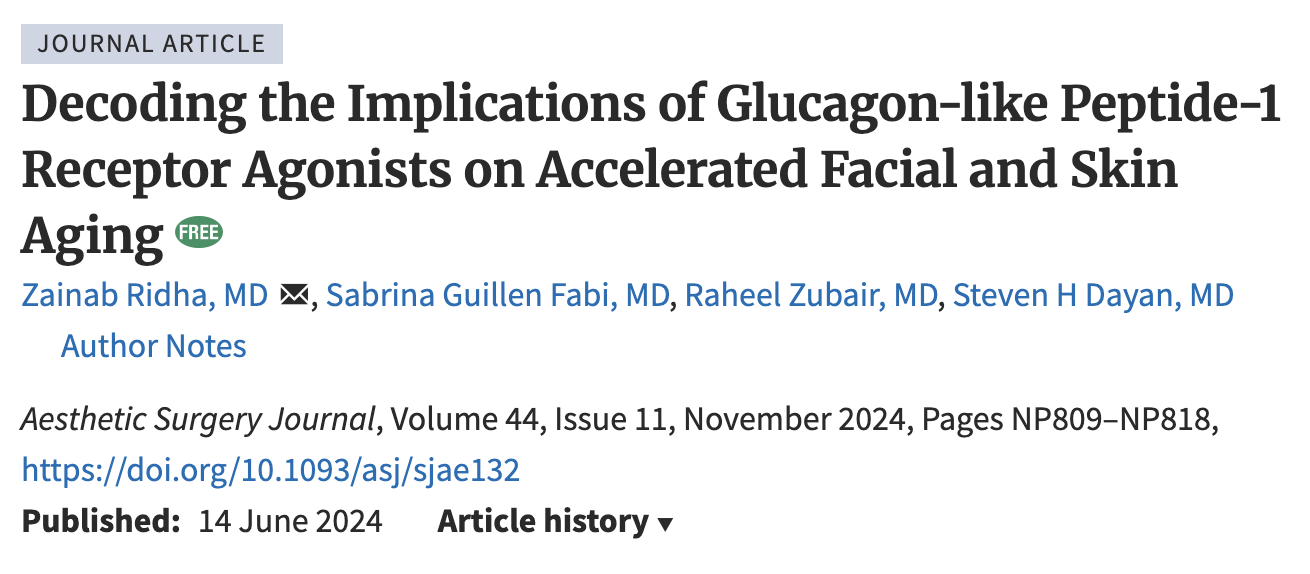
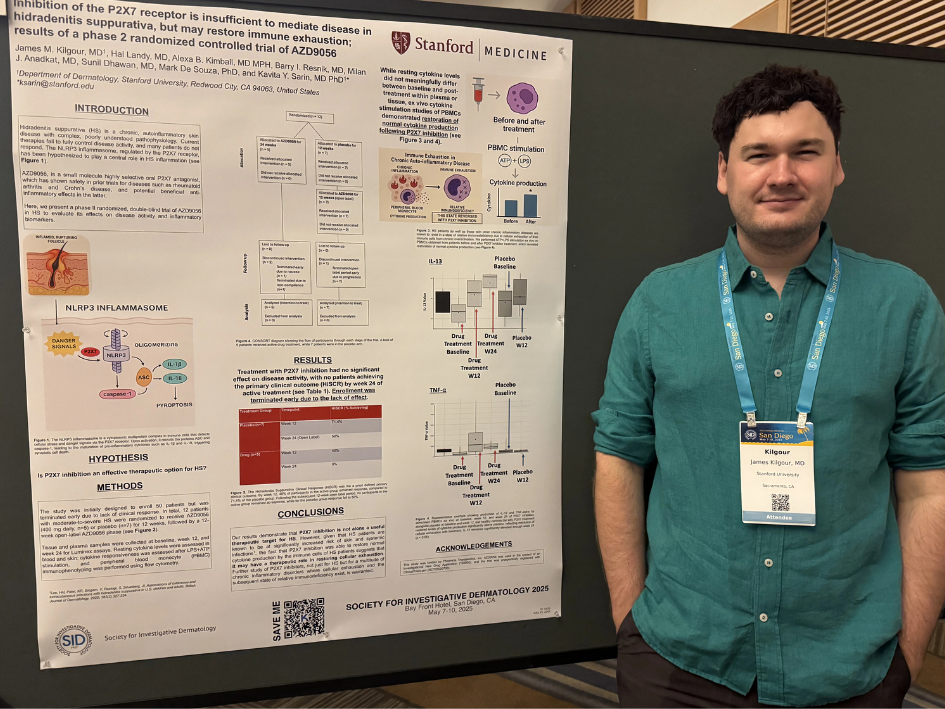
That’s what researchers at the University of Illinois Chicago proved in a paper published in the Aesthetic Surgery Journal in November 2024 — a peer-reviewed study that should have ended the entire conversation about GLP-1 hair loss.
Here’s what they found.
When the body starts rationing nutrients, the tissues at the bottom of the queue start aging fast. Years of damage in months. The grip each follicle relies on starts giving out.
Other research has measured the gap directly. Under starvation conditions, scalp tissue ages roughly ten times faster than the skin on a woman’s forehead. Same woman. Same age. Inches apart on her body. One tissue stays intact. The other collapses.
The researchers concluded that GLP-1 medications cause accelerated aging across the skin — and that the scalp, the thickest skin on the body and the tissue most dependent on a steady nutrient supply, ages the fastest. The follicle was never the problem. The medication didn’t break your follicles. It collapsed the grip underneath them.
Which means almost every product sold to women for GLP-1 hair loss is aimed at the wrong target.
Biotin and hair vitamins feed the strand. But on a GLP-1, your body is rationing. Heart first. Brain second. Liver third. Bones fourth. Hair is the patient sitting in the ER waiting room with a paper cut. He’s never getting seen. By the time anything you swallow reaches a follicle, there is almost nothing left.
Eating cleaner doesn’t fix it either. The damage to your scalp tissue is happening right now, every week you wait. You cannot eat your way out of a scalp the medication is actively aging.
Hair masks, oils, and bond builders treat the strand. The strand is dead. It’s keratin. It finished growing weeks before it ended up in the drain. Pour anything you want on it — it doesn’t change what’s happening underneath.
And quitting the medication is the worst version of the trade. You lose the weight loss. You keep the shedding for another year. The damage to the tissue keeps progressing for months after you stop, because the scaffold the medication thinned doesn’t rebuild itself.
The good news is that the tissue can be rebuilt. The trial proved it. And the technique those 95% of women used to do it is something almost any woman on a GLP-1 can do at home — in thirty seconds, once a night, before bed. While staying on her medication.
“This Is The First Trial To Cease Shedding, Not Slow It”
The trial enrolled women between 40 and 65 with aged scalps — the exact tissue condition GLP-1 medications create in women in their thirties and forties.
Most had already tried something. Minoxidil. Special shampoos. Supplements. A few had quit medications because of the shedding and were trying to recover. None of them were seeing the results they wanted. These were women modern medicine had already tried and failed.
For six weeks, each woman followed the same thirty-second protocol on her scalp every night before bed.
Then the lab measured what was actually happening.
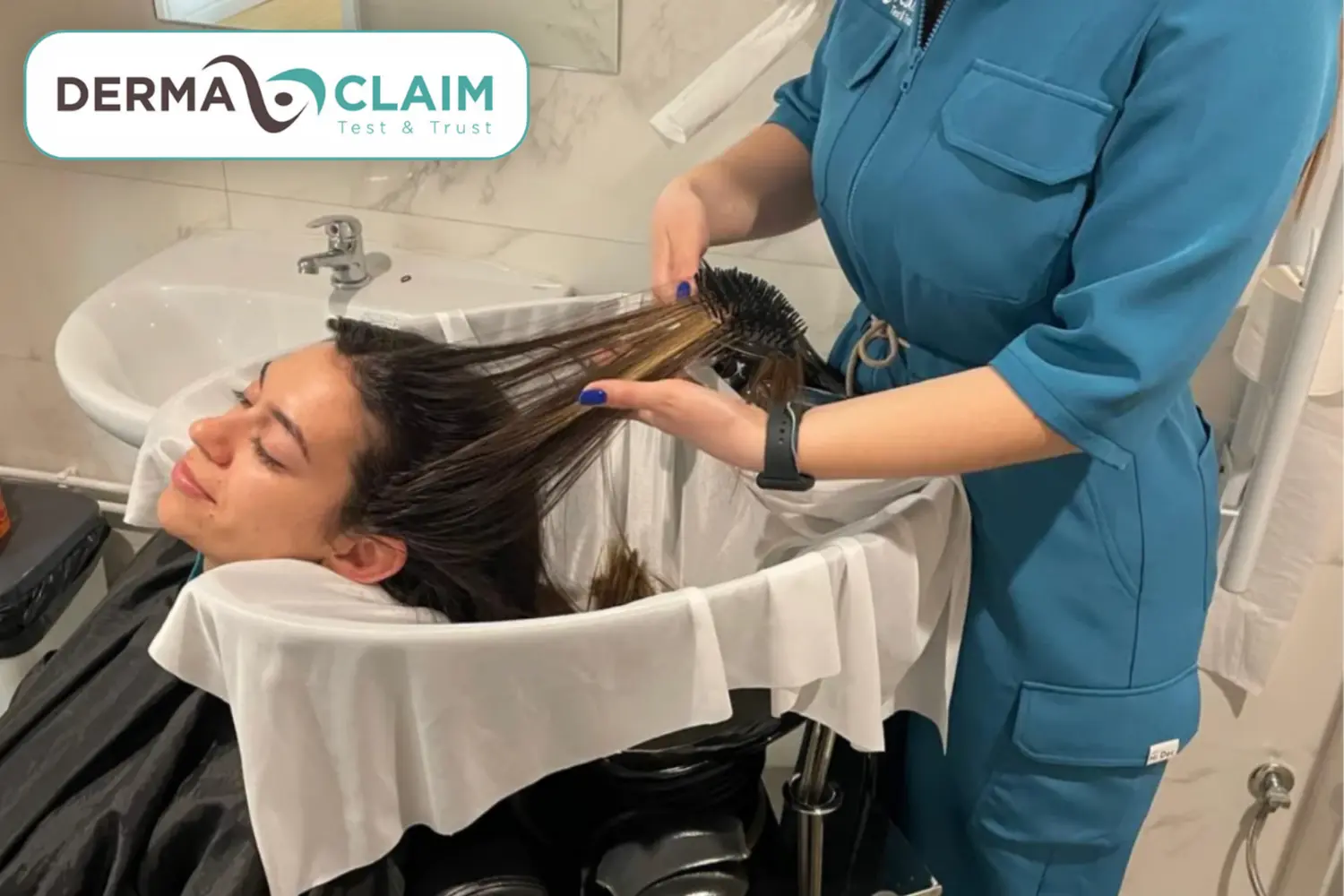
Each woman was seated in a hairdresser’s chair and draped in a dense weft fabric that catches every shed strand. A trained technician then ran a thick brush, then a medium brush, then a fine comb through her hair in a fixed sequence — same combs, same number of strokes, same tension — until no more hair came out. Every strand caught in the fabric was dried, photographed, and counted by hand.
This was done before the protocol began. And again at the end of week six.
The result: the brush count dropped by 60%.
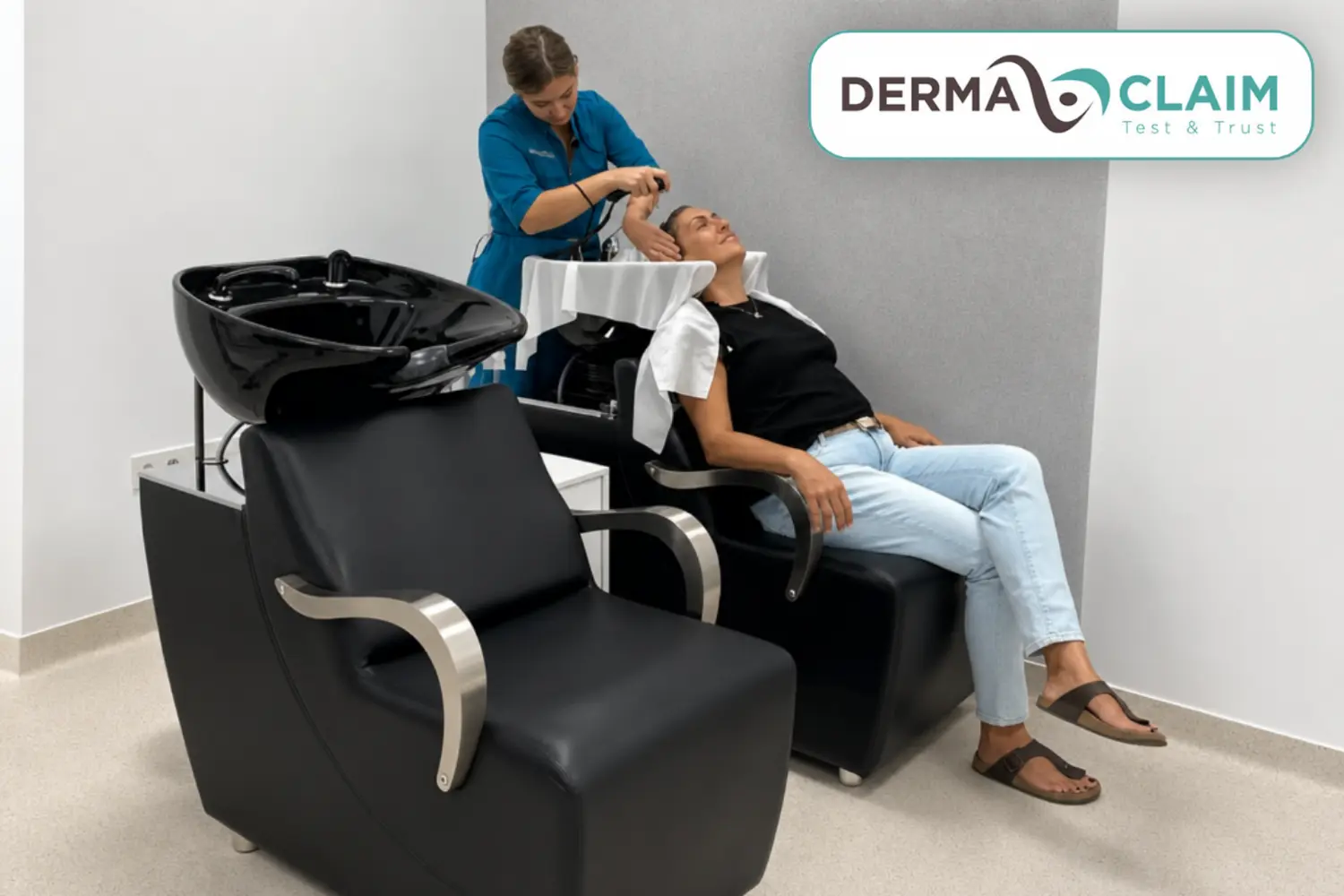
Each woman washed her hair in a clinical sink. Two consecutive washes. Five minutes each. A neutral, sulfate-free shampoo. A mesh fabric below the basin caught every strand released during the lather and the rinse.
Counted by hand. Photographed. Documented. Same protocol before the trial. Same protocol at week six.
The result: the wash count dropped by 68%.
Then the lab combined the two measurements to answer the bigger question. Not how much less each woman was shedding — but whether her shedding had returned to what it should be.
The benchmark: the daily shedding of a healthy 30-year-old scalp. Before tissue degradation. Before the dermal layer thins. Before the scaffold starts releasing strands that should still be holding.
95% of the women in the trial had returned to that benchmark.
Not reduced. Not slowed. Returned to normal. Inside six weeks.
It was the finding that surprised everyone, including the lab.
The trial was peer-reviewed and accepted by the Journal of Drugs in Dermatology for publication in their June 2026 issue.
Which leaves one question.
What were those women actually doing for those thirty seconds every night?
What The Trial Used That Nothing Else On The Market Combines
To stop the shedding, a topical has to do three things at once.
It has to rebuild the chemistry estrogen used to maintain before 40 — the active grip your scalp has on each strand.
The scalp is the thickest skin on your body. That’s the reason most “scalp serums” wash off in the next shower without ever doing anything underneath.
It has to tell each follicle to stay in growth phase instead of shutting down early — turning a two-year cycle back into a four-to-six-year one.
No single ingredient does all three. And until the trial, no formulation on the market combined compounds that did each one.
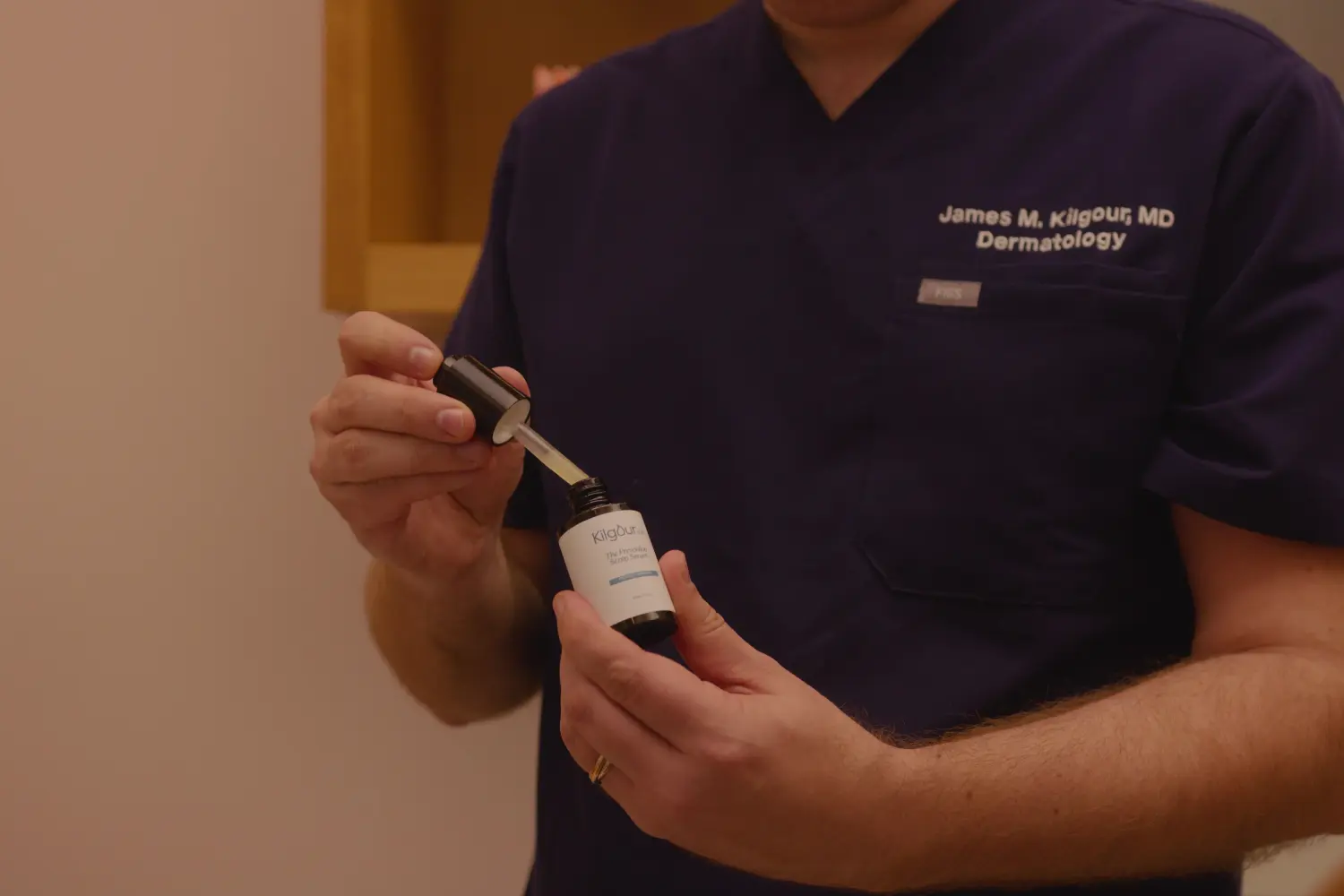
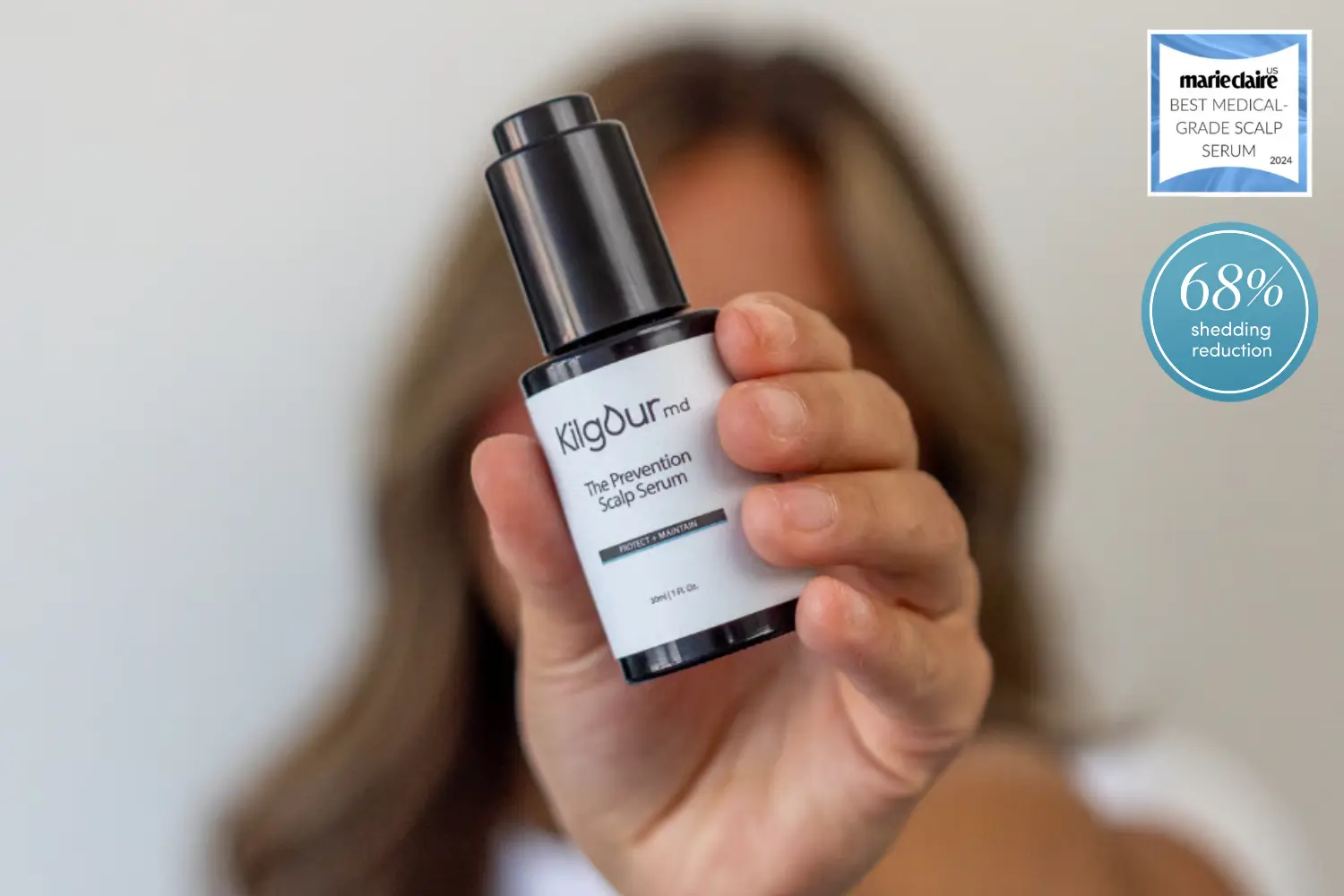
The serum the women in the trial were using does. It’s called The KilgourMD Prevention Serum.

Your scalp is the thickest skin on your body. That’s why most scalp serums wash off in the next shower without ever doing anything underneath. Procapil is the only compound here that gets through that barrier — and it carries everything else with it.
It also doubles blood flow to the follicles — feeding the rebuild with oxygen and nutrients the tissue hasn’t seen since you started the medication.

Than Minoxidil
Capixyl rebuilds the grip directly — the same job your scalp used to do on its own before the medication aged it years ahead of schedule. In head-to-head testing it proved 81% more effective than minoxidil. Without the irritation. Without the rebound shedding when you eventually cycle off.
That’s why the women in the trial stopped shedding strands their scalp should have been holding.


Every follicle has a command center at its base making one call: hold or release. When the tissue around it breaks down, the command shifts to release — and hair gets evicted years before its time.
AnaGain tells the follicle to keep cycling. RootBioTec protects the command center making the call.
Together they extend the growth phase by 78% and increase density by 79%.
That’s why strands stay on your head longer instead of getting evicted before their time.

Fragmentation
Capixyl rebuilds the grip. Vitamin C makes sure the grip has something solid to hold onto.
On a GLP-1, the tissue underneath the grip breaks down faster than it would naturally — the medication accelerates a process that takes decades on its own. Vitamin C cut that breakdown by 44.6% in a placebo-controlled trial.
That’s why the protocol works on women whose tissue is already collapsing. Not just on women whose scalp is still intact.
Each of these compounds, on its own, would be a breakthrough. None of them are found together in any other formulation on the market.
That’s what the women in the trial were applying for thirty seconds every night before bed.
That’s what produced a 60% drop in brush count, a 68% drop in wash count, and complete cessation of shedding for 95% of them in six weeks.
What’s Happening For Women On GLP-1s Outside The Trial
Since we made Prevention available outside the trial, thousands of women on GLP-1 medications have started using it. Here’s what a few of them have said.
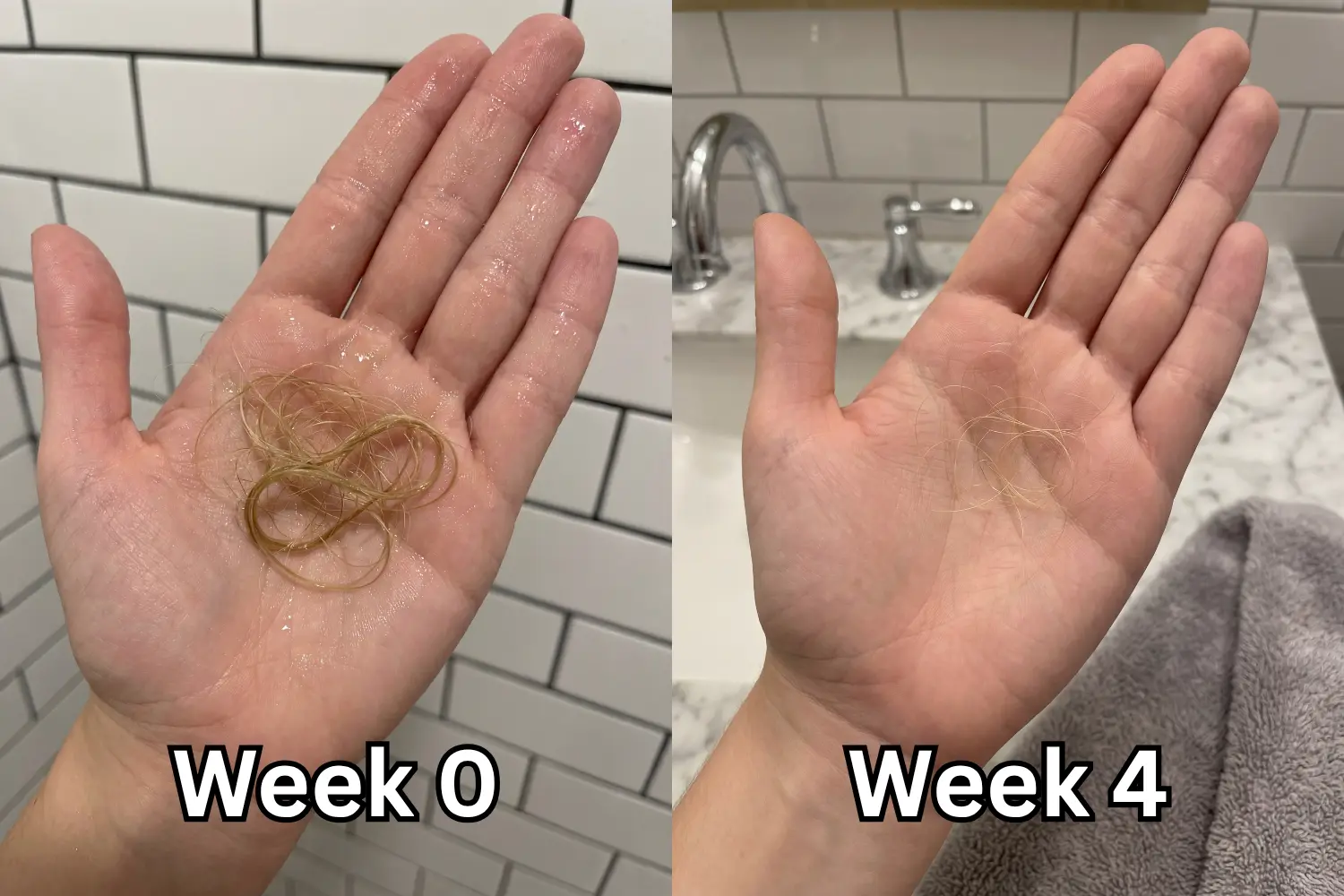
“I lost forty pounds on Wegovy and I thought losing my hair was just the price. The shedding started around month four and by month six the drain was unrecognizable. My dermatologist told me to quit the medication. My internist told me to just take iron. I did neither. I started Prevention. By week five the drain looked normal again. I’m still on the Wegovy. I’m down another twelve pounds. And my ponytail is the thickest it’s been since I started.”
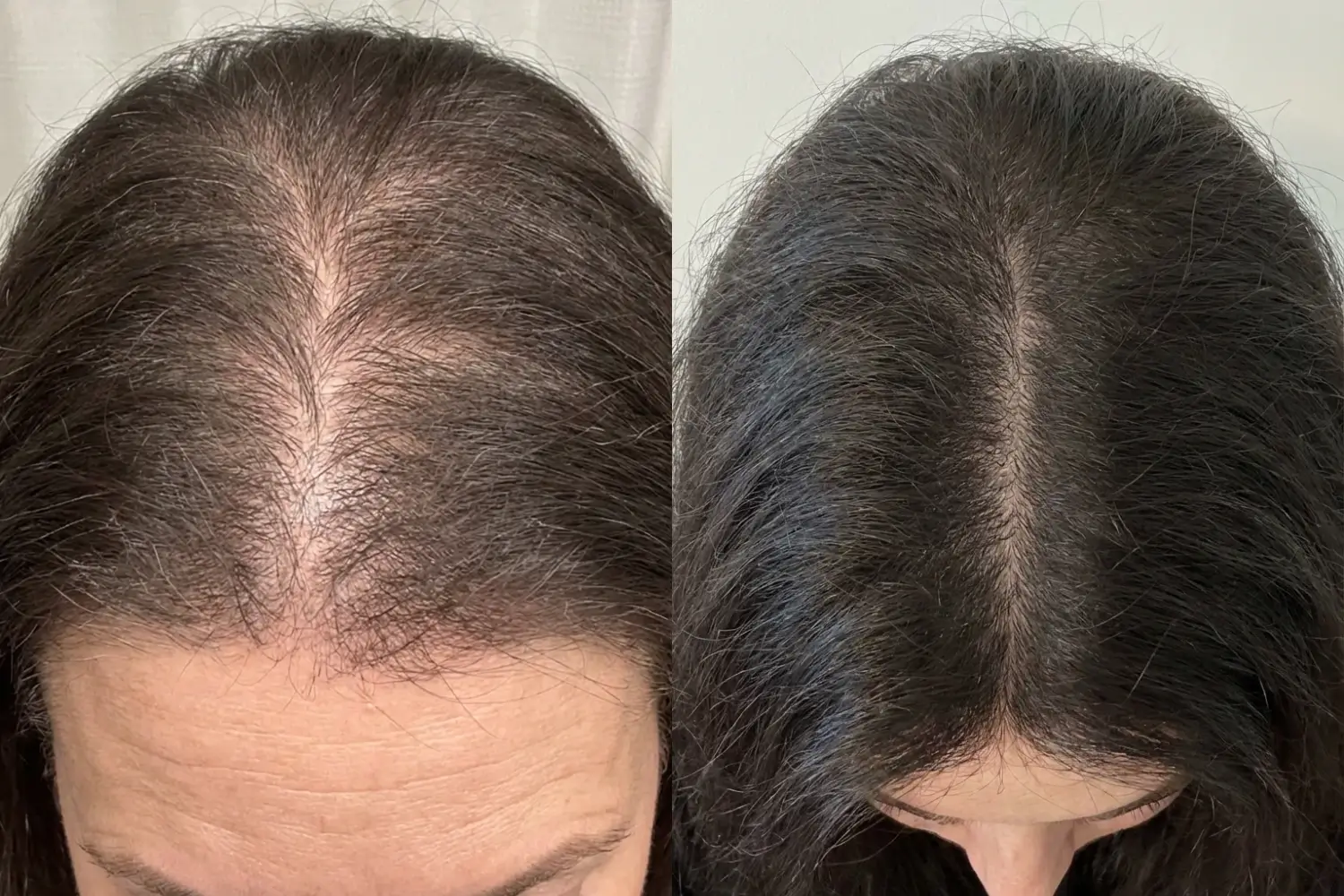
“I’d been counting hairs in my brush for three months. Forty. Sixty. Eighty. The morning I counted a hundred and twelve I almost called my doctor and told her I was stopping the medication. My sister convinced me to try Prevention first. I’m at week seven. Yesterday morning I counted nine. Nine. I cried in the bathroom.”
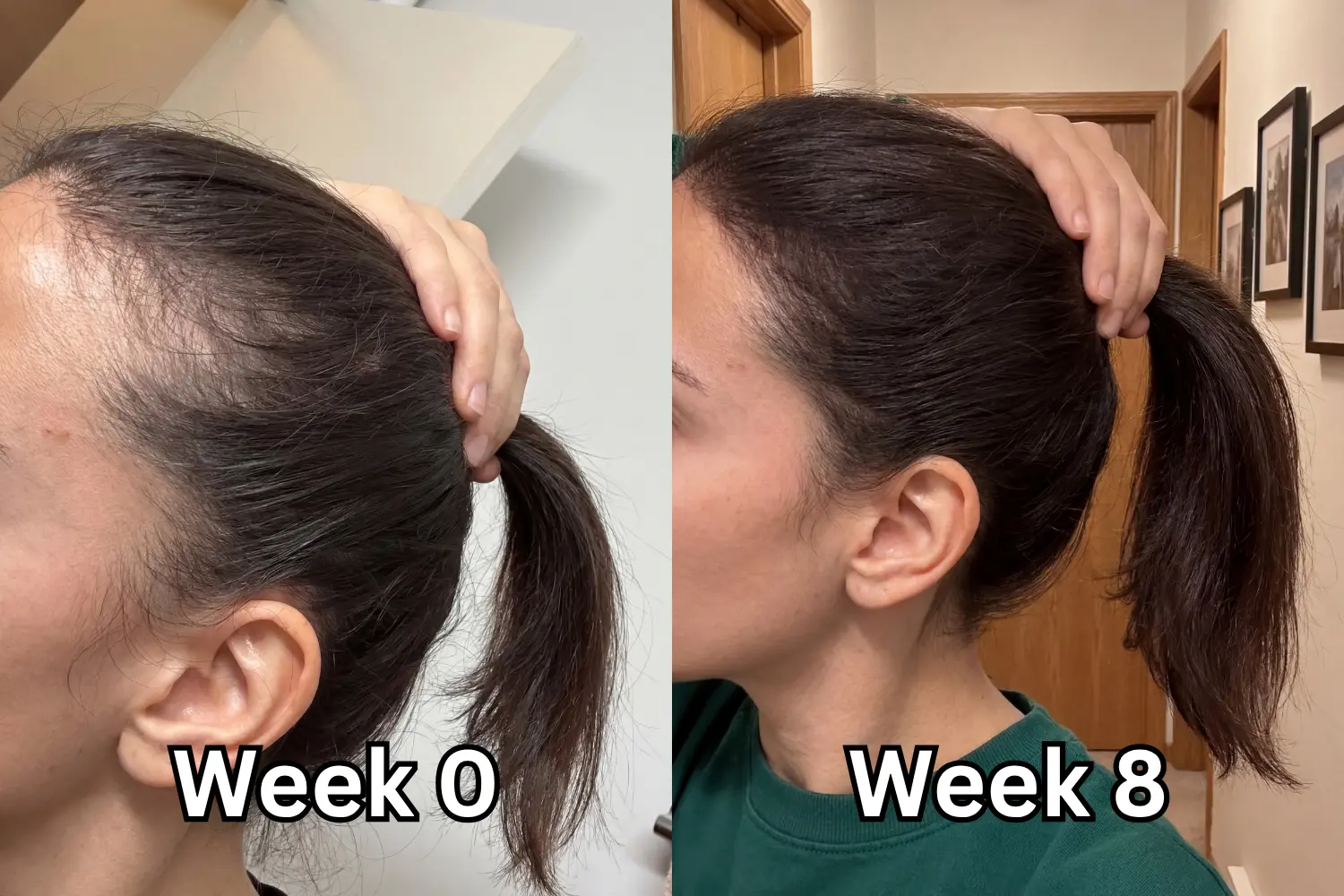
“The shower was the worst. I’d be standing there with hair stuck to my chest, my arms, the wall behind me. I’d be afraid to look down at the drain. I started Prevention at five months on the medication. Six weeks in, I stepped out of the shower and looked. Three strands. Three. I take pictures of the drain now to remind myself it’s real.”
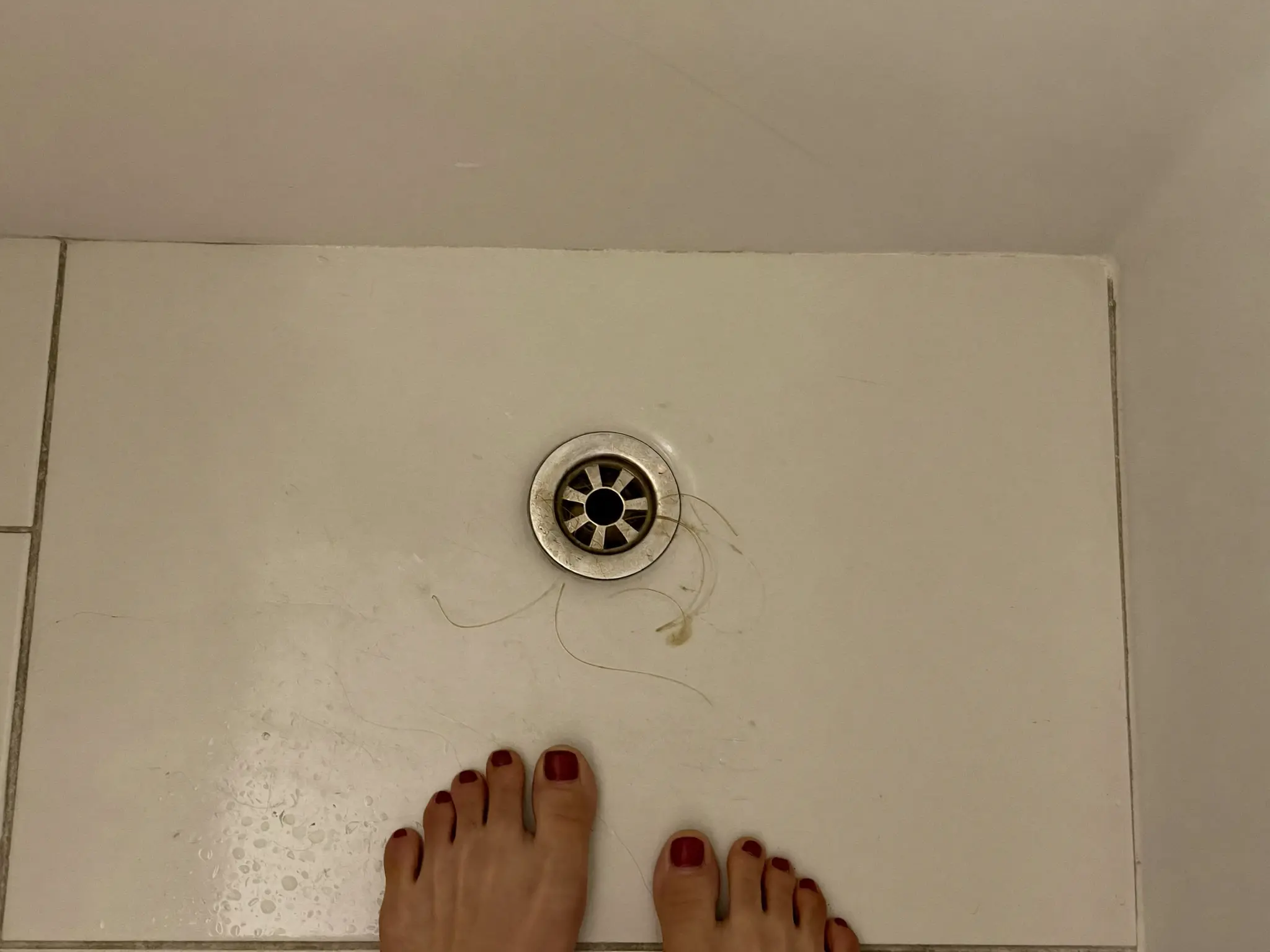
“My doctor said the hair loss would stop on its own once my body adjusted. It didn’t. It got worse every month. I was about to quit the medication and accept the weight coming back when I found Prevention. I’m at week eight. The shedding has stopped. The baby hairs at my temples are growing back in. I’m still on Z*pbound, I’m still losing weight, and my hair is thicker than it was before I started.”
These are not isolated cases. They’re the same pattern the trial measured — the same pattern in tens of thousands of women on GLP-1 medications who have used Prevention since.
My Personal 90-Day “Empty Brush” Guarantee
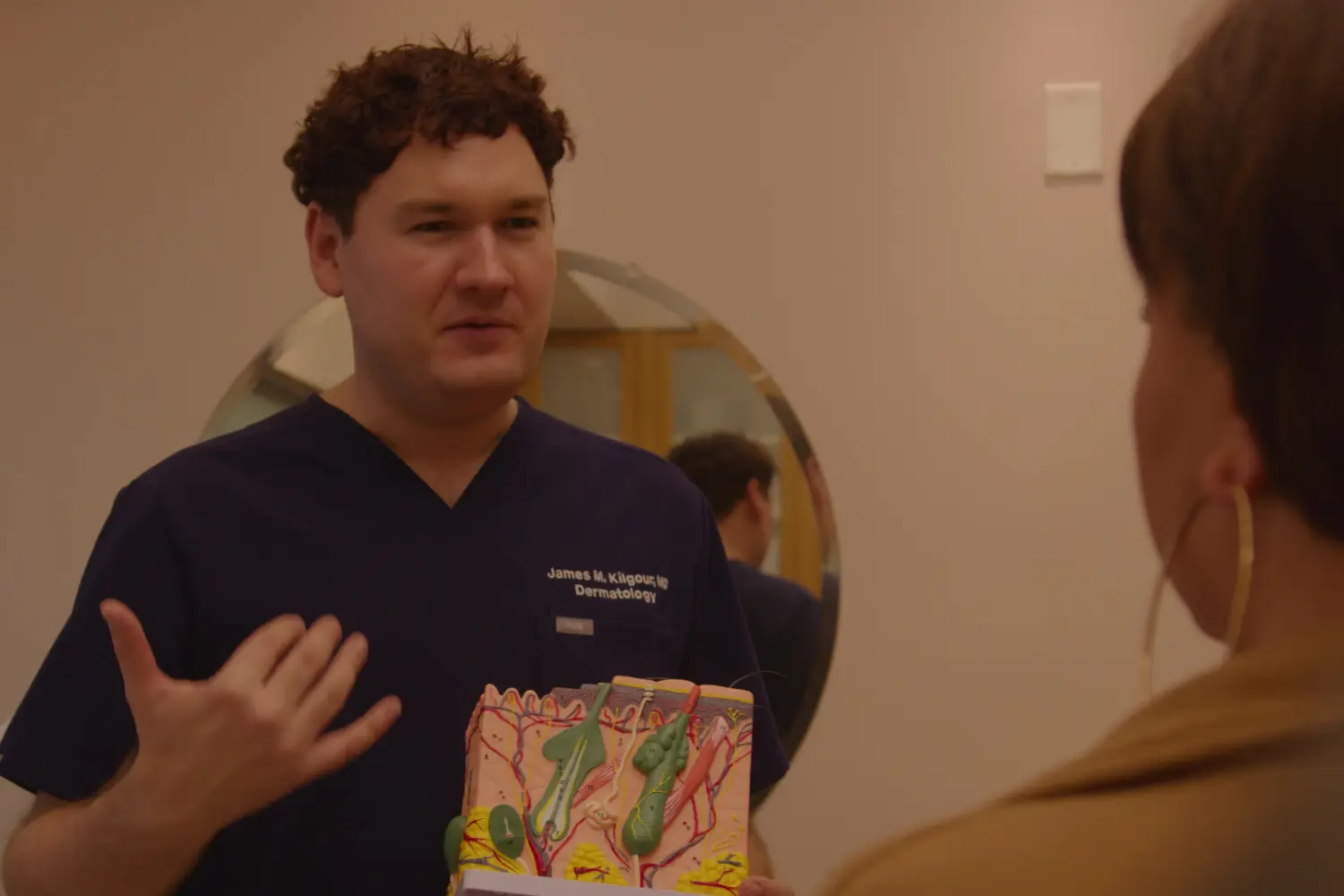
If you’re on a GLP-1 right now and the shedding is the only thing making you consider quitting, this is the lowest-risk way to find out whether you can keep both the weight loss and the hair.
It doesn’t interfere with the medication. No drug interactions. All natural. Exactly like skincare — just for your scalp.
If you’ve already tried everything — biotin that did nothing, expensive masks that didn’t change the count, doctors who told you to “wait it out” — this is your one without the risk of getting burned again. And without losing the weight loss you’ve worked for.
Here’s my promise.
Use Prevention Serum every night. Thirty seconds, before bed. Stay on your medication.
By week 6, your brush should be almost empty. By week 12, your part should be narrowing. After that, you should be looking at a version of your hair you haven’t seen since you started the medication.
If none of that happens, I’ll refund every penny.
No forms. No hoops. No store credit. Just email the team and say “It didn’t work.” You keep the bottles.
Why am I willing to do this? The Journal of Drugs in Dermatology just accepted the trial for publication in their June 2026 issue. And on the women in that trial, 95% stopped shedding completely inside six weeks.
If 95 out of 100 women stop shedding in six weeks, this guarantee isn’t generous. It’s the math.
What To Do Next
If you recognized yourself anywhere in this article — the drain, the ponytail elastic going around twice, the brush that has more in it after one pass than it used to have after a week — you already know what’s happening.
And you already know what happens if you don’t do anything about it.
You don’t have to choose between your weight loss and your hair. You just have to stop trying to fix the wrong thing.
Tap the button below and start tonight, before bed. Thirty seconds. That’s it.
Six weeks from now, your brush is going to look different. Twelve weeks from now, you’re going to catch yourself in the mirror.
If it were me, I’d grab the 3-month subscription. It’s the format we ran the trial on, it’s where you see every stage of results, and with 28% off while the publication batch lasts, it’s where you save the most. But whatever option you pick, the guarantee covers every penny of your order.
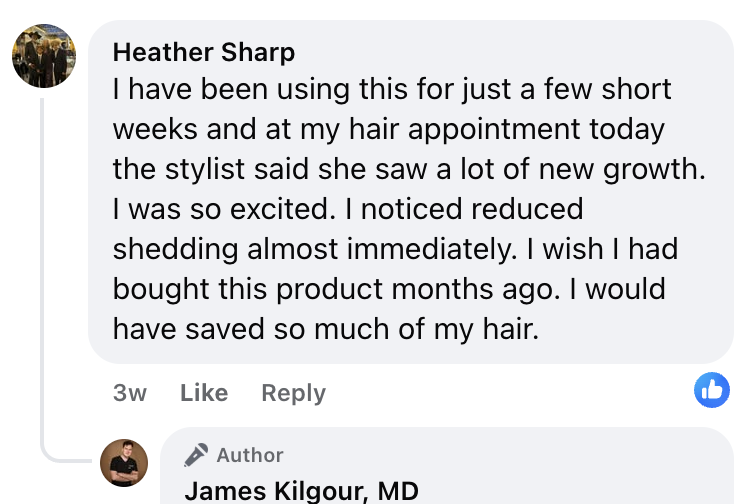
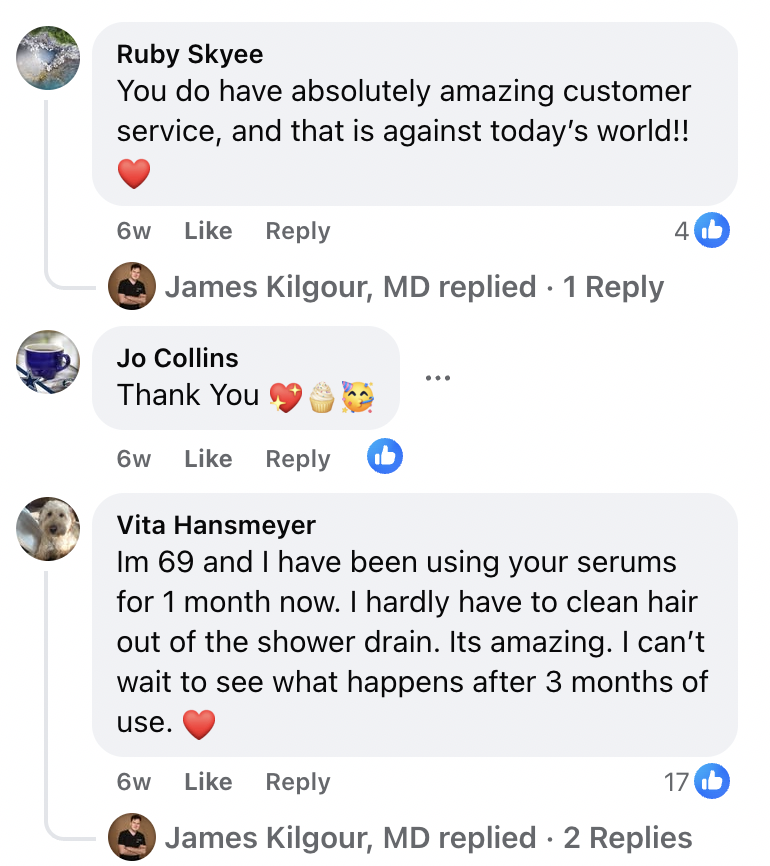
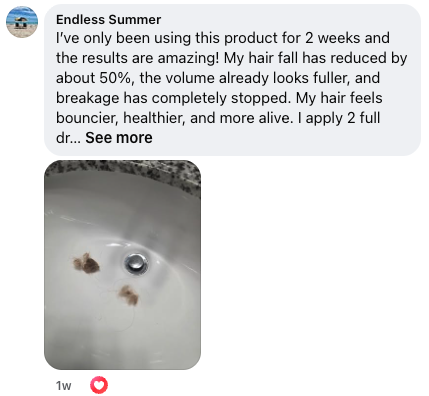
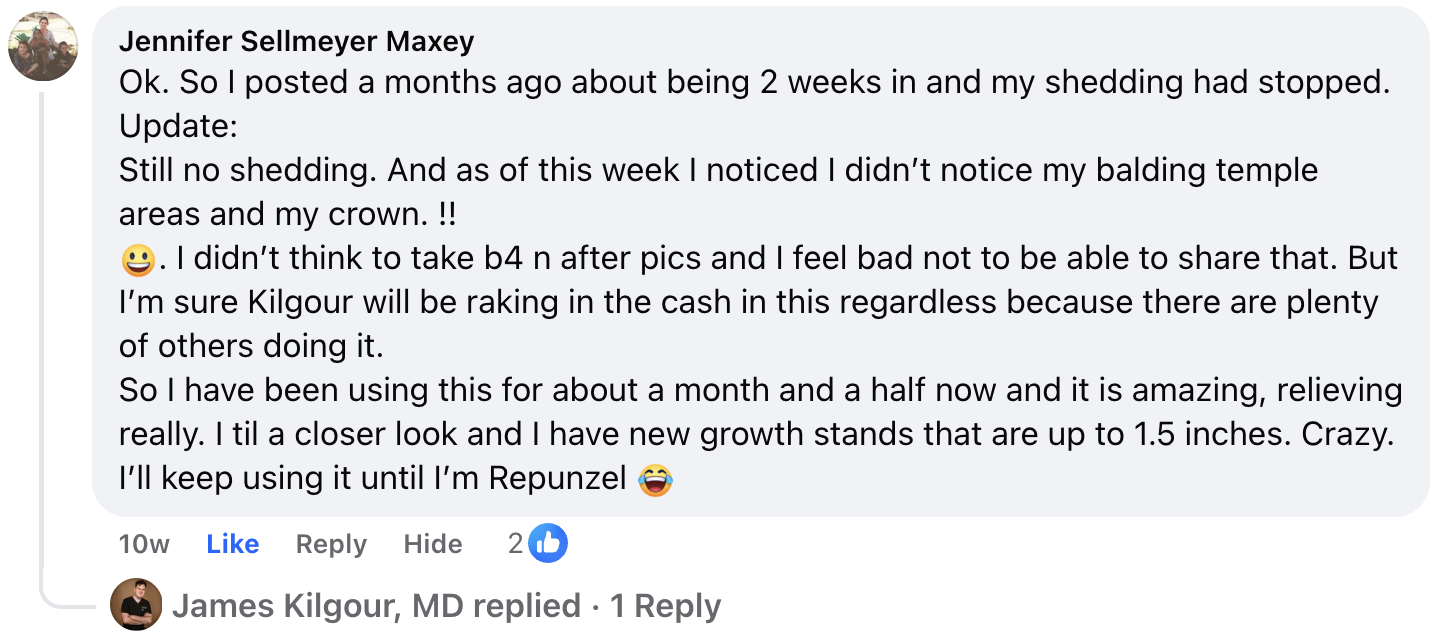
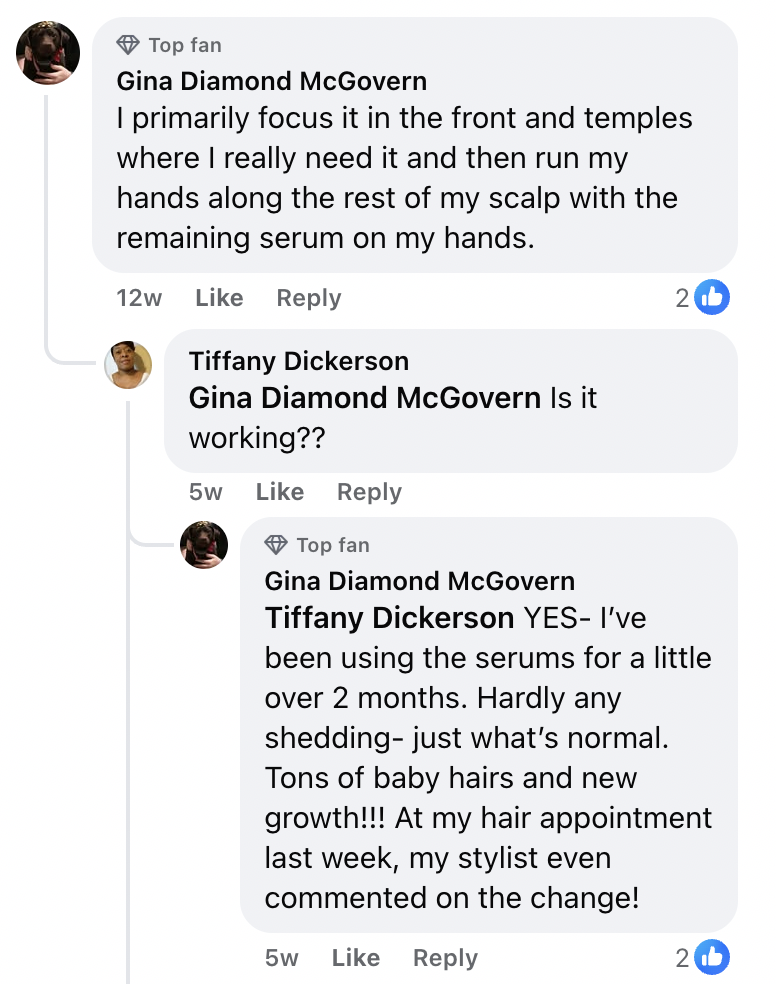
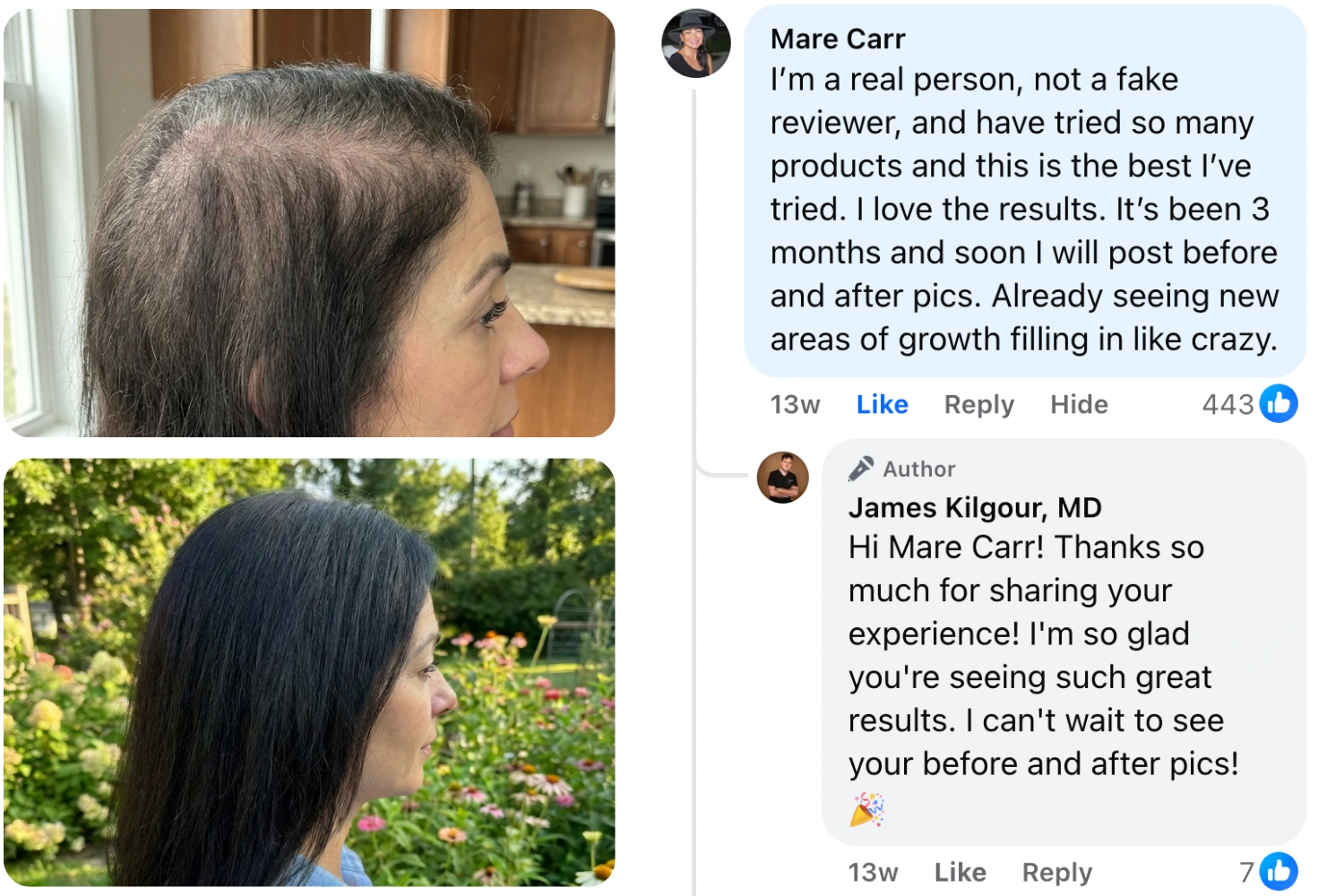
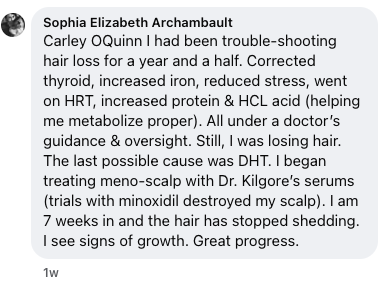
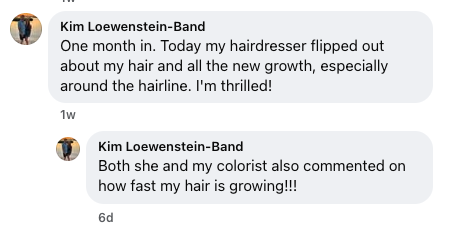
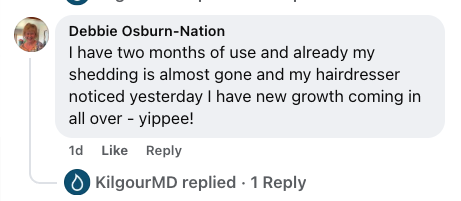
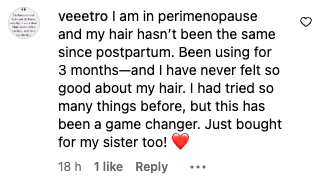
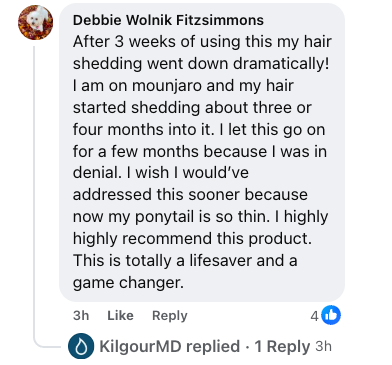
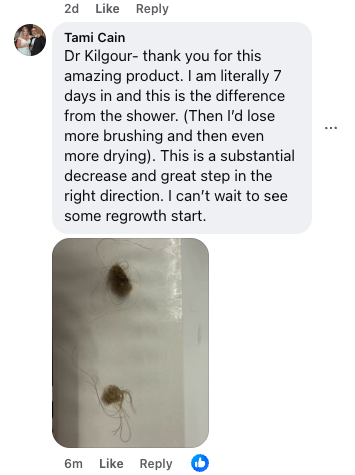
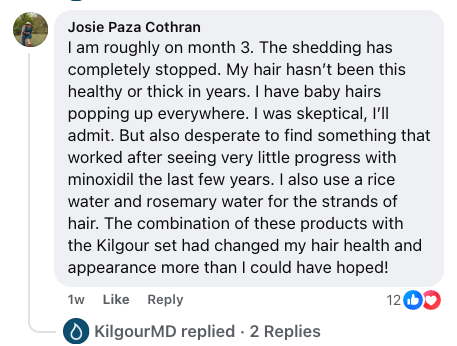
What Women Have Been Writing
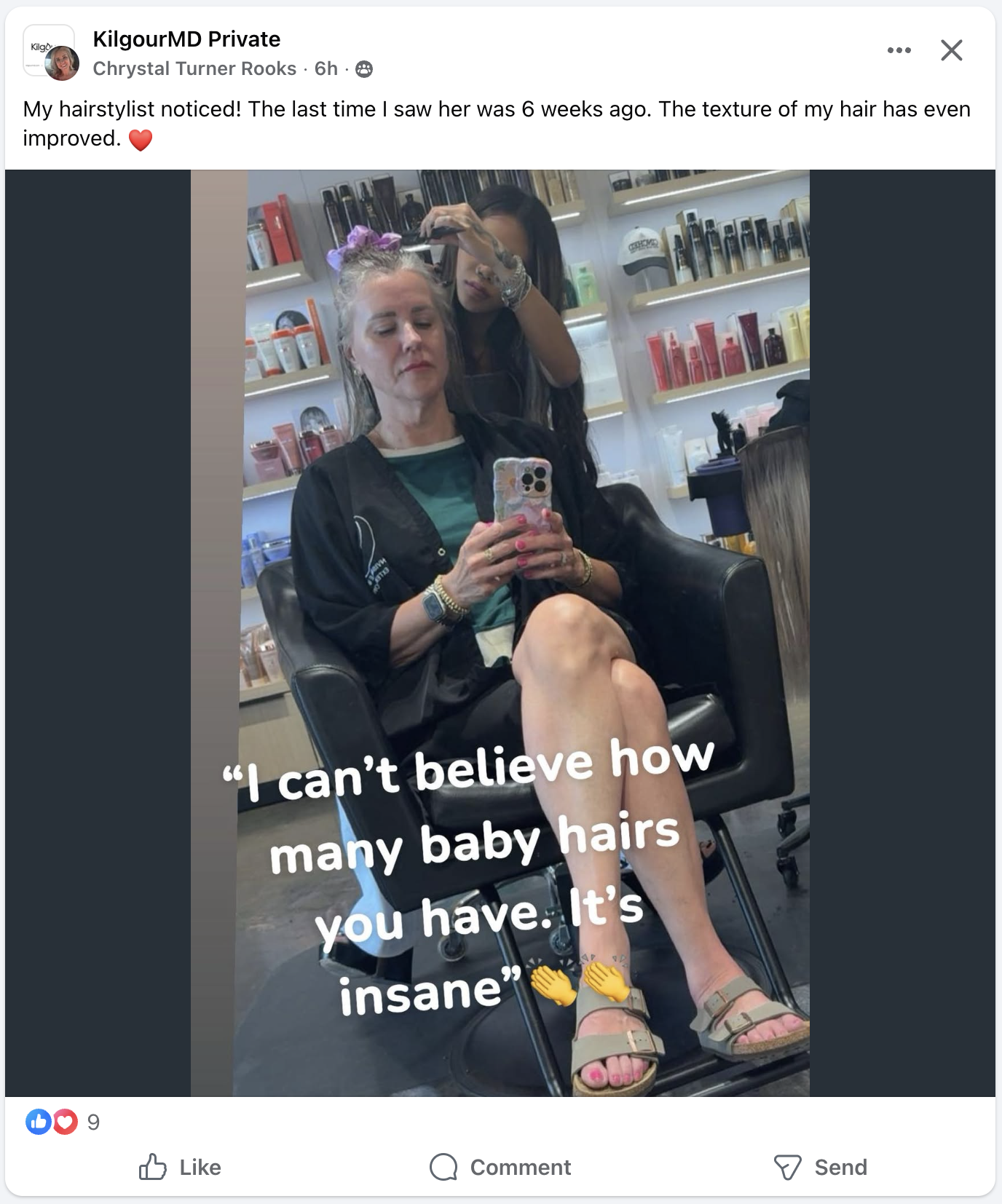
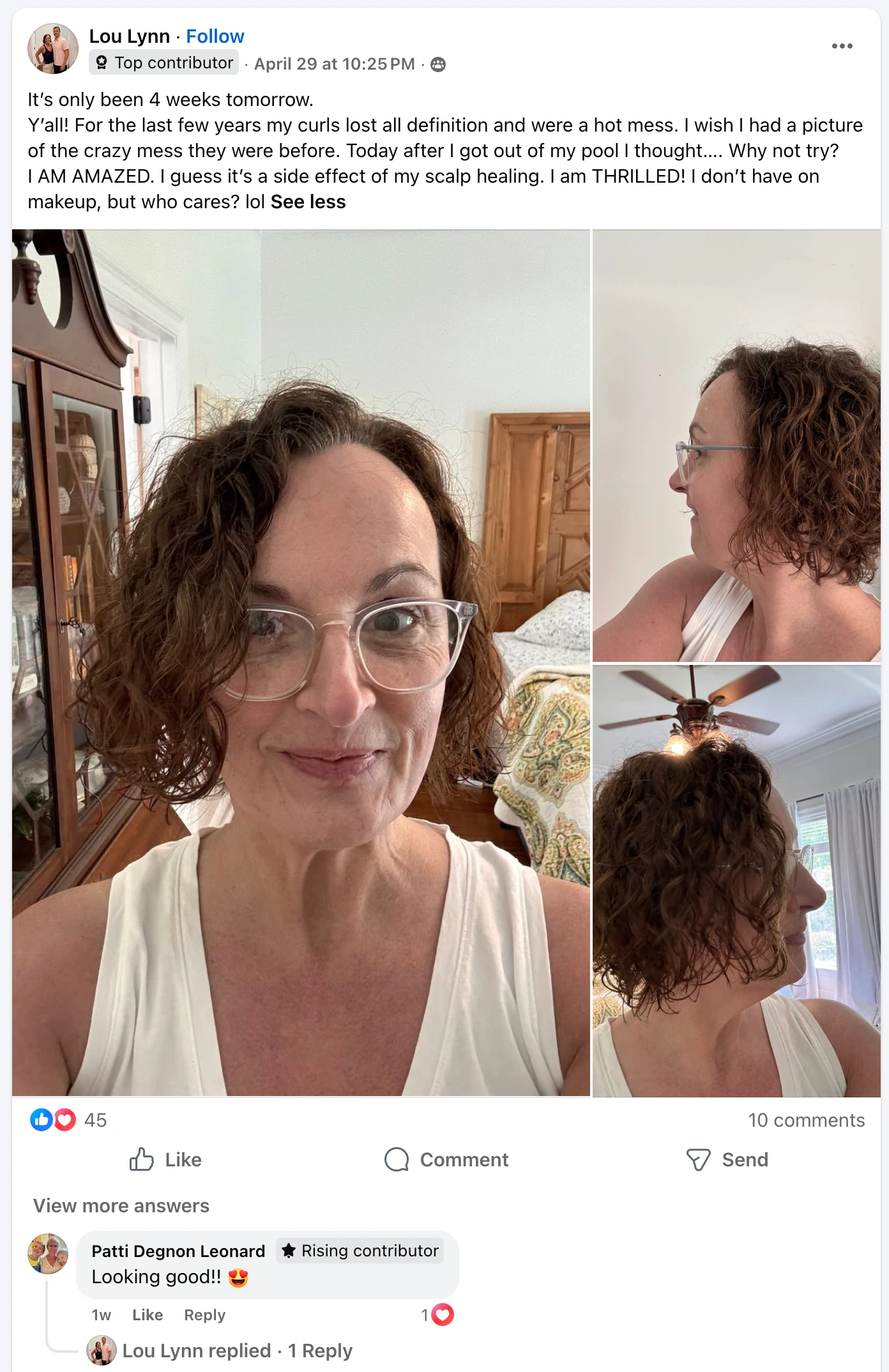
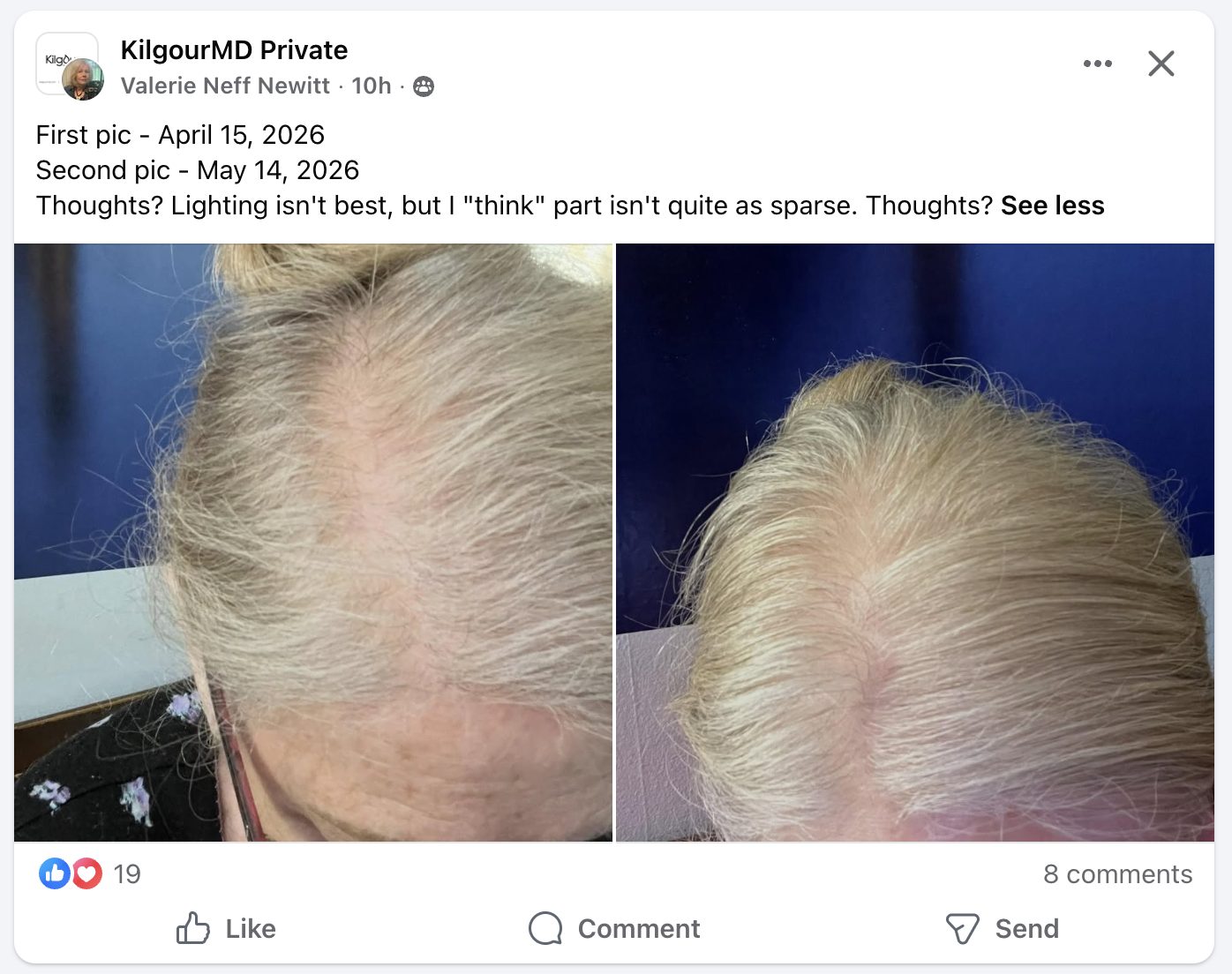
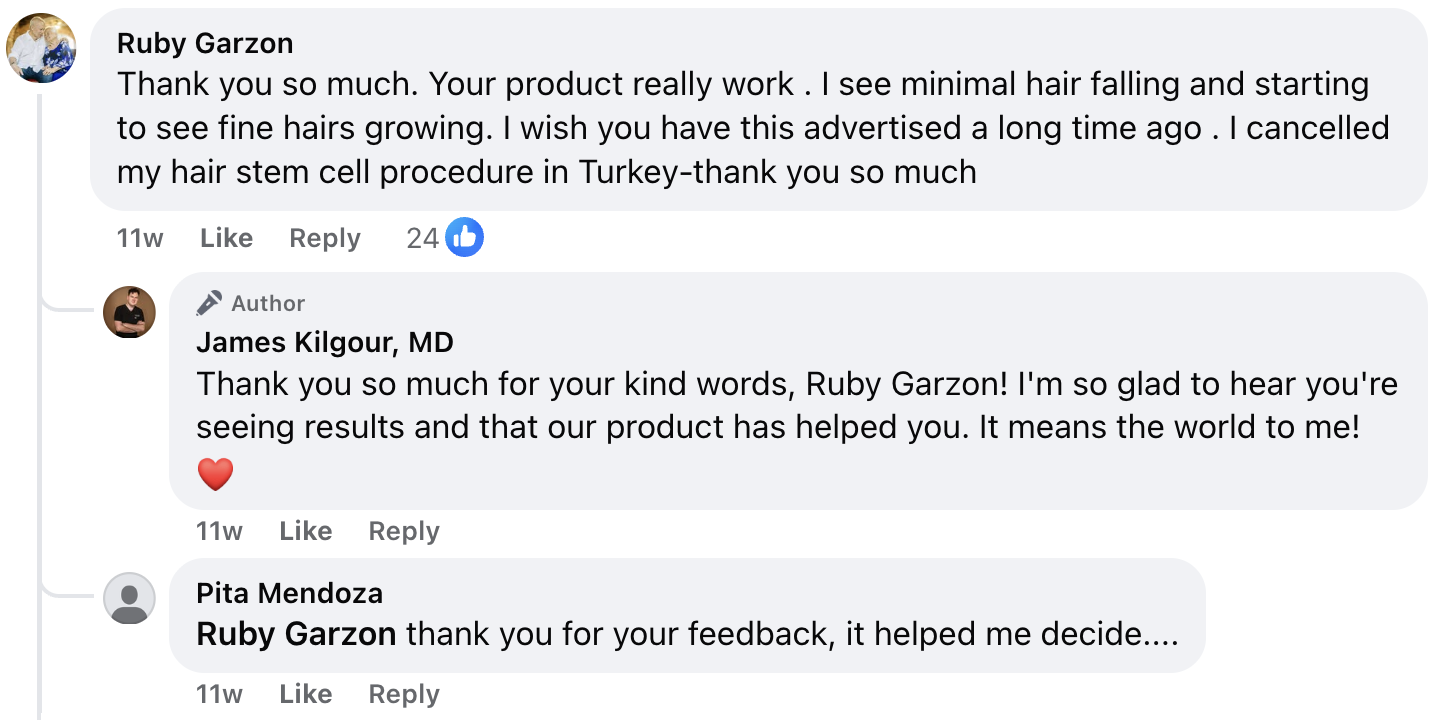
Little unprompted notes women have left on our posts — usually a few weeks in, once they start noticing.
Meet Your Dermatologist
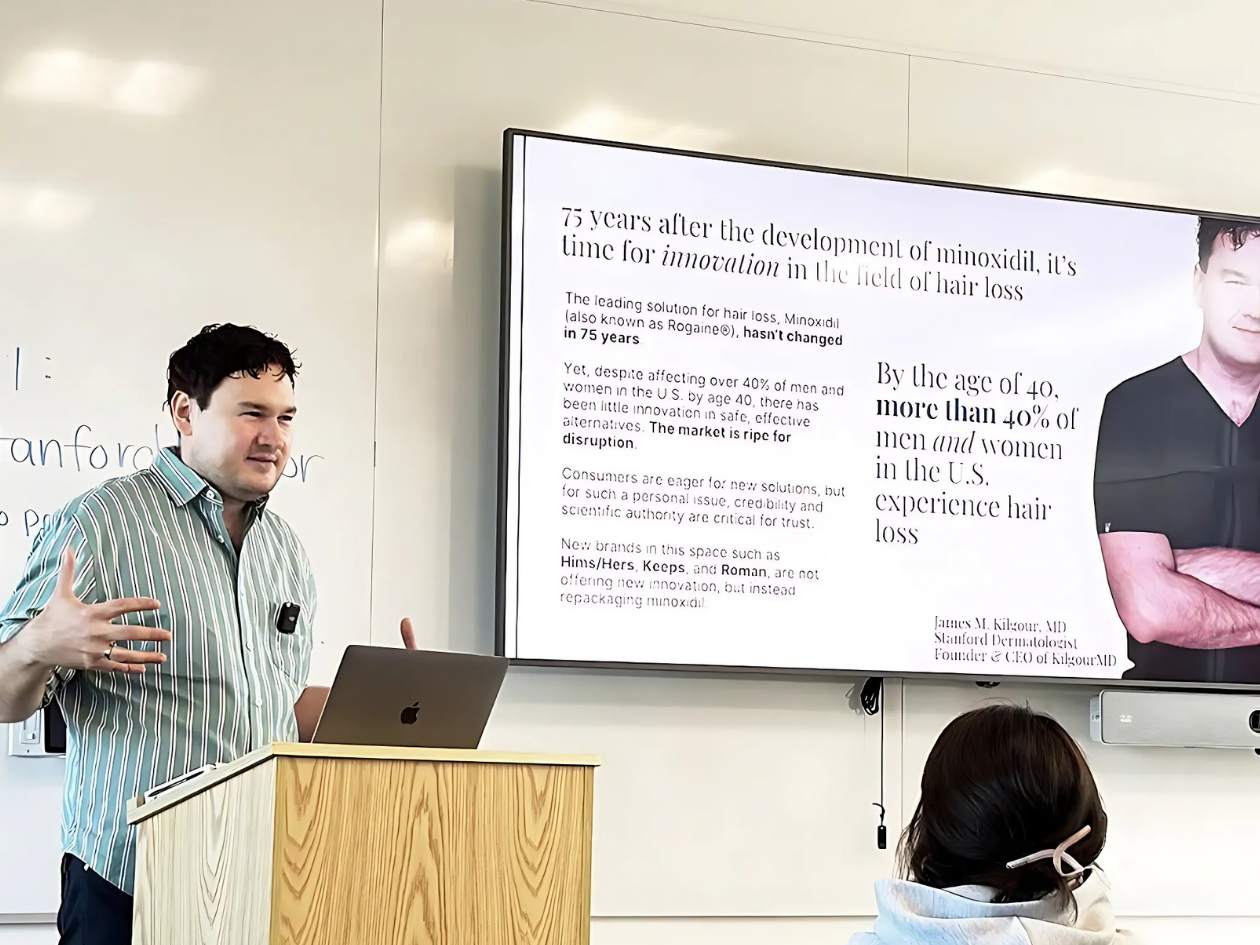
Dr. Kilgour spent 18 months building this protocol after watching the same pattern repeat in his clinic — women in their 40s and 50s coming in with thinning hair, getting prescribed minoxidil, and either not responding or quitting because of the side effects.
The science on scalp aging and follicle anchoring had advanced dramatically in the last decade. Nothing on the market reflected it. So he built something that did.
One serum. Four patented compounds. Matched to the specific biology behind hormonal hair loss. The response rate in his clinical trial came back at 95% in six weeks — the highest published in the category in the last forty years.
That’s why we’re here.