


A Stanford Dermatologist Warns: Your Shampoo Is Triggering the Exact Hair Loss It Claims to Prevent
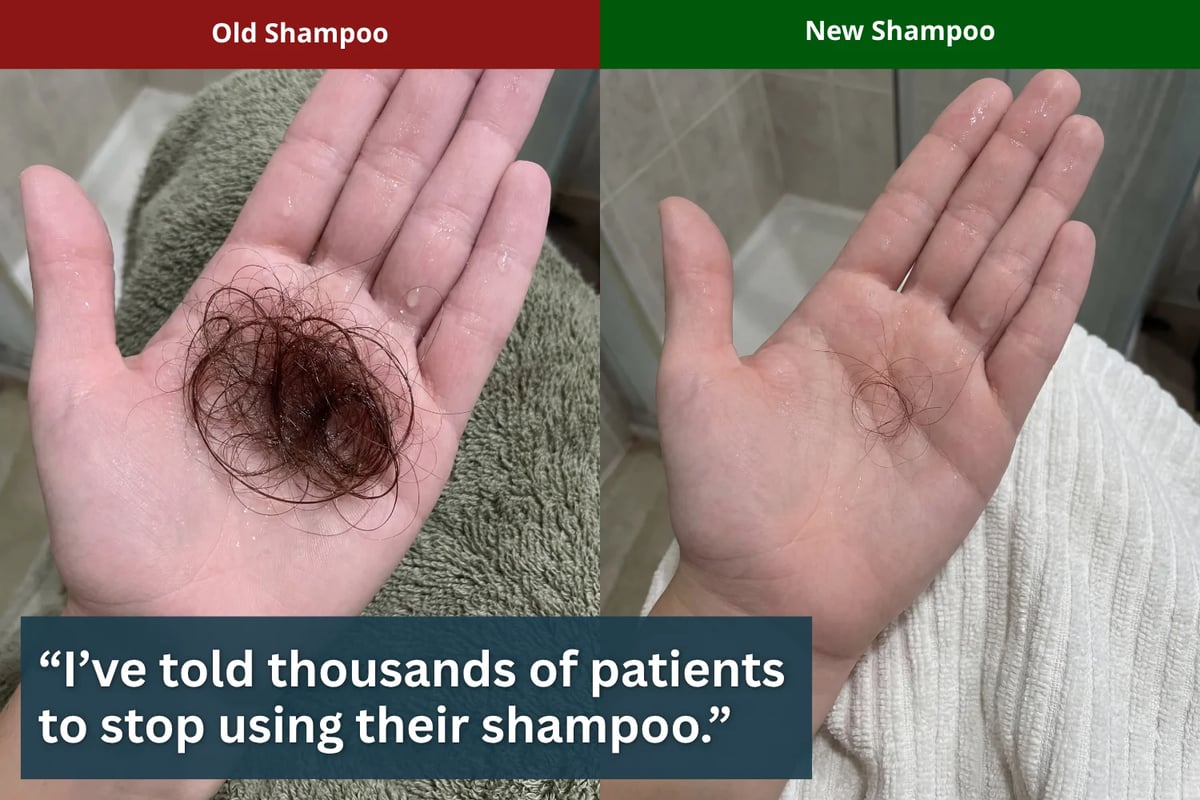
After speaking with thousands of women about thinning hair, one detail keeps coming up.
And I cannot stay quiet about it anymore.
Because these women are blaming themselves for a problem they did not create.
They think they are washing too often.
Scrubbing too hard.
Drying too roughly.
Brushing too soon.
So they become more careful with every wash.
Fingertips instead of nails. Barely any pressure. No rough towel.
Then they hesitate before drying or brushing because every pass feels like another chance to lose more.
But they did not suddenly forget how to care for their hair.
And the products they had trusted for years did not suddenly change.
Something underneath them did.
And while these women were becoming more careful, the same mistake was being repeated every wash day.
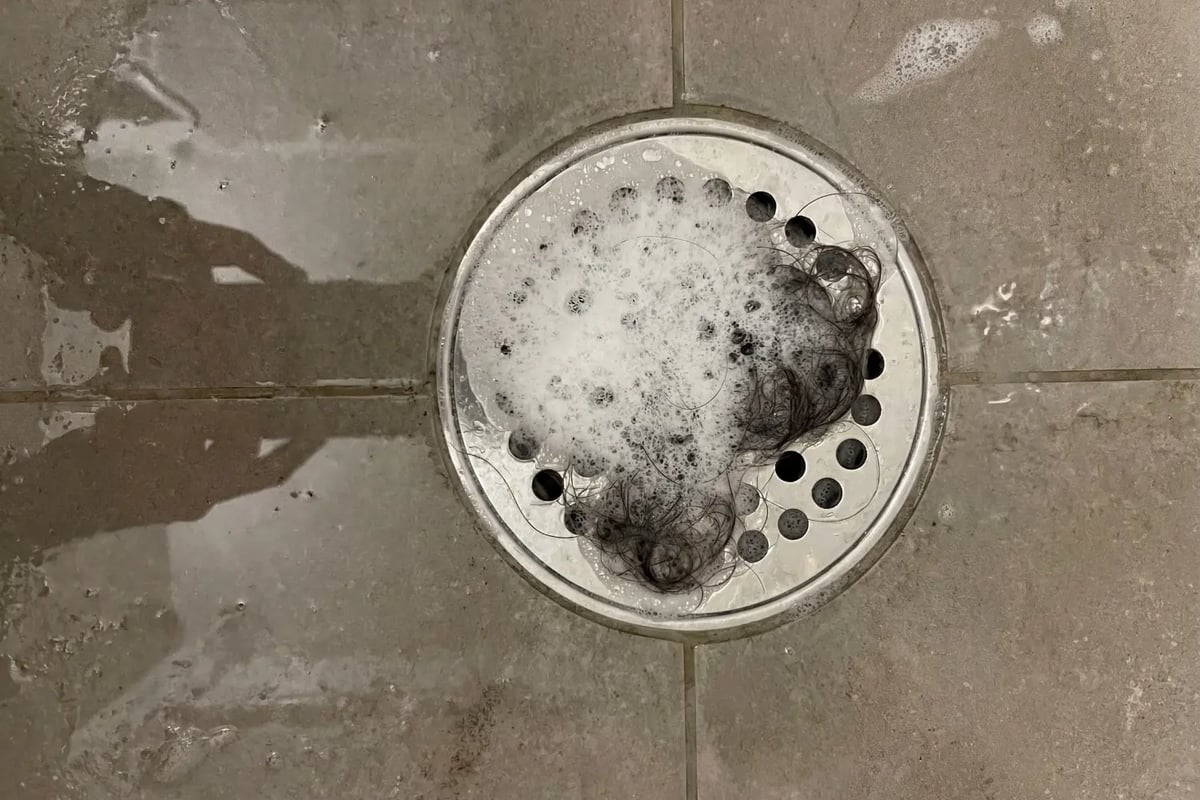
Before they even reach for the towel, they are already counting the hair in their hands and the drain.
Then they find more in the brush and repeat the number they found online:
Fifty to one hundred hairs a day is normal.
But almost every woman gives me the same answer.
On the days they do not wash, the shedding seems manageable. Almost forgettable.
Then wash day comes and several days of hair seem to appear at once.
Different women. Different histories.
But the worst moment kept happening during the same two steps: shampoo and conditioner.
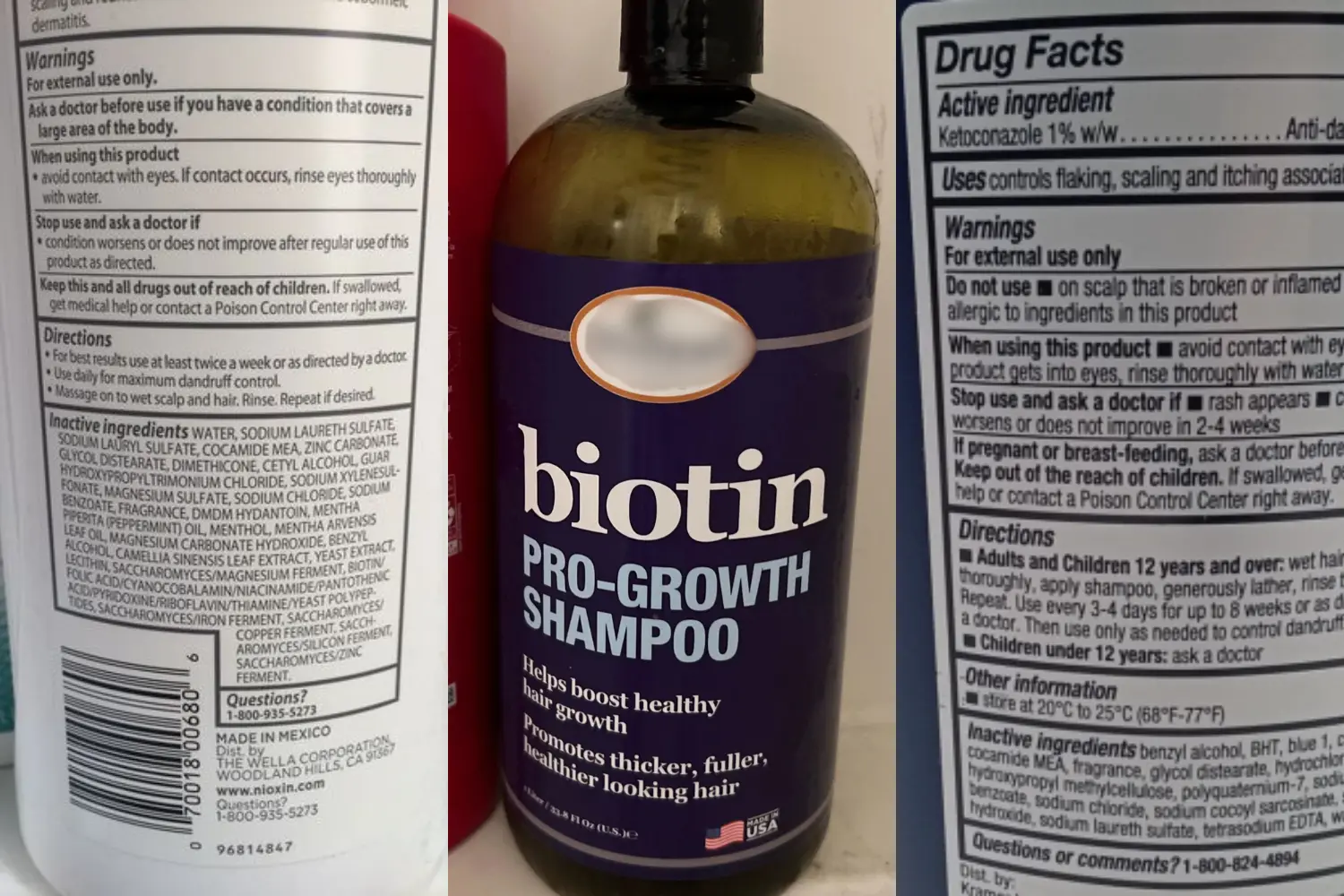
So I started asking women to bring the bottles from their showers into my clinic.
At first, I expected to find one unusually harsh brand or one ingredient causing the problem.
I did not.
I found the same design mistake across drugstore bottles, salon formulas and expensive menopause products.
The strange part was that these products were not failing to do what they promised.
They were doing exactly what they had been designed to do.
That was the problem.
When I rebuilt those two steps around the scalp and hair these women had now, the first changes were hard to miss.
The clump in the drain started getting smaller.
Their brushes were not filling up as quickly.
Their ponytails felt thicker in their hands.
And when they looked in the mirror, they could see less scalp through their part.
They had not added another supplement, serum or complicated treatment.
I had changed what happened during the two steps they were already repeating every wash day.
To understand what I changed, we have to go back to something I found while I was at Stanford in 2022.
Why Minoxidil and Supplements Changed So Little for My Patients
In 2022, while I was at Stanford and working at Golden State Dermatology, I was seeing four to eight women with thinning hair every day.
Their ponytails were shrinking. Their parts were widening. Their hair fell flat, and more of it appeared in the drain and brush.
Most had already tried supplements, minoxidil and scalp serums.
But when I examined them, I found something surprising.
Most of their follicles were still growing hair.
The problem was that their scalps were releasing more of it, while every new strand was growing finer and breaking more easily.
The Journal of Structural Biology calls this the “aged hair program.”
And an analysis of 1,099 menopausal and postmenopausal women found the same pattern: after 40 to 45, individual strands begin losing diameter.
That change is much bigger than it sounds.
The average scalp carries roughly 100,000 hairs.
If each strand becomes 20% to 30% thinner, you can lose the visible equivalent of 20,000 to 30,000 full-sized hairs without those follicles disappearing.
An average transplant moves around 8,000 hairs.
So replacing that lost coverage could take several transplants.
But I hope this is reassuring.
You do not need to spend tens of thousands of dollars replacing follicles that are still producing hair.
You need to help your scalp retain more of that hair, give each strand more visible body and stop the lengths from breaking.
The place I could address all three was not another supplement or year-long regrowth treatment.
It was the routine every patient was already following.
If Your Shampoo Only Cleans, It Misses the Best Window to Reduce Shedding
Once I discovered that these women were still growing hair, I began looking for a way to help their scalps hold onto more of it.
The shower became the obvious place to start.
It is the one moment when the oil and buildup around every root are being cleared away and the entire scalp is exposed.
But most shampoos leave women trapped between two bad choices.
Clean aggressively enough to remove the oil, and sulfates strip the scalp’s protective barrier, worsening the environment around the follicles and leaving finer lengths dry and straw-like.
Switch to something gentler, and it may stop the stripping.
But oil and residue remain around the roots while the locally produced DHT underneath continues acting on the follicles.
One makes the problem worse.
The other does nothing about it.
So I began experimenting with ingredients that could turn an ordinary wash into an opportunity to help retain more hair.
That led me to a patented three-plant complex developed by a laboratory in Berlin called CutiBiome CLR®.
It helps control oil while reducing the activity of 5-alpha reductase, the enzyme the scalp uses to produce DHT locally around the roots.
Then I paired it with resveratrol.
Not because I wanted another fashionable ingredient on the label.
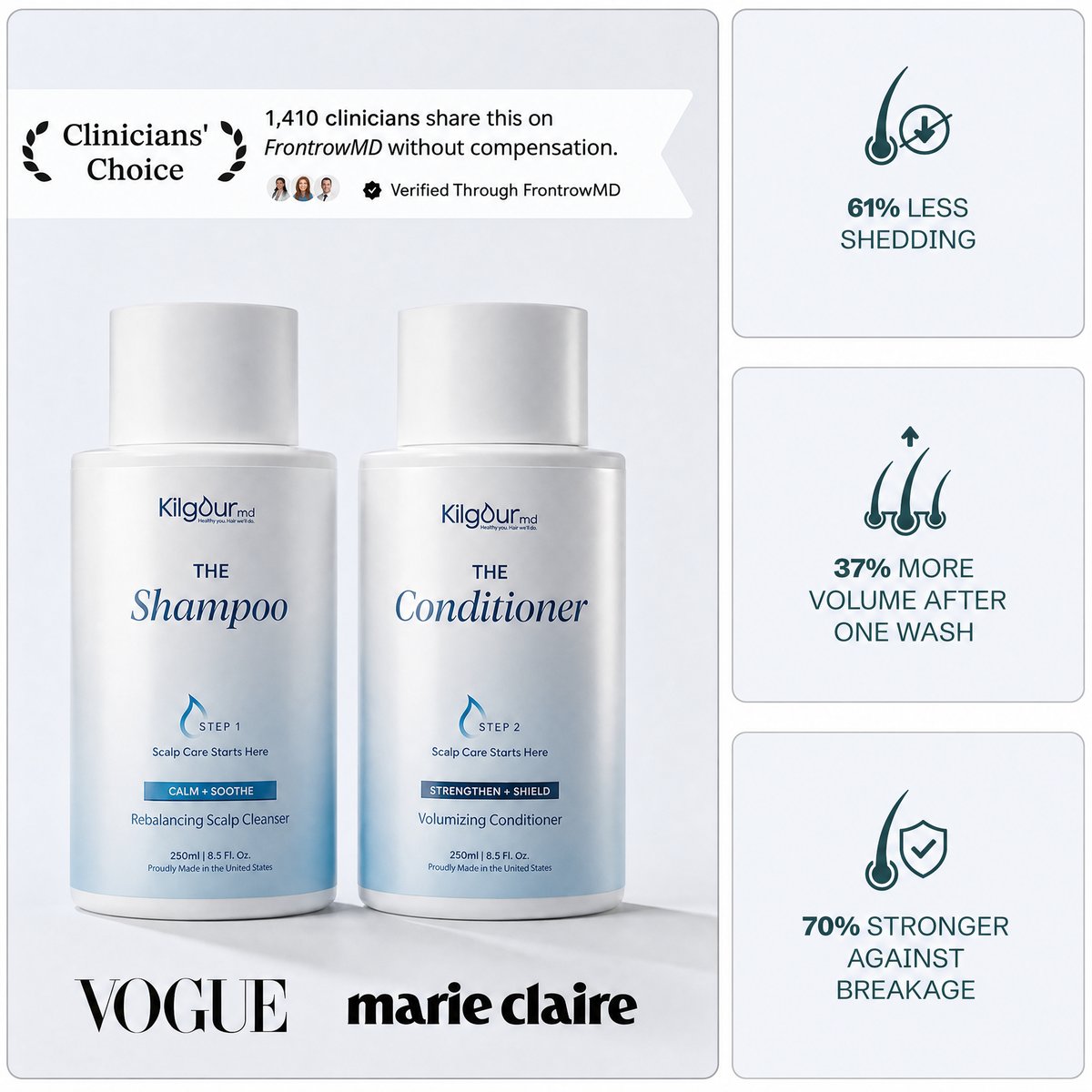
Because this antioxidant was shown to reduce shedding by 61%.
For the first time, shampoo was not simply removing what sat above the scalp.
It was addressing what was loosening the hair underneath it.
 Diane
Diane
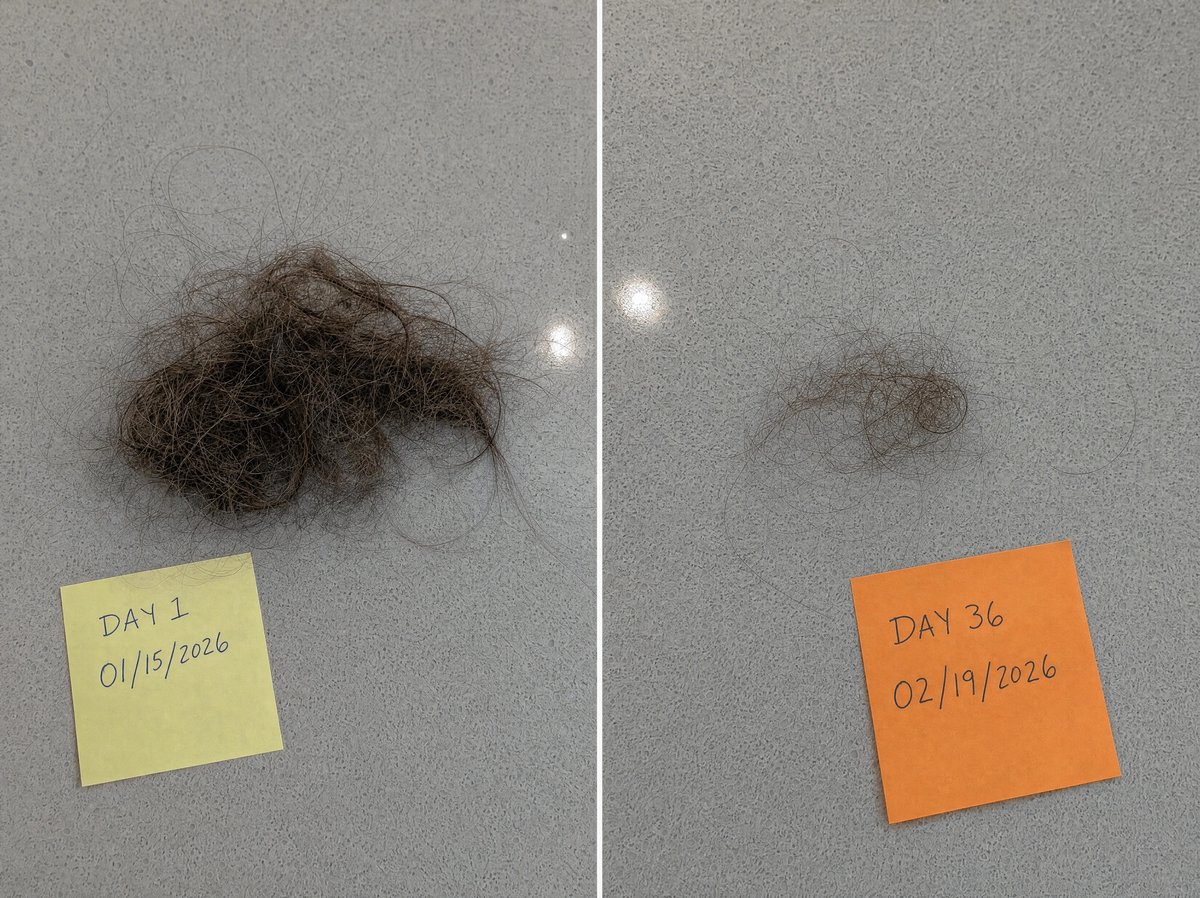
Between these photographs, Diane did not add another supplement, serum or regrowth treatment.
She changed what happened when she washed.
But these ingredients would mean very little if the shampoo continued stripping her scalp and drying out her ends.
So I removed sulfates and replaced them with four plant-based cleansers that clear oil and buildup without taking the scalp’s remaining protection with them.
Her roots could feel properly clean without her finer lengths feeling dry, rough or tangled afterward.
That became the KilgourMD Shampoo.
It still cleans your hair.
Cleaning is simply no longer all it does.
But retaining more hair only solved one part of the problem.
Those finer strands still had to create more coverage.
The Conditioner Making Your Hair Softer Is Stealing Its Fullness
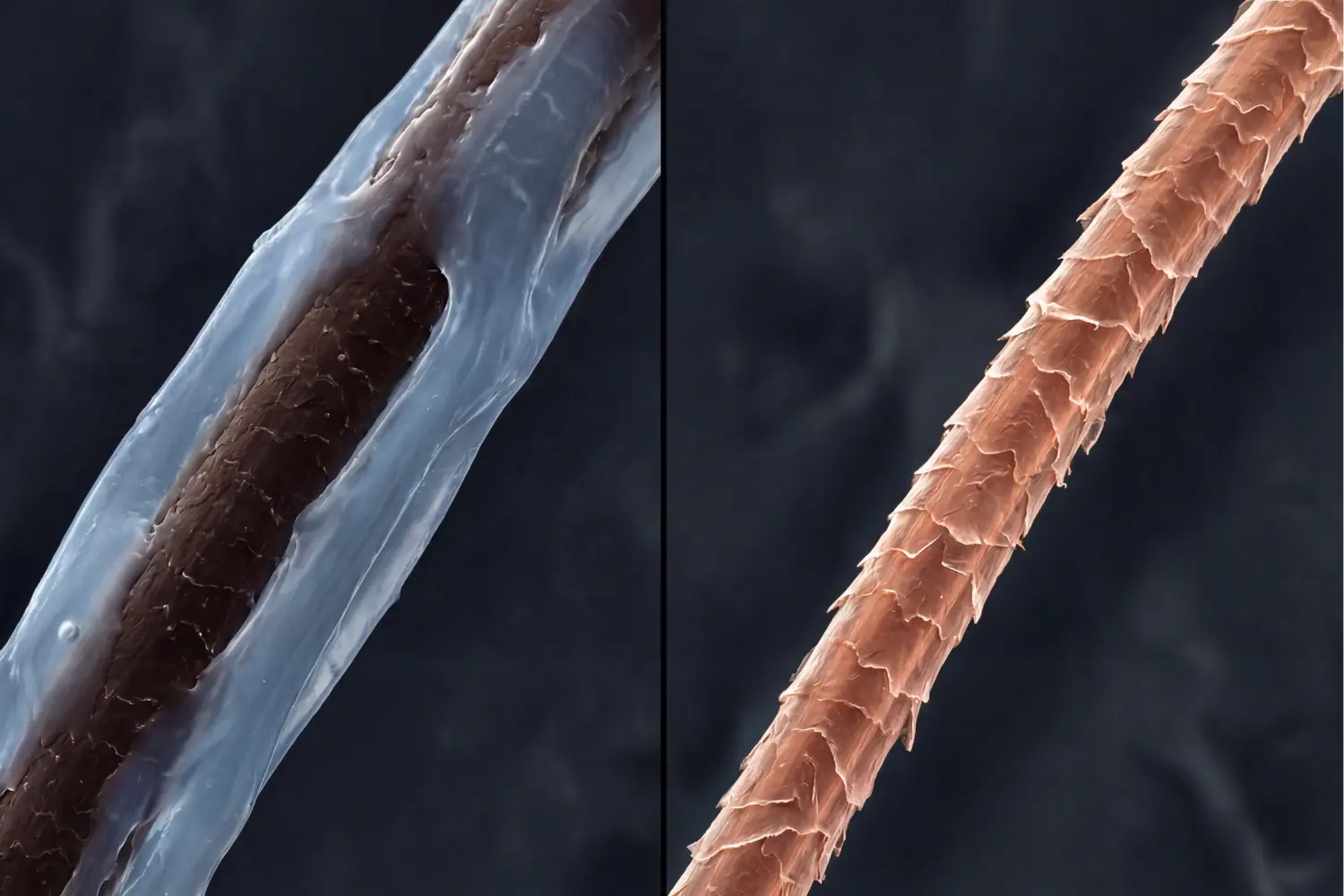
Most conditioners do exactly what they promise.
They make hair feel smoother.
They loosen the knots.
On thicker strands, the conditioning layer provides all of that without sacrificing body.
But the women coming into my clinic had naturally fine hair, or hair that had become finer after 50.
On those smaller strands, the same conditioning layer became weight.
That is why their hair looked smooth and full immediately after the blow-dry, then fell flat, separated at the roots and exposed more scalp by lunch.
It was not a bad conditioner.
It was designed for hair with more diameter than theirs had now.
So I stopped looking for another way to coat the outside.
I started looking for ingredients that made each strand more substantial from within.
That led me to KeraShaft V®.
Its tiny protein peptides pass inside each strand and reinforce its internal structure.
In testing, it gave fine hair up to 37% more visible volume after one wash.
That means more coverage from the hair already on your head, without waiting for thousands of new follicles to grow.
But making the strand fuller was only the first step.
My patients still needed it to feel soft without falling flat again.
So I added ResistHyal®.
Its hyaluronic acid travels 5.9 times deeper inside the hair than conventional hyaluronic acid.
It carries moisture into the strand instead of leaving another heavy layer around it.
The hair stays soft and hydrated without the roots collapsing under the weight.
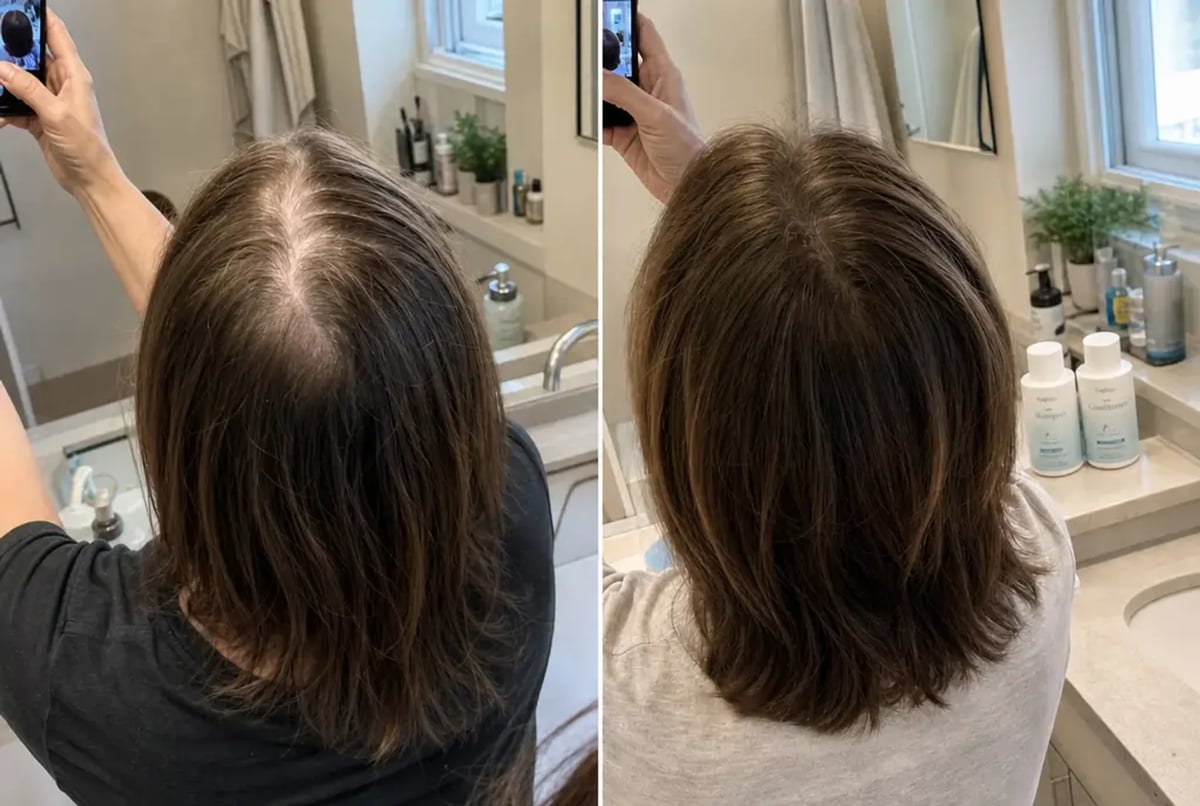 Jennifer, 59
Jennifer did not grow an entirely new head of hair between these photographs.
The hair she already had began creating more coverage and staying lifted for longer.
But fuller, hydrated hair still had to survive the brush.
So I added Silkgel Neo®.
Unlike conventional hydrolyzed silk, which is broken into fragments, Silkgel Neo® is a full-length vegan silk grown through fermentation.
It forms a breathable second skin around thinning hair without the weight of silicone.
In testing, it made thinning strands up to 70% stronger against breakage.
So fewer pieces snap off, and more length and body survive in the ponytail.
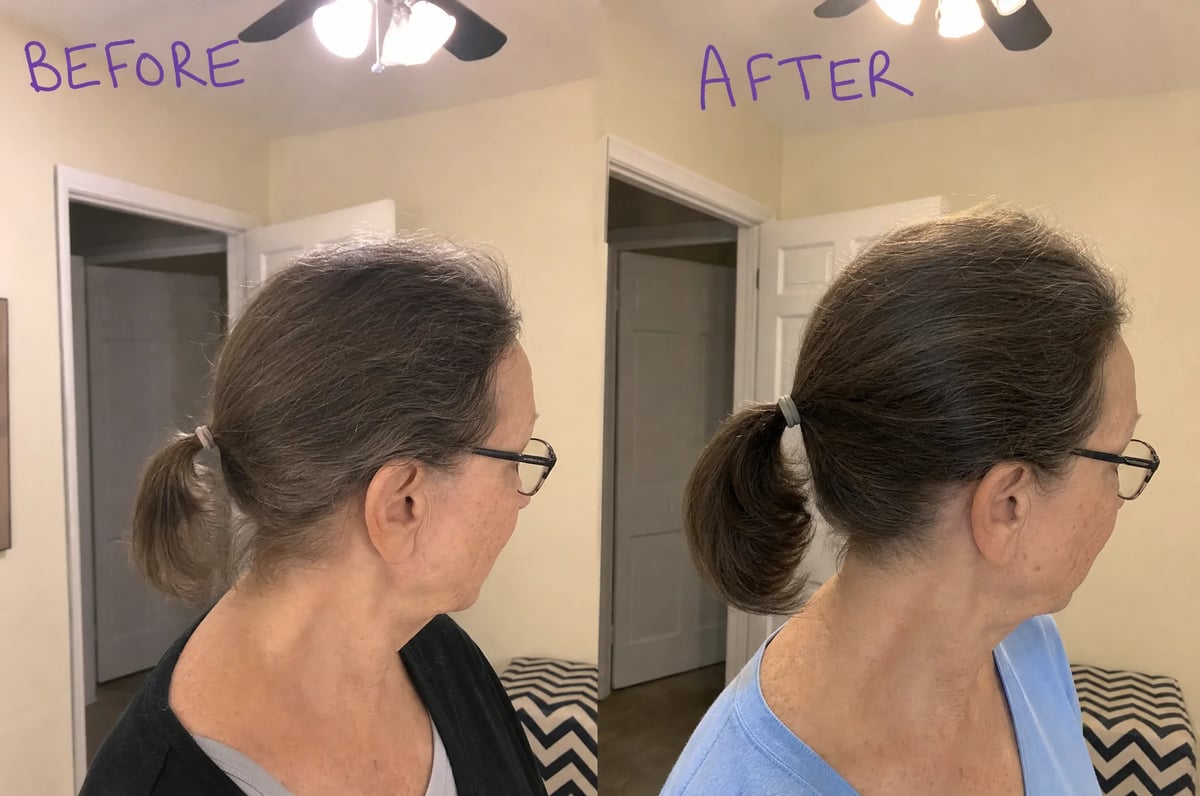 Mary, 64
Every strand that stays intact preserves more length and body in the ponytail.
Together, those three ingredients became the KilgourMD Conditioner.
One photograph shows more coverage at the scalp.
The other shows more body surviving through the lengths.
The Shampoo keeps more full-length hairs on your head.
The Conditioner makes every one of them contribute more.
The First Changes Do Not Require a Single New Hair to Grow
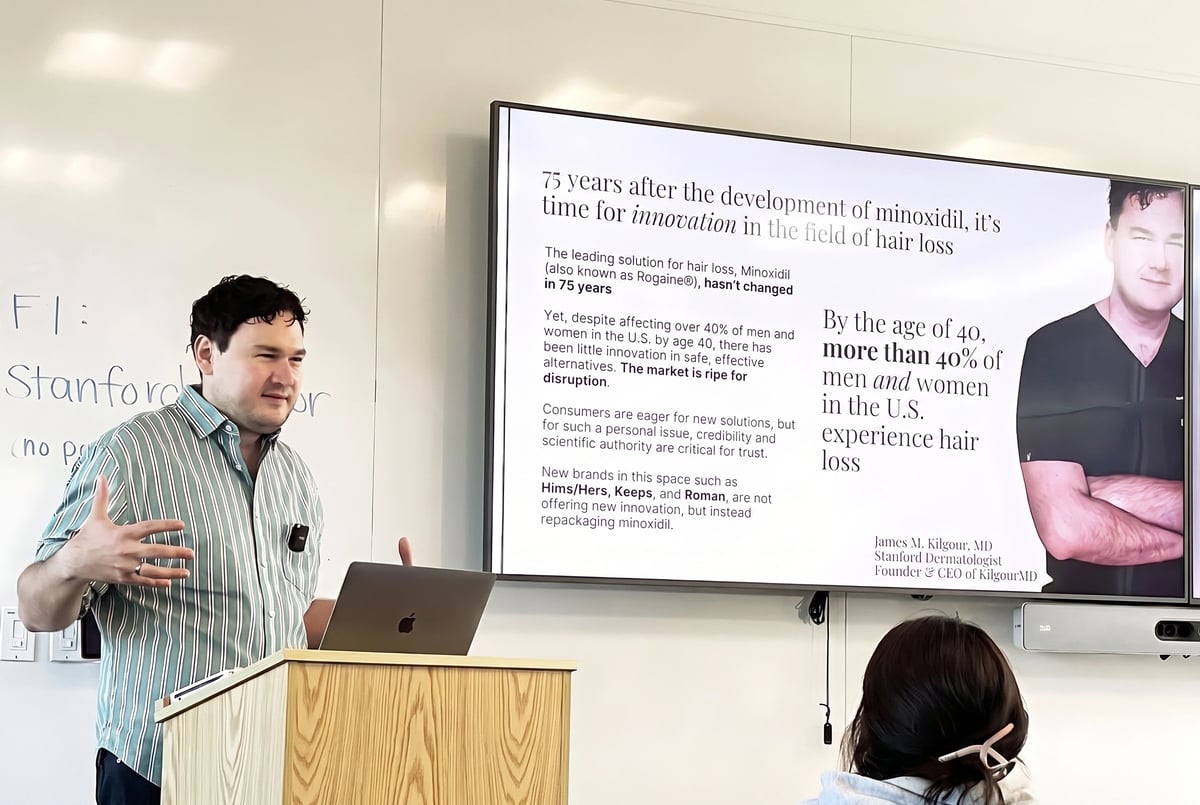
This is what made the results so different from the regrowth treatments my patients had already tried.
They did not have to wait for a follicle to produce a new hair and grow it long enough to cover the scalp.
The first changes happened to the hair they already had.
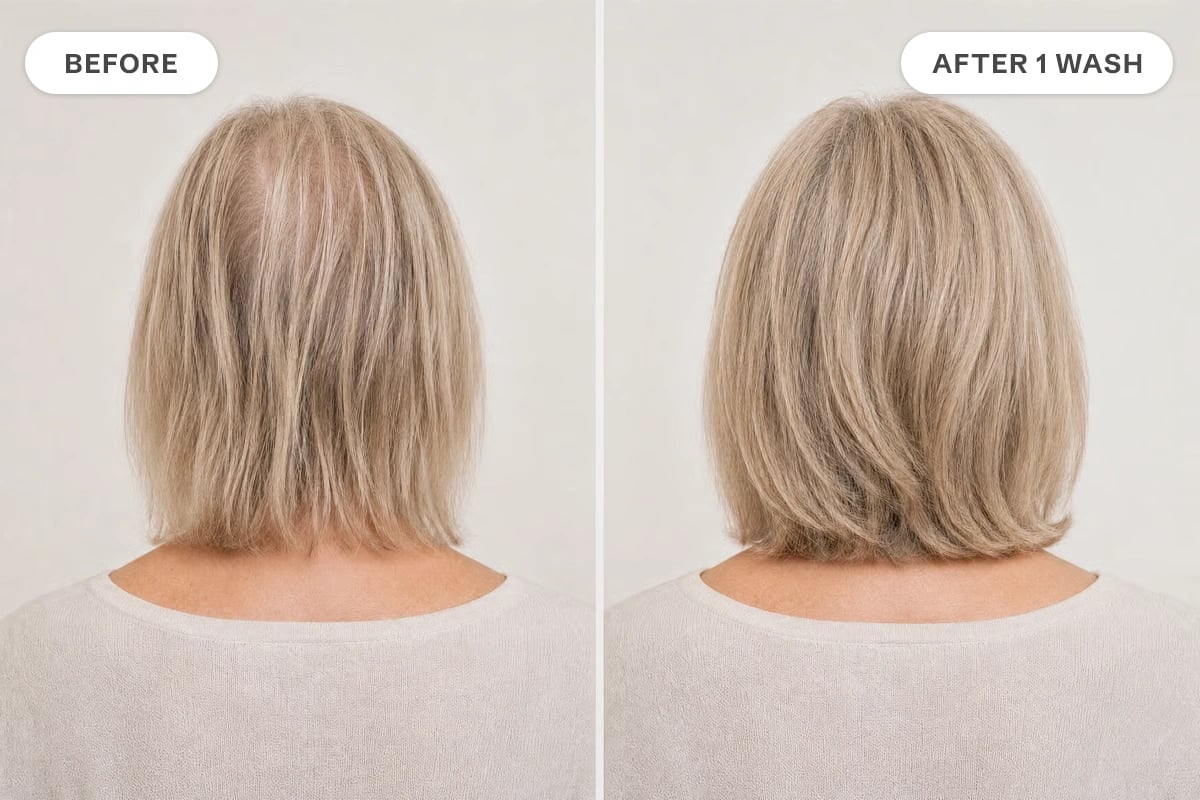
Fine hair gains up to 37% more visible volume. The roots look more lifted. The part looks better covered. And the hair feels soft without collapsing beneath a heavy conditioning layer. This is not new growth. It is more coverage from the hair already on your head.
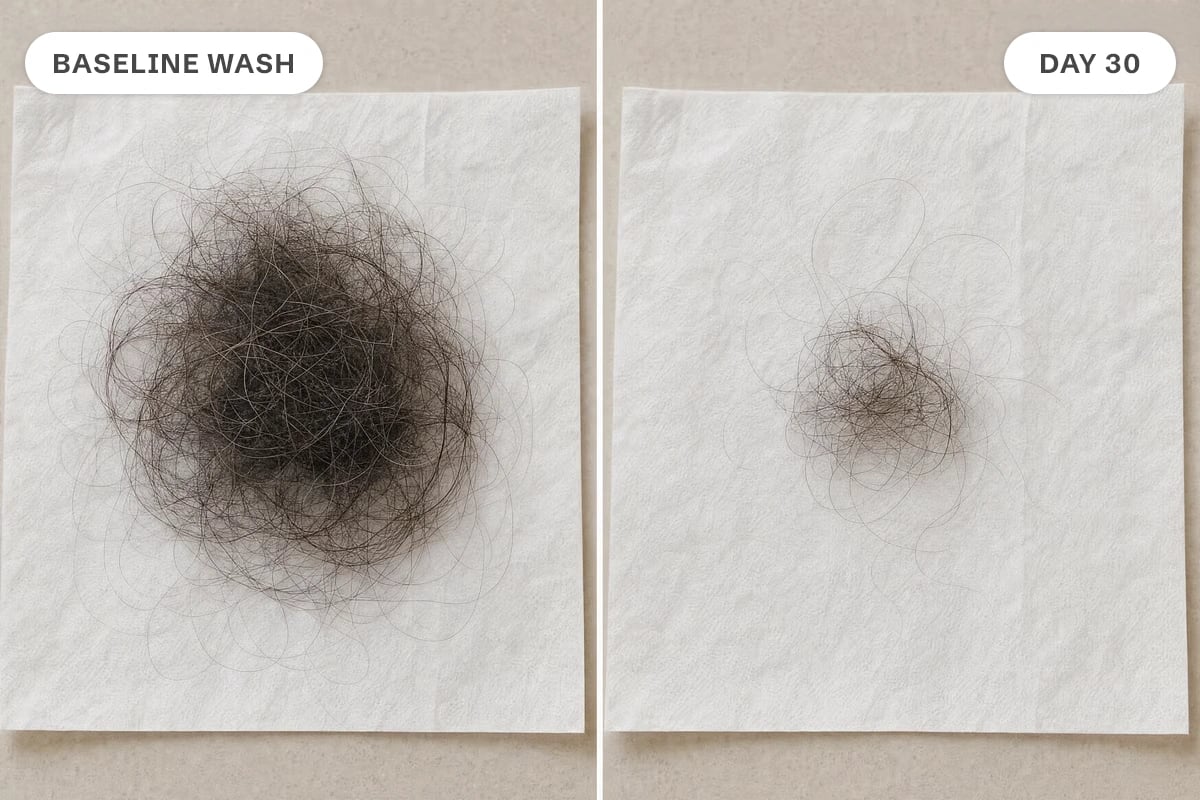
The next change begins appearing where the fear started. Less full-length hair in your hands. A smaller clump in the drain. Less left behind in the brush. Every wash clears away oil and buildup without stripping the scalp or drying out the finer lengths.
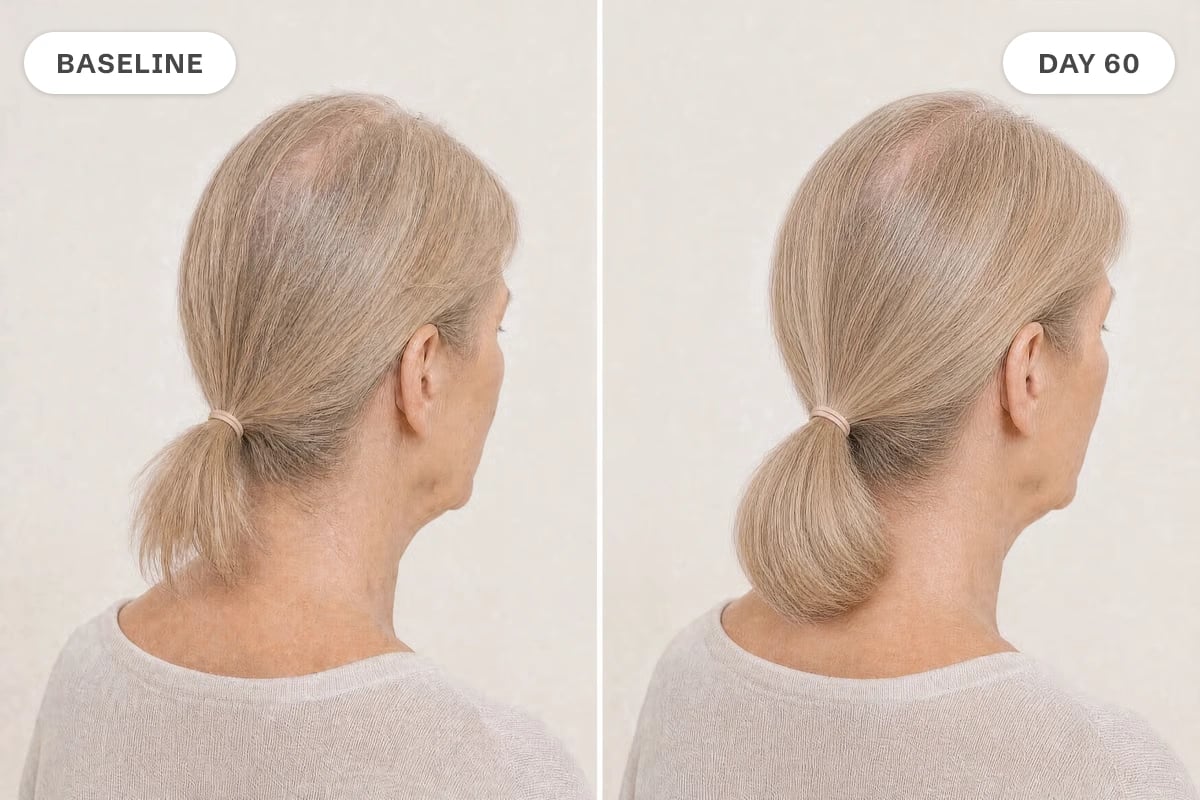
With less breakage through the lengths, fewer short pieces disappear. More body remains in the ponytail. And the hair does not separate as quickly and expose the scalp underneath. At the same time, the system continues supporting the environment around the follicles producing your future hair.
The order matters.
The mirror changes first.
The drain changes next.
The ponytail changes over time.
You do not have to wait for an entirely new head of hair before seeing the first difference.
More Than 1,000 U.S. Physicians Now Recommend the Same Two-Step System
Doctors are trained to be skeptical of hair products.
I know because I am one.
A shampoo and conditioner do not earn physician recommendations because a dermatologist’s name appears on the bottles.
The mechanism has to make sense.
The ingredients need evidence behind them.
And patients need to see a difference outside a controlled study.
The ingredients inside this system are supported by more than 20 clinical studies.
But the proof did not remain in research papers or inside my clinic.
Women began returning to their doctors with less hair collecting in the drain, more coverage through their parts and ponytails that felt more substantial in their hands.
The doctors wanted to know what had changed.
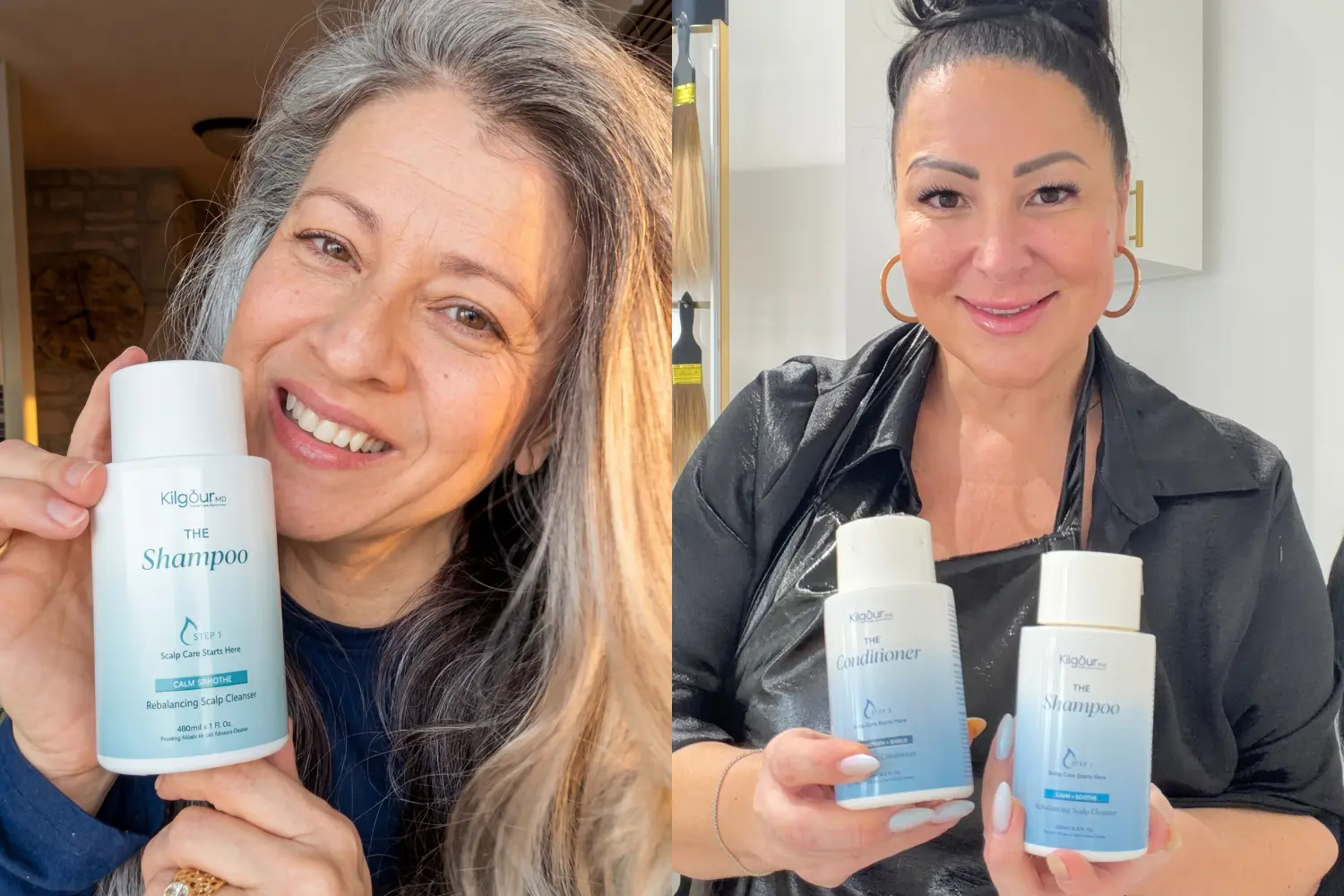
Today, more than 1,000 physicians recommend KilgourMD through FrontrowMD to women experiencing the same pattern.

“Many women are still growing hair. The problem is that more of it releases, each strand grows finer and more length breaks away. KilgourMD addresses all three during the wash instead of only asking women to grow more.”

“Rich conditioners make fine menopausal hair feel soft, then flatten it under the weight. KilgourMD reinforces and hydrates each strand from within, so women get softness without sacrificing visible fullness.”

“Supplements cannot change what happens when shampoo strips the scalp or conditioner weighs down the hair. KilgourMD improves the two steps women are already repeating every wash day.”
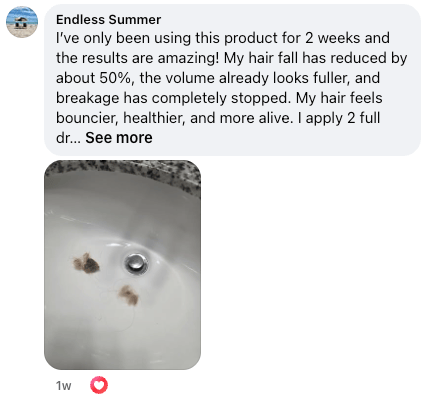
See what women are saying on Facebook
We can explain the science behind the system.
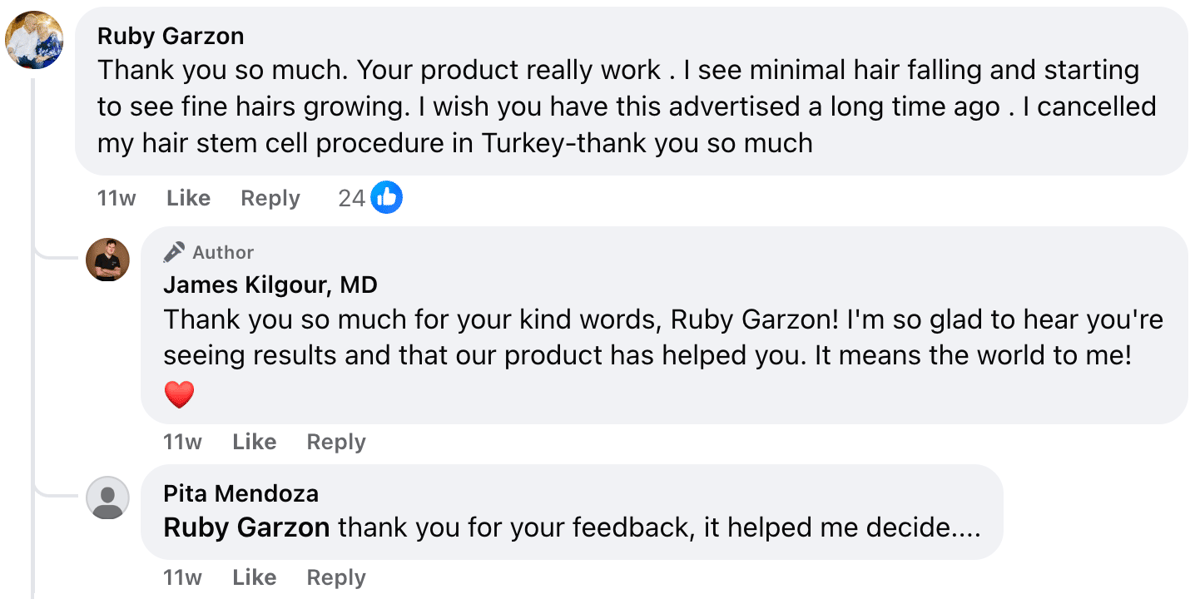
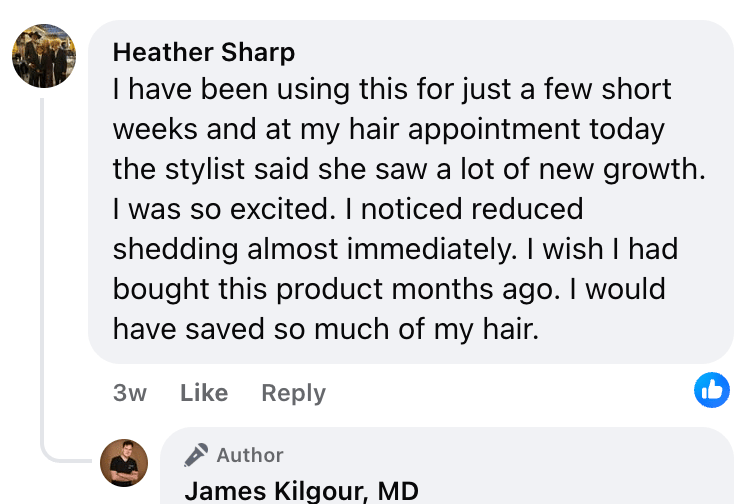
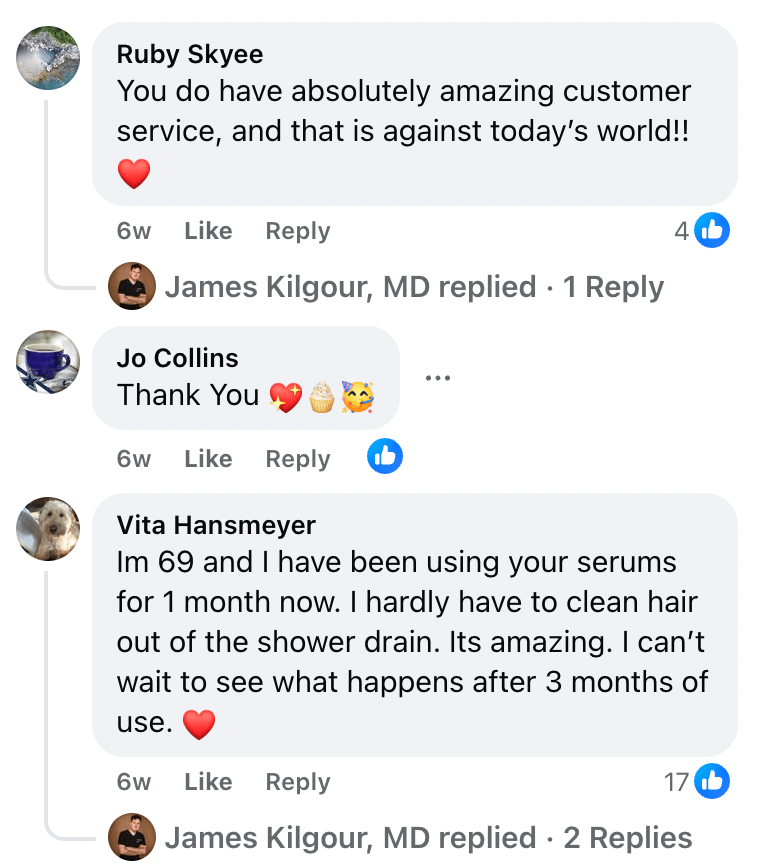
But these women describe the experience better than we ever could.
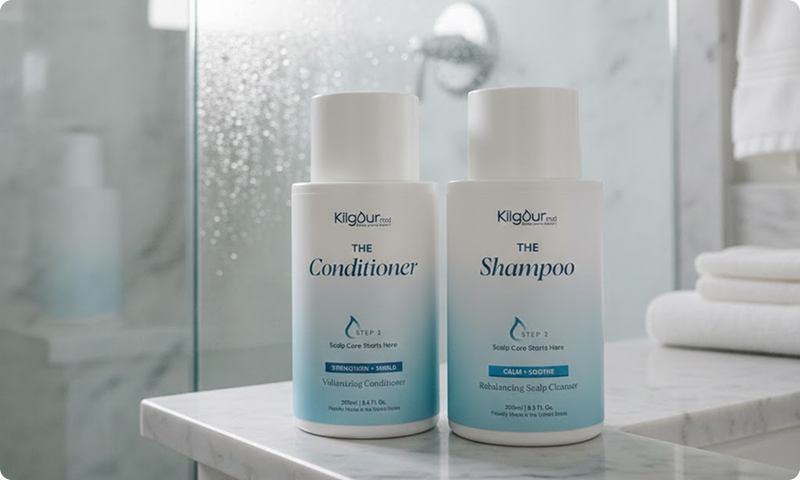
Clears oil and buildup without stripping the scalp or drying out your ends.
It supports the environment around your roots and helps reduce the full-length hairs left behind after washing.
Gives finer strands more visible body, carries moisture inside without flattening them and protects the lengths against breakage.
Shampoo. Rinse. Condition. Rinse.
Wash on your normal schedule. No extra shower steps. No complicated routine to remember.
Same shower. Same schedule. Same two steps.
Just two bottles designed for the scalp and hair you have now.