

A Stanford Dermatologist Warns: Your Shampoo Is Triggering The Exact Hair Loss It Claims To Prevent
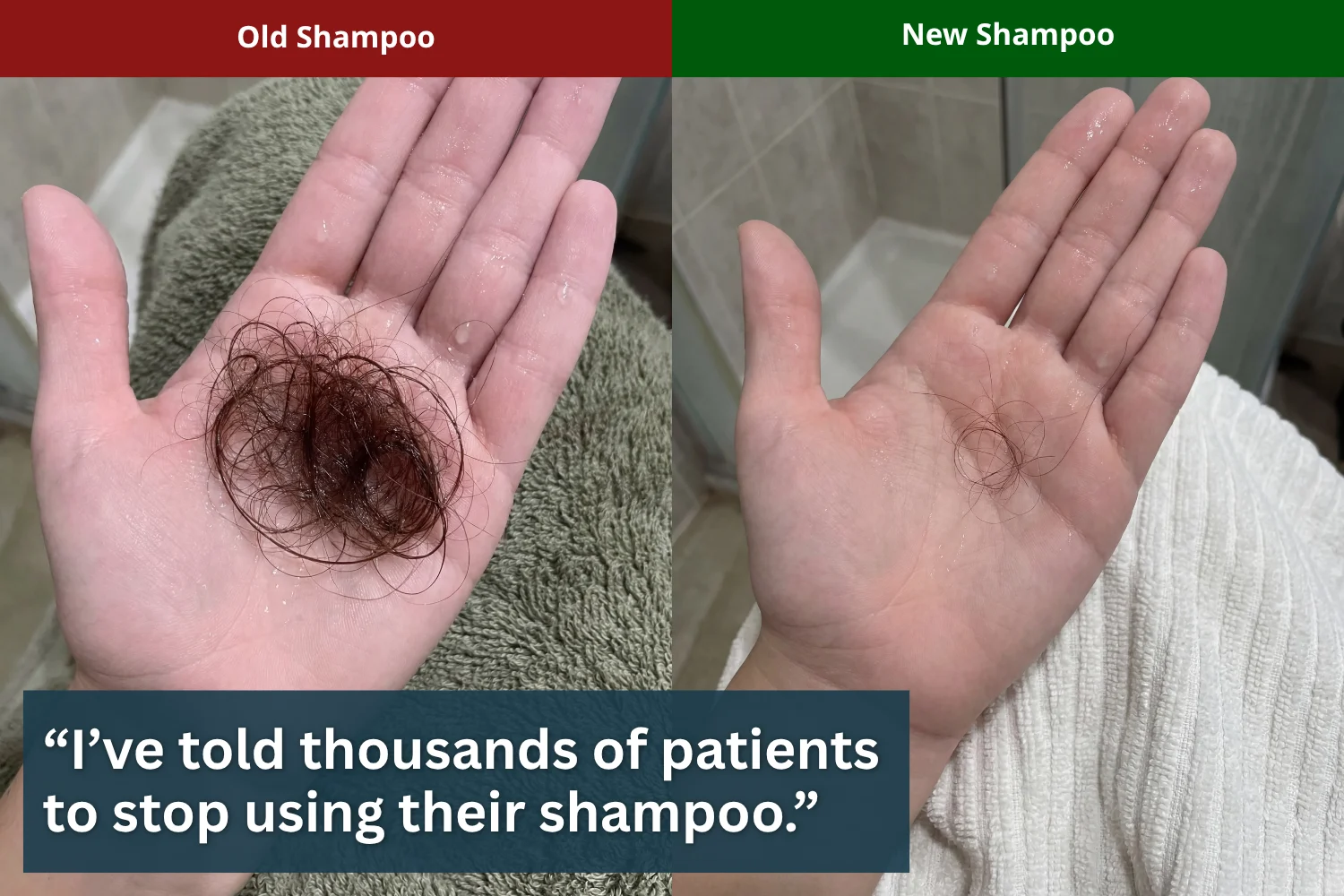

There’s a thirty-second window in your shower — between the moment the shampoo first hits your scalp and the moment you rinse — where something specific happens that determines whether the strand stays on your head or ends up in your drain.
I’ll show you exactly what happens in that window in a minute.
But first — go pick a strand out of your shower drain. Or pull one off your brush. Or look at the ones that ended up on your pillow last night.
Hold one up to the light.
What you’re looking at — almost every time — is a healthy strand with four more years of life left in it.
Four more years of holding your ponytail thick in your hand. Four more years of covering the spot at your temples you’ve started checking in the mirror. Four more years of fullness along your part. Four more years of soft, shiny hair that didn’t fall out by the handful.
Forced out early.
I’m a board-certified dermatologist trained at Stanford. I’ve now looked at hair like this under my trichoscope from over two thousand women in their late 40s and 50s. These aren’t strands at the end of their life. They’re not thin. They’re not tapered. The cortex is intact. The anchor bulb is still attached.
The strand I had under my microscope this morning came out of my patient’s head the night before. Same as the one on your brush this morning. Same as the ones on your pillow.
It didn’t fall out because the follicle failed, or because she’s getting older, or any of the other explanations she’s been given for the last decade.
It came out because of what she did in the shower the night before. The same thing she’s done two to four times a week for years.
The same thing you did this week.
To understand why — and to understand what you can do about it tonight — you have to understand something nothing you’ve read about perimenopause or menopause has actually told you.
Three jobs estrogen was quietly doing for your scalp. Three jobs that all stopped on the same day.
The third one is why your hair is in your hands during the rinse.
The Three Jobs Estrogen Was Doing For Your Scalp
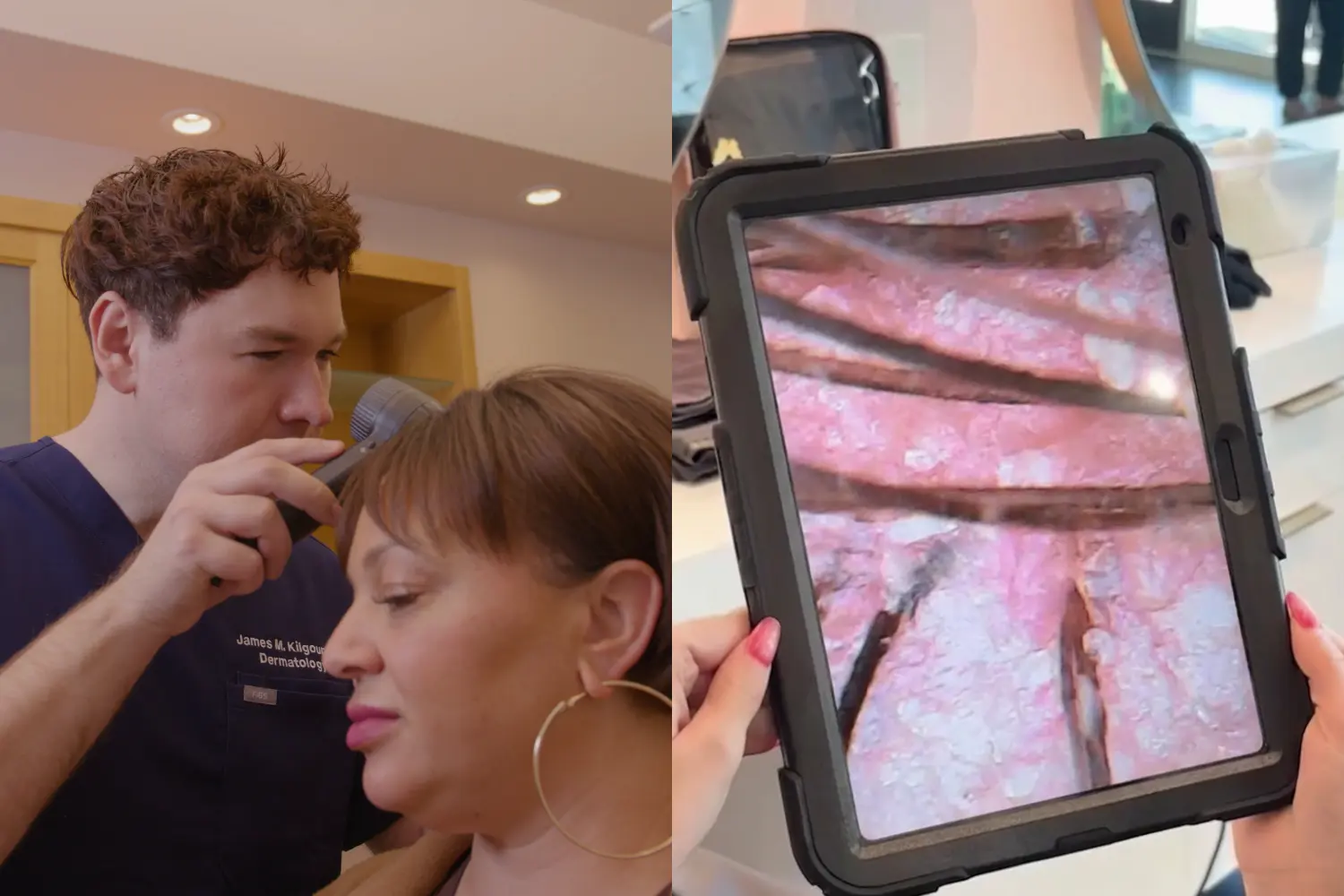
Estrogen wasn’t doing one job for your hair. It was doing three. And when it left, all three stopped on the same day.
Same head at 35. Same head now. Completely different organ.
Job one: it kept your scalp’s protective seal intact. When that seal dissolved, your scalp became permeable to everything you wash with.
Job two: it kept inflammation off. Without estrogen, inflammation on your scalp climbs to roughly six times what it was at 35. You can’t feel it. But it’s there, switching on the enzyme that forces your follicles to release strands years before they should.
Job three is the one nobody talks about. And it’s the reason your hair is falling out in the shower right now.
It kept the growth window open. At 35, each strand had four to six years to mature. At 50, on a scalp without estrogen, that window collapses to two to three.
Your follicles are still producing hair. They’re just producing hair that doesn’t have time to finish.
That’s why the strands coming out look healthy. They are healthy. They just got pushed out years before they should have.
This is also why the women whose hair has always been on the finer side feel it the hardest. There’s less margin to hide behind once the follicle starts releasing strands early.
Now look at what you’re pouring on that scalp two to four times a week.
Every Bottle In Your Shower Was Built For The Hair You Had At 30
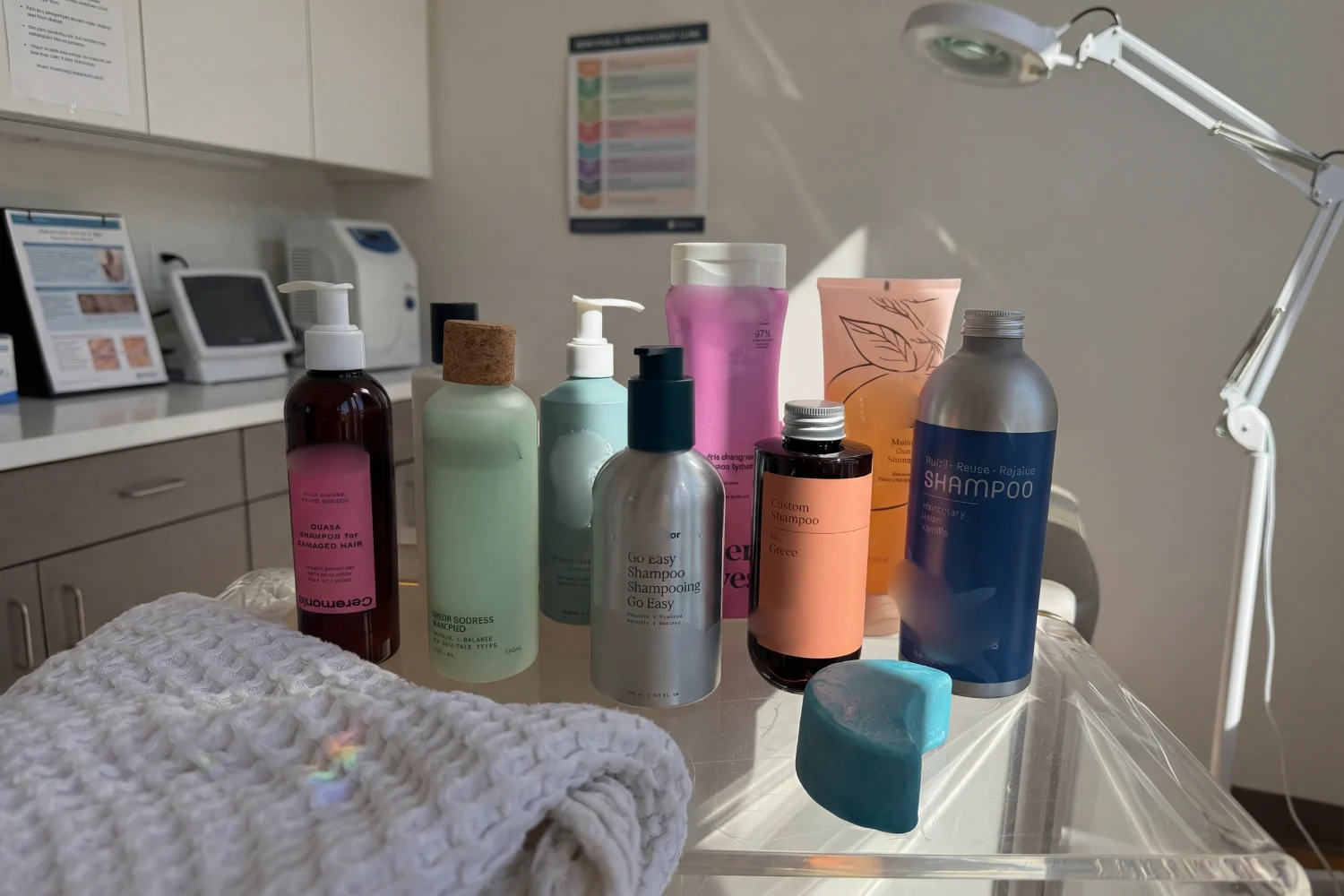
Most of my patients have been through the whole arc — drugstore, salon, the bond-repair sets, the $80 luxury bottles their colorist swore by.
Every one of those was built for the hair you had at 30. Not the hair you have now.
And the conditioner is where the high-end brands quietly do the most damage — I’ll show you the exact reason your roots have been getting flatter the more you spend, in a moment. But first, the shampoo.
Picture a moment in your shower. You rinse the shampoo, look down, and there’s hair in your hands. Not a few strands. A visible amount. Every woman who’s been losing hair for more than a year knows this moment.
Remember the thirty-second window I told you about at the start?
This is it.
Right now. Two to four nights a week. Thirty to forty seconds after the shampoo hits your scalp — here’s what’s actually happening to the strand that ends up in your hands during the rinse.
The cleansers in your shampoo strip oil. On a 30-year-old scalp that’s fine — the protective seal reforms. On a post-estrogen scalp the seal is already gone. So the cleansers strip the next layer down. Inflammation, already six times higher than it was, floods in. The enzyme switches on. The follicle, sitting in a hostile environment, releases the strand it was producing.
That strand had four years left. Four years of holding your ponytail thick. Four years of covering your temples. Four years of body and softness and shine.
That’s the hair in your hands during the rinse. That’s the strand on your brush. That’s what’s on your pillow.
Now the conditioner.
Luxury conditioners feel slippy and smooth and soft in the shower. That feel is silicone — a waxy film coating every strand. Heavier the conditioner, more silicone in it.
That’s why your hair feels softer right after you blow it out.
And it’s why your hair is dead by morning.
The silicone wore off in the night. The hollow strand it was coating is what you’re working with — the silicone gave you one evening of soft and one morning of nothing. The roots flatten. Your hair feels stuck to your skull. The ponytail that took two wraps now takes four, and half the volume’s gone before you’re out the door.
That’s what’s been happening with the most expensive bottle in your shower. Two to four nights a week. For years.
What I Found That Forty Years Of Hair Care Missed
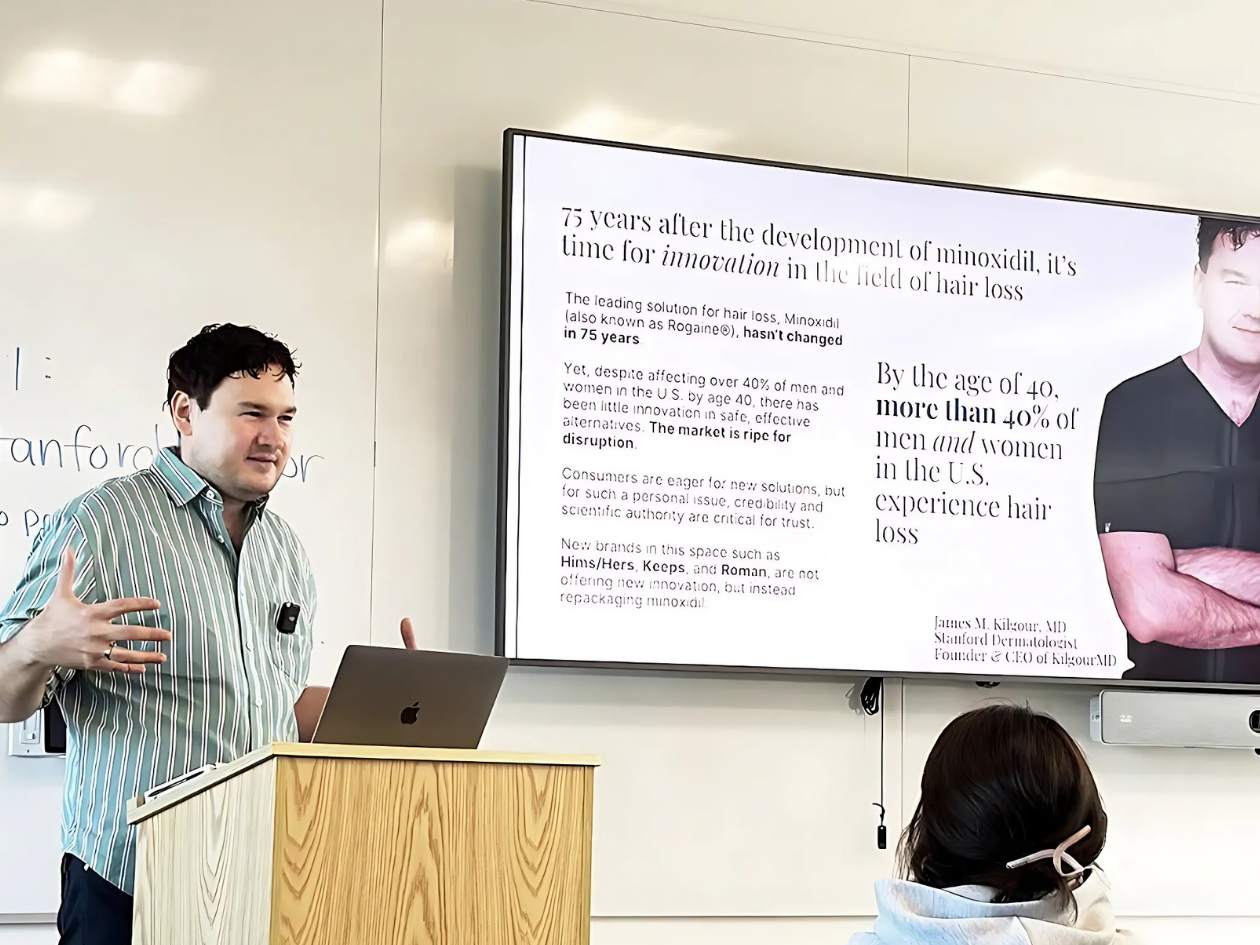
I got tired of telling women to “try a gentler shampoo” knowing it wouldn’t work.
So I spent a year going through forty years of cosmetic chemistry research. Every patent. Every clinical trial. Every compound that had ever been tested on a post-estrogen scalp.
What I found was nine patented compounds nobody had ever combined into a single hair care protocol before.
One of them stops the shedding by calming the inflammation that’s pushing your follicles to quit early — and blocking the enzyme that forced them to release the strand in the first place.
One of them is the hail mary for a scalp that’s lost estrogen. The first ingredient that does what estrogen used to — restart the protective seal, restart the moisture barrier, close the door inflammation has been walking through every wash.
One of them is a hyaluronic acid that, instead of coating the strand, actually penetrates it — locking 189 times more moisture inside the strand than silicone delivers on the surface.
I’ll name all nine in a minute. But first you need to understand why no other brand has ever combined them.
These compounds are unbelievably expensive. They don’t foam. And they require a formulation process most contract manufacturers won’t touch unless you pay 8 to 10x the standard rate.
Foam is cheaper. Margin is bigger. Not a single shampoo or conditioner on any shelf in America uses any of them.
I picked the compounds anyway.
Combined for the first time. Into a two-step protocol that replaces the two bottles already in your shower, in the time you already spend.
I call it KilgourMD.
What’s In The First Bottle
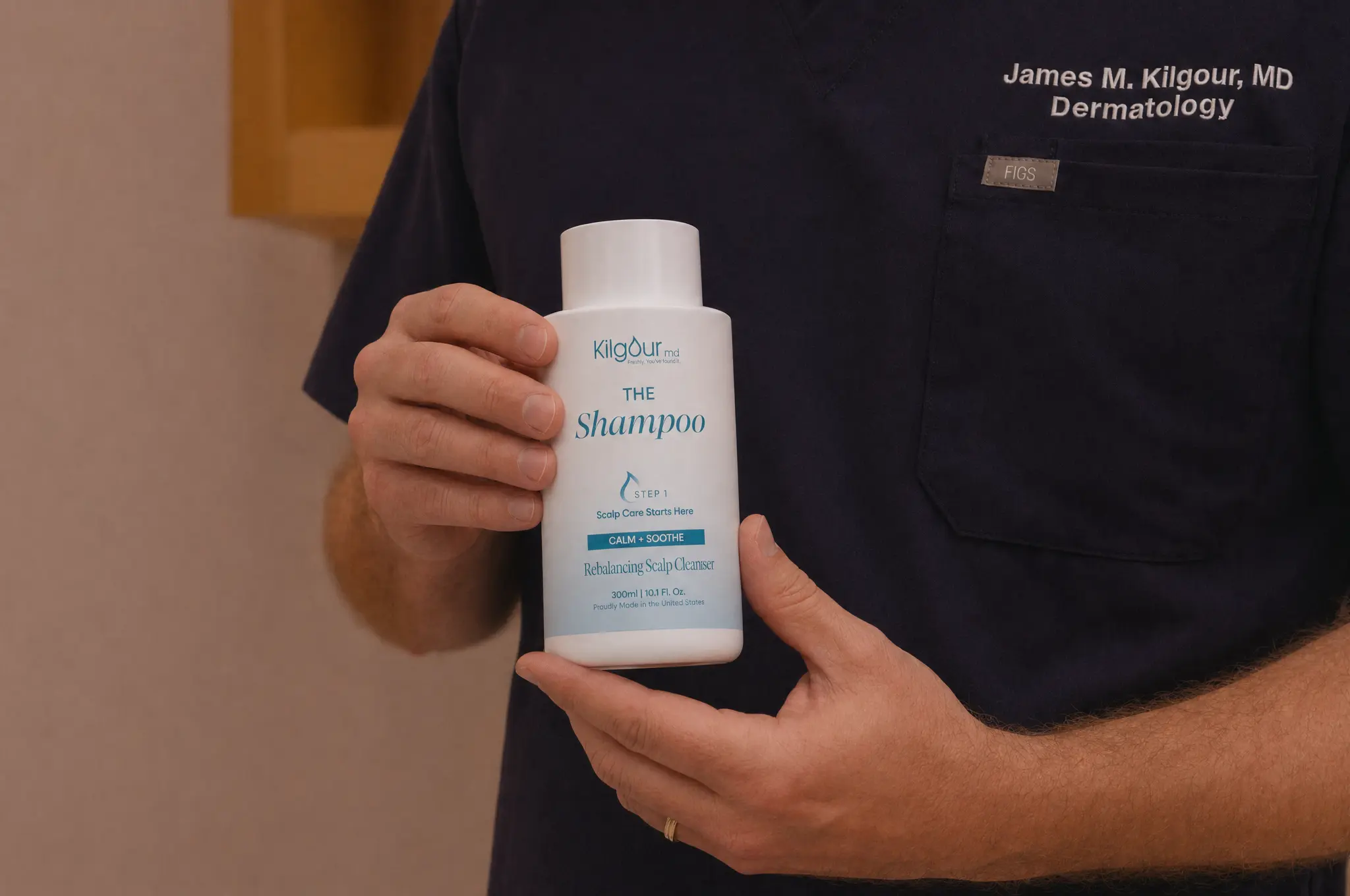
Picture your hair at 35. That hair didn’t disappear. The follicles producing it didn’t die. The environment around them changed.
The first bottle is engineered to bring that environment back.


 Panthenol penetrates the strand from root to tip. Strand goes into wash thinner than it should be, comes out reinforced.
That’s bottle one.
Then The Conditioner Does What No Other Conditioner On The Market Does
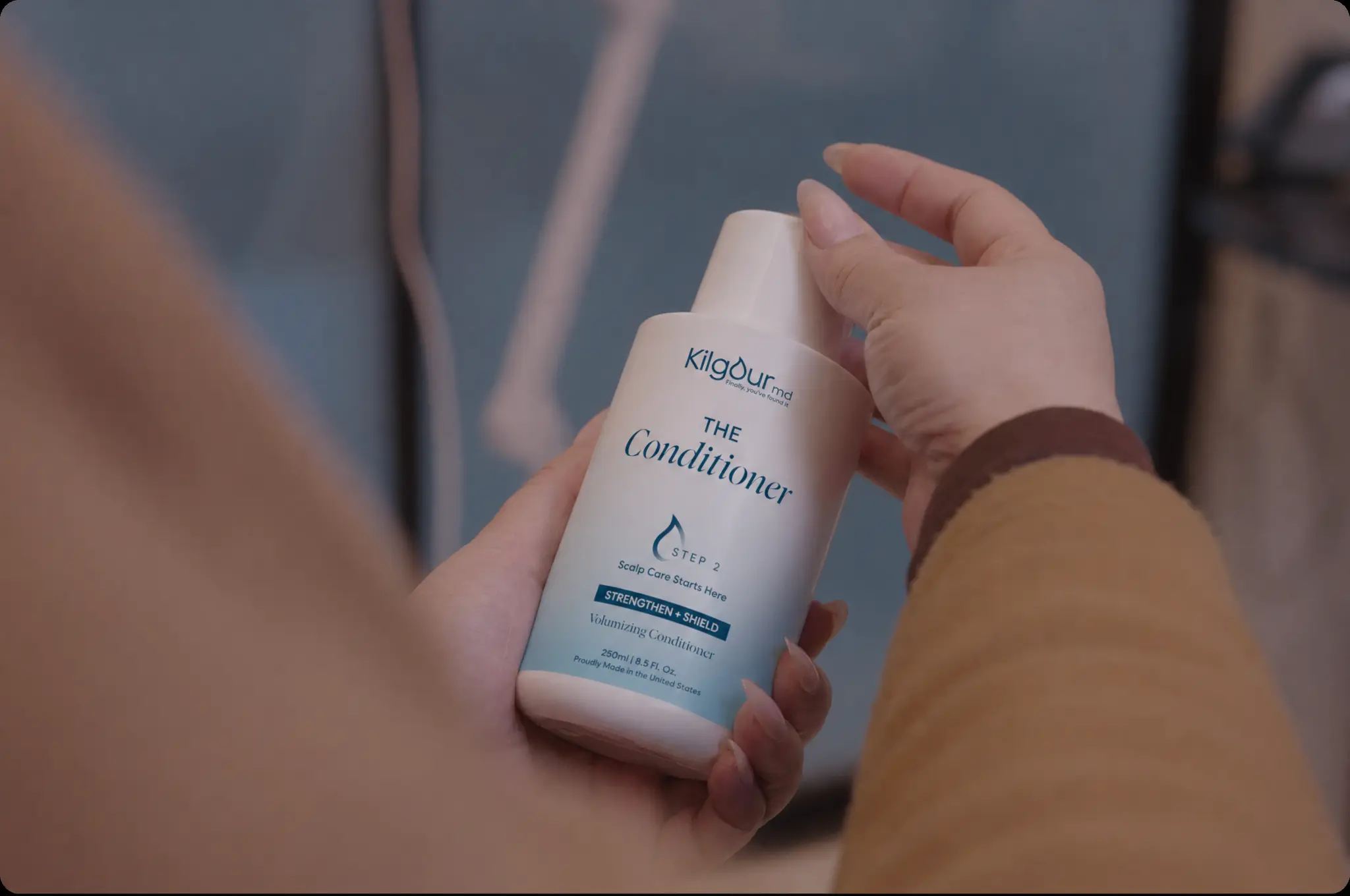
The shampoo cleared the environment. The conditioner has to rebuild every strand still on your head — bring back the body, the softness, the shine, without the weight that flattens you.


Your follicles never stopped producing new hair. They’ve been making baby hairs the entire time you’ve been losing volume. But on a post-estrogen scalp, those baby hairs are too fragile inside to survive a brush, a pillowcase, the wind. They snap off before they reach visible length.
Kerashaft V fills the gaps from inside the strand. 17% thicker shaft. 64% less breakage. The baby hairs your follicles have been quietly producing this whole time finally survive long enough to become the density at your temples, the fullness along your part, the wisps at your hairline that used to be there.

For women whose hair has always had a wave or a curl, ResistHyal and Silkgel Neo together are also what brings the pattern back into focus — the curl shape comes from the strand being hydrated and protected, not from styling on top of it.
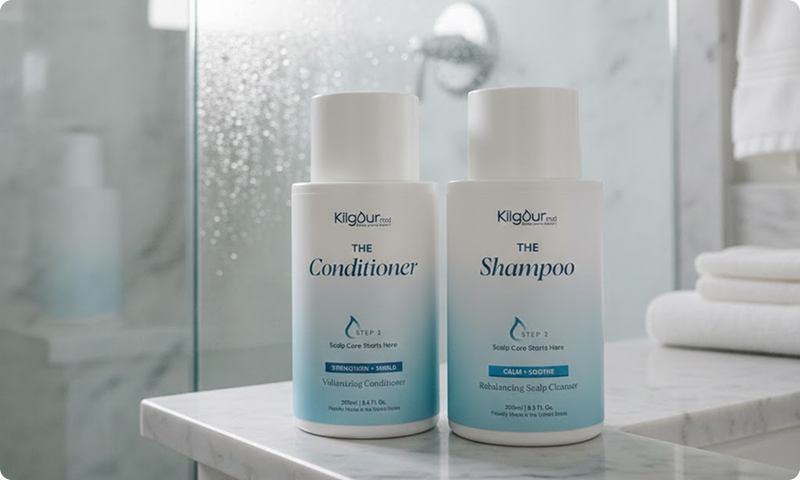
Nine patented compounds. Two bottles. Same shower, same time, same routine — swapped for what’s actually built for the hair you have now.
What Happens Over The Next 60 Days
There’s a moment somewhere around day 55 that almost every woman on this protocol describes the same way.
It’s not when she sees her hair in the mirror. It’s when somebody else does.
I’ll tell you what they say in a moment. But here’s what happens between now and then.
First, your scalp stops fighting you…
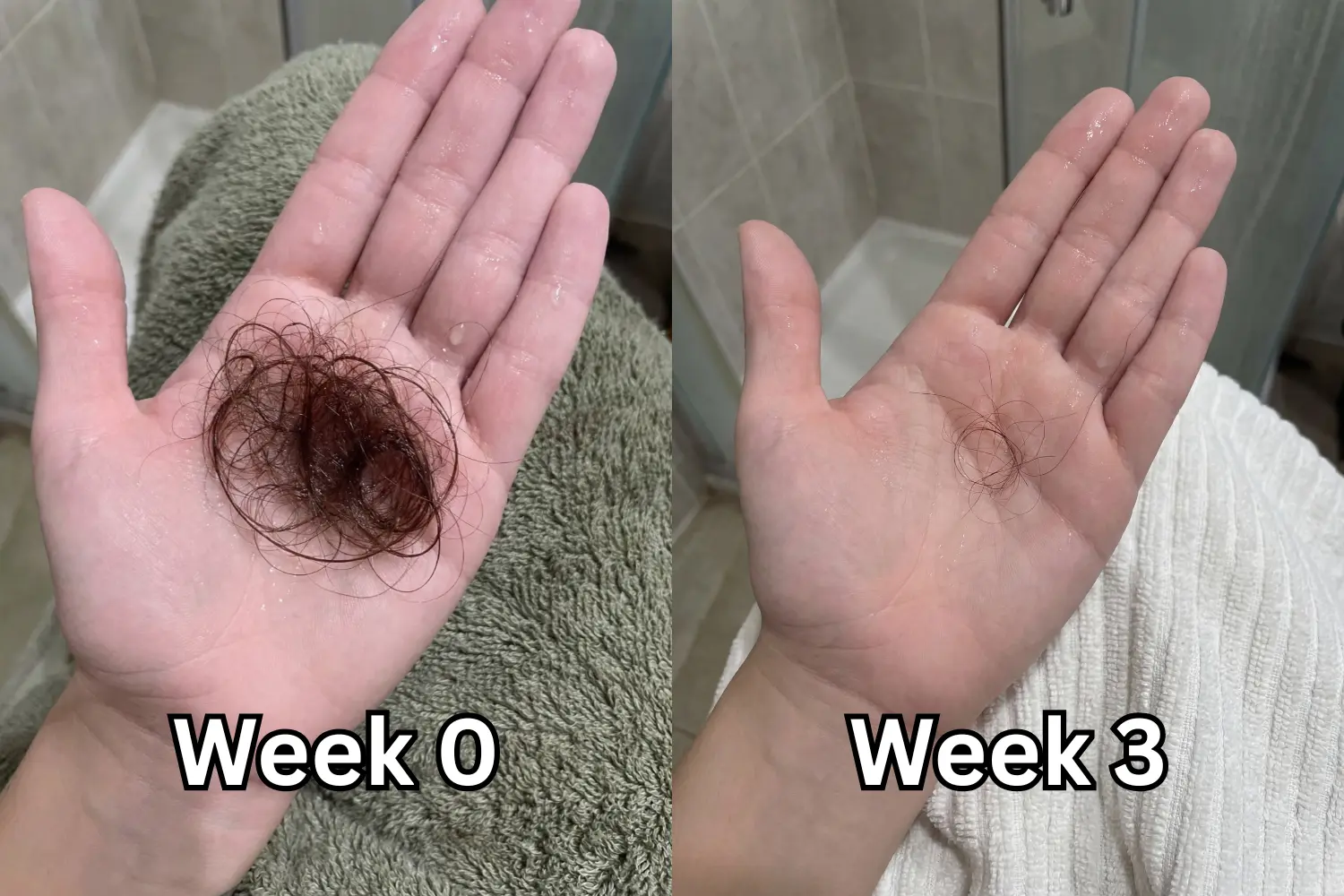
Week 1. The shedding in the shower drops. Not to zero — but you notice. The hair that used to be in your hands during the rinse stops being there. The handful becomes a few strands. The brush in the morning is mostly clean.

Then, the drain clears.
Week 2 to 3. The tightness after washing is gone. Your scalp stops feeling like it belongs to someone else. The blow-dry holds. Your hair has body the morning after — soft, shiny, still there. Not because you styled it differently. Because the strand itself is plumper from the inside.
Then, the new growth survives…
Week 4 to 6. The baby hairs along your temples start staying. You see them in the mirror at the right angle — the soft halo of new growth that’s been trying to come in for years and finally has the structural integrity to survive.
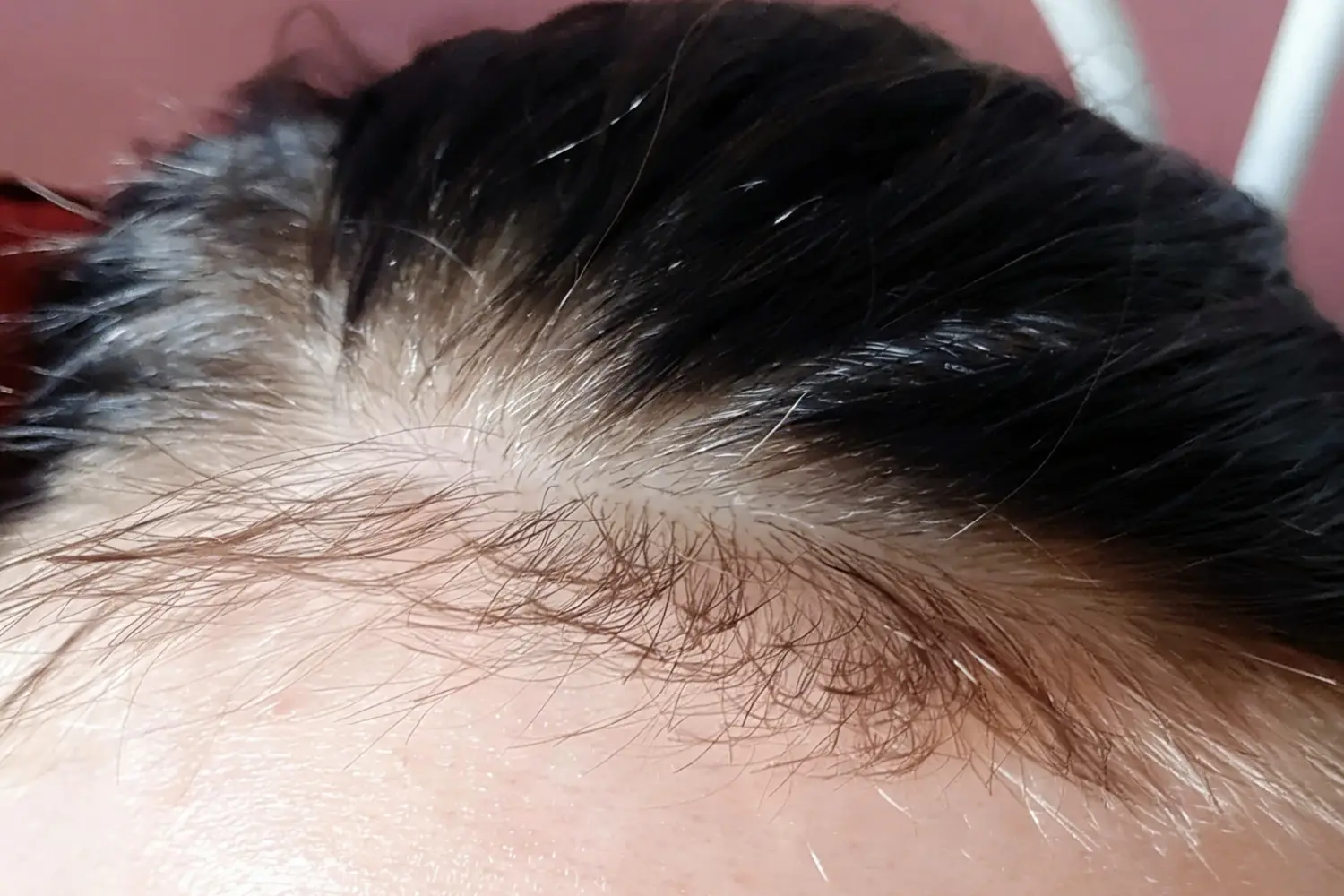
And it keeps building.
Week 8. Your ponytail has weight again. Other people start to see it. Your hairdresser stops mid-cut and asks what you changed. A friend you haven’t seen in two months says “what did you do to your hair.” Not the polite compliment. The real one. The one where they actually want to know.
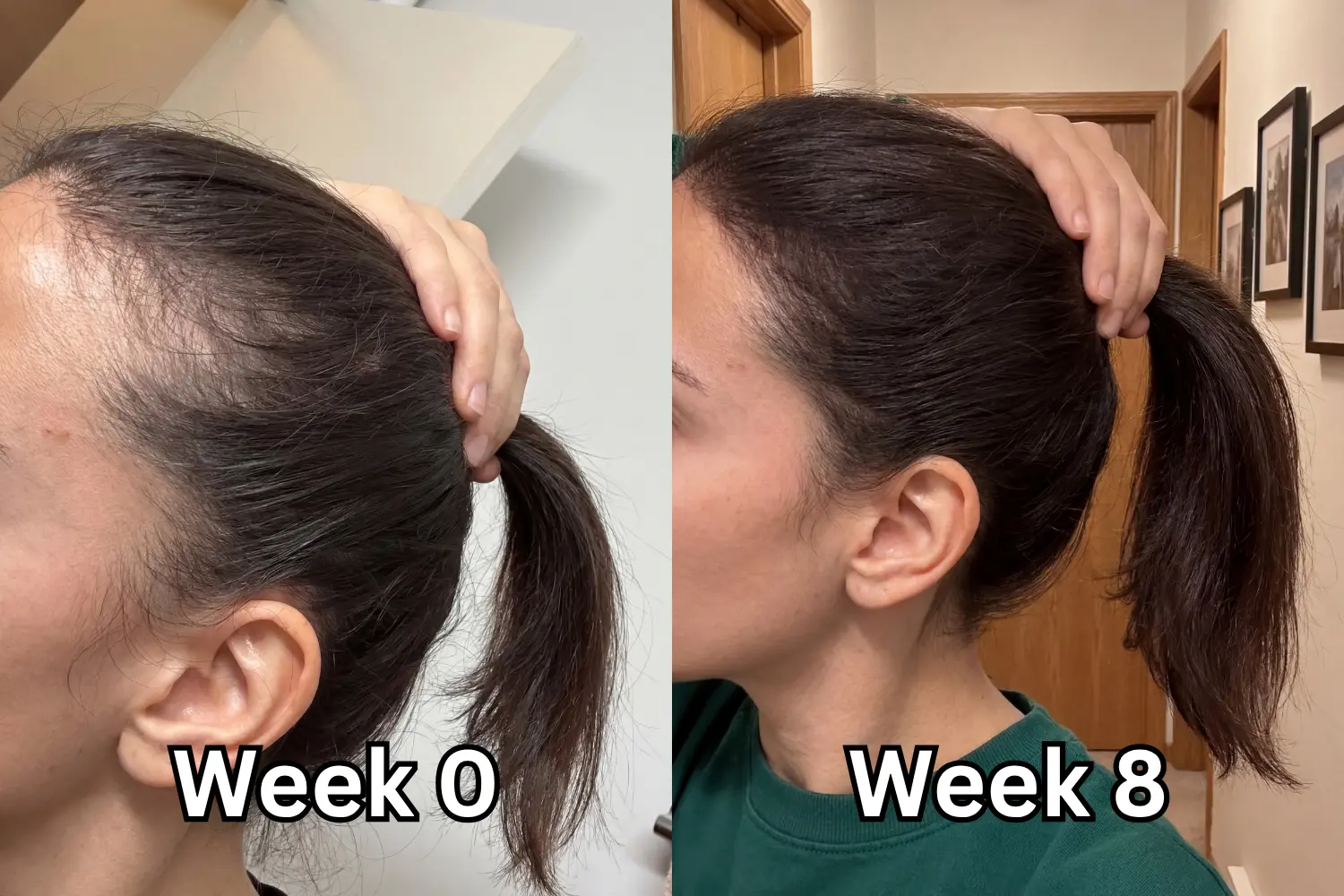
Every single woman in our initial test group of a thousand re-ordered after their first 60-day supply ran out. Not because they had to. Because by day 60 the hair coming in was the hair they’d given up on years ago — and they weren’t about to stop washing with the only thing that was producing it.
Nine patented compounds doing nine specific jobs. Every wash. In the same two bottles, in the same shower, in the same amount of time.
Your shampoo was made for the hair you had at 30.
This was made for the hair you have now.
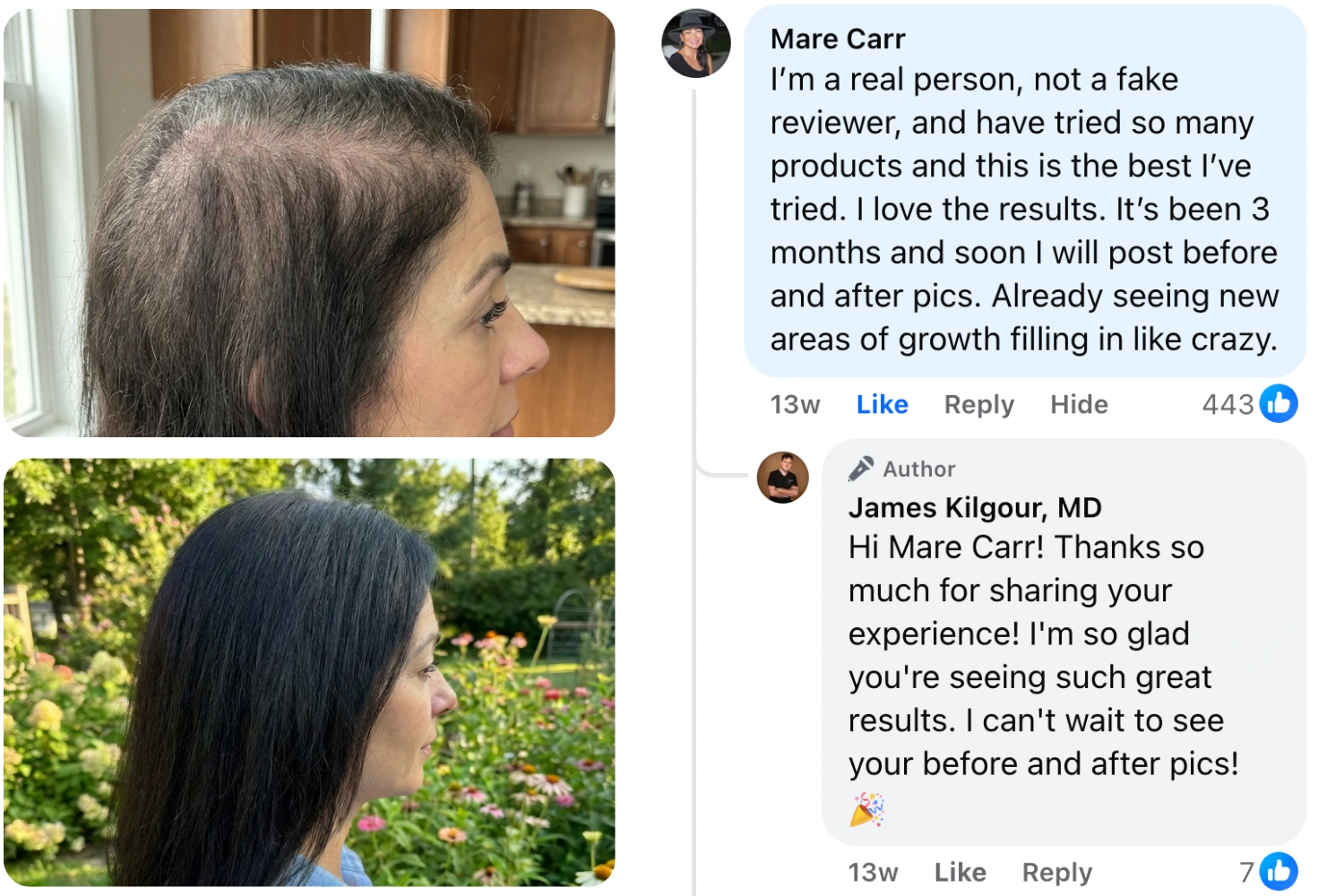
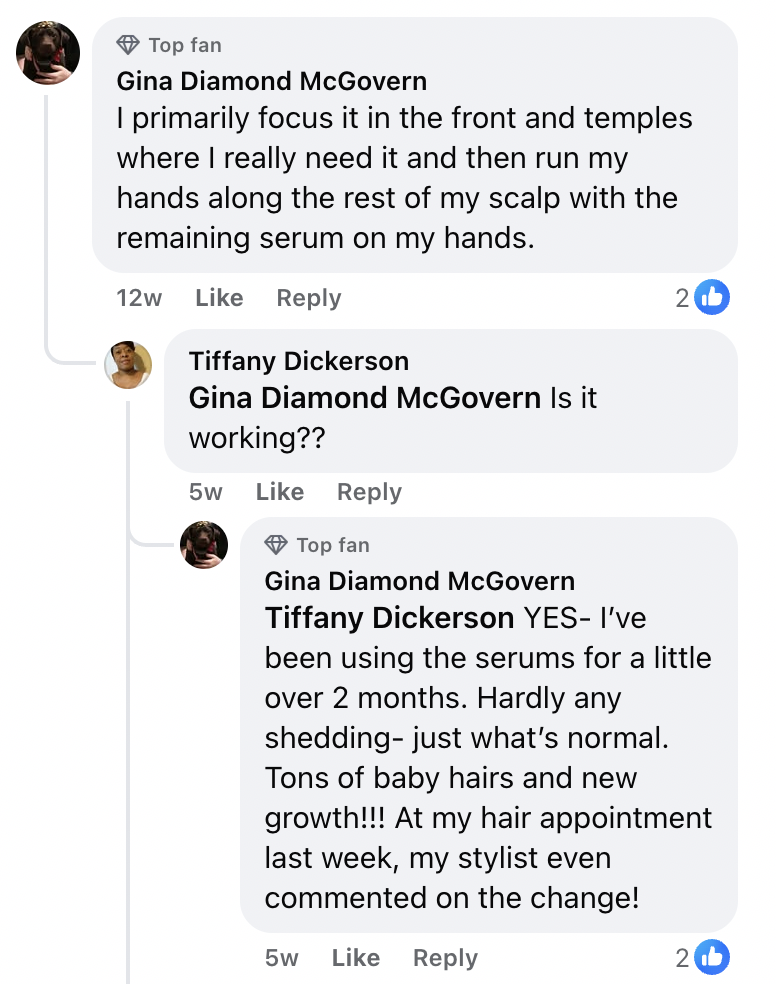
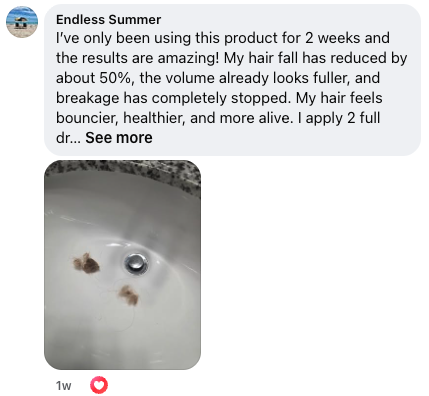
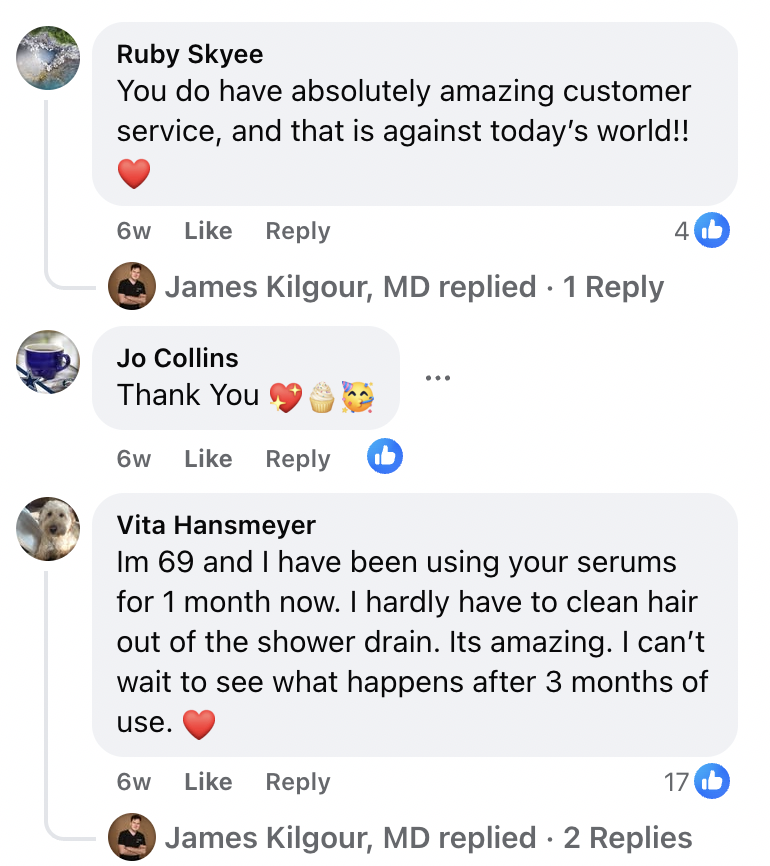
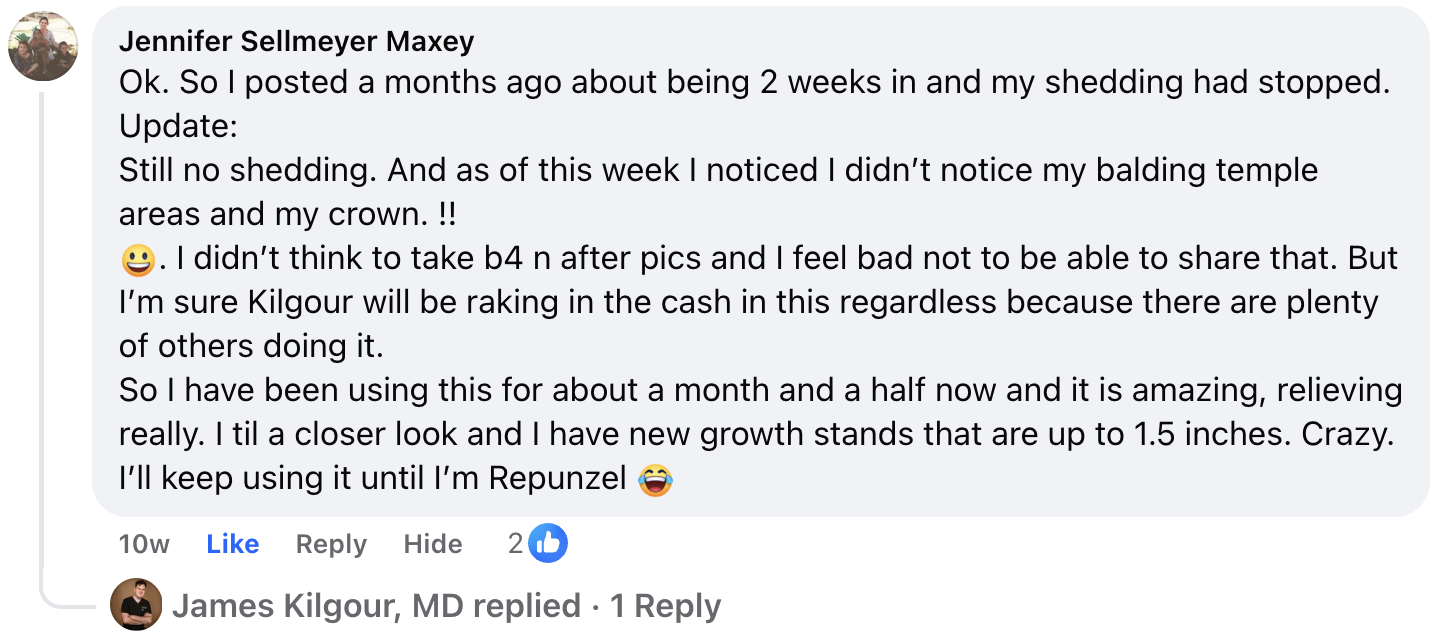
What Women Have Been Saying
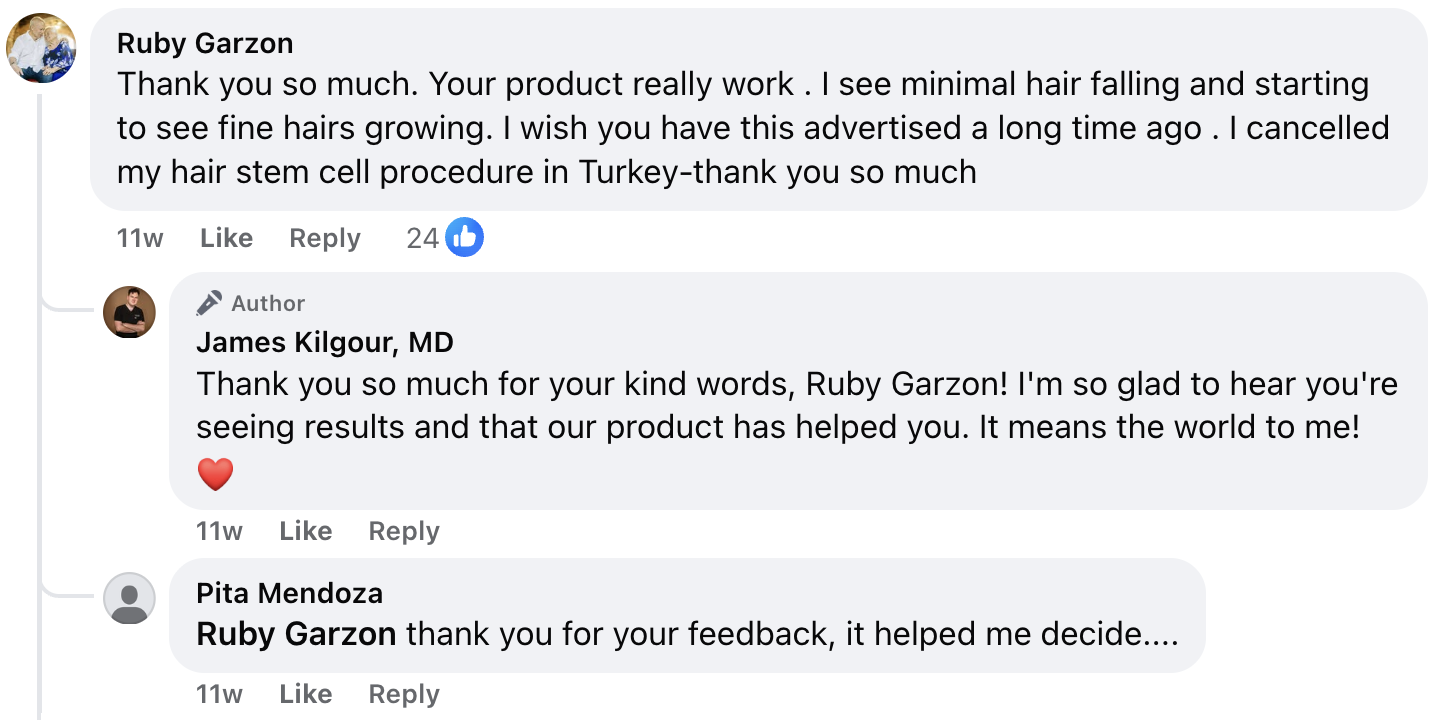
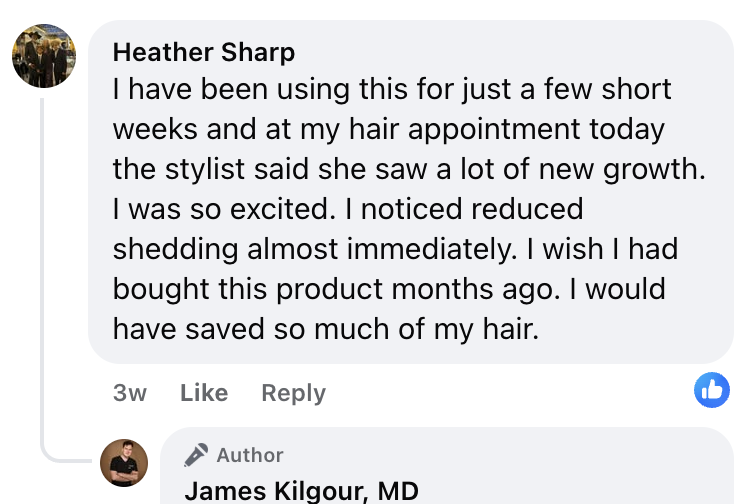
Comments left on our posts over the past month — most of them around the 30-to-60-day mark, when the hair coming in starts catching the light.
The KilgourMD Wash System
Shampoo + Conditioner · One Full Protocol
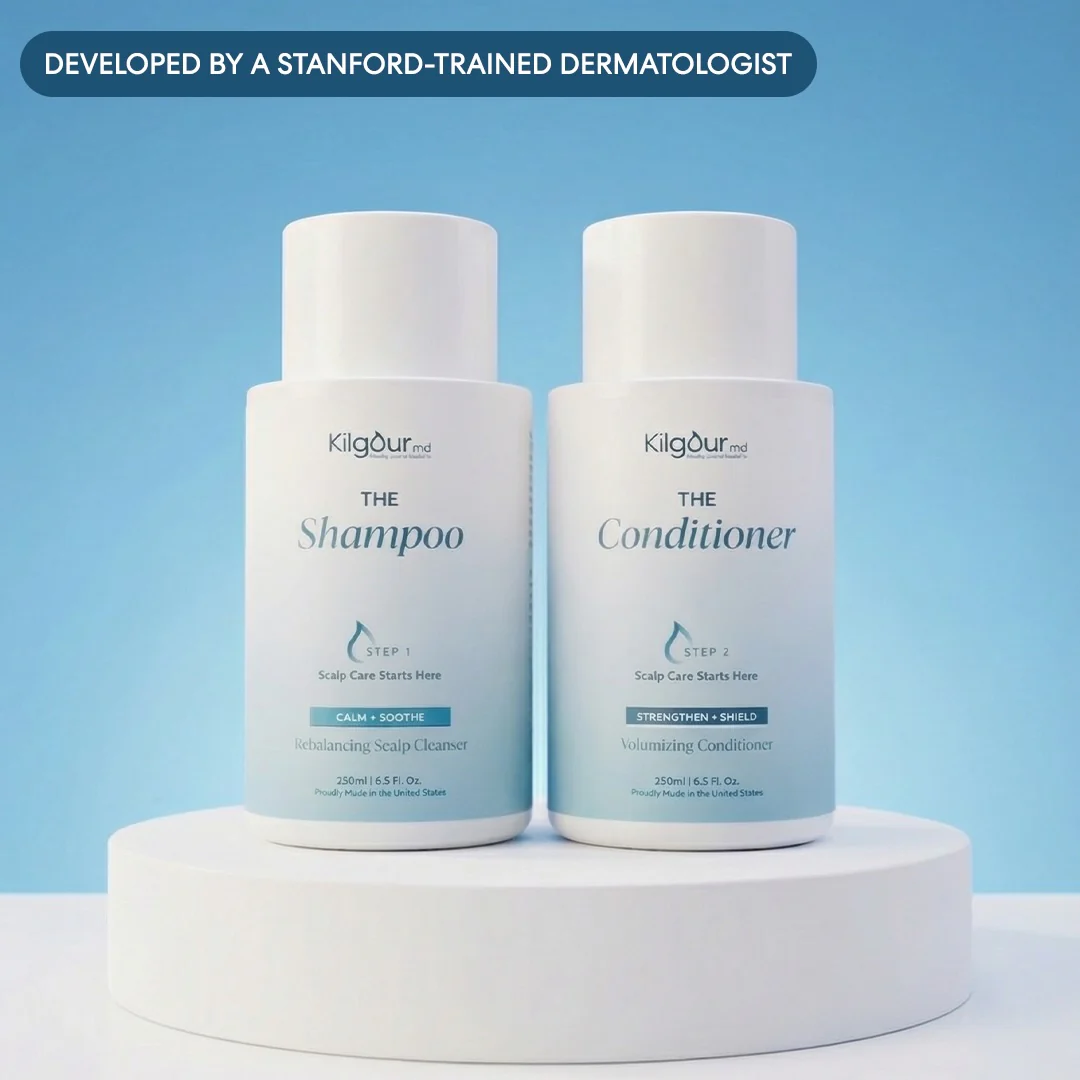
We launched this system after a year of formulation work.
Demand has been heavier than we built for. We’re shipping thousands of orders a day, and the current production batch is the last one going out at launch pricing. Once it’s gone, the next batch is being manufactured at the standard rate.
I don’t know exactly when the crossover happens. It depends on order volume, and order volume has been climbing every week since we opened.
Tap below and the page will check whether the current batch is still in stock. If it is, you can lock in launch pricing before the crossover.
Free priority shipping · Used by 10,000+ women · Backed by 1,000+ physicians
If You Made It This Far
If you recognized yourself anywhere in this article — the strand on your brush, the hair in your hands during the rinse, the part that’s been getting wider, the ponytail half its old size by mid-morning — you already know what’s happening.
You also know it isn’t getting better on its own.
Two thousand women in my exam room. A thousand women in our initial test group — every single one re-ordered after their first 60 days. Over 1,000 physicians now putting their name behind it. Nine patented compounds nobody else has ever combined into a single wash system, doing nine specific jobs every time you use it.
The strand under my microscope this morning had four years of life left in it. So does the one on your brush.
This is the wash that lets it use those four years.
By your second wash, the rinse is going to look different. By week three, the handful is gone. By week eight, your ponytail has weight in your hand again — and it keeps building from there.
The current batch is the last one going out at launch pricing. We’re shipping thousands of orders a day, and once it’s sold through, the next batch is being manufactured at the standard rate.
Tap below. The page will check whether the current batch is still in stock. If it is, your order ships at launch pricing on free priority.

Dr. James Kilgour, MD
Board-Certified Dermatologist · Stanford School of Medicine
Free priority shipping · Launch pricing on current batch